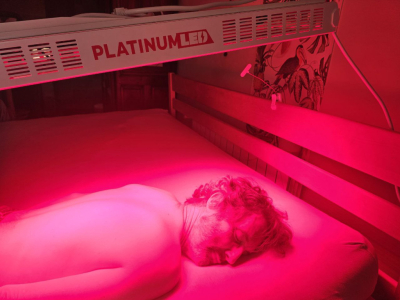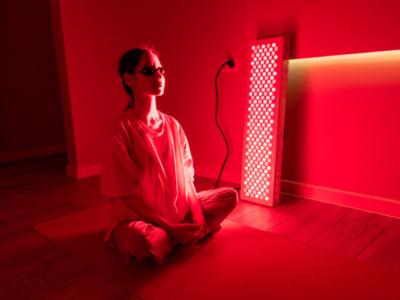




The Photobiomodulation by LED panels — also known as red light therapy or red phototherapy — is emerging in 2026 as one of the most studied solutions to accelerate muscle recovery. High-level athletes, amateur sports enthusiasts, physiotherapists, osteopaths, and sports coaches are embracing it as the scientific literature expands. A meta-analysis published in 2025, which includes 14 controlled studies on delayed onset muscle soreness (DOMS), confirms that red light significantly reduces post-exercise muscle pain at 24 and 48 hours after exercise. Another umbrella review in 2025 (PubMed Central) consolidates all clinical evidence on PBM in recovery.
How does this technology work? What does science say in 2026? How to use it, how often, at what distance, with what precautions? This article provides a comprehensive overview of the use of LED light therapy panels applied to muscle recovery: biological mechanisms, scientific evidence 2024-2025, quality criteria, usage protocol, and precautions. Transform your approach to sports recovery at home.
How does red light promote muscle recovery?
When bare skin is exposed to red or near-infrared light emitted by a LED light therapy panel, wavelengths — typically 660 nm (visible red) and 810 to 850 nm (near infrared) — penetrate the tissues and are absorbed by the muscle cells, particularly by their mitochondria. This mechanism, called Photobiomodulation In scientific literature, it is based on the activation of mitochondrial cytochrome c oxidase. Red light primarily acts on the skin and the superficial layers of the dermis; near-infrared, which is less absorbed by water and hemoglobin, penetrates deeper and reaches the muscle layer, fascia, and tendons up to about 5 cm deep. This differentiated penetration makes multispectral panels particularly interesting for athletes: they treat both the surface (skin, cutaneous microcirculation) and the depth (striated muscles, myotendinous junctions).
This light absorption triggers a cascade of biological benefits:
- Increase in cellular ATP: photobiomodulation stimulates the production of adenosine triphosphate (ATP), the "energy currency" of cells. More ATP means more energy available to repair muscle fibers damaged by exertion, synthesize new actin and myosin filaments, and support post-exercise metabolism. A particularly interesting mechanism to support theCellular energy in case of chronic fatigue.
- Better tissue oxygenationRed light promotes local vasodilation through the release of nitric oxide (NO) by the endothelium and improves microcirculation. More oxygen and nutrients reach the engaged muscles, and metabolic waste (lactate, free radicals) is removed more quickly. The result: a sensation of lighter legs and a faster recovery.
- Anti-inflammatory effect: by reducing inflammatory markers (pro-inflammatory cytokines such as TNF-α and IL-6, prostaglandins), photobiomodulation alleviates post-exercise inflammation. While inflammation is necessary in the short term to trigger regeneration, its chronic excess hinders recovery: PBM helps balance this response. A natural complement to a Anti-inflammatory diet.
- Acceleration of healing: the infrared LED panels are associated, in laboratory settings, with the proliferation of fibroblasts, collagen synthesis and angiogenesis, three key processes in the repair of micro-tears in muscles and tendons that follow intense exertion or injury.
- Modulation of oxidative stress: PBM plays a regulatory role on reactive oxygen species (ROS). It can produce them temporarily in healthy cells (hormetic stimulation effect) while reducing the excess in cells stressed by exertion. A cellular "fine-tuning" effect that protects muscles from deleterious oxidative stress.
TheUmbrella review Published in 2025, which synthesizes reviews of randomized clinical trials, confirms all of these mechanisms on multiple criteria of muscle health. Source: Photobiomodulation on multiple health outcomes — PubMed Central, 2025. For a comprehensive overview of the mechanisms in skeletal muscle regeneration, also see the 2025 review published in ScienceDirect.
What studies show about muscle recovery
Several recent studies document the value of LED panels in muscle recovery. These devices work deeply, with measurable effects on the reduction of inflammation, theacceleration of the tissue repair process, the reduction of muscle fatigue and theimprovement of sports performance in the phases of effort repetition.
A major review from 2017, encompassing 46 studies and 1,045 participants, concluded that red light photobiomodulation provides a significant advantage to competitive athletes. The authors even suggest that this therapy could offer athletes an "unfair advantage" by enhancing their recovery, endurance, and muscle strength. To such an extent that the question of ethical regulation of PBM in competition has been raised by some researchers, similar to how cryotherapy or pressure-compression techniques are regulated. Source: PubMed 29090398.
The 2025 meta-analysis on muscle soreness (DOMS) provides decisive confirmation: 14 controlled studies (wavelengths 660 to 950 nm) demonstrate that therapeutic photomodulation significantly reduces post-exercise muscle pain and accelerates strength recovery at 24 and 48 hours after exercise. The tested protocols generally apply the light within an hour following the effort, at a distance of 15-30 cm from the worked muscle area, for a duration of 10 to 20 minutes. Source: MDPI Journal of Functional Morphology and Kinesiology, 2025.
The measured biological markers in these studies confirm the profound effect of red light on muscle physiology. Rather than subjective sensations, the researchers measured objective parameters:
- Creatine kinase (CK): a reference biomarker for muscle damage. Its blood concentration rises after any intense effort (long-distance running, eccentric weightlifting, combat sports) and indicates fiber rupture. Photobiomodulation studies show a significant decrease in post-exercise CK compared to the placebo group, indicating less muscle lysis and better cellular protection.
- Blood lactate: Accelerated lactate clearance reduces the sensation of heavy legs and allows for quicker succession of sessions. Several clinical protocols measure a faster return to normal kinetics under PBM.
- Maximum isometric forcePhotobiomodulation accelerates the recovery of contractile capacity at 24 and 48 hours. Specifically, the athlete regains their strength levels more quickly.
- Joint range of motion and perception of effort: the mobility of the engaged joints (knee, shoulder, ankle) is restored more quickly, and the rate of perceived exertion (RPE) shows a decrease in the days following exposure.
- Salivary cortisol: Some recent studies note a modulation of post-exercise cortisol, a marker of the body's overall stress.
The university of Stanford Medicine published in February 2025 a summary confirming the clinical interest of red light in sports recovery, musculoskeletal health, and dermatology. The safety profile is described as excellent in healthy adults, with no documented DNA damage. Source: Stanford Medicine, February 2025.
A PubMed study published in 2020 also confirms that the 940 nm wavelength showed a significant improvement in recovery among athletes treated compared to a placebo group. Source: PubMed 33273302. Also note this MDPI review 2021 which lays the conceptual foundations of PBM, distinguishing the key parameters: wavelength, fluence (energy per unit area), irradiance (power per unit area), exposure duration, pulsed or continuous mode.
It should be noted that the benefits of photobiomodulation are not limited to the muscles. The Red light is also being researched in cardiovascular health, on glucose metabolism — a subject that particularly interests endurance athletes — and on the post-operative recovery in the event of a sports injury requiring surgery, and even supports the quality of sleep, the first pillar of muscle regeneration.
A short but rich scientific story. Photobiomodulation has a unique history: it all began in the late 1960s when Hungarian physician Endre Mester accidentally observed that low-level red laser light accelerated hair regrowth in mice. Over the decades, the concept evolved from laser (LLLT — Low-Level Laser Therapy) to LED, which is more accessible. The 2010s saw PBM become established in professional physiotherapy centers, and the last decade has democratized LED panels for home use by the general public. By 2026, PBM is one of the most studied non-drug recovery techniques, with over 700 clinical trials recorded, a significant portion of which focus on skeletal muscle.
How to choose a quality LED panel for muscle recovery
Faced with the growing popularity of red light therapy, many brands offer LED panels. Not all are created equal, and a low-quality panel (with too low irradiance, imprecise wavelengths, high EMF) will not produce the expected results. Here are the technical criteria to require for serious muscular use:
- Wavelengths 660 nm + 810/850 nm: the combination of visible red and near-infrared covers the skin, fascia, and deep muscles. A panel that emits only in red (660 nm) will primarily be active on the surface; an infrared panel alone (850 nm) will not address skin microcirculation. Multispectral synergy is optimal for sports.
- Sufficient irradiance: aim for at least 50 mW/cm² at a distance of 15 cm. High-end panels (such as Platinum LED BioMax) reach ~90 mW/cm². This power directly determines the duration of the sessions: with double the irradiance, the same energy dose is delivered in half the time.
- High LED density: more LEDs = larger and more homogeneous exposure surface, essential for covering large muscle groups (thighs, back, buttocks).
- Measurable EMF levels: prioritize signs indicating an EMF (electromagnetic field) close to zero at the recommended usage distance. A criterion of comfort and manufacturer reliability.
- Pulsed modes (optional): Certain clinical protocols use specific pulsed frequencies to further stimulate mitochondrial regeneration. High-end panels offer multiple modes.
- Minimum 3-year warranty and French or European customer service — a guarantee of durability and after-sales service in case of a breakdown.
- Certifications CE, FCC, RoHS: markers of electrical and environmental compliance.
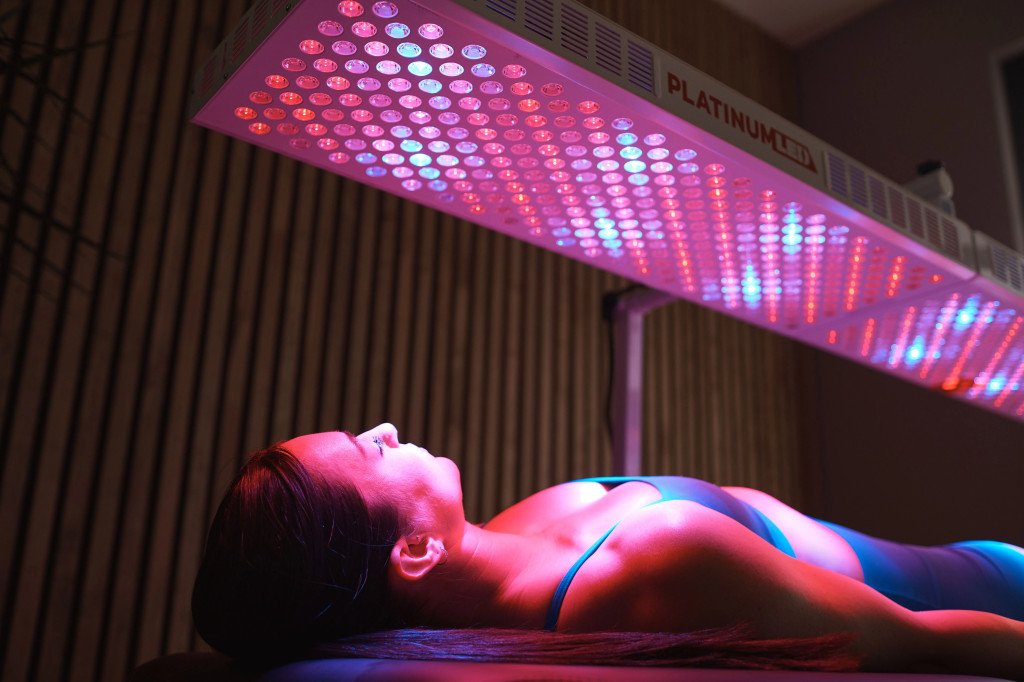
Among the brands studied in 2024-2026, Platinum LED (BioMax range) stands out: irradiance up to ~90 mW/cm² at 15 cm, low measured EMF, wide spectral band combining 630, 660, 810, 830, and 850 nm, 3-year warranty, support available in French via the European store. Independent comparisons conducted by Alex Fergus and Light Therapy Insiders regularly place the BioMax range in the global top 3 of high-performance panels. Discover the Platinum LED BioMax range — or via the European boutique in French.
To go further on independent comparisons: Light Therapy Insiders — Best Panel 2024.
When and how to use an LED panel for recovery?
The effectiveness of photobiomodulation largely depends on the timing and of the protocol. A well-balanced session yields observable results in 2 to 4 weeks; a session that is too short or too infrequent will not bring any benefits. Here are the recommendations based on the 2024-2025 literature and the experience accumulated by sports coaches who incorporate PBM into their training:
- Pre-effort (5 to 10 minutes, 30 minutes before training): it is the most scientifically validated strategy. It "preconditions" the muscles, increases ATP availability before exertion, reduces fatigue during effort, and accelerates recovery within the following 24 hours. Ideal in competition for performing multiple efforts throughout the day.
- Immediate post-effort (10 to 20 minutes, within the hour following the session): this moment has become the benchmark for acute recovery. Exposure right after exertion reduces blood concentration of creatine kinase, alleviates post-exercise inflammation, and limits the onset of muscle soreness (DOMS) within 24-48 hours. It is the priority time slot for athletes who want to continue with their training sessions.
- Chronic recovery (1 to 2 sessions/day, 10-15 min): for severe muscle soreness, overload phases during competition or intensive training camps. In the event of injury or rehabilitation, use is a matter for the healthcare professional following you.
- Exposure distance: 15 to 30 cm from bare skin depending on the panel's irradiance. High-end manufacturers always specify the optimal distance in the instructions. Too close: risk of thermal discomfort. Too far: insufficient irradiance for a biological effect.
- Frequency: every day is possible, with no documented toxicity in healthy adults. For visible results, plan for at least 3 sessions per week for 4 to 8 weeks. Photobiomodulation is cumulative: structural benefits (mitochondrial regeneration, increased capillarization) develop gradually.
- Exposed area: the light does not pass through clothing. Expose the bare skin of the targeted muscle area (thighs, calves, back, lower back, shoulders depending on the sport).
Please note that the Photobiomodulation is part of a holistic approach. recovery: it is even more effective when combined with good hydration, with Recovery tips after exercise, to a cordyceps supplementation for sports energy, to a diet rich in antioxidants (green vegetables, berries, seaweed) and to a restorative sleep — Nighttime recovery remains the number one pillar of muscle regeneration. No technology can compensate for a chronic sleep deficit. The ideal: make the post-exercise LED session a short but regular ritual, integrated into the cooldown.
Case studies: photobiomodulation according to your discipline
Not all sports engage muscles in the same way, and photobiomodulation protocols benefit from being adjusted. Here are the most common use cases observed among regular users of LED panels.
- Running / trail running / marathon: primarily target the quadriceps, hamstrings, calves, and glutes. Long-distance runners particularly benefit from the post-exercise window (10-15 minutes on the legs in the evening after a long run) to reduce tendon fatigue and the onset of muscle soreness. Ultra-trail runners in intensive training often have two sessions per day.
- Bodybuilding, CrossFit, weightlifting: target the muscle groups worked in a split routine (legs, back, chest depending on the session). PBM is particularly interesting after slow tempo or eccentric sessions, which generate the highest elevations of creatine kinase. Several strength training coaches schedule the LED session right before the post-workout shower.
- Combat sports (boxing, MMA, judo): target areas of repeated impact (shoulders, back, abdominals, thighs), particularly useful during the loading phase before a fight. Near-infrared (810-850 nm) is valuable here for reaching the deep areas under heavy strain.
- Team sports (football, rugby, basketball, handball): targeting the legs (lower limbs) between matches. PBM is increasingly being integrated by the medical staff of professional clubs, in addition to cold therapy and traditional recovery treatments.
- Cycling and triathlon: target quadriceps, hamstrings, lower back, and neck (often strained by the aerodynamic position). During a training camp, two 10-minute sessions per day can significantly reduce cumulative fatigue.
- Yoga, Pilates, dance, climbing: target specific areas (hips, shoulders, hands for climbers). PBM is used here more for chronic recovery to support heavily strained tendons.
- Post-injury rehabilitation: Some physiotherapists include photobiomodulation in their treatment. This use is a decision for the healthcare professional following you, never a self-prescription.
For most amateur athletes, a medium-sized panel (300-1000 W) permanently installed in a dedicated room (home gym, yoga corner, locker room) allows for the integration of PBM without constraints. Portable compact panels are an alternative for travel and training camps.
Precautions, contraindications, and proper use
Photobiomodulation by LED panel is generally considered a safe technology. The safety profile has been confirmed by several recent reviews (Stanford 2025, umbrella review 2025, clinical meta-analyses): no documented DNA damage, no acute or chronic toxicity in healthy adults, wide therapeutic window between the effective dose and the problematic dose. However, some common-sense precautions remain essential, especially for repeated home use:
- Eye protection: never look directly at the LEDs, especially in near-infrared where the light is not perceived by the eye but remains energetic. Wear appropriate glasses (provided with high-end panels) during exposures of more than 5 minutes or if the panel is facing the face.
- Bare skin exposed: Red light does not penetrate clothing. Apply the treatment directly to the skin for a real biological effect. Remove sunscreens and makeup containing titanium dioxide, as they can reflect light.
- Drug-induced photosensitivity: certain medications increase the skin's sensitivity to light — St. John's wort, isotretinoin (acne), antibiotics from the tetracycline family (doxycycline) or quinolones, certain diuretics (hydrochlorothiazide), certain anti-inflammatories. Seek medical advice before starting if you are taking any of these treatments.
- Pregnancy: as a precaution, in the absence of solid data on pregnant women, seek medical advice before any use, even if no harmful effects have been reported to date.
- Active skin cancers or non-healing skin lesions: do not expose the affected area without prior dermatological advice. Known melanoma areas must be protected.
- Photosensitive autoimmune diseases: systemic lupus erythematosus in particular — as a precaution, seek medical advice.
- Reported adverse effects: extremely rare — temporary mild skin dryness, transient redness, exceptionally headaches in case of overexposure. Reducing the duration of sessions and increasing the distance generally resolves the issue.
Warning: Red light is not a medical treatment and does not replace professional advice. In the case of a serious muscle injury (extensive tear, deep contusion with hematoma), persistent pain beyond 7 days, or chronic pathology, consult a physiotherapist, sports doctor, or cardiologist depending on the context.
FAQ – LED Panels and Muscle Recovery
Does red light really help with recovery after sports?
Yes. Numerous studies — including a 2025 meta-analysis of 14 controlled studies — confirm that red light accelerates muscle recovery after exertion. By improving fiber repair, reducing inflammation, increasing blood circulation, and promoting the healing of microlesions, it helps muscles recover more quickly from intense training. High-level athletes use it to string together sessions with less fatigue and to limit soreness.
How long should a LED panel be used for muscles?
Red light therapy sessions are generally short: 10 to 20 minutes per muscle area are sufficient. For post-exercise recovery, aim for 10-15 minutes on the targeted area (thighs, calves, back, etc.). For pre-conditioning, 5-10 minutes 30 minutes before training. If the session is too short, it has no measurable biological effect; if too long, it does not provide additional benefits and may cause slight thermal discomfort.
How often can one do red light therapy sessions for recovery?
One session per day, or even two during intense training phases, competitions, or injuries, is completely safe. For visible results on chronic recovery, plan for at least 3 sessions per week for 4 to 8 weeks. Photobiomodulation is cumulative: regularity is more important than intensity. An occasional session here and there won't achieve much; three weekly sessions over two months transform the sensation of effort.
Should red light be used before or after training?
Both work, but they act differently. The literature from 2024-2025 suggests that pre-conditioning (5-10 minutes, 30 minutes before exertion) is the most scientifically validated strategy, as it reduces fatigue during exertion and accelerates recovery within the following 24 hours. Immediate post-exertion (10-20 minutes within the hour) is effective in reducing soreness and inflammation. The ideal approach: combine both according to availability and context.
Is red light therapy safe for muscles?
Yes, recent scientific reviews confirm the absence of toxicity in healthy adults. No DNA damage, no harmful thermal effect on muscle fibers, no negative interaction with physical effort. The main precautions concern the eyes (wearing appropriate glasses), drug-induced photosensitivity, and pregnancy. In case of doubt, seek medical advice, especially if you are on regular medication.
What is the difference between red light and infrared for muscles?
Visible red light (660 nm) primarily acts on the surface, affecting the skin and the superficial layers of the dermis. Near-infrared light (810-850 nm) penetrates deeper, reaching the muscles, fascia, and tendons (up to about 5 cm). For muscle recovery, the combination of both wavelengths is ideal: this is what high-end multispectral LED panels offer. A "red-only" panel will be less effective for deep muscle groups.
Can a LED panel be used on muscles every day?
Yes. Photobiomodulation is a cumulative and well-tolerated technology: daily use (10-20 minutes) poses no problem for healthy adults and is even the recommended frequency for significant benefits. For athletes in competition, injured sportspeople, or individuals in rehabilitation, two sessions per day are possible, spaced at least 4-6 hours apart.
Synergies: Photobiomodulation in a Holistic Approach
The muscle recovery does not depend on a single factor. The more photobiomodulation is part of a coherent sports lifestyle, the more its benefits accumulate. Here are the most powerful synergies to implement around LED sessions.
- Quality sleep (7 to 9 hours per night)It is during deep sleep that the peak secretion of growth hormone (GH) triggers the repair of muscle fibers. No technology can compensate for degraded sleep. PBM at the end of the day can even support falling asleep by gently lowering cortisol.
- Hydration and electrolytes: Even moderate dehydration (-2% of body weight) significantly extends recovery time. Drink 2 to 3 liters of water per day depending on the effort, and supplement with sodium-potassium-magnesium in case of intense sweating.
- Protein and amino acid intake: aim for 1.4 to 2 g of protein per kg of body weight per day depending on the sport and level. Plant-based sources (legumes, algae, sprouted seeds, pseudo-cereals) are perfectly suitable for athletes. The metabolic window of 30 minutes post-exercise remains relevant to initiate muscle protein synthesis.
- Dietary antioxidants: red berries, dark green vegetables, algae (spirulina, chlorella), fresh turmeric, ginger. A natural antioxidant environment supports the modulation of oxidative stress induced by PBM.
- Active recovery: gentle walking, stretching, self-massage with a foam roller, hot-cold baths. PBM fits perfectly into this toolbox; it does not replace it.
- Chronic stress management: breathing, cardiac coherence, meditation, contact with nature. Chronic stress raises cortisol and hinders muscle recovery. PBM can positively modulate salivary cortisol, but the cause must be addressed at the source.
Athletes who achieve the best results with photobiomodulation are those who make it a daily ritual integrated into their preparation, rather than a one-time gadget. Consistency remains the secret of PBM: a minimum of 4 weeks to perceive the initial effects, and 8 to 12 weeks for lasting structural benefits on mitochondrial regeneration and muscle capillarization.
Update: April 30, 2026.
Warning: The information shared in this article is for educational purposes and does not replace medical advice. In the case of a serious muscle injury, persistent pain, or chronic condition, consult a qualified healthcare professional.