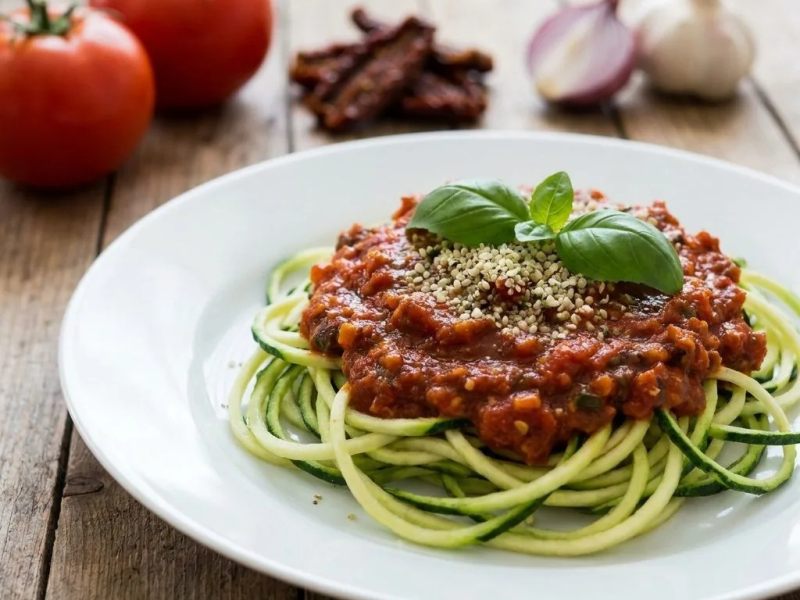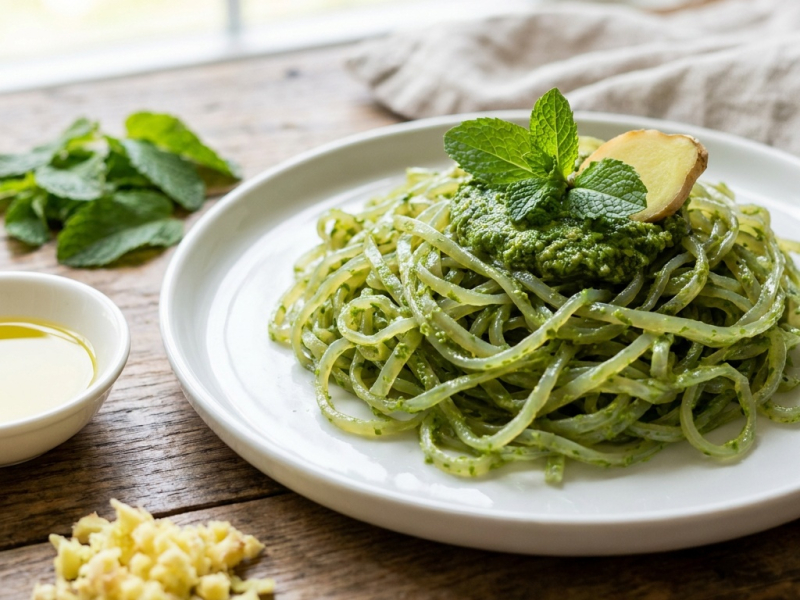


This courgette spaghetti is dressed in a creamy pesto of fresh mint and pine nuts, for a plate that is light yet full of character. The asparagus and mushrooms add crunch, and a pistachio crumble crowns it all with a toasty, salty note, without ever going near a frying pan. It is a fresh, colourful way to reinvent the pasta dish, ready in about twenty minutes.
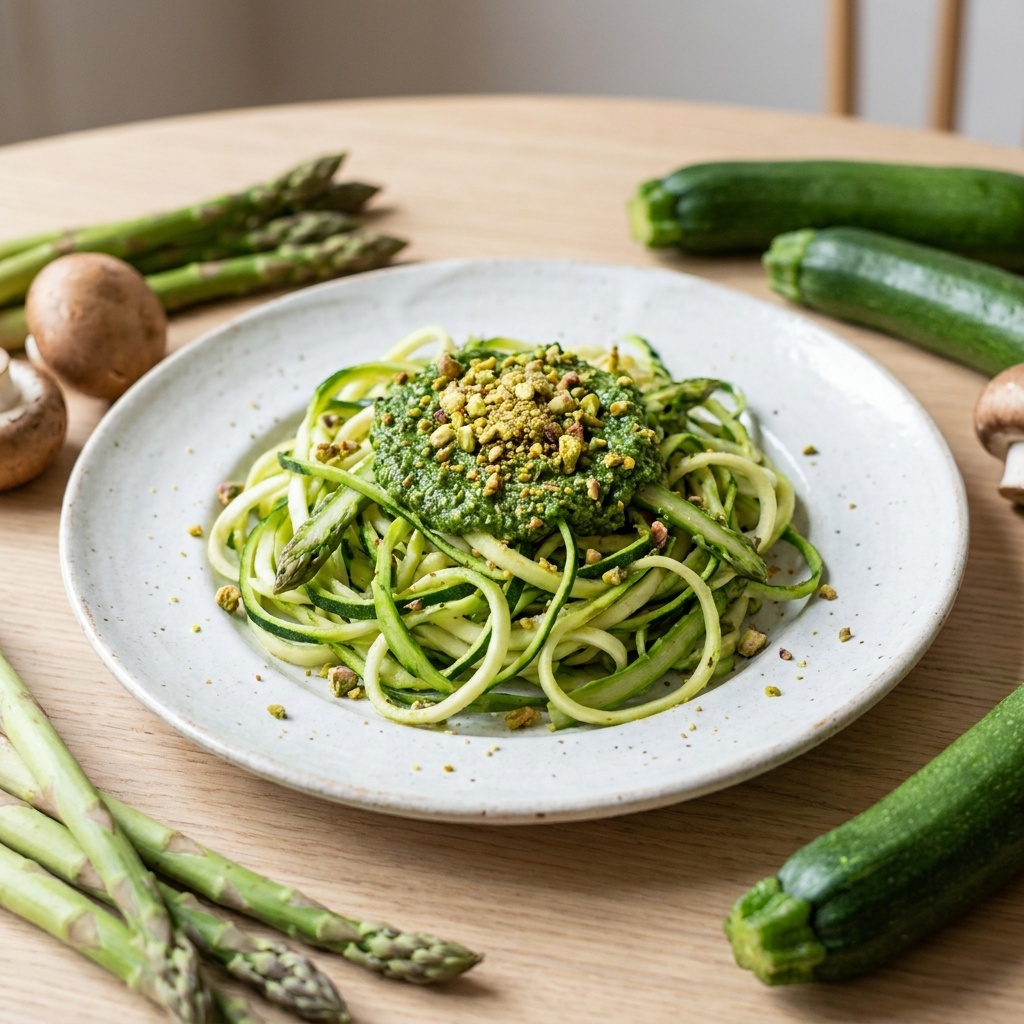
Raw courgette spaghetti with mint pesto and pistachio crumble

Share this article

Ingredients
Vegetable spaghetti
- 4 medium courgettes, ends trimmed
- 1 bunch of green asparagus, cut into 2.5 cm pieces
- 6 brown button mushrooms, thinly sliced
Mint pesto
- 150 g raw pine nuts
- 25 g fresh mint leaves
- 60 g nutritional yeast
- 60 ml olive oil
- juice of 2 unwaxed lemons
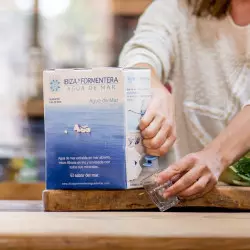
- salt, to taste (or the equivalent of 1 tablespoon - 15 ml - of seawater)
- 1 garlic clove
- a little filtered water, if needed
Pistachio crumble
- 75 g raw pistachios
- 2 tablespoons nutritional yeast
- 1/8 teaspoon salt
Method
- Cut the courgettes into thin strips with a mandoline or a spiralizer (a vegetable peeler gives wider ribbons). Put them in a salad bowl with the asparagus pieces.
- In the food processor, blend the pine nuts, mint, nutritional yeast, olive oil, lemon juice, salt and garlic until you get a smooth pesto. Loosen it with a splash of water if the texture is too thick.
- Pour the pesto over the vegetables and toss gently to coat them well.
- Rinse the food processor, then blend the pistachios with the nutritional yeast and salt. With the motor running, add a few spoonfuls of water until you get small, irregular crumbs.
- Arrange the spaghetti on plates, add the sliced mushrooms and sprinkle with the pistachio crumble.
Tip
For more flavour, marinate the sliced mushrooms for ten minutes in a drizzle of olive oil and a few drops of tamari before adding them. Only salt the courgettes just before serving: salt draws out their water and the pesto would slide to the bottom of the plate.
FAQ: your questions about courgette spaghetti with mint pesto
How do you make courgette spaghetti without any special equipment?
A simple vegetable peeler is enough: peel long strips along the whole length of the courgette, then cut them with a knife into thin bands to get tagliatelle or spaghetti. A mandoline fitted with a julienne blade gives a more even result, and a sharp knife also lets you cut thin matchsticks. Stop when you reach the softer, seedy core, which you can add to a soup.
How do you make a creamy pesto?
The creaminess comes mainly from the nuts: in this recipe, 150 g of raw pine nuts blended for a good while with the mint, olive oil, lemon, garlic and nutritional yeast give a smooth, velvety texture. Add the filtered water one spoonful at a time, with the motor running, until you reach the consistency you want. For an even rounder result, replace some of the pine nuts with cashews soaked for a few hours.
What is the difference between pistou and pesto?
Provençal pistou combines basil, garlic and olive oil pounded together, with no pine nuts and, traditionally, no cheese; it is used in particular to flavour soupe au pistou. Genoese pesto adds pine nuts and hard cheese, which makes it thicker. This raw version keeps the structure of pesto, with pine nuts, but swaps the basil for mint and the cheese for nutritional yeast.
What savoury recipes can you make with pistachios?
Blended with a little nutritional yeast and salt, raw pistachios turn into a savoury crumble to sprinkle over vegetable pasta, a salad or a chilled soup, as in this spring dish. They can also be used roughly chopped in a cauliflower tabbouleh, in a pesto instead of pine nuts or in a vegetable stuffing. Choose unsalted, unroasted ones so you stay in control of the seasoning.
Share this article
Related articles