


Soaked and dried sunflower seeds grind down into a thick flour that forms the base of this dehydrator classic, with nutritional yeast supplying the savoury, cheese-like note and tamari adding the salt and depth underneath it. Garlic works into the batter while it is still turning in the food processor, and the cayenne only arrives at the last moment, just before drying, so its heat stays sharp rather than mellowing over the hours. Massaging the sauce by hand into sturdy kale leaves is what makes the coating hold evenly, leaf after leaf, instead of pooling at the bottom of the bowl. Drying gently at 40 °C takes longer than baking, but it is what keeps the kale raw while driving out enough moisture for the leaves to shatter cleanly with each bite. The quantity of sauce is sized to cover about two bunches, which makes it easy to double if you are preparing a large tray for guests or want some in reserve. Compared with baked kale chips, these keep their crispness longer and taste noticeably richer, thanks to that seed-based sauce rather than a thin coating of oil and salt.
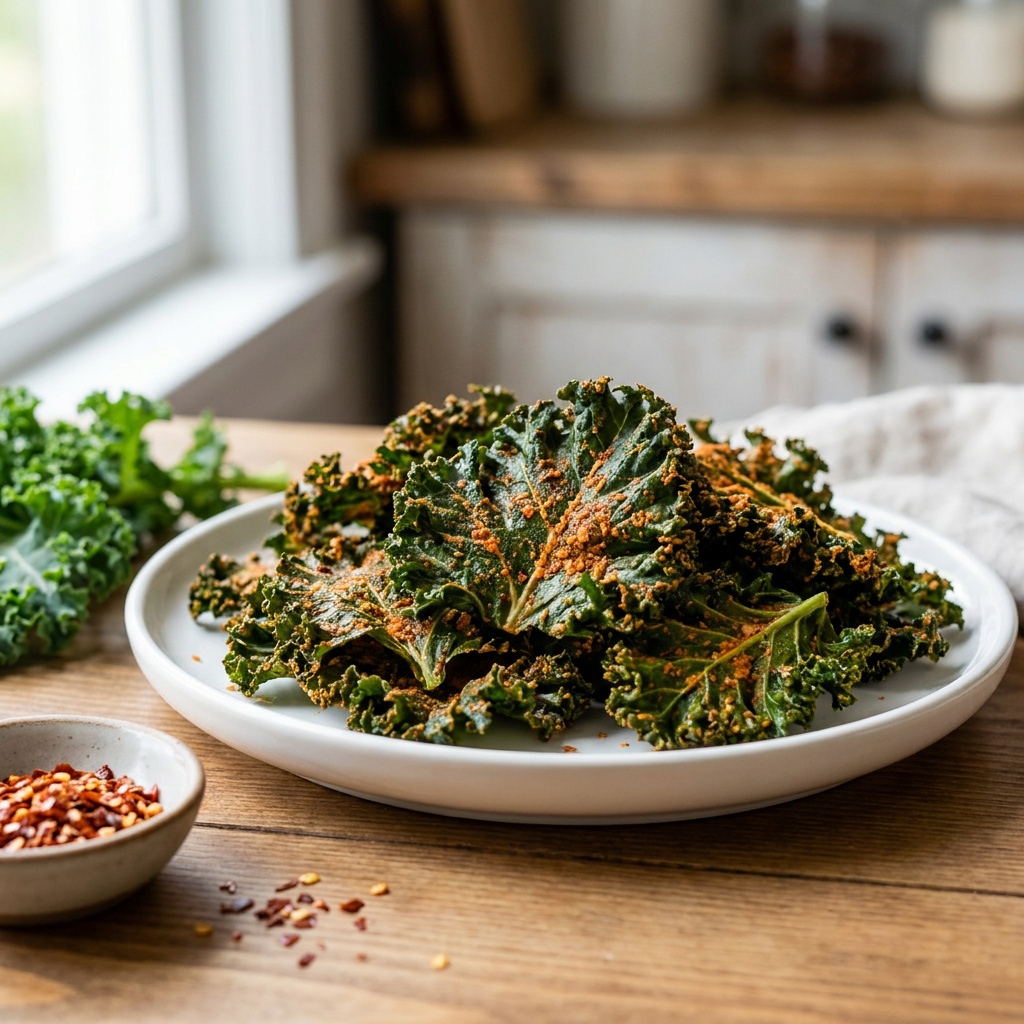
Cheesy spiced kale chips

Share this article
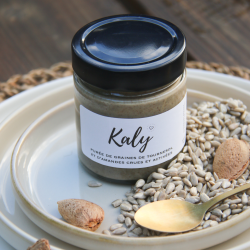
Sunflower seed and activated almond puree
€12.00 RESTOCKING BEGINNING OF DECEMBER
Ingredients
Spiced cheesy sauce (enough to cover about 2 bunches of kale)
- 4 cups (about 550 g) sunflower seeds, soaked then dried
- 1 cup (about 60 g) nutritional yeast
- 1/2 cup wheat-free tamari, or to taste
- 1/2 cup olive oil
- Fresh garlic, to taste
- Water, as needed
- Cayenne pepper, optional but recommended
Also
- 2 bunches of kale, centre ribs removed
Preparation
- Grind the sunflower seeds into a fine flour in a food processor.
- Add the nutritional yeast, tamari, olive oil and garlic (hold back the cayenne) and process, adding water gradually, until you have a thick batter that spreads easily.
- Rinse the kale and strip out the tough centre ribs, then gather the leaves in a large bowl - this quantity of sauce covers about two bunches.
- Massage the sauce into the leaves by hand until every one is coated.
- Spread the leaves in a single layer across the dehydrator trays, dust with cayenne to taste, and dry at 40 °C until the chips are crisp all the way through.
Tip
If your dehydrator runs a little warm, check the trays after the first few hours rather than leaving it to run in one go: thin leaves dry far faster than thick pieces left near the rib. Any leftover sauce keeps for about a week in the refrigerator and works just as well as a dip for raw vegetables or a spread for a wrap.
The full range Oilseeds, nuts, seeds
20 products
Discover the full range

FAQ: your questions about nutritional yeast kale chips
Can I freeze kale?
Yes, but not for chips. Raw frozen kale keeps for several months, except that the ice crystals burst the cell walls: on thawing, the leaves release water and go limp, which makes clean drying in the dehydrator impossible. So save freezing for leaves destined for smoothies or soups, and keep fresh, firm kale for chips.
What is the difference between yeast and nutritional yeast?
They are two very different products despite the shared name. Baker's yeast is alive: it is used to raise a dough, and has no culinary interest on its own. Nutritional yeast is deactivated - it raises nothing - and serves purely as a condiment, for its savoury, faintly cheesy taste. The two are therefore never interchangeable in a recipe.
What can replace nutritional yeast?
There is no exact substitute, because its taste comes from a very particular aromatic profile. Depending on the recipe, you can get close with a little unpasteurised miso, an extra splash of tamari, or ground sunflower seeds and almonds with a pinch of salt. In this sauce, nutritional yeast really makes the character: better to reduce the quantity a little than to replace it with something very different.
How much nutritional yeast per day?
Common usage runs to one to three tablespoons a day, roughly 5 to 15 g, which is about what a portion of these chips represents. It is a food rich in protein and B vitamins, but also in purines: anyone following a low-purine diet would do well to discuss daily use with a health professional.
Share this article