


Raw breads have no obligation to stay raw breads. The same batter, pressed in an unplugged waffle iron then dehydrated, turns into savoury waffles that step completely outside the breakfast category, heading instead towards lunch or dinner. The batter combines almond flour, ground flax, coconut flour and psyllium with moist almond pulp, the kind left over after straining a plant-based milk. Dried dill, onion powder and dried minced onion carry most of the flavour, with garlic and pepper to round it off. Psyllium is what holds it all together: without it, the batter crumbles when you unmould it. The key technique is lining the waffle iron with cling film, before and after spreading the batter, which lets you lift the waffle out intact without it sticking to the plates. And the reminder that sounds like a joke but isn't: you do not plug the appliance in. Drying then happens in the dehydrator, one hour at a higher temperature to form the crust, then four to six hours at a gentler setting. For flatbreads, simply skip the waffle iron and shape the dough by hand.
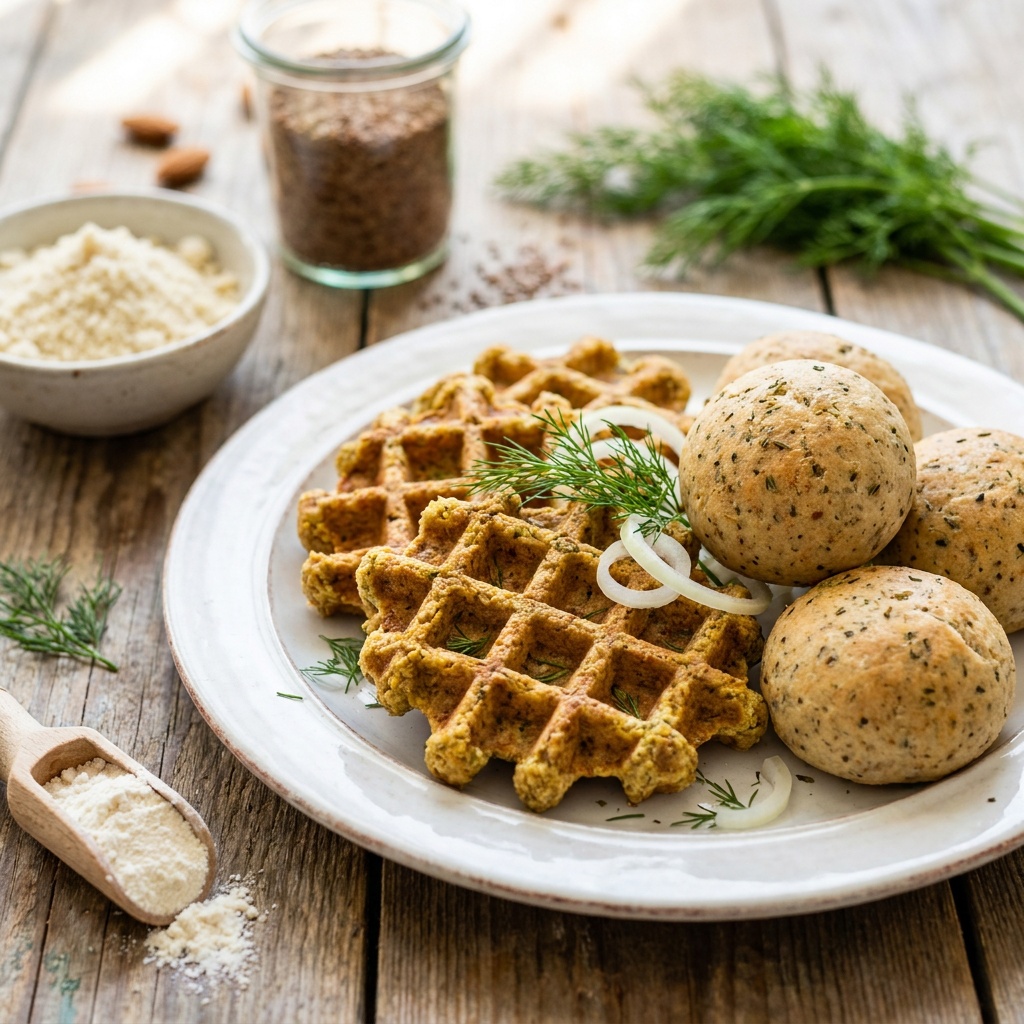
Raw Dill and Onion Waffles and Flatbreads

Share this article
Ingredients
Dry ingredients
- 100 g almond flour
- 30 g ground flaxseed
- 3 tablespoons raw coconut flour
- 2 tablespoons psyllium powder
- 2 teaspoons onion powder
- 2 teaspoons dried minced onion
- 1 and a half teaspoons sea salt
- 2 teaspoons garlic powder
- 1 teaspoon freshly ground black pepper
- 2 tablespoons and 2 teaspoons dried dill
Wet ingredients
- 2 cups moist almond pulp, well packed
- 120 ml water
- 80 ml almond milk
- 2 tablespoons fresh lemon juice
Method
- In a food processor fitted with the S-blade, combine the almond flour, ground flax, coconut flour, psyllium, dried minced onion, onion powder, salt, garlic and pepper. Pulse to combine, then transfer to a bowl and set aside.
- In the same processor bowl, combine the almond pulp, water, almond milk and lemon juice. Blend until fully incorporated. Depending on how moist your pulp is, add water one tablespoon at a time so the batter holds together.
- Add the dry ingredients to the wet ingredients and blend again until you get a smooth batter.
- For waffles, line the bottom plate of an unplugged waffle iron with cling film, spoon in about 150 ml of batter, spread gently to the edges, cover with a second sheet of film and close the appliance. Remove the top sheet, then lift the waffle by holding the edges of the bottom sheet and transfer it carefully onto the dehydrator tray. For flatbreads, simply shape the batter by hand.
- Dehydrate for 1 hour at 63°C: this first stage forms the outer crust.
- Lower to 45°C and continue for 4 to 6 hours. The bread should be neither doughy in the centre nor completely dried out.
Tip
How much batter you use per waffle depends on your appliance: too much overflows generously at the sides, too little doesn't fill the pattern properly. Keep these breads in an airtight box in the fridge, 3 to 5 days at most: the more moisture left inside, the shorter the shelf life. To warm them before serving, 5 to 10 minutes in the dehydrator at 63°C is enough.
The full range Sprouted seeds
46 products
Discover the full range

FAQ: your questions about dehydrators and flaxseed
What is the best food dehydrator?
Whichever one you'll actually use, which mainly depends on the volume you plan to dry and the space you have available. Stackable tray models are the cheapest and are fine for the occasional batch of fruit or crackers; horizontal drawer models, bulkier and pricier, dry much more evenly and accept full non-stick sheets, essential for liquid batters like this one. The non-negotiable point for raw cooking: a thermostat that can go down to 40-42°C.
How do you eat ground flaxseed?
Ground, it fits in everywhere: a spoonful in a plant-based yoghurt, a smoothie, a compote, a porridge, or in a batter like this one, where it acts as a binder. This is actually the form in which flax is most useful, since the whole seed often passes through the digestive tract without giving up much. One to two tablespoons a day is a reasonable benchmark, alongside enough water: flax is very high in fibre.
How do you make almond milk at home without soaking?
It's possible, but the result isn't the same. Without soaking, the almonds blend less finely, the milk is a little less creamy and the pulp yield changes; some people also digest it less well. If you're in a hurry, cover the almonds with very hot water for about twenty minutes, which softens them enough for a decent blend. For this recipe, where the pulp is what matters, a proper four-to-eight-hour soak gives a noticeably better texture.
Share this article