









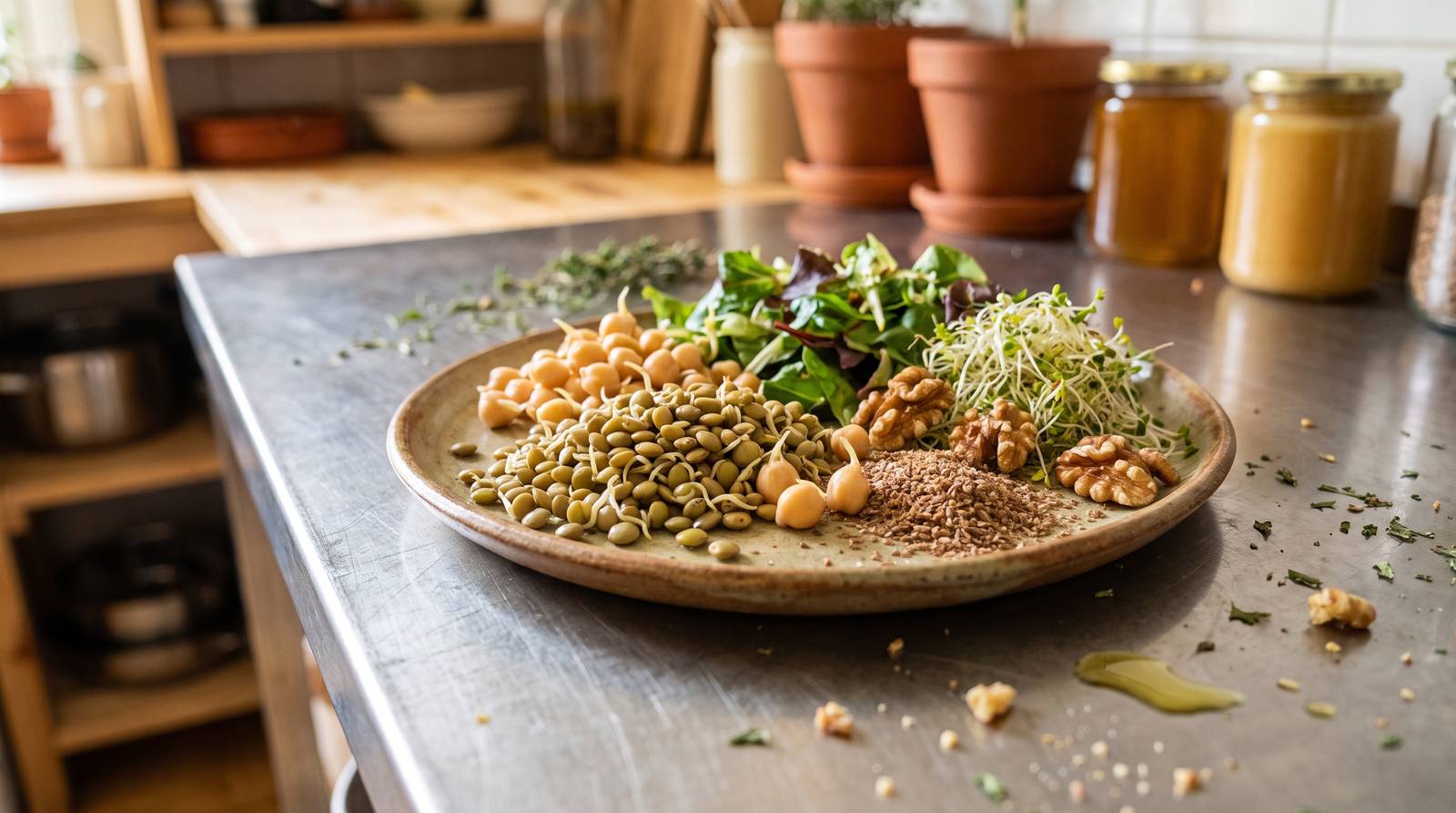
When it comes to vegan diet deficiencies, being vegan and being deficient don't necessarily go together. I actively campaign for the de-medicalization of this way of eating, partly because I'm fed up with the word deficiency being automatically tied to plant-based food. Anyway, a review of 141 studies finds inadequate intakes in all diets, meat included. Three nutrients deserve real attention: vitamin B12 (including in people who eat animals and animal products), to be supplied without exception given current scientific knowledge (supplement or fortified foods), then, depending on your profile, long-chain omega-3s (EPA and DHA) and iron.
"Vegan diet deficiencies": type these words (or "common vegan deficiencies and symptoms") into a search engine, and there you are facing lists of ten nutrients or more, each with its little red flag. Every year, 1 November is World Vegan Day: a good day to get started, and a very bad day to run into that kind of list.
Vegan diet deficiencies: what is really at stake
If you are vegan, vitamin B12 needs serious watching if there is neither a supplement nor fortified vegan foods. Among vegan vitamin deficiencies, it is the one that stands apart. Long-chain omega-3s (EPA, DHA) and iron may raise questions depending on your profile. Protein, for its part, is enough. Calcium, zinc and iodine are sorted out on the plate, provided you think about them. Three real subjects, then, and not ten.
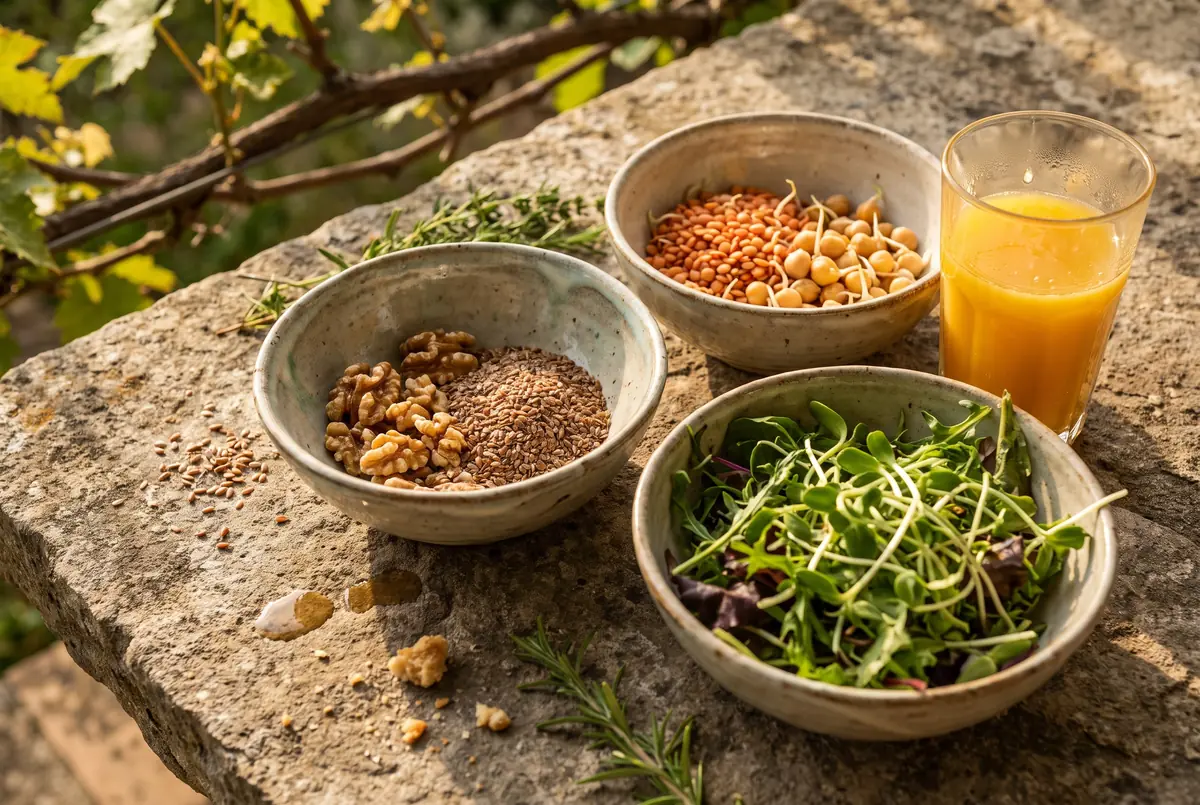
Where does this sorting come from? From a systematic review (Neufingerl and Eilander, 2021) that gathered 141 observational studies in adults, published between 2000 and January 2020. Twenty years of work put end to end: that's no bar-stool opinion. Among vegetarians and vegans, status is lower for vitamins B12 and D, iron, zinc, iodine and calcium.
What we hear much less about is the other half of the picture: meat eaters have inadequate intakes too, of fiber, ALA (a plant omega-3), folate, vitamins D and E, calcium and magnesium. So you can fall short of something while eating everything? Yes, really.
No diet is perfect by default. That's rather good news: everyone has something to add to their plate, at their own pace. The full table of the 10 essential nutrients is in another article; here, we prioritize, starting with the one point on which I don't compromise.
Vitamin B12: the one non-negotiable point
Why no plant source is 100% reliable
Vitamin B12 is not reliably found in any plant. It's a bit awkward to write when you've co-written an entire book on seaweed, but that's how it is: I don't count on them for my B12. Neither spirulina nor nori should be counted as reliable (and stable, in quantity) sources of vitamin B12. I went through the debate on nori and vitamin B12 in a dedicated article, if you want to dig deeper.
The figures from the EPIC-Oxford cohort (Gilsing et al., 2010) speak for themselves. In this cross-sectional study of 689 British men, with samples taken between 1994 and 1997, average serum B12 fell to 122 pmol/l in vegans, versus 182 in vegetarians and 281 in omnivores. Less than half the omnivores' level, then.
52% of vegan men were below 118 pmol/l, the deficiency threshold used, versus 7% of vegetarians and just one omnivore. More than one in two. And neither age nor how long they had followed the diet changed anything: this is not a matter of distracted beginners.
Of course, these data are old and only concern men, which is another subject for me: why does science so often study only men? But well, that's another debate. Still, the gap between the groups is far too clear to be taken lightly.
How much is needed, and in what form?
EFSA sets an adequate intake of 4 µg a day for adults, 4.5 µg during pregnancy and 5 µg during breastfeeding (EFSA, 2015). Four thousandths of a milligram a day: on a kitchen scale, almost nothing, a speck of dust. And that very speck is what's missing. A vegan B12 supplement or fortified foods, whose label you read, settle the question. If you are pregnant or breastfeeding, discuss the dose with your doctor or midwife.
Vitamin B12 contributes to the reduction of tiredness and fatigue and to normal red blood cell formation; it also contributes to the normal function of the nervous system (EU Regulation No 432/2012), as part of a varied and balanced diet and a healthy lifestyle. It is the only nutrient for which I see no alternative. On everything else, we can discuss. On this one, no.
Long-chain omega-3: ALA doesn't do it all
ALA, EPA, DHA: three different molecules
To understand omega-3s, I like to go through a carpentry workshop. The ALA in flax seeds, chia or walnuts arrives there as rough planks; EPA and DHA, the long-chain omega-3s, are the assembled furniture, ready to use. In between, there are workers, and those workers take their time.
Very slowly, in fact. In humans, the conversion of ALA into EPA and DHA hovers around 5 to 8%, according to a narrative review (Burns-Whitmore et al., 2019). Out of 100 planks entering the workshop, 5 to 8 come out as furniture. So the vegan omega 3 question is not settled with seeds alone.
The same review cites a study by Pinto and colleagues (2017): an omega-3 index of 2.71% in vegans, versus 5.42% in omnivores. Exactly half. Another review (Sanders, 2009) gives the key: ALA raises blood EPA, not DHA, whereas a little preformed DHA clearly raises it. In other words, delivering a few pieces of ready-assembled furniture works better than bringing ever more planks.
So, should we worry? No evidence of harm has been found in vegetarians with lower DHA, and the significance of this gap remains unknown (Sanders, 2009). A measured gap is not a demonstrated problem: it is a reason to look closely, not to panic.
Where to find ALA and DHA?
For ALA, everything is on the plate, which is rather pleasant: ground flaxseed, chia, hemp, walnuts, rapeseed and walnut oils. For preformed EPA and DHA, it's another story: the only plant source is microalgae oil. EFSA sets an adequate intake of 250 mg a day of EPA and DHA for adults (EFSA, 2010), a quarter of a gram.
Only one claim applies: EPA and DHA contribute to the normal function of the heart, the beneficial effect being obtained with a daily intake of 250 mg of EPA and DHA (EU Regulation No 432/2012). It holds as part of a varied and balanced diet and a healthy lifestyle.
Storing ground seeds and walnuts well
A word on storage, because ground seeds and walnuts don't forgive carelessness. I know something about it: at one point, we stored bags of walnuts and almonds under the sofas, in duvet storage bags vacuum-sealed with a vacuum cleaner. On paper, the idea seemed clever. In real life, not really: rancidity, rodents, hassle. Today, I buy 5 kilos at a time.
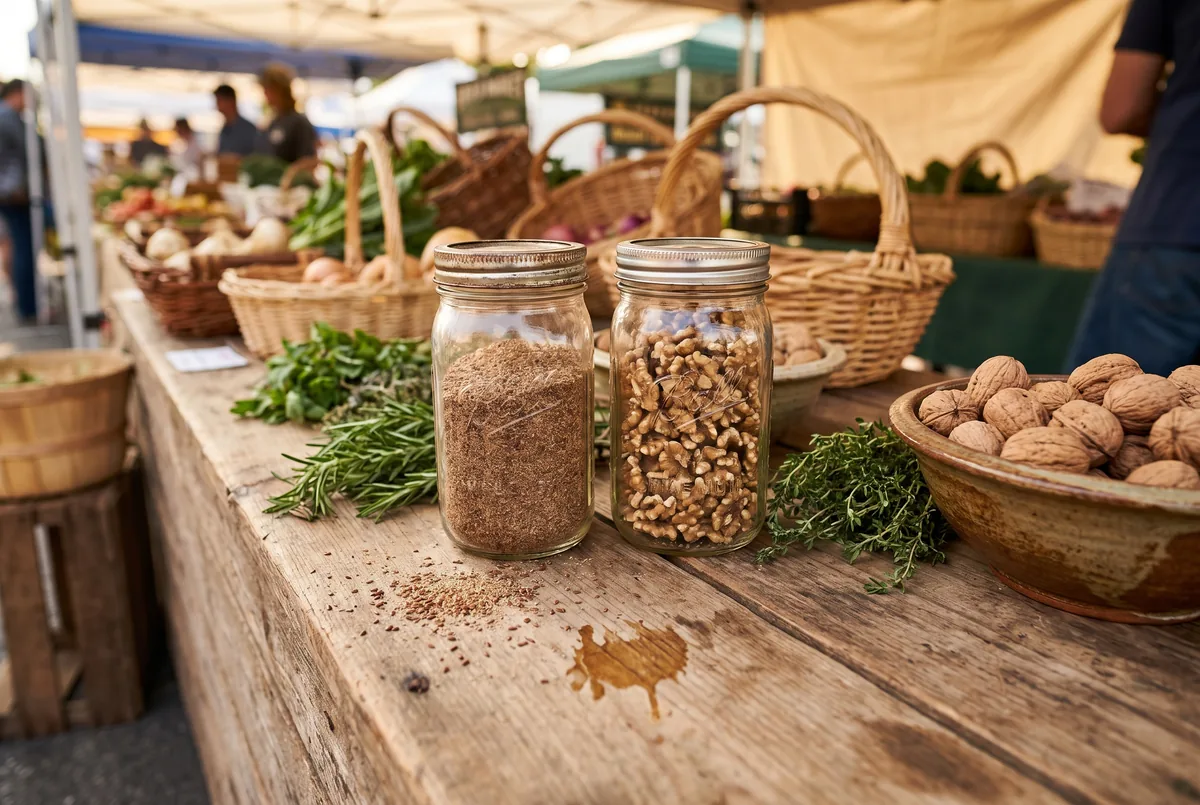
For already-ground seeds and walnuts, I recommend vacuum-sealing in a glass jar and/or grinding to order only, to avoid rancidity. The complete BocUp kit reproduces in miniature what industrial producers do: a bell, a small manual pump, and that's all, no electricity or plastic bag, on the glass jars you already have, if they have "shoulders" and a 65 or 84 mm lid. Dry foods stay protected from humidity and moths this way. Vacuum does not replace the fridge or the freezer, and it does not sterilize.
I went through the advantages of vacuum sealing at home in a dedicated article, if you want to go further.
Iron: a subject that depends on your profile
Iron deficiency on a vegan diet is a worry, and not without reason: the review of 141 studies does find a lower iron status in vegetarians and vegans (Neufingerl and Eilander, 2021). But here, more than anywhere, it all depends on who you are.
EFSA sets a reference of 16 mg a day for a pre-menopausal woman (average requirement 7 mg), versus 11 mg for a man or a post-menopausal woman (average requirement 6 mg) (EFSA, 2015). It assumes an absorption of 18% in pre-menopausal women and 16% in other adults. Keep the order of magnitude in mind: less than a fifth of the iron on the plate actually gets into the body. Menstruating women are the profile to watch first.
We are not what we eat, but what we absorb, and iron shows it well.
On the plate, two very simple moves: combine legumes and vitamin C-rich vegetables in the same meal, and keep tea and coffee away from meals. I go into the link between iron deficiency and fatigue in another article. Iron contributes to normal oxygen transport in the body and to the reduction of tiredness and fatigue (EU Regulation No 432/2012), as part of a varied and balanced diet and a healthy lifestyle.
Rather than taking iron at random, have your ferritin measured by your doctor: they will tell you whether there is an issue. If you are pregnant, take the question directly to your healthcare professional.
Protein, calcium, zinc, iodine: one false subject and three plate subjects
Protein: the false subject
It's almost always the first question asked of a vegan, at the table, before dessert even: "But where do you get your protein?" And yet it's the least worrying of all. According to a review of 141 studies, vegans' protein intakes are lower than those of meat eaters, but remain within the recommendations (Neufingerl and Eilander, 2021). Legumes, cereals and sprouted seeds every day do the job, no calculator needed.
Calcium, zinc, iodine: to build into your plate
The same review finds lower status in calcium, zinc and iodine in vegans. Nothing alarming, but nothing to ignore either. These three are settled through food choices, provided you plan ahead for them. For iodine, iodized salt; for calcium, waters and foods rich in or fortified with calcium; for zinc, legumes and oilseeds.
I dug into the real iodine risk in France in another article. Vitamin D, for its part, concerns everyone: its status is lower in vegans, but intakes are also inadequate in meat eaters, so it's one to discuss with your doctor.
As part of a varied and balanced diet and a healthy lifestyle, here is how I sum up the sorting of vegan deficiencies:
| Nutrient | A real subject? | Who to watch | Practical lead |
|---|---|---|---|
| Vitamin B12 | Yes, without exception | Everyone | Supplement or fortified foods, from day one |
| EPA and DHA | Yes | Everyone | ALA every day, microalgae oil for DHA |
| Iron | Depends on the profile | Pre-menopausal women | Legumes and vitamin C in the same meal, ferritin test with your doctor |
| Protein | No, false subject | No one in particular | Legumes, cereals, sprouted seeds |
| Calcium | Plate subject | Everyone | Waters and foods rich in or fortified with calcium |
| Zinc | Plate subject | Everyone | Legumes and oilseeds |
| Iodine | Plate subject | Everyone | Iodized salt |
Meat substitutes: handy, but not equivalent
I won't turn my nose up at them: meat substitutes are useful, on a very occasional basis. On a tired evening, for an improvised meal, they help out nicely. But what do they really contain? An Australian audit (Curtain and Grafenauer, 2019) went through 137 of them, in 4 Sydney supermarkets. Only about 1 product in 5 was fortified with B12, iron or zinc. A small clarification from a slightly maniacal engineer: the study's abstract states 24% for B12, 20% for iron and 18% for zinc, but its results table gives 20%, 24% and 18%, the B12 and iron values being swapped from one part to the other. Hence this rounded order of magnitude.
On protein, the comparison is less flattering than you might imagine. Per 100 g, the plant burger provided 9.7 g of protein against 15.4 g for the meat burger, and the plant mince 13.7 g against 25.1 g, roughly half. And then there's the salt. The plant mince also contained 401 mg of sodium per 100 g, against 64 mg for the meat mince, more than six times as much.
Of course, these figures apply to the Australian market of 2019, not necessarily to your shelves today. The reflex, though, doesn't change. Read the label, don't count on these products for B12 or zinc, and keep legumes and unprocessed foods as your base.
Where to start: the checklist for the first weeks
To avoid vegan diet deficiencies, there's no need to turn everything upside down at once, and even less to empty your cupboards on a Saturday morning. We add rather than remove, and everyone moves at their own pace. The first step is a low one: take your B12 starting today, with no equipment and no recipe. The rest follows, week after week.
- B12 from day one, through a supplement or fortified foods (like the excellent Violife vegan cheese).
- ALA every day (ground flax in a smoothie, a few walnuts), and the question of algae DHA.
- Iron according to your profile, but there, seaweeds are an excellent contribution.
- Seawater or foods rich in or fortified with calcium.
- A blood test with your doctor after a few months, to see where you stand.
And for the complete path, I explain elsewhere how to become vegan in a few steps. As part of a varied and balanced diet and a healthy lifestyle, these few moves, made one at a time, turn an anxiety-inducing list into a quiet routine.
I hope that in a few years, people will finally ask vegans about their B12 rather than their protein. And if you have beginner's questions, write to me: as I told you at the start, they are the most precious ones.
Frequently asked questions
What are the benefits of plant-based omega-3s?
Plant-based omega-3s mainly provide ALA, which the body converts only a little into EPA and DHA. For these last two, the only authorized claim is the following: EPA and DHA contribute to the normal function of the heart, the beneficial effect being obtained with a daily intake of 250 mg of EPA and DHA.
Which foods rich in omega-3 for breakfast?
Ground flaxseed, chia seeds and walnuts are the easiest to add at breakfast, on a bowl of fruit or in a smoothie. They provide ALA, whose conversion into EPA and DHA hovers around 5 to 8% in humans: so on their own, they don't cover the needs for EPA and DHA.
How to get DHA when you're vegan?
Microalgae oil is the only plant source of preformed DHA. A 2009 review indicates that small amounts of preformed DHA clearly raise blood DHA, whereas the ALA in seeds raises EPA but not DHA. The EFSA reference is 250 mg a day of EPA and DHA for adults.
Is plant-based omega-3 as good as animal-based omega-3?
It all depends on the form. The ALA in seeds raises blood EPA but not DHA, according to a 2009 review. DHA from microalgae, on the other hand, is the same molecule as the one in fish: so it is the plant-based answer to animal-based omega-3.
Which vitamins should you take when you no longer eat meat?
Vitamin B12 first, without exception if you no longer eat any animal product: EFSA sets an adequate intake of 4 µg a day for adults, through a supplement or fortified foods. Vitamin D is one to discuss with your doctor, as for anyone, since intakes are also insufficient in meat eaters.
Can a vegetarian diet cause anemia?
It doesn't necessarily cause it, but iron status is lower in vegetarians and vegans, according to a review of 141 studies. Pre-menopausal women are the most concerned, with a reference of 16 mg a day according to EFSA. A ferritin test with your doctor lets you know where you stand.
Which form of omega-3 should you choose as a vegan?
A source of EPA and DHA from microalgae, in oil form, on top of the ALA from flax seeds, chia and walnuts. EFSA sets an adequate intake of 250 mg a day of EPA and DHA for adults; the dose is read on the label, and discussed with your doctor if needed.
References
- Neufingerl N., Eilander A. (2021). Nutrient Intake and Status in Adults Consuming Plant-Based Diets Compared to Meat-Eaters: A Systematic Review. Nutrients, 14(1), 29.
- Gilsing A.M.J., Crowe F.L. et al. (2010). Serum concentrations of vitamin B12 and folate in British male omnivores, vegetarians and vegans: results from a cross-sectional analysis of the EPIC-Oxford cohort study. European Journal of Clinical Nutrition, 64(9), 933-939.
- EFSA Panel on Dietetic Products, Nutrition and Allergies (NDA) (2015). Scientific Opinion on Dietary Reference Values for cobalamin (vitamin B12). EFSA Journal, 13(7), 4150.
- EFSA Panel on Dietetic Products, Nutrition and Allergies (NDA) (2015). Scientific Opinion on Dietary Reference Values for iron. EFSA Journal, 13(10), 4254.
- EFSA Panel on Dietetic Products, Nutrition and Allergies (NDA) (2010). Scientific Opinion on Dietary Reference Values for fats, including saturated fatty acids, polyunsaturated fatty acids, monounsaturated fatty acids, trans fatty acids, and cholesterol. EFSA Journal, 8(3), 1461.
- Sanders T.A.B. (2009). DHA status of vegetarians. Prostaglandins, Leukotrienes and Essential Fatty Acids, 81(2-3), 137-141.
- Burns-Whitmore B., Froyen E., Heskey C., Parker T., San Pablo G. (2019). Alpha-Linolenic and Linoleic Fatty Acids in the Vegan Diet: Do They Require Dietary Reference Intake/Adequate Intake Special Consideration? Nutrients, 11(10), 2365.
- Curtain F., Grafenauer S. (2019). Plant-Based Meat Substitutes in the Flexitarian Age: An Audit of Products on Supermarket Shelves. Nutrients, 11(11), 2603.
- Commission européenne (2012). Règlement (UE) n° 432/2012 de la Commission du 16 mai 2012 établissant une liste des allégations de santé autorisées. Journal officiel de l'Union européenne, L 136.
Updated: November 2026. Article written and validated by Éric Viard, founder of Biovie since 2007 and ISTOM engineer, co-author of "Algues au quotidien" (Gallimard, 2024), Best Cookbook in the World, Gourmand Cookbook Awards 2025, and Best Cookbook in France, Académie Nationale de Cuisine 2025.
The information presented in this article is provided for information purposes only and does not constitute medical advice. Consult a healthcare professional before making any change to your diet or supplementation.