


One in five French women of childbearing age is iron deficient. The fatigue that sets in, shortness of breath at the slightest hill, ridged or brittle nails, mental fog: you might know these signals all too well. And the cause is often the same - your body is not receiving enough absorbable iron.
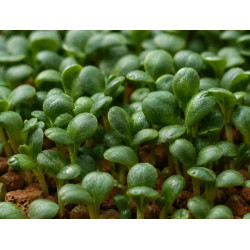
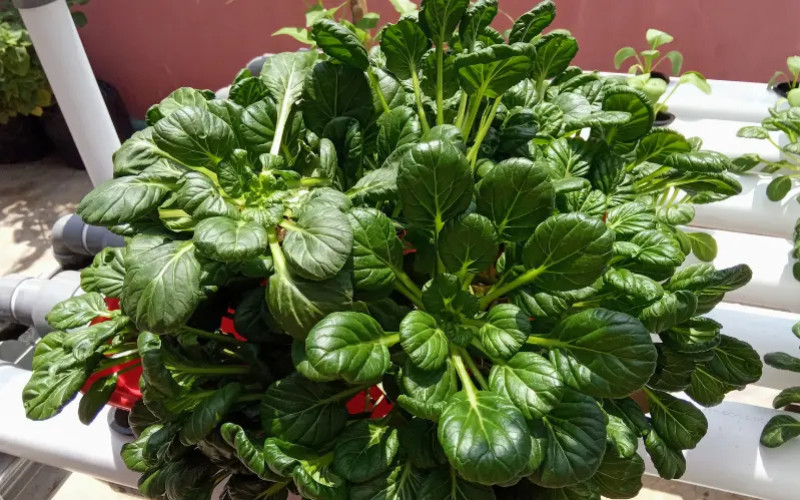
Here's the good news. Tatsoi, an Asian sprout from the brassica family, contains both non-heme iron (1.5 to 1.8 mg/100 g), a remarkable dose of vitamin C (45 to 130 mg/100 g), and folate, which is vitamin B9. Three nutrients that complement each other in a single food. This equation is rare among green vegetables, and it has a direct consequence: vitamin C helps increase iron absorption(*) - and tatsoi offers you both in the same bite.
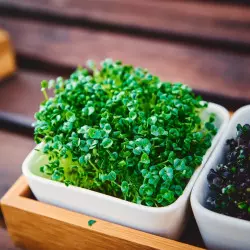
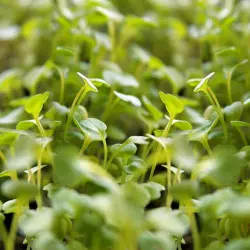
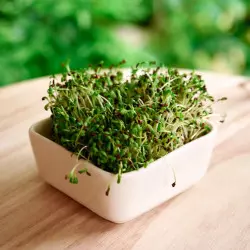
Growable at home in seven to ten days in a sprouter for young shoots, living tatsoi makes what was long thought complicated simple: replenishing your iron intake, at your own pace, in your kitchen.
Why are 20% of French women iron deficient?
When ANSES publishes its figures on iron deficiency in France, we tend to overlook them. Wrongly so. Because behind these percentages are entire lives being exhausted - women dragging themselves to work, not recognizing themselves, attributing their fatigue to stress, sleep, or screens. Yet there is often a very concrete and measurable physiological cause.
Iron Deficiency in Numbers: What ANSES Data Reveals
The French data is telling. According to the SU.VI.MAX study and ANSES's work, 20 to 25% of women of childbearing age are iron deficient. The biological deficiency threshold (ferritin level below 15 µg/L) is reached in 5.1% of French adults. And among pregnant women, it's even more pronounced: 54 to 77% are iron deficient, and 9 to 30% have confirmed iron deficiency anemia.
Here's another figure that struck me while preparing this article with Aurélie: only 8% of women consume the recommended daily intake of iron. In other words, 92% of them fall below official recommendations. Not out of negligence. Due to a lack of foods that are both rich in iron AND whose iron is truly absorbable.
Why Women Are Particularly Affected
Biology is what it is. Menstrual losses lead to a significant monthly iron loss. Pregnancy increases needs by 1.8 times. Breastfeeding also draws on reserves. The recommended daily intakes (RNP, ANSES 2021) reflect these realities:
- Adult men: 11 mg/day
- Women of childbearing age: 16 mg/day
- Pregnant women in the third trimester: 20 mg/day
- Postmenopausal women: 11 mg/day
In practical terms, a woman before menopause needs 45% more iron than a man of the same age. And this is precisely where the problem lies: most plant foods contain non-heme iron, whose absorption is low if the right dietary habits are not adopted.
The Most At-Risk Groups in France
Here's the list of those I advise to monitor their ferritin levels as a priority - a simple blood test:
- Women of childbearing age, especially if periods are heavy
- Pregnant and postpartum women
- Adolescents in full growth
- Endurance athletes (losses due to micro-digestive bleeding are real)
- Vegetarians and vegans poorly advised (poorly advised, not poorly nourished - the nuance matters)
- People suffering from digestive diseases (celiac disease, IBD) that impair intestinal absorption
- Menopausal women with unexplained fatigue - a point often forgotten, to be explored in menopausal women also concerned
If you recognize yourself, first step: have your ferritin levels tested. Not just your serum iron (which varies throughout the day), but ferritin. And ideally, also request the transferrin saturation coefficient. It's free, it's covered, it's valuable.

How to recognize an iron deficiency? Signals not to ignore
When iron levels drop, the body doesn't send just one signal. It sends several, and they often settle in so slowly that we get used to them. It's the classic trap.
Chronic fatigue and shortness of breath: the first signals
Iron contributes to the normal transport of oxygen in the body(*). When it is lacking, cell oxygenation decreases. Result: fatigue that is not relieved by sleep, disproportionate shortness of breath - you climb two flights of stairs and you're exhausted even though you're 32 years old. These are the two earliest signals, and the most systematically minimized.
A naturopath friend in Lyon (whom I've known since around 2017) recently told me: "80% of women who come to see me for chronic fatigue have ferritin below 30 µg/L." Anecdotal? Maybe. But it also corresponds to what I've seen in Biovie training for years.
Visual symptoms: nails, hair, skin
The body draws from its reserves in a well-established order of priority: first vital functions, then "cosmetic" functions. When iron levels drop, it's the nails, hair, and skin that speak first - and often last to be listened to:
- Vertically ridged, split, brittle nails
- Diffuse hair loss (different from classic seasonal shedding)
- Pale skin, particularly the conjunctiva of the eye and the inside of the lower eyelid
- Dry lips, angular cheilitis
- Black line on the nail (advanced sign, should be examined)
Iron contributes to the normal formation of red blood cells and hemoglobin(*). And hemoglobin is the pigment that colors the blood. When it decreases, paleness sets in.
Mental fog and concentration
Here's a symptom rarely associated with iron, yet it should be a warning. Iron contributes to normal cognitive function(*). When lacking: difficulty concentrating, feeling of a "veil" in the head in the middle of the afternoon, losing track in conversations, faltering working memory.
I've had this discussion several times with thirty-something executives in training: "I thought it was burnout coming." Sometimes it's burnout. Often, it's also ferritin at 12 µg/L.
When to consult and what assessment to request
If you have two or three of the above signals for more than two months, make an appointment with your doctor. Request this minimum assessment:
- Serum ferritin: reserve marker
- Hemoglobin: marker of declared anemia
- Transferrin saturation coefficient: transport marker
- Complete blood count: for context
Do not start self-supplementing with iron without this assessment - an excess of iron is anything but trivial. For the nutritional strategy, however, you can act immediately. And that's precisely where tatsoi comes into play.
Heme Iron vs Non-Heme Iron: What We Often Forget
If you were to remember only one thing from this article, it would be this. Everyone talks about iron as if it were a single entity. In reality, there are two dietary forms, and their fate in your intestine is radically different.
The Two Forms of Dietary Iron and Their Absorption Rates
- Heme Iron (animal origin: meat, fish, offal): absorbed between 15 and 35%
- Non-Heme Iron (plant origin: vegetables, legumes, cereals, algae) without cofactor: absorbed between 0.8 and 5%
- Non-Heme Iron with 25 mg of Vitamin C: absorption at 2.9%
- Non-Heme Iron with 1,000 mg of Vitamin C: absorption at 7.1% - a ninefold increase (Pan et al., Antioxidants 2024)
Pay close attention to these numbers. Plant-based iron without a cofactor is three to ten times less absorbed than animal iron. But with a sufficient dose of Vitamin C, the gap narrows considerably. Tatsoi exploits exactly this mechanism - it provides both.
The Cellular Mechanism: The Enzyme That Changes Everything
Here is the section that may seem technical but changes the way we see things. Stay with me for a few lines.
Plant-based iron naturally exists in the ferric form (Fe³⁺). And in this form, your intestine cannot pass it into the blood. For it to enter, it must first be reduced to ferrous iron (Fe²⁺), the only form that the intestinal transporter - called DMT-1 - can pass through the enterocyte wall.
This reduction Fe³⁺ → Fe²⁺ is ensured by an enzyme located on the surface of intestinal cells: the duodenal cytochrome b. And the main cofactor of this enzyme is ascorbic acid. Vitamin C, in other words.
In practical terms: without Vitamin C in the food bolus, plant-based iron remains largely blocked at the door. With Vitamin C, it enters. It's as simple and mechanical as that.
Why Plant-Based Iron is Underestimated
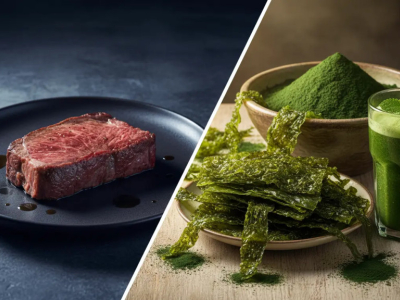
Because for a long time, we compared contents and absorption rates without considering cofactors. A large part of French nutritional culture remains obsessed with black pudding and liver. However, if you add the right cofactor in the same meal - a kiwi, an orange, a raw pepper, a portion of tatsoi - non-heme iron becomes much more assimilable. To delve deeper into this point, I refer you to our article on algae that beat red meat in iron.
Why Tatsoi is the Most Effective Sprout Against Iron Deficiency
Here is an article that has been close to my heart since Aurélie started incorporating tatsoi into our daily salads, four or five years ago. At first, it was a curiosity. Today, it's a reflex.
Tatsoi: Nutritional Profile per 100 g
Tatsoi (Brassica rapa subsp. narinosa) is a cousin of pak choi and Chinese cabbage. Its nutritional profile per 100 g of raw sprouts:
- Iron: 1.5 to 1.8 mg (9 to 10% of the RDI for an adult)
- Calcium: 105 to 210 mg (15 to 21% of the RDI)
- Vitamin C: 45 to 130 mg (40 to 118% of the RDI - depending on the stage of the sprout and the cultivation method)
- Vitamin K: 220 µg (293% of the RDI)
- Vitamin A: equivalent to ~165% of the RDI
- Folate (Vitamin B9): present in notable quantity
- Glucosinolates (sinigrin, gluconasturtiin): bioactive compounds specific to brassicas
- Oxalates: low, and this is a major advantage that I will return to later
A foodomics study published in Scientific Reports in 2025 documented 526 volatile compounds, 1,475 metabolites, and 113 active compounds in tatsoi (Zhang et al., 2025). For a leaf that is so little known in France, it's a remarkable chemical biodiversity.
Why Young Sprouts Are 2 to 3 Times Denser Than Mature Leaves
Here's an argument you rarely hear, and it makes all the difference. In a young sprout, the plant concentrates its nutritional resources for growth. It's a period of metabolic excitement.
A landmark study (Xiao et al., USDA, Journal of Agricultural and Food Chemistry 2012) showed that microgreens contain up to 40 times more vitamin E and 6 times more vitamin C than their mature leaf counterparts. A subsequent review (Choe et al., 2018) confirmed this nutritional density to be 2 to 3.5 times higher than that of mature spinach.
In practical terms: 50 g of young tatsoi sprouts provide the nutritional equivalent of about 150 to 175 g of mature leaves. It's more cost-effective, more digestible, and quicker to incorporate into a dish.
Tatsoi vs. Spinach: Why It's Better Assimilated
Spinach has long been the unjust hero of iron - you know the story of Popeye and the misplaced comma that multiplied its iron content tenfold in 19th-century nutritional tables. Well. Beyond this anecdote, spinach has a real problem: it is extremely rich in oxalates.
Oxalates chelate iron in the intestine. In other words, they bind to it and prevent absorption. So, you consume a food rich in iron (2.7 mg/100 g)… most of which doesn't get absorbed. Tatsoi, on the other hand, is both less concentrated in oxalates and accompanied by its own vitamin C. As a result, the amount of iron actually absorbed is significantly higher than that of spinach, for an equivalent portion.
The Triple Natural Synergy of Tatsoi: Iron + Vitamin C + Folate
This is where I want to share what I find truly remarkable about this sprout. Not just one nutrient of interest. Three. Which amplify each other.
Vitamin C, Cofactor of Non-Heme Iron
As mentioned earlier: vitamin C helps increase iron absorption(*). And the extent is impressive. Depending on the dose ingested in the same meal, non-heme iron absorption can be multiplied by 9 (Pan et al., 2024).
But here's the crucial point. This vitamin C must be present in the same food bowl as the iron. Not two hours before, not two hours after. At the same time. With tatsoi, you have it naturally - no need to add a kiwi, the vegetable carries its own cofactor.
The Role of Folate in Red Blood Cell Formation
Folate (vitamin B9) contributes to normal blood formation(*). It plays a direct role in the production of red blood cells. And since these red blood cells carry iron, you immediately understand the benefit of combining the two nutrients.
For pregnant women and those wishing to become pregnant, vitamin B9 is also recommended by all health authorities. Young tatsoi sprouts are a natural source, to be integrated as part of a varied diet.
A Rare Dietary Equation Among Green Vegetables
Ask yourself: how many plant foods simultaneously provide absorbable iron, its absorption cofactor (vitamin C), and the partner nutrient for red blood cell production (folate) - without excess oxalates that sabotage it all?
The list is very short. Tatsoi ranks very high on it. Sprouted broccoli too. Seaweeds like dulse - see our article on dulse, the forgotten seaweed for women - offer a different but complementary logic.
How to Incorporate Tatsoi into Your Daily Diet?
Well. Theory is good. Practice is better. Here's how I incorporate it, and how Aurélie works with it in the kitchen.
What Quantity Per Day for Visible Effects
30 to 50 g of fresh young sprouts per day, equivalent to a good handful. Always raw - or just warm at the end of cooking, to preserve the vitamin C, which is heat-sensitive.
At this dosage, you provide about 0.5 to 0.9 mg of non-heme iron, accompanied by 15 to 65 mg of vitamin C in the same bite. It's modest on its own, but taken daily, in addition to other iron-rich foods (legumes, seaweed, seeds), it contributes to a regular and well-absorbed intake.
5 Simple Ways to Eat Raw Tatsoi
- As a base for a mixed salad, replacing baby spinach leaves
- Chopped on a sourdough avocado toast
- In a green smoothie with kiwi (which provides even more vitamin C)
- As a topping for a warm quinoa bowl
- In a raw pesto, blended with activated nuts, garlic, and olive oil
Trying it is adopting it - and the flavor of raw tatsoi is surprisingly mild, slightly nutty, much less bitter than arugula.
3 Recipe Ideas: Morning, Noon, Evening
Morning - Morning Bowl. Coconut yogurt, a handful of chopped raw tatsoi, a cubed kiwi, a tablespoon of sprouted chia seeds, a level teaspoon of organic spirulina (about 3 g). A squeeze of lemon on top. Start the day with a concentrated dose of iron and vitamin C.
Noon - Living Salad. 50 g of tatsoi sprouts, an orange in segments, half an avocado, a tablespoon of sprouted pumpkin seeds, tahini-lemon-linseed oil dressing.
Evening - Raw Tatsoi Pesto on Warm Quinoa. 100 g of raw tatsoi, 30 g of activated nuts, garlic, lemon, olive oil, pinch of salt. Blended. Served on warm quinoa (not hot, warm - vitamin C does not withstand intense heat) and steamed broccoli. Serves four.
Growing Your Own Tatsoi at Home with a Sprouter: The Game-Changing Gesture
This is the part that touches me the most, personally. Growing your own iron at home means taking control of your food autonomy. Not a slogan - a daily reality in our kitchen for years.
Why Grow Your Own Sprouts at Home
Three concrete reasons:
- Maximum Freshness. Store-bought sprouts have already lost some of their vitamin C during transport. At home, you harvest just before eating.
- Very Low Cost. A packet of sprouting seeds costs a fraction of the price of fresh sprout trays in organic stores.
- Independence. You no longer wait for the store shelf. You produce at your own pace, in 0.5 m² of counter space.
Personally, I've had an EasyGreen sprouter on my kitchen counter for almost twelve years. It accompanies me every morning while I prepare my tea. Small ritual, big nutritional impact.
The EasyGreen Sprouter: How It Works
The EasyGreen sprouter is an automated watering system that ensures constant humidity for the seeds, without manual intervention. You fill the reservoir, add the seeds. The system irrigates on its own at regular intervals, and you harvest your sprouts in seven to ten days depending on the varieties.
Yes, it's an initial investment. But it quickly pays off if you regularly consume young sprouts, and it ensures consistent quality. For a complete guide, I refer you to our complete guide to sprouted seeds.
The EasyGreen sprouter is more suited for sprouted seeds; for young sprouts, we offer a specific "microgreens" sprouter: