Fast delivery
.png)
 Fair prices


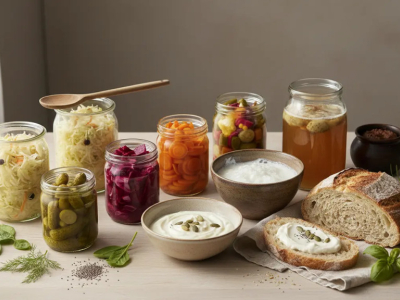

Summary
With Aurélie, we consume some fermented foods daily for years, and frankly, it's one of the dietary changes that has most transformed our digestive comfort. But beyond our personal experience, it is the recent scientific discoveries that convinced me to share this comprehensive guide with you.
You may experience bloating after meals, slow digestion, or that feeling of unexplained fatigue? These signals that your body is sending you now probiotiques. These foods deserve an answer, and that answer might well be found on your plate, thanks to foods that our ancestors naturally consumed: fermented foods rich in probiotics. natural probiotics for gut flora.
In 2021, a major study from Stanford University, published in the prestigious journal Cell, demonstrated something remarkable: after only 10 weeks of regular consumption of fermented foods, participants saw their microbial diversity increase significantly and 19 inflammatory markers decrease. These results have caused a small revolution in the world of nutrition.
Specifically, in this article, I present to you the complete list of 15 fermented foods the most beneficial for your gut flora, with practical tips for easily incorporating them into your daily routine and improve your digestion naturally.
What is a fermented food ?
Before diving into the heart of the matter, let's take a moment to understand what really happens in a fermented food. It's fascinating, and it will help you make the right choices.
Lactic fermentation explained simply
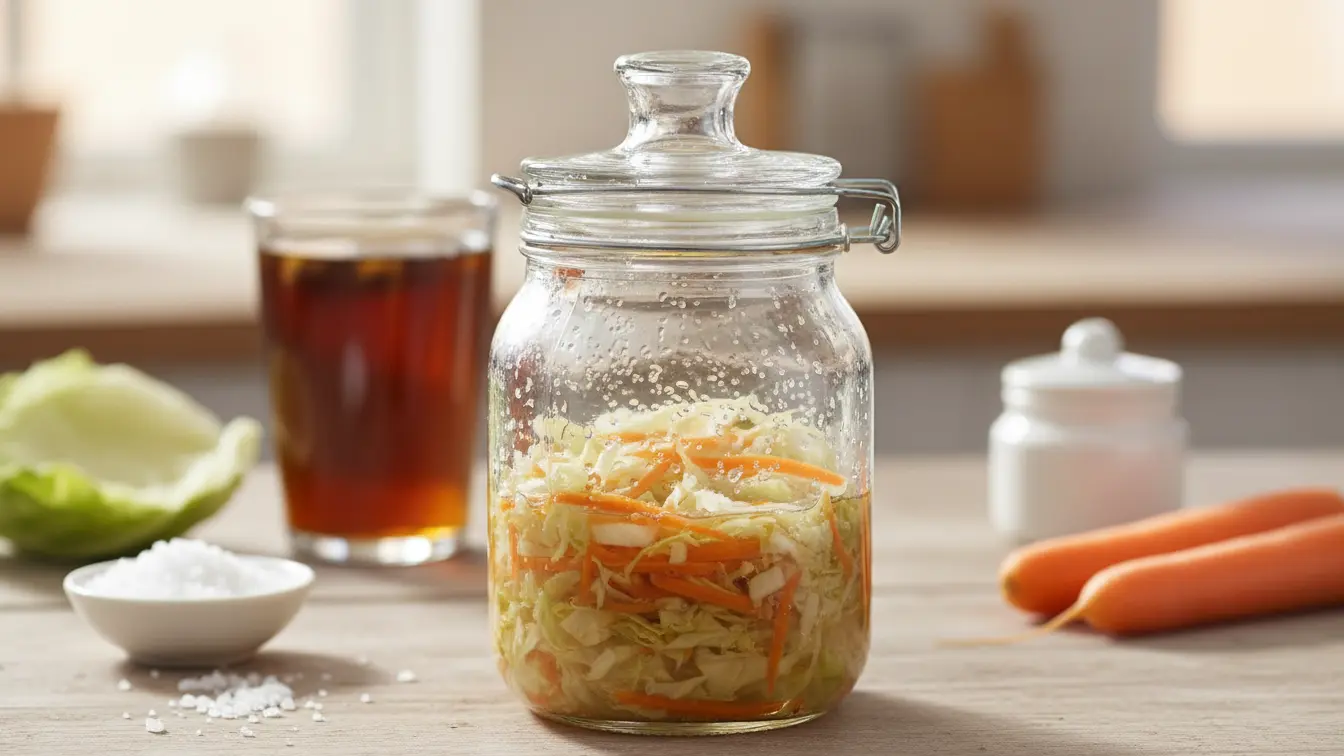
The Lactic fermentation is a natural process as old as the world. Bacteria or yeasts transform the sugars present in a food into lactic acid, alcohol, or carbon dioxide. This is what gives yogurt its acidity, to the raw sauerkraut its characteristic crunch, and kombucha its small bubbles.
Our ancestors used fermentation to preserve their food long before the invention of the refrigerator. What they didn't know was that they were simultaneously creating true concentrations of microbial life beneficial to their bodies.
The process is simple: you take a food item (cabbage, milk, tea), create favorable conditions for the development of good bacteria, and let the magic happen. In a few days or weeks, the food transforms, develops new flavors, and most importantly, becomes rich in living microorganisms. This is the principle of homemade lactic fermentation, accessible to everyone.
Live probiotics: the key to effectiveness
And this is where the crucial point lies, the one that many people overlook: to benefit from the advantages of fermented foods, they must contain some live probiotics.
A pasteurized fermented food, like canned sauerkraut from the supermarket, has lost its beneficial bacteria. Pasteurization, which heats the food to preserve it longer, unfortunately destroys the microorganisms. That's why I always recommend opting for raw, unpasteurized versions, or better yet, making your own. lacto-fermented foods at home.
At Biovie, we offer kefir grains and lactic ferments precisely to allow you to create your own living fermented foods, with the guarantee of active probiotics.
The scientifically documented benefits of fermented foods
I could talk to you for hours about the benefits we have personally observed with Aurélie. But I prefer to rely on what science has demonstrated, as it is more solid and more useful for you.
What the 2021 Stanford study reveals
This study, conducted by professors Justin Sonnenburg and Christopher Gardner, remains the reference in the field. Here is what they observed about 36 healthy adults for 10 weeks :
The protocol was simple. : one group consumed 6 servings of fermented foods per day (yogurt, kefir, kimchi, sauerkraut, kombucha, fermented vegetables), while the other group followed a high-fiber diet.
The results surprised the researchers themselves. :
- The diversity of gut microbiota increased significantly in the "fermented" group
- 19 inflammatory proteins, including interleukin 6, have decreased
- 4 types of immune cells were less activated (a sign of reduced inflammation)
- The "fiber" group, although considered beneficial, did not show these improvements.
Professor Sonnenburg said about these results: It is one of the first examples showing how a simple dietary change can reproducibly reshape the microbiota in healthy adults..
Support for digestive function
Your gut hosts approximately 100 trillion bacteria. Yes, you read that right: one hundred trillion. This ecosystem, called the microbiota, plays a fundamental role in your digestion.
Fermented foods provide beneficial bacteria that can contribute to the balance of this gut flora. Strains like Lactobacillus plantarum (present in kimchi and sauerkraut) or Lactobacillus rhamnosus GG (in certain yogurts and kefirs) have been the subject of numerous studies.
Specifically, people who regularly consume fermented foods often report a reduction in bloating, more regular bowel movements, and better tolerance to certain foods. This is exactly what we have observed with Aurélie over the years — a natural way toimprove digestion naturally.
Contribution to the normal functioning of the immune system
Here is a piece of data that particularly struck me when I discovered it: 70 to 80% of our immune cells are found in our intestines. This means that the health of our gut flora is directly linked to our natural defenses.
Fermented foods, by contributing to the balance of the microbiota, play a role in the normal functioning of the immune system. It is no coincidence that food traditions around the world include fermented foods, from German sauerkraut to Korean kimchi, and Caucasian kefir.
The gut-brain axis
One last fascinating point: did you know that 90% of serotonin, the neurotransmitter involved in mood regulation, is produced in the gut? Research on the gut-brain axis shows that our microbiota influences our mental well-being much more than previously thought. Another reason to take care of your gut microbiota through diet.
The complete list of the 15 best fermented foods
Let's now move to the heart of the matter. I have selected these 15 foods based on their richness in probiotics, their accessibility, and their overall nutritional interest. This list of fermented foods covers all categories so that everyone can find something for themselves.
Fermented drinks
1. Milk kefir
It's my favorite, by far. The milk kefir contains more than 30 different strains of beneficial bacteria and yeasts, compared to only 2 to 3 for a regular yogurt. This exceptional diversity makes it a true champion for your gut flora. That's why the comparison kefir vs yogurt largely turns in favor of kefir in terms of probiotic richness.
The taste is slightly acidic and sparkling. You can consume it plain, add it to your smoothies, or use it as a base for your sauces. We offer kefir grains on the Biovie store so that you can prepare it yourself, indefinitely, from a single purchase.
2. Water kefir (or fruit kefir)
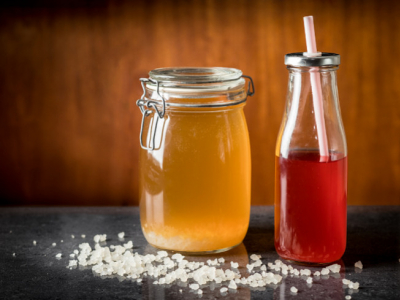
For those who do not consume dairy products, the water kefir is an excellent alternative. Prepared with water, sugar, and fruits, it offers a sparkling and refreshing drink, naturally rich in probiotics. It is one of the best options for obtaining dairy-free probiotics.
It is also a healthy alternative to sodas for children. With Aurélie, we regularly prepare it in the summer. If you want to get started, check out our guide. how to make 100% homemade fruit kefir.

3. Kombucha
This fermented tea-based drink is experiencing growing popularity in France. The market for kombucha and kefir has reached 15 million euros in 2021, which is a doubling compared to 2020. This is not a coincidence.
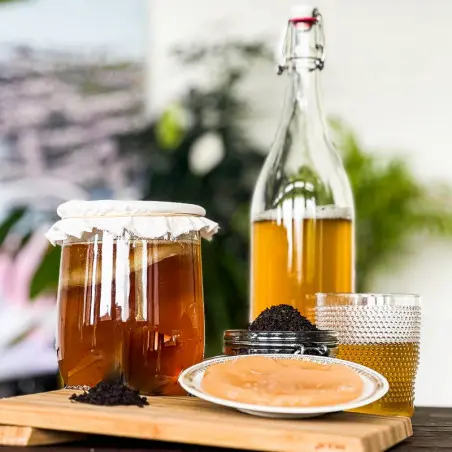
Kombucha provides probiotics from the SCOBY (the "mother" of kombucha), polyphenols from tea, and a unique slightly vinegary flavor. It is an ideal drink to support your intestinal flora thanks to kombucha. However, be careful: prioritize unpasteurized versions, and avoid those that contain too much added sugar. For more information, check out our article on the 5 benefits of kombucha.
To prepare your own, you can get a kombucha mother on our store.
4. Kvass
Less known in France, kvass is a traditional Eastern European beverage made from fermented rye bread. Its taste is unique, but it deserves to be discovered for its richness in probiotics and its ease of homemade preparation — a fermented food. easy to do for adventurers.
Lacto-fermented vegetables
5. Raw sauerkraut
The raw sauerkraut is probably the most ingrained fermented food in our French culture. But be careful: only raw, unpasteurized sauerkraut retains its live probiotics.
She is particularly rich in Lactobacillus plantarum and in Lactobacillus brevis, two strains with well-documented benefits. It also provides vitamin C (sailors used it to prevent scurvy), vitamin K, and fiber.
A study on 58 patients suffering from the irritable bowel syndrome showed that consuming 75g of sauerkraut per day for 6 weeks helped improve their digestive comfort.
6. Kimchi
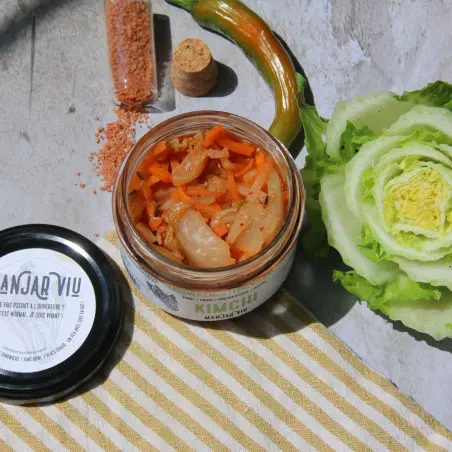
Kimchi is the Korean cousin of sauerkraut, but in a spicy version. It is made with Chinese cabbage, radish, chili pepper, garlic, and ginger. Its richness in antioxidants and in Lactobacillus kimchii actually makes it a particularly interesting food among the lacto-fermented foods.
A study on 21 prediabetic individuals showed that consuming fermented kimchi for 8 weeks was associated with improved insulin sensitivity.
7. Lacto-fermented pickles and gherkins
Be careful not to confuse them with pickles in vinegar! True lacto-fermented pickles are prepared in a brine (water + salt) and naturally ferment thanks to lactic bacteria.
You can ferment almost any vegetable this way: cucumbers, carrots, radishes, green beans, beets... The homemade lactic fermentation is within everyone's reach.
8. Fermented beetroot
Lacto-fermented beetroot combines the benefits of fermentation with those of this exceptional root vegetable: natural nitrates, antioxidants (betalains), and fiber. Its vibrant color brightens up dishes, and its slightly tangy taste pairs perfectly with salads.

9. Fermented carrots
Probably the easiest fermented vegetable to prepare for beginners. The taste remains close to fresh carrot, with a very pleasant tangy note. It's an excellent entry point into the world of homemade fermentation — a fermented food. easy to do to start.
Fermented soybeans
10. Miso
Fermented soybean paste, the misoIs a pillar of Japanese cuisine. It brings natural probiotics, quality proteins, and digestive enzymes. The secret: never boil it, as that would destroy its valuable microorganisms.
Add it at the end of cooking in your soups, or use it as a base for marinades and dressings.
11. Tempeh
Originally from Indonesia, the Tempeh is obtained by fermenting soybeans with the fungus Rhizopus oligosporus. Its firm texture and nutty taste make it an excellent substitute for meat, with 19g of protein per 100g. It is the ideal option for those who are looking for fermented plant proteins.
It is one of the few fermented foods that can be cooked without losing all its benefits, as fermentation modifies the structure of soy proteins, making them more digestible.
12. Natto
Natto is a Japanese food that divides opinions: its slimy texture and strong smell do not appeal to everyone. However, it is one of the best sources of vitamin K2, which is essential for bone and cardiovascular health.
If you are adventurous, try it on hot rice with a bit of soy sauce and Japanese mustard.
Other fermented foods
13. Sourdough bread
Even if we do not consume it, I note for the record that true sourdough bread, made with natural sourdough starter and not with industrial yeast, offers several advantages over regular bread. The long fermentation partially predigests the gluten, making it more tolerable for some sensitive individuals. Its glycemic index is also lower.
Certainly, cooking destroys probiotics, but the fermentation process has already transformed the food in a beneficial way.
Honorable mentions
I could also mention unpasteurized apple cider vinegar (with its visible "mother"), olives in natural brine, and naturally fermented soy sauce (tamari). All these foods have their place in a diet rich in fermented foods.
How to incorporate fermented foods into your daily routine
It's all well and good to know these 15 foods, but concretely, how can you integrate them without completely disrupting your habits? Here is the protocol I recommend for restore your gut flora Gradually, based on our experience and scientific data.
The protocol for starting gently
Week 1-2: Discovery
Start slowly. One serving per day of a mild fermented food like plain yogurt or milk kefir. Your microbiome needs to gradually adapt to this influx of new bacteria.
Week 3-4: Diversification
Add a second type of fermented food. For example, a bit of raw sauerkraut at lunch as a side dish. You are now at 2 servings per day.
Week 5-8: The ramp-up
Gradually increase to 4-6 servings per day, varying the sources. This is the level used in the Stanford study, and it showed the best results on microbial diversity and inflammation.
Beyond: The Maintenance
Once your body has adapted, maintain a regular intake of 3 to 6 servings daily, varying the foods. Diversity is the key to restore your gut flora Sustainably.
The recommended quantities
A "serving" of fermented food corresponds approximately to:
- 150 ml of kefir or yogurt
- 2-3 tablespoons of sauerkraut or kimchi
- 100-150 ml of kombucha
- 1 tablespoon of miso
- 50g of tempeh
The Stanford study used 6 daily servings, but start with what you can easily incorporate. Even one serving per day is better than nothing.
Possible side effects at the start
I prefer to be transparent with you: some people experience temporary digestive discomfort when they start consuming fermented foods. Bloating, gas, or accelerated transit may occur in the first few days.
It's normal. Your microbiota is rebalancing. These symptoms usually disappear within a few days to two weeks. If you increase the quantities too quickly, these effects may be more pronounced. Hence the importance of the gradual protocol.
If the symptoms persist beyond two weeks or are very uncomfortable, reduce the quantities and consult a healthcare professional.
To support this transition, our digestive enzymes can be a useful support. They contribute to more comfortable digestion, especially during this period of adjustment.

Mistakes to avoid with fermented foods
After 18 years in the field of raw food at Biovie, I have seen many common mistakes. Here are the main ones.
Confuse pasteurized and non-pasteurized
This is the number one mistake to keep in mind. Really. A pasteurized fermented food has lost its live probiotics. It retains some nutritional qualities, but not the essential ones: the beneficial microorganisms.
Check the labels, especially for sauerkraut. The terms "unpasteurized," "raw," "live," or "with active cultures" are good indicators. If in doubt, the refrigerated section is generally more reliable than the ambient temperature grocery section.
Relying on industrial products
Many industrial products labeled as "fermented" are actually poor imitations. Cow's milk yogurts with ultra-sweetened fruits, pasteurized kombuchas then artificially carbonated, or canned pseudo-sauerkrauts cooked and recooked have little to do with genuine raw and healthy fermented foods.
The best solution? Prepare your own fermented foods. It's simpler than you might think and much more economical in the long run. At Biovie, we offer everything you need to get started: kefir grains, lactic ferments, and kombucha mother.
Neglect the quality of basic ingredients
Fermentation amplifies the qualities of the starting food. If you ferment vegetables full of pesticides or low-quality milk, you will not obtain an optimal product.
Prioritize organic ingredients, local if possible, and seasonal. The difference is noticeable in the taste and, likely, in the benefits.
Forget the contraindications
Fermented foods are not suitable for everyone. People with histamine intolerance, SIBO (small intestinal bacterial overgrowth), or those undergoing immunosuppressive treatment should be cautious and consult their doctor before consuming them regularly.
Similarly, during pregnancy, certain non-pasteurized fermented foods are not recommended. Discuss this with your healthcare professional.
Frequently Asked Questions
What are the main fermented foods ?
The fermented foods The most common ones are yogurt, milk kefir, water kefir, raw sauerkraut, kimchi, kombucha, miso, tempeh, natto, lacto-fermented vegetables (carrots, beets, pickles), sourdough bread, and unpasteurized apple cider vinegar. Each provides different probiotic strains, which is why it's beneficial to vary them.
Is it good to eat fermented foods every day ?
Yes, a daily consumption of fermented foods is even recommended to gain the best benefits. The 2021 Stanford study used 6 servings per day for 10 weeks to observe significant improvements in microbial diversity and a reduction in inflammatory markers. Start gradually if you are not used to it.
How long does it take to restore gut flora ?
The first changes in the microbiota can appear in a few days, but lasting modifications generally require 2 to 12 weeks depending on the individual. The Stanford study showed significant results after 10 weeks of regular consumption of fermented foods. This is the time needed to truly restore your gut flora.
How much fermented food should be consumed per day ?
Ideally, aim for 3 to 6 servings daily once your body has adapted. One serving is approximately 150 ml of kefir, 2-3 tablespoons of sauerkraut, or 100 ml of kombucha. Start with one serving per day and gradually increase over several weeks.
What is the difference between probiotics and fermented foods ?
The probiotics are living microorganisms that, when consumed in sufficient quantities, can have beneficial effects. Fermented foods naturally contain probiotics, as well as other beneficial compounds resulting from fermentation (enzymes, vitamins, organic acids). Probiotic supplements are concentrated preparations of specific strains. Both approaches are complementary.
Can fermented foods be consumed without lactose ?
Absolutely! Many fermented foods are naturally lactose-free : water kefir, kombucha, sauerkraut, kimchi, lacto-fermented vegetables, miso, tempeh, natto... These are excellent sources of dairy-free probiotics. Furthermore, milk kefir contains very little lactose because the bacteria transform it during fermentation, making it often tolerable even for sensitive individuals.
Do fermented foods present any risks ?
For the vast majority of people, fermented foods are perfectly safe and beneficial. However, some individuals need to be cautious: those with histamine intolerance, SIBO, or on immunosuppressive treatment. Mild side effects (bloating, gas) at the start are normal and usually disappear within a few days. If in doubt, consult a healthcare professional.
Do fermented foods help with weight loss ?
The fermented foods can indirectly support a weight loss approach. By contributing to the balance of the gut microbiota, they can promote better digestion and a more efficient metabolism. Some studies suggest that a diverse microbiota is associated with a healthier body weight. However, fermented foods alone do not cause weight loss — they are part of an overall balanced diet.
Conclusion
The fermented foods are not a passing trend. They are ancestral foods whose benefits are now validated by modern science. The 2021 Stanford study rigorously demonstrated what food traditions around the world intuitively knew: a diet rich in fermented foods contributes to microbiome diversity and reduces inflammation.
Specifically, you can start as early as tomorrow. A simple plain yogurt for breakfast, a few spoonfuls of raw sauerkraut at lunch, a glass of kefir for a snack. Gradually, your palate will get used to these tangy flavors, and your gut flora will thank you.
At Biovie, we have been supporting this approach since 2007. We offer kefir grains, a kombucha mother, lactic ferments, and digestive enzymes to help you easily incorporate fermented foods into your daily routine. Feel free to browse our store and contact us if you have any questions.
Here it is, this list is of course not exhaustive, and I encourage you to explore, test, and prepare your own fermentations. To try it is to adopt it !