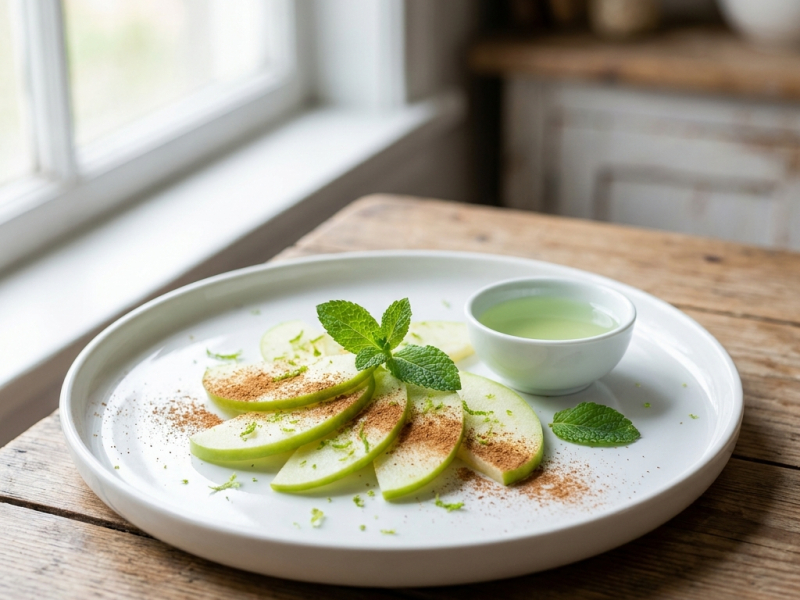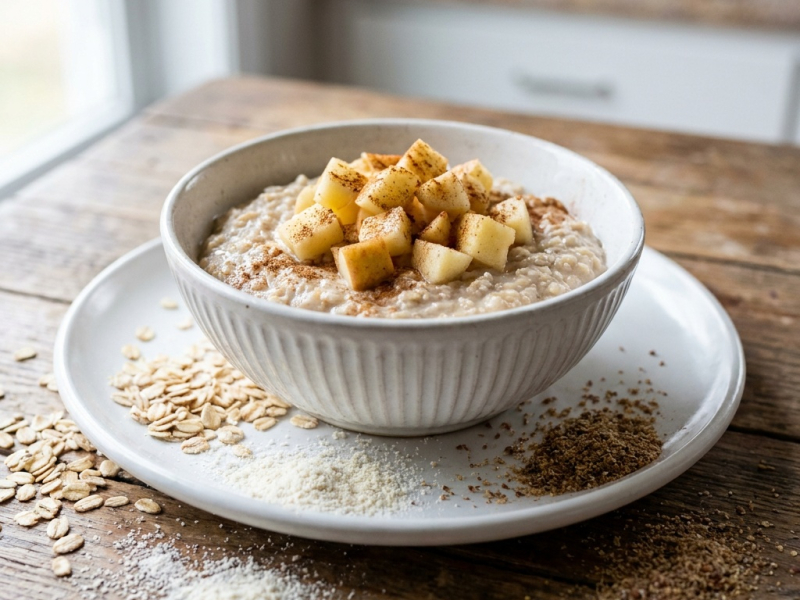







This soup brings together two stars of autumn: butternut squash, sweet and lightly sugary, and apple, which adds its tangy note. A hint of cinnamon and nutmeg is enough to give it the scent of the season. Everything is blended raw, in a single go, for a smooth, comforting result that keeps all the freshness of the ingredients. Serve it chilled at lunchtime, or warm it gently if you prefer a hot soup.
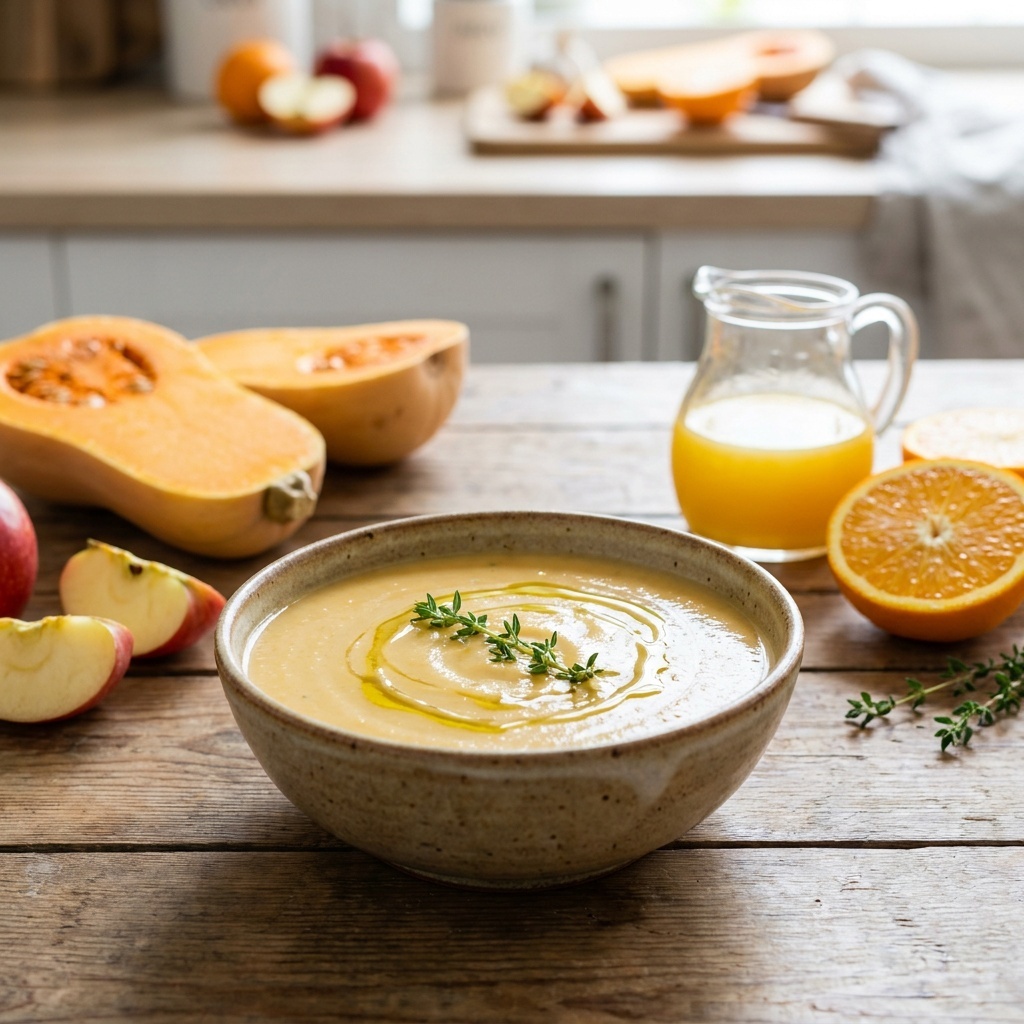
Raw butternut and apple soup with cinnamon
Share this article
Ingredients
- 600 g butternut squash, peeled, deseeded and cut into pieces
- 240 ml fresh apple juice (or sweet non-alcoholic cider)
- 80 ml orange juice
- 80 ml filtered and hydrogenated water (a little less for a thicker soup)
- 2 large celery stalks
- 2 g ground cinnamon (i.e. 1 tsp)
- 1 g grated nutmeg (i.e. ½ tsp)
- 4 pitted, soaked dates (or 30 ml of honey, i.e. 2 tbsp)
- 6 g salt (i.e. 1 tsp)
- A dash of shoyu or tamari
- 1 pinch of onion powder (or a small piece of fresh onion)
Preparation
- Put all the ingredients in a high-power blender, starting with the liquids to make blending easier.
- Blend at full power until the soup is perfectly smooth and creamy, adding a little water if needed.
- Taste and adjust the seasoning, then serve chilled. For a hot version, warm it gently in a saucepan, stirring, without letting it boil.
Tip
Without a very powerful blender, raw squash can stay slightly fibrous: cut it into small dice and let it soak for an hour in the apple juice before blending, and it will blend much more finely. For a gourmet touch, serve it with a few pumpkin seeds and a drizzle of walnut oil.
The full range Blender Mixeur
Blender vital Mix, 9 products


FAQ: your questions about the raw butternut soup
Do you need to peel butternut squash for soup?
For a raw soup like this one, yes: the skin of butternut squash stays tough and does not blend finely without cooking. First cut the squash into chunks, lay each piece flat and remove the skin with a peeler or knife, then take out the seeds and fibres. For a soup cooked for a long time, the skin of an organic butternut softens and can be kept.
Can butternut squash cause stomach aches?
Butternut squash is generally well tolerated. Raw, its fibres are firmer and some sensitive people may feel a little bloated: blend it very finely, start with a small portion or let it soak before blending. A squash with a distinctly bitter taste must not be eaten, as bitterness signals an abnormal level of cucurbitacins.
How do you make a raw butternut recipe?
Butternut squash lends itself well to raw preparations: grated in a salad with an orange dressing, cut into thin ribbons with a peeler, sliced into a very thin carpaccio or blended into a soup as here. The secret is to pair it with a sweet and tangy liquid, such as apple or citrus juice, which softens its texture and brings out its nutty flavour.
Share this article
Related articles