Fast delivery
.png)
 Fair prices



Did you know that nearly 70% of your immune cells live in your gut? This figure, documented by theINSERM, Explain why pampering your microbiota is one of the most powerful levers to strengthen your immunity. The natural probiotics, which are found in living fermented foods such as kefir, kombucha, raw sauerkraut, or fresh pollen, are your most valuable allies for nourishing this internal ecosystem.
In this 2026 guide, we review what natural probiotics really are, how they affect your immunity, what their best food sources are, and how to easily incorporate them into your daily life — with the scientific rigor and art of living that characterize living food.
What is a natural probiotic ?
According to the official definition of theWorld Health Organization (WHO) and FAO, a probiotic is a "living microorganism which, when consumed in sufficient quantity, exerts a beneficial effect on the host's health". Specifically, these are friendly bacteria or yeasts that help enrich and balance your gut microbiota, this ecosystem of 100 trillion microorganisms that lines your digestive tract.
Natural probiotics vs capsule supplements: what's the difference ?
A natural probiotic is a living ferment consumed in its original food matrix: a fermented, raw, and unpasteurized food. In contrast, a probiotic in a dietary supplement is an isolated strain, freeze-dried, and then encapsulated. The difference is fundamental:
- Natural probiotics provide a diversity of strains (up to 30 in kefir) while capsules generally contain 1 to 10.
- They come accompanied by prebiotics, vitamins, enzymes, and polyphenols which multiply their action tenfold.
- They are integrated into a protective food matrix which helps them survive the passage through the stomach.
- They are an integral part of a living food balanced, and not from a logic of isolated supplementation.
Why do natural probiotics strengthen immunity ?
The intestine is not just a digestive organ: it is the first immune organ of the human body. The work of theINRAE have highlighted the key role of the microbiota in modulating natural defenses.
70% of immune cells reside in the intestine.
The intestinal mucosa houses the GALT system (Tissu lymphoïde associé à l'intestin), that is to say, the largest concentration of lymphocytes and immune cells in the body. Natural probiotics contribute to:
- Strengthen the intestinal barrier to prevent the passage of pathogens into the bloodstream.
- Stimulate the production ofImmunoglobulins A (IgA), first line of defense of the mucous membranes.
- Produce some short-chain fatty acids (butyrate, propionate) which nourish intestinal cells and modulate inflammation.
- Train ecological competition that limits the proliferation of pathogenic bacteria.
A balanced microbiome means a stronger immunity.
Among the best-documented beneficial bacteria, Faecalibacterium prausnitzii — identified by INRAE teams — plays a remarkable anti-inflammatory role. A rich and diverse microbiota, regularly nourished by fermented foods, thus helps to maintain the balance of the microbiota and health Global.
The 7 best sources of natural probiotics
To deeply explore the richness of fermented foods, we recommend the video interview with Julien Brantener, a microbiologist who collaborated with Biovie:
1. Kefir: The Fermented Drink with 30 Strains
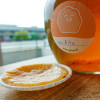
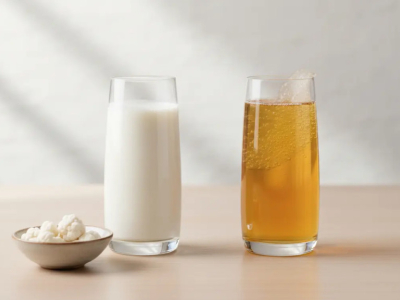
The Kefir, the ultimate living drink, comes in two forms: water kefir and milk kefir. Its grains—aggregates of lactic acid bacteria and yeasts—harbor up to 30 distinct microbial strains. Water kefir, naturally vegan and sparkling, ferments in 24 to 48 hours with cane sugar, lemon, and a dried fig.
2. Kombucha: the fermented tea with polyphenols
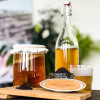
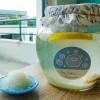
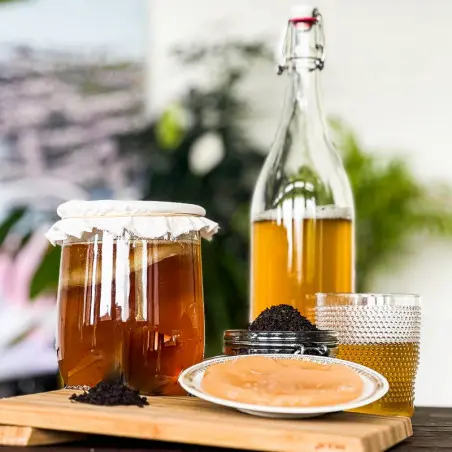
The kombucha is born from an astonishing symbiosis: a SCOBY (Symbiotic Culture Of Bacteria and Yeast) transforms a sweet tea into a sparkling, slightly tangy drink, rich in organic acids and polyphenols. Its fermentation lasts 7 to 14 days at room temperature.
3. Raw sauerkraut: the lacto-fermented champion
White cabbage or red cabbage, sea salt, a few days of patience: the Lacto-fermentation transform these simple ingredients into raw sauerkraut, where up to 10⁸ colony-forming units per gram thrive Lactobacillus plantarum. Attention, only the sauerkraut unpasteurized preserve its live probiotics.
4. Miso and tempeh: the fermentation of soybeans
Treasures of Asian cuisine, miso (Japanese fermented paste) and tempeh (Indonesian fermented soybean cake) are rich in lactic bacteria, enzymes, and amino acids. Be sure to choose a unpasteurized miso and add it at the end of cooking (never boiling) to preserve its live cultures.
5. Kimchi: Traditional Korean Fermentation
Spicy, crunchy, lively: the Korean kimchi combines napa cabbage, radish, chili pepper, garlic, ginger, and gochugaru in a spontaneous fermentation. It combines Lactobacillus kimchii, , Leuconostoc mesenteroides and other strains for remarkable microbial diversity.
6. Fresh frozen cistus pollen: a unique probiotic
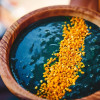
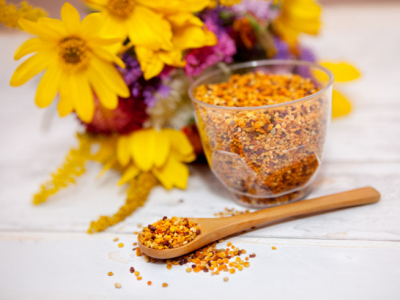
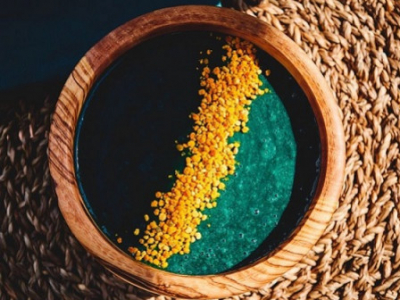
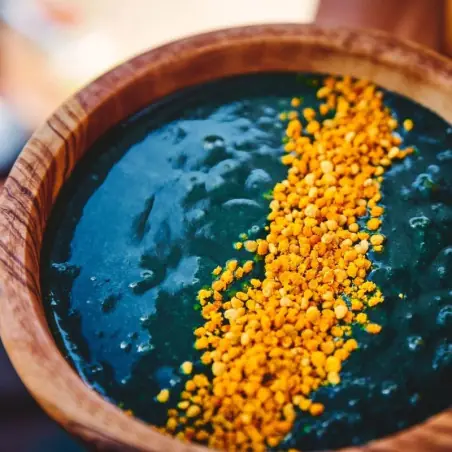
Less known, the fresh frozen cistus pollen is one of Biovie's gems. Harvested in pellets and immediately frozen (to preserve the natural ferments that drying destroys), it provides flavonoids, B-group vitamins, and unique microorganisms. One teaspoon per day is sufficient.
7. Homemade lacto-fermented vegetables
Carrots, beets, black radishes, turnips, cauliflower: almost all vegetables can be lacto-fermented at home. You need a jar, sea salt (2 to 3% of the weight), and a few days of patience. One of the most accessible and economical methods to diversify your probiotics.

How to incorporate natural probiotics into daily life ?
How much to consume ?
The available studies do not establish an official dose for dietary probiotics, but practitioners of raw food generally recommend:
- 1 to 3 servings per day various fermented foods
- A small glass of kefir or kombucha (100 to 200 ml)
- One to two tablespoons of raw sauerkraut or kimchi as a side dish
- A teaspoon of fresh pollen on porridge or in a smoothie
- A teaspoon of miso in a warm soup at the end of cooking
Combining probiotics and prebiotics
Probiotics need fuel to thrive. This fuel is the Prebiotics and dietary fibers : inulin (chicory, Jerusalem artichoke), oligofructose (onion, garlic), beta-glucans (oats, barley), pectins (apples, citrus fruits). The combination of probiotics + prebiotics forms what is called synbiotics. synbiotics, whose effect on the microbiota is more powerful than either one taken separately.
Introduce gradually
If your microbiota is not used to fermented foods, start gently: a tablespoon of raw sauerkraut for the first few days, then gradually increase. The goal is to allow your intestinal ecosystem to adapt over a few weeks.
Precautions and contraindications
Natural probiotics are generally well tolerated, but certain situations require caution.
Immunosuppression
Immunocompromised individuals (post-chemotherapy, organ transplant, HIV at the AIDS stage) must consult their doctor before introducing non-pasteurized fermented foods. In rare cases, certain strains can cause bacteremia in vulnerable patients.
Histaminosis and intolerance to biogenic amines
Fermented foods are naturally high in histamine and tyramine. People suffering from histaminosis, recurrent migraines, or those on monoamine oxidase inhibitors (MAOIs) should limit their consumption.
Children, pregnant women, and seniors
Caution is advised, particularly for children under 3 years old and pregnant women: introduce fermented foods gradually and prioritize quality, organic products from reliable sources.
The European regulation EC 1924/2006 governs health claims related to probiotics. The information in this article falls under a general nutritional framework and does not replace personalized medical advice.
Where to buy quality natural probiotics ?
The market is full of fermented foods, but not all are equal. To ensure the presence of live cultures, check these four criteria:
- Organic label (certified organic or Ecocert) — no pesticide residues that disrupt the microbiota.
- Mention "non-pasteurized" — Pasteurization destroys live probiotics.
- Clear traceability — origin of raw materials, place of fermentation, date of production.
- Keep refrigerated — live cultures require a maintained cold chain.
On biovie.fr, since 2007, we have been selecting ingredients for living food that meet these requirements: water kefir grains, kombucha mothers, unpasteurized miso, and of course the famous fresh frozen cistus pollen, unmatched elsewhere in Europe at this quality.
FAQ — Natural Probiotics and Immunity
What is the best natural probiotic for immunity ?
There is no single "best" natural probiotic: diversity is key. Vary kefir, kombucha, raw sauerkraut, miso, kimchi, and fresh pollen throughout the days. Each food provides different strains that enrich your microbiome and strengthen your natural defenses.
Is it possible to consume too many natural probiotics ?
In excess, fermented foods can cause bloating, gas, or temporary digestive issues. Gradual introduction is essential: start with a small daily portion, listen to your body's response, and increase according to your tolerance.
What is the difference between natural probiotics and dietary supplements ?
Natural probiotics, found in living fermented foods, offer a wide variety of strains within their original food matrix, along with associated prebiotics and cofactors. Capsule supplements contain isolated, freeze-dried strains, often in high quantities but without the natural accompanying food ecosystem.
How often should you consume fermented foods ?
The ideal is to incorporate 1 to 3 servings per day of various fermented foods into your diet: a small glass of kefir at breakfast, a spoonful of raw sauerkraut at lunch, a miso soup at dinner, for example. Consistency is more important than quantity.
Do natural probiotics act quickly on immunity ?
The initial effects on transit and digestive comfort can be felt within a few days. To observe a real change in the microbiota and its effects on immunity, it takes several weeks of regular consumption, ideally 4 to 12 weeks, combined with a varied diet rich in fiber.
In practice: the opinion of Eric Viard, tropical agronomist engineer
"For 33 years that I have been living as a vegan, natural probiotics—whether they come from kefir, kombucha, or fresh cistus pollen—have been my daily immune allies. In" Seaweed in everyday life, Aurélie and I explain why a living diet, rich in ferments and microorganisms, is the key to a balanced microbiota and strong immunity. Fermentation is an ancestral, accessible, and profoundly restorative practice — we just need to reconnect with it. — Eric Viard, founder of Biovie.
Update: April 2026. Article approved by Éric Viard, founder of Biovie and engineer ISTOM, co-author of " Seaweed in everyday life "(Gallimard, 2024) —" Best cookbook in the world, Gourmand Cookbook Awards 2025, and Best cookbook in France, National Academy of Cuisine 2025.
Warning: The information presented in this article is provided for informational purposes only and does not constitute medical advice. Consult a qualified healthcare professional before making any significant changes to your diet or supplementation. As part of a varied and balanced diet and a healthy lifestyle.
Find all our organic ingredients for raw food on https://www.biovie.fr/en/