



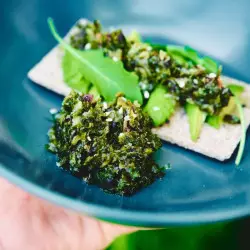

Kelp noodles need nothing more than a rinse under clear water: they come ready to eat, with no cooking or soaking, and a crisp texture that holds up well under a thick sauce. Here, that sauce is a blend of full-fat coconut milk, peanut butter, fresh garlic and jalapeno, blended until smooth and clingy. Spinach and red pepper cut into thin strips bring freshness and colour. For a fully raw version, use a raw, unroasted peanut butter, or swap it for almond butter or sprouted sunflower seed butter. Makes two servings, plus about three cups of sauce, so there's some left over.
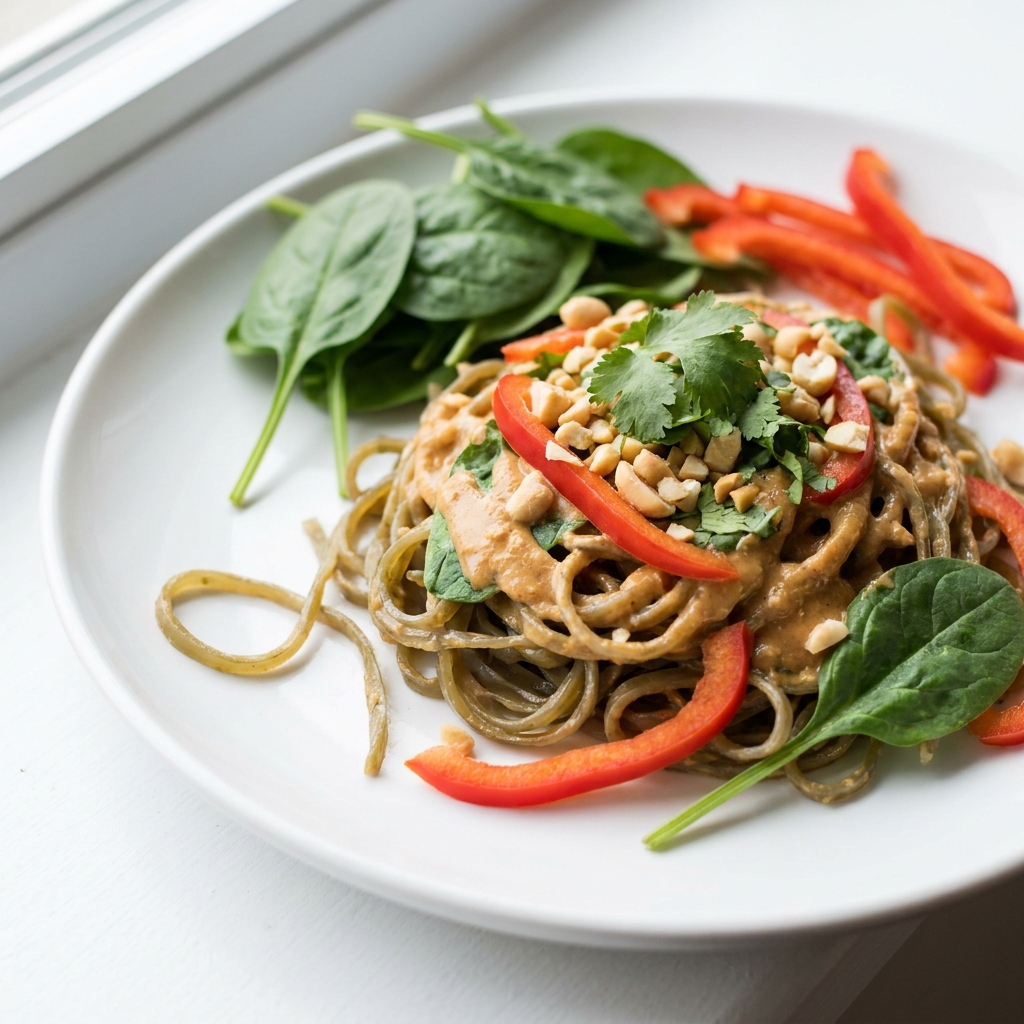
Kelp Noodles with Spicy Coconut Peanut Sauce

Share this article
Ingredients
Base
- 1 packet of kelp noodles (about 340 g)
To add
- 1 cup spinach, cut into strips
- 1 cup red pepper, cut into thin strips
The sauce
- 1 can full-fat coconut milk (homemade for a fully raw version)
- 1/2 cup peanut butter
- 3 tablespoons coconut sugar, or your preferred sweetener
- 2 tablespoons extra virgin olive oil
- 1 tablespoon fresh cilantro
- 2 cloves garlic, freshly crushed
- 1 jalapeno
- 1 teaspoon chili flakes
- 1 teaspoon pink Himalayan salt
Method
- Take the kelp noodles out of their packet and rinse them under filtered water. Set aside.
- Cut the spinach into thin strips and the red pepper into thin strips. Set aside.
- Put all the sauce ingredients in the blender and blend until you get a smooth, creamy texture. Adjust the seasoning, especially the jalapeno and chili flakes. For a thinner sauce, add 60 to 120 ml filtered water.
- Combine the noodles and vegetables in a medium bowl, pour over the sauce and toss gently to coat evenly.
- Finish, if you like, with a little extra spinach or pepper.
Tip
With a whole jalapeno and a teaspoon of chili flakes, the sauce is genuinely spicy. Cut back on or leave out one of the two if you prefer it milder: the rest of the recipe stays the same.
The full range Dry algae
10 products
FAQ: your questions about kombu seaweed
How do you cook kombu?
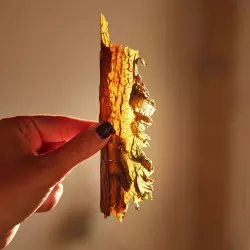
Kombu, or kelp, is the ultimate stock-building seaweed: it's what gives Japanese dashi its depth. A piece dropped into cold water and heated gently, never boiled, is enough to get a deep, savoury broth. It also goes into the cooking water for legumes, which it helps soften, and into a homemade tomato sauce, where it cuts the acidity. Raw, rehydrated and cut into thin strips, it slips easily into a salad or a bowl of noodles.
What does kombu taste like?
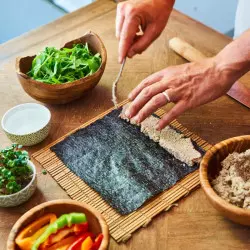
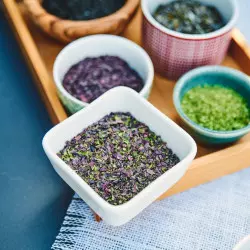
Seaweed is eaten far more simply than people imagine. Fresh seaweed, desalted and rinsed, can be served as is in a salad or tartare. Dried seaweed rehydrates in ten to twenty minutes in a little water, or can be ground into flakes to sprinkle as a condiment over raw vegetables, soups and grains. Nori sheets can be rolled or crumbled with no preparation at all. Start with small amounts: the sea flavour is pronounced.
How is seaweed eaten?
Kombu is the mildest-tasting seaweed, far from the sharp iodine flavour some people fear. What you mostly taste is umami, that fifth, deep, savoury flavour that gives body to broths, with a slightly sweet note and a hint of the sea. Once rehydrated, it stays firm to the bite, almost crisp. It's precisely this relative neutrality that makes it such a good base for a sauce as aromatic as this one.
Share this article