Fast delivery
.png)
 Fair prices


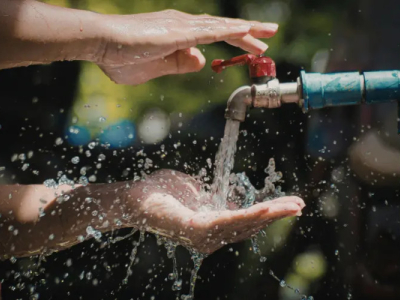

For 30 years, I have been using and testing filtration systems. The topic has never been as critical as it is today.
The three most effective methods for removing pollutants from tap water are reverse osmosis, ceramic filtration, and activated carbon. Each targets different contaminants: reverse osmosis filters up to 99% of PFAS and heavy metals, activated carbon neutralizes chlorine and pesticides, and ceramic blocks bacteria and microplastics.
Do you drink tap water with confidence? In 2024, 43% of the samples tested in France contained PFAS — those "forever" pollutants that your Brita pitcher doesn't filter out. I'm not telling you this to scare you, but because as an agronomist, when I see these figures, I think it's time to talk about it clearly. The good news is that simple, natural, and accessible solutions exist to filter tap water from pollutants. And that's exactly what I will detail in this article.
Why filtering tap water in France has become necessary
Pollutants detected in tap water in 2024-2025
When we talk about water quality in France, we often hear "our water is among the most monitored in the world." This is true. However, monitored does not mean free of pollutants.
Specifically, here is what recent analyses reveal:
- PFAS (Per- and polyfluoroalkyl substances): 43% of tap water in France contains detectable PFAS, according to data from Générations Futures and ARS in 2024. These substances are nicknamed "forever pollutants" because they almost never degrade in the environment. They are found in food packaging, non-stick pans, waterproof textiles, and they end up in our groundwater.
- Vinyl chloride monomer (VCM) : 6,410 non-conformities detected by the ARS in France in 2024. This compound, classified as carcinogenic, mainly comes from the degradation of old PVC pipes.
- Pesticides and nitrates : In agricultural areas, the concentrations remain concerning despite the regulations.
- Microplastics : recent studies confirm their almost systematic presence in tap water, even though current standards do not yet measure them in a standardized way. For those who want to understand this topic in depth, we have written a complete guide on how to filter tap water which details each contaminant.
- Drug residues : a still emerging topic, but traces of antibiotics, hormones, and anti-inflammatories are increasingly documented.
The problem is that French standards do not yet cover all these emerging pollutants. European standards on PFAS, for example, will not come fully into effect until 2026 with the European directive 2020/2184. In the meantime, we are drinking water that complies with current standards, but these standards lag behind the chemical reality of our environment.
Who is actually affected? The map of risk areas
Frankly, we would like to be able to say that only a few isolated areas are affected. But the reality is different.
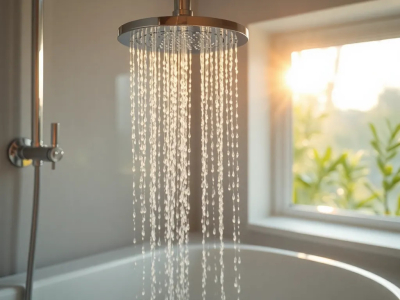
The most exposed areas are regions with high industrial activity (Rhône Valley, northern France), intensive agricultural zones (Beauce, Brittany, cereal plains), and areas where the pipelines are old. But even in cities, chlorine treatment—necessary for disinfection—leaves a taste and odor in the water that many find unpleasant, not to mention the chlorination by-products (trihalomethanes) that form when chlorine reacts with organic matter. It is for this reason that filter the shower and bath water has also become a reflex for many families.
In reality, everyone is potentially affected. The question is not "does my water contain pollutants?" but rather "in what quantity and which ones?" Families with young children have even more reason to be vigilant, as developing bodies are more sensitive to these contaminants.
What your classic pitcher does NOT filter
Here is a point that I find essential to understand. Many households use a type of filter pitcher thinking that their water is perfectly filtered. It's a good first step, don't get me wrong. But traditional filter pitchers have very real limitations.
A water filter pitcher improves taste by removing a good portion of chlorine. That's something. However, it allows most PFAS, pesticides, and heavy metals to pass through. This was confirmed by 60 Millions de Consommateurs in their comparative tests of August 2024: for complete filtration of tap water pollutants, one must turn to other technologies.
It is precisely for this reason that we have included the Ecofiltro in our range at Biovie. After testing it daily for over 6 months, we were convinced by its effectiveness-simplicity ratio. But I will return to this in the comparison that follows.
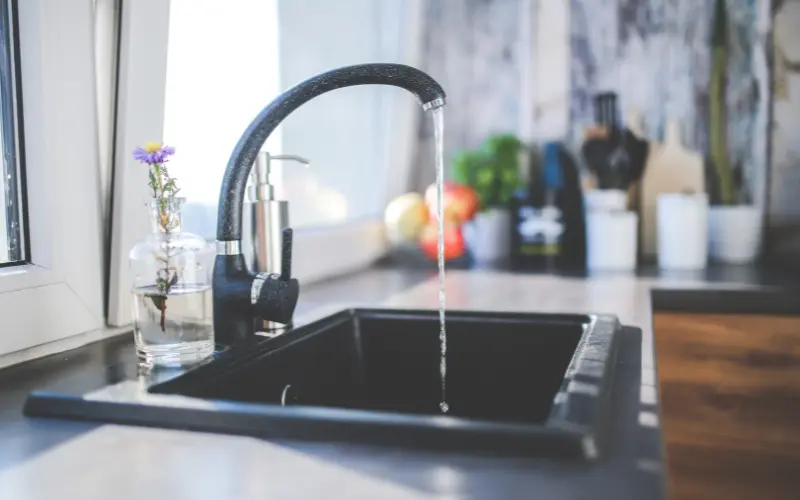
Comparison of Filtration Systems: Actual Efficiency by Pollutant
The home filtration market is booming: it is expected to reach 14.26 billion dollars globally by 2025, with a projection of 45.81 billion by 2034. This is not surprising: 67% of filter purchases are driven by health concerns, and 41% of consumers prefer eco-friendly solutions.
But faced with this overwhelming offer, how do you find your way? Here is an honest comparison, system by system, pollutant by pollutant.
The 6 systems facing the 8 main pollutants
To make it as clear as possible, here is what each water filtration system actually filters:
Reverse osmosis
- PFAS: eliminates up to 99%
- Pesticides: eliminates 95% +
- Chlorine: yes
- Heavy metals: eliminates 99%
- Microplastics: yes
- Bacteria: yes
- Average price: €200 to €600
- Maintenance: membranes to be replaced every 2-3 years
Block activated carbon
- PFAS: approximately 73% (according to independent tests)
- Pesticides: 80%+
- Chlorine: yes
- Heavy metals: partial
- Microplastics: partial
- Bacteria: no
- Average price: €30 to €150
- Maintenance: cartridge every 6 months
Ceramic + activated charcoal (Ecofiltro type)
- PFAS: partial
- Pesticides: yes
- Chlorine: yes
- Heavy metals: partial
- Microplastics: yes
- Bacteria: yes
- Average price: €80 to €130
- Maintenance: monthly cleaning, lifespan 2 years
Classic water filter pitcher
- PFAS: low
- Pesticides: limited
- Chlorine: yes
- Heavy metals: no
- Microplastics: no
- Bacteria: no
- Average price: €20 to €50
- Maintenance: cartridge every month
UV (ultraviolet)
- PFAS: no
- Pesticides: no
- Chlorine: no
- Heavy metals: no
- Microplastics: no
- Bacteria: yes, 99.9%
- Average price: €100 to €300
- Interview: annual lamp
Distillation
- PFAS: yes
- Pesticides: yes
- Chlorine: yes
- Heavy metals: yes
- Microplastics: yes
- Bacteria: yes
- Average price: €150 to €400
- Maintenance: regular cleaning, very energy-consuming
Reverse osmosis: the most effective but not for everyone
Reverse osmosis is the all-around champion in terms of pure efficiency. Water is forced through an ultra-fine membrane that retains 95 to 99% of all contaminants. It is the only household system certified for the near-total removal of PFAS and heavy metals, as confirmed by 60 Millions de Consommateurs.
But there are trade-offs. The installation is more complex (usually under the sink, with a connection to the water supply). The system discharges a significant amount of water (about 2 to 3 liters discharged for 1 liter filtered, depending on the models). It also removes beneficial minerals from the water, which sometimes requires remineralization downstream. The initial cost is also higher.
For whom? If you live in a highly polluted area (industrial proximity, documented PFAS contamination), reverse osmosis is probably the safest choice.
Activated charcoal: the versatile natural filter
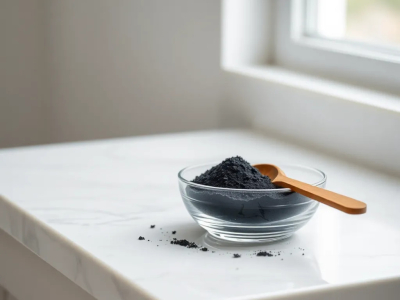
Activated charcoal is an ancient solution that has proven its effectiveness. Its principle is adsorption: pollutants adhere to the porous surface of the charcoal. In compressed block form, it retains about 73% of PFAS according to independent tests, and it is very effective on chlorine and many pesticides.
Binchotan, this traditional Japanese activated charcoal, is particularly interesting for its simplicity of use: you place it directly in your water carafe. At Biovie, we offer quality activated charcoal that we have studied. the properties of activated carbon in filtration in detail.
On the other hand, activated carbon alone is less effective on heavy metals and does not filter bacteria. That is why it is often combined with other technologies, such as ceramics.
Ceramic and gravity filtration: the zero electricity solution
Here is the category that excites me the most, and for good reason: it is the one that best aligns with our philosophy at Biovie. Gravity filtration is the simplest principle that exists. You fill a reservoir at the top, the water passes through a ceramic filter (and often an additional activated carbon filter) solely by the force of gravity, and you collect filtered water at the bottom. Zero electricity, zero connections, zero plastic.
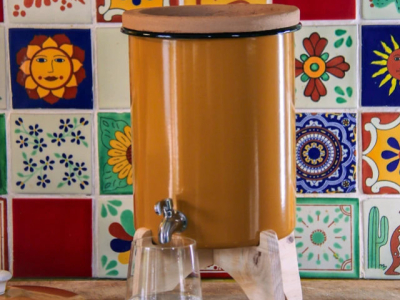
The Ecofiltro is an excellent example of this approach. It is a handcrafted Guatemalan clay filter that combines high-density ceramic, activated charcoal, and silver colloid. After our field test of over 6 months, the conclusion is clear: soft water, without a chlorine taste, at a negligible usage cost. We have also written A complete article on the Ecofiltro ceramic filter for those who want to know everything about this system.
Danièle R., a Biovie customer, shares her experience on Trustpilot: "After a few days, the Ecofiltro filter convinced me. The water is light and smooth to drink, and it's easy to use. A purchase to recommend." And Nicole B. adds: "I bought the Ecofiltro clay water filter which provides excellent filtered water. I recommend it."
An important point to note: Berkey filters, long popular in this category, have been condemned in the United States (FIFRA) for unproven filtration claims. The U.S. EPA has questioned their actual effectiveness against the advertised contaminants. This is an important reminder: always check independent certifications (NSF, ACS) before investing in a filtration system.
We also made a video about the Naturalizer filter., a system based on volcanic rocks that replicates natural filtration — watch the video.
How to choose the right filter for your situation
There is no perfect universal filter. The best water filtration system is the one that suits your situation, budget, and priorities. Here's how I see things.
In an apartment: compact solutions
If you live in an apartment, you have two main options:
- On the counter : A gravity filter like the Ecofiltro is placed directly on your countertop. No installation, no tools. You fill it up and you're good to go. It's the solution I recommend first for its absolute simplicity.
- Under sink : A block activated carbon filter is connected under the sink. It's a bit more technical to install (or you can call a plumber), but it frees up space on the countertop and the filtered water flows directly from the tap.
For a family in an apartment, the countertop Ecofiltro is truly the most obvious solution: no installation, unlimited pure water, and the children can help themselves.
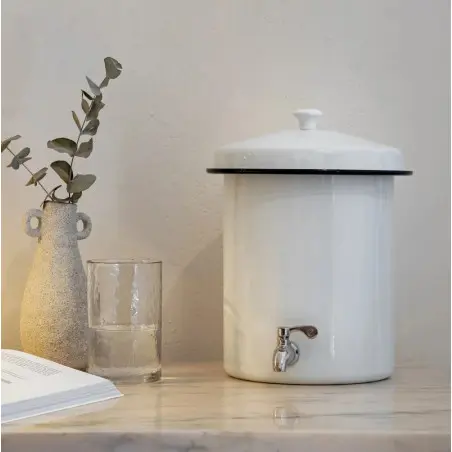
In the home: filtration at the point of entry or at the point of use
In a single-family home, you have an additional choice: to filter all the water entering the house (point of entry) or only the drinking and cooking water (point of use).
Point-of-entry filtration is relevant if you are in an agricultural area with documented issues of pesticides or nitrates. A reverse osmosis system or a centralized filtration system then protects the entire house, including the shower water.
On the other hand, if your main concern is the quality of the water you drink, a point-of-use filter (under-sink or countertop) is more than sufficient and much more economical. Optionally, complement it with a anti-chlorine shower filter for comfort — the chlorine absorbed by the skin during a hot shower is not insignificant. Nialal, one of our customers, also confirms on Trustpilot: "I bought a shower filter and I can finally take showers without having dry skin."
Budget: The real cost over 3 years
This is a point that is close to my heart because many people think that home filtration is expensive. Specifically, let's compare over 3 years:
- Water filter pitcher : €30 purchase + approximately €60 for cartridges per year = approximately €210 over 3 years
- Ceramic gravity filter (Ecofiltro) : €80-130 purchase + free monthly cleaning, lifespan of 2 years = approximately €130-200 over 3 years, or about €0.02 per liter
- Reverse osmosis system : €300-600 purchase + €50-100 per year on membranes = €450-900 over 3 years
- Bottled water (family of 4): €30-60 per month = €1,080-2,160 over 3 years, or €0.15 to €0.50 per liter
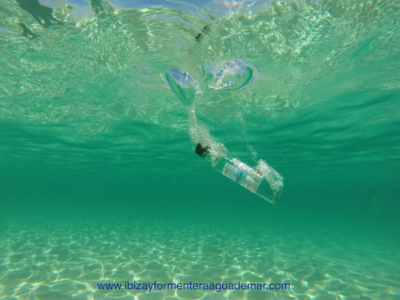
Do you see the table? A ceramic filter like the Ecofiltro costs less than €5 per month. Compared to bottled water, it's a considerable saving, and you also eliminate hundreds of plastic bottles. Stéphanie T., a Biovie customer for years, shares on Trustpilot: "My son just ordered the filtering fountain." When children also adopt the approach, it's a good sign.
→ Are you looking for the best solution to filter tap water without breaking the bank? Discover the Ecofiltro and our selection of natural filtration solutions.
Practical Guide: Installing and Maintaining Your Filtration System
The 3 mistakes that reduce the effectiveness of your filter
Having a good filtration system is not enough if it is used incorrectly. Here are the three most common mistakes I notice:
1. Not changing the filters or cartridges on time. This is the number one mistake. A saturated filter no longer filters anything and may even release accumulated pollutants. Strictly follow the manufacturer's recommendations. For a filter pitcher, it's every month. For a block activated carbon filter, every 6 months. For a ceramic filter, a monthly cleaning and a replacement every 2 years.
2. Not cleaning the container regularly. The reservoir of your gravity filter, the tank of your filter pitcher, the under-sink compartment: all of these need to be cleaned regularly to prevent bacterial growth. A wipe with a sponge and some white vinegar is usually sufficient.
3. Letting the filtered water stagnate for too long. Filtered water no longer contains residual chlorine to prevent microbial growth. Consume it within 24 to 48 hours, especially in summer. If your gravity filter is full and you are going on vacation, empty it.
Frequency of filter and cartridge replacement
To avoid making mistakes, here is a simple summary:
- Filtered carafe: cartridge every month (or 100 liters depending on the model)
- Binchotan activated charcoal: every 3 months (can be reactivated by boiling)
- Ceramic filter (Ecofiltro): monthly cleaning with clear water, replace the filter every 2 years
- Reverse osmosis system: pre-filters every 6-12 months, membrane every 2-3 years
- Under-sink activated carbon filter: cartridge every 6 months
- UV lamp: annual replacement
Caitlin, a customer who purchased the Ecofiltro 20L, shares a helpful review on Trustpilot: "I am a fan of the product. Be aware, the water tastes like terracotta for a few weeks at first, but it goes away." This is completely normal and is a sign that the filter is made of natural ceramic — the taste disappears after a few filling cycles.
Test the quality of your filtered water at home
How to know if your filter is doing its job well? Some accessible options:
- TDS strips (total dissolved solids): they measure the total amount of dissolved solids. It is a global indicator, not a specific test for each pollutant, but it allows you to verify that your filter effectively reduces the water's load.
- Specific test kits : There are kits available to test for chlorine, nitrates, lead, and water hardness. They are more precise but more expensive.
- Laboratory analysis : the most comprehensive solution. Some laboratories offer at-home water testing for around a hundred euros. It is recommended at least once to know the precise profile of your tap water, even before choosing your filtration system.
In agricultural areas in particular, an annual test is a reasonable precaution.
.webp)
Beyond filtration: optimizing the quality of your water on a daily basis
Structured water and essential minerals
Filtration is a fundamental step. However, the water we drink is also a carrier of essential minerals. This is where caution is needed, as some filtration systems (notably reverse osmosis) also remove beneficial minerals.
At Biovie, we have always had this global vision of water quality. That's why we are also interested in the effects of limestone on health and to the remineralization of the filtered water.
The topic of structured water and energization is fascinating. For years, we have offered the Naturalizer filter, a system based on volcanic rocks (magnetite, taki-you, bell-quan) that not only filters but also energizes the water by replicating what happens in nature when water passes through geological layers. The principle is simple: the water passes through successive layers of sand, activated charcoal, and specific rocks, and emerges with a modified structure.
Complete the filtration with proper hydration.
Filtering your water is good. But you still need to drink enough and ensure that this water provides what your body needs.
Marine plasma — or Quinton water — is an extraordinary supplement for remineralizing the body. Seawater contains all the elements of the periodic table in a bioavailable form, meaning it can be directly assimilated by our cells. Jacquot C., a regular customer at Biovie for several years, shares on Trustpilot: "Fresh vacuum-packed seaweed and high-quality Quinton marine plasma at very affordable prices. Congratulations and long life to you."
Moreover, we filmed a report on the harvesting of marine plasma in Ibiza., which shows the entire process of harvesting and filtration — watch the report.
We have written a comprehensive article on the benefits of marine plasma for remineralization which I invite you to consult if the subject interests you.
Hydrogenated water is another promising avenue. It is enriched with molecular hydrogen, a powerful antioxidant that helps protect cells against oxidative stress. Yveline-Justine, one of our clients, shares on Trustpilot: "Thank you for introducing me to hydrogenated water bottles." To learn more, check out our guide on the benefits of hydrogenated water.
By combining properly filtered water, appropriate remineralization (marine plasma), and good daily hydration, you provide your body with the best conditions to function optimally.
FAQ: Your questions about water filtration
How to filter PFAS from tap water ?
Reverse osmosis is the most effective method: it removes up to 99% of PFAS. Block activated carbon removes about 73% of these forever pollutants. Traditional filter pitchers are insufficient for PFAS. For a non-electric solution, high-density ceramic filters like Ecofiltro offer effective complementary filtration.
What is the difference between a water filter pitcher and a reverse osmosis system ?
A water filter pitcher improves taste by removing chlorine but allows most PFAS, pesticides, and heavy metals to pass through. A reverse osmosis system forces water through an ultra-fine membrane that retains 95 to 99% of all contaminants. The cost and complexity of installation are higher for the reverse osmosis system. We have also written our detailed comparison of carafe vs. reverse osmosis system to help you choose.
Is tap water dangerous in France in 2025 ?
French tap water complies with current health standards, but 43% of the tested samples contain detectable PFAS. European standards on PFAS will not come fully into effect until 2026. Domestic filtration is a reasonable precaution, especially for families with children.
Which water filter to choose for the home without complex installation ?
Gravity filters require no installation, no electricity, and no connections. Simply fill the upper reservoir: the water passes through the ceramic and activated carbon filter by gravity. It is the simplest solution to naturally purify tap water. We have tested the Ecofiltro ceramic filter in detail.
How much does home water filtration cost ?
The cost varies depending on the system: filter jug (20-50 € + about 5 €/month in cartridges), gravity ceramic filter (80-130 € + cleaning, lasts 2 years), reverse osmosis system (200-600 € + 50-100 €/year in membranes). Over 3 years, the ceramic filter costs about 0.02 €/liter, compared to 0.15 to 0.50 €/liter for bottled water.
Does activated charcoal really purify water ?
Activated charcoal is effective at adsorbing chlorine, many pesticides, and organic compounds that alter taste. In compressed block form, it retains about 73% of PFAS. However, it is less effective on heavy metals and bacteria. It serves as a good first level of filtration, often combined with ceramic for more comprehensive protection.
Why are Berkey filters controversial ?
Berkey filters have been subject to a condemnation in the United States (FIFRA) for unproven filtration claims. The U.S. EPA has questioned their actual effectiveness against the advertised contaminants. This is an important reminder: always check independent certifications (NSF, ACS) before investing in a filtration system.
Here you go, I hope this article has helped you see more clearly through the jungle of filtration solutions. Honestly, there are no bad choices when deciding to filter your water — there are just choices that are more or less suited to your situation.
If I had to summarize in one sentence: start with any filtration system rather than doing nothing. Your filter pitcher is still better than nothing at all. But if you want to go further and truly eliminate concerning pollutants like PFAS, opt for more effective solutions.
At Biovie, we have been using and testing the Ecofiltro for over 6 months. The result: soft water, without a chlorine taste, for less than €5 per month. And zero plastic waste.
→ Are you looking for a natural filtration solution, without electricity and without plastic? Discover the Ecofiltro and our range of hydration solutions
Ready to switch to purer water? The quality of your water impacts your overall health — hydration, digestion, nutrient absorption, vitality. It's a simple investment that changes everything in your daily life.
Sources: Générations Futures / ARS 2024, 60 Millions de Consommateurs (August 2024), European Directive 2020/2184, Business Research Insights 2025, Global Growth Insights 2025, EWG, NSF International.
Update, March 2026. Article approved by Eric Viard, founder of Biovie, engineer ISTOM, co-author of " Seaweed in everyday life "(Gallimard, 2024) — elected" Best cookbook in the world, Gourmand Cookbook Awards 2025 - elected Best cookbook in France, National Academy of Cuisine 2025.