Fast delivery
.png)
 Fair prices


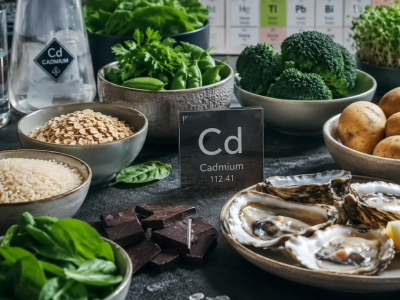

Cadmium in Food: Sources, Health Risks & 2026 Solutions
In February 2026, France's ANSES dropped a quiet bombshell. 47.6% of French adults aged 18 to 60 exceed the critical cadmium impregnation threshold. Nearly one person out of two. And for 98% of them, it isn't industrial pollution. It isn't tobacco either. It's the plate.
When I read this report, I did what I always do in moments like this — I went to find Aurélie in the kitchen, we sat down, and we talked through the press coverage of the announcement over a cup of herbal tea. The conclusion that came back on every page: the main lever isn't a medication. It's what you choose to lay down on the cutting board, in the morning.
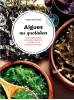
My name is Eric Viard. I'm an ISTOM engineer. I founded Biovie in 2007 and I've been vegan for 33 years now — so questions about food contamination have been following me since my time in the lecture hall. With Aurélie, we spent six years writing Algues au quotidien (Gallimard/Alternatives), a book that received the Gourmand World Cookbook Award 2025 and the Prix de l'Académie Nationale de Cuisine 2025. A whole chapter — chapter 7 — is dedicated precisely to seaweeds as allies against heavy metals.
This article is the complete guide I wish I'd been able to read in 2026: what cadmium actually is, why it settles in our kidneys for 20 years, where it really comes from, how ANSES measured the situation, where it hides on your plate, and most importantly what you can do starting tomorrow morning without guilt, without panic, without doing things halfway.
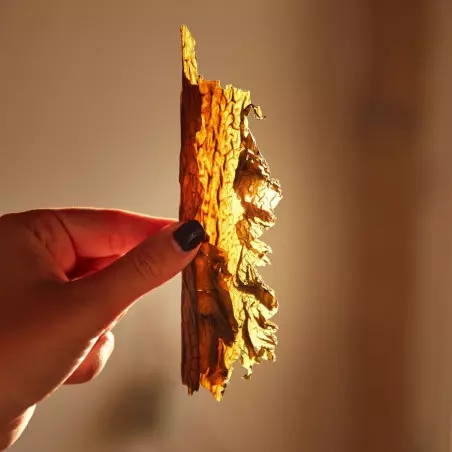
What is cadmium, exactly?
Cadmium is a metal. Chemical symbol Cd, atomic number 48 on the periodic table — to place it, just below zinc, and this detail will become important. It's a natural element. It's been in the Earth's crust from the start, in tiny amounts, of the order of a few micrograms per kilo of rock.
What has changed is us. Since the 19th century, industry has multiplied its presence in the biosphere by tenfold: mining extraction (often as a zinc byproduct), galvanization, Ni-Cd batteries, red-orange pigments in plastics and paint, and — central to what we're going to look at — phosphate fertilizers. Concretely, what cadmium does when it enters a living organism is that it cheats. Its ionic structure looks so much like that of zinc and calcium that it takes their place in certain enzymes and certain cellular transports. Except that once it's installed, it doesn't do the job. It blocks. This is what's called ionic mimicry, and it's what explains its silent, slow toxicity — the kind that gives no symptom for decades.
If you want an image that sticks, let me take you back to 1950. In Japan, in the Jinzū river valley, hundreds of people — mostly postmenopausal women — develop a horrific disease, named itai-itai (literally "ouch-ouch") because their bones become so brittle they snap at the slightest movement. The cause: a zinc mine upstream releasing cadmium into the river. The rice irrigated downstream concentrates the metal. It will take more than twenty years to make the connection. This is the modern birth certificate of cadmium toxicology.
There you go. A mundane industrial metal that sneaks in where zinc and calcium should be, and that settles in for a very long time. Now we can look at why exactly it's a problem.
Why is cadmium a real health concern?
A half-life of 10 to 20 years in the kidneys
This is the first figure you have to absorb to understand. When you ingest cadmium — say through a portion of bread — your body only eliminates a tiny fraction each day. The rest accumulates. Its biological half-life is estimated at 10 to 20 years in renal tissue (EFSA, 2009).
Concretely, what this duration means in real life: one microgram of cadmium absorbed at age 30 is still there, halfway gone, when you turn 45. That's why occupational physicians measure cadmium exposure in entire decades, not in weeks. Your body keeps a counter, and it doesn't reset.
30% of body burden in the kidneys
Of all the cadmium you accumulate over a lifetime, around 30% concentrates in the kidneys, mostly in the renal cortex. The rest distributes between liver, pancreas, bones.
What this means day-to-day — when a threshold is crossed: the renal tubules, the fine structures that filter your blood and produce your urine, start leaking proteins (β2-microglobulin, the classic marker). It's called tubulopathy. At first, it's silent. You feel nothing. Your blood panel reads normal. It's only after several years that kidney function deteriorates — and by that stage, the renal tissue is already significantly damaged.
Certain carcinogen since 1993
The International Agency for Research on Cancer (IARC, WHO) classified cadmium and its compounds in Group 1 — certain carcinogen for humans — back in 1993 (IARC Monographs, Vol. 100C). This is the highest level of evidence. The same as asbestos, tobacco, or benzene.
Beyond the figure, here's what it means in practice: for high exposures (miners, industrial workers), the links are established with lung cancer. For lower but chronic dietary exposures — the ones that concern you and me — research is currently evaluating links with kidney, breast, and endometrial cancers. Ongoing studies, particularly within the European EPIC cohorts, are still refining the question.
The EFSA threshold: 2.5 µg/kg body weight per week
To set an exploitable benchmark, the European Food Safety Authority established in 2009 a Tolerable Weekly Intake of 2.5 micrograms of cadmium per kilo of body weight per week (EFSA Journal, 2011).
To make this concrete: for someone weighing 70 kg, that's 175 micrograms of cadmium per week maximum — 25 micrograms per day. It's very little. A generous portion of oysters easily delivers double that in one sitting. A bar of 85% dark chocolate, about a quarter. Coherence plays out on the daily average, not on the spike of one meal. That's your dashboard.
Where does cadmium come from on your plate?
Soil, phosphate fertilizers, and Morocco
This is the root of the problem — quite literally. Cadmium is naturally present in certain phosphate rocks that are extracted to make agricultural fertilizers. And these rocks come mostly from a handful of countries: Morocco (about 70% of the world's reserves), Tunisia, Russia. Depending on the deposit, cadmium content in raw phosphate ranges from a few milligrams per kilo to over 100 mg/kg.
To put this in practical terms: every bag of phosphate fertilizer spread on a field deposits a small dose of cadmium in the soil. Year after year, it accumulates. European agricultural soils have received several decades of inputs. Today, the European fertilizer regulation (EU 2019/1009) caps the authorized content, but the stock already in the soil is still there.
This is exactly what France's Labbé-Biteau bill of April 14, 2026, is meant to address — aiming to progressively lower cadmium thresholds in fertilizers sold on French territory. For the first time, we're talking about the problem at its agronomic source. It's slow, but it's the right direction.
From plant to plate: the hyperaccumulators
Not all plants behave the same way toward cadmium in the soil. Some ignore it. Others draw it in like a magnet. These last ones are called hyperaccumulators.
The list includes: sunflower, flax (seeds and oil), rice (especially brown rice, because the outer layer concentrates the metal), wheat (so, bread), some wild brassicas — paradoxically. Cacao too, particularly in the volcanic soils of Latin America. And tobacco, which we'll come back to.
What this characteristic changes for you: two potatoes that look identical can contain very different cadmium concentrations depending on the soil where they grew. That's why recommendations that just tell you to "eat less chocolate" are at best incomplete — at worst, missing the point.
Tobacco: an ignored but major route for smokers
A point few articles tackle squarely: the tobacco plant is itself a hyperaccumulator. And each cigarette transfers cadmium directly to the lungs, where absorption is far more efficient than via the digestive route (around 50% pulmonary absorption versus 5% digestive).
To give you an idea: a one-pack-a-day smoker doubles their body cadmium impregnation compared to a non-smoker on the same diet (ANSES report 2026). Concretely, this means that quitting smoking is the most powerful individual measure that exists for this metal — well ahead of any dietary change. If you smoke and you're reading this article, that's lever number one. By far.
The ANSES 2026 report: 47.6% of French adults concerned
In February-March 2026, France's National Agency for Food, Environmental and Occupational Health Safety published its updated assessment of cadmium exposure in the adult French population. The figures come from Esteban, a biomonitoring study that measured cadmiuria (cadmium in the urine) on a representative sample.
The finding: 47.6% of French adults aged 18 to 60 show a cadmiuria above the toxicological reference value. Nearly one French adult out of two. And this isn't a snapshot of recent exposure — cadmiuria reflects chronic impregnation, accumulated over years.
The second figure is the one that changes the conversation: among non-smokers, 98% of this impregnation comes from food. Not air. Not water. Not skin contact. From what we eat. As simple and as decisive as that.
What this means in lived experience, when you read these figures quietly in the morning: the phrase "it doesn't depend on me" no longer holds. For 98% of your impregnation, it depends exclusively on the choices you make in your kitchen. It's uncomfortable, but it's also deeply freeing — because it means there's an immediate, concrete lever of action that doesn't wait for the industry or the legislator.
Last data point from the report, and the most concerning: the trend has been rising for 20 years. We accumulate more today than we did in the 2000s. The exact opposite of what public health policy should be producing.
Top dietary sources in the everyday plate
Cereals and bread: the number-one source
This is the post that concentrates the bulk of the intake, and it's a surprise for many readers. Cereals and bakery products account for between 25% and 35% of total dietary cadmium exposure in adults (EAT2 study, ANSES). Not because the concentration is very high — it's modest, around 30 to 60 micrograms per kilo — but because consumption is massive. Bread, pasta, semolina, cakes, crackers: all of that adds up.
Wheat is sensitive to soil cadmium. Sourdough bread doesn't change much on that specific point — sourdough plays on digestibility and glycemic index, not on the metal content of the grain. For your day-to-day: varying cereals (buckwheat, millet, quinoa, which are less hyperaccumulating) and favoring known origins makes a measurable difference over the year.
Potatoes, mollusks, organ meats
The second block of sources, in decreasing order of intake:
- Potatoes: 10 to 15% of exposure. It's the consumption volume, not the concentration, that weighs. A French potato eaten with skin contains little cadmium, but we eat a lot of them.
- Mollusks and shellfish: oysters, mussels, scallops are natural concentrators. A few dozen to a few hundred micrograms per kilo. A dozen oysters easily delivers half of EFSA's weekly dose in one go.
- Organ meats, especially kidneys: beef, pork, veal kidneys accumulate — like our own — cadmium throughout the animal's life. Concentration sometimes above 1 mg/kg. To be consumed rarely, and avoided for pregnant women and children.
Dark chocolate: a false big problem
I know you've been waiting for this paragraph. Since 2018, alarmist articles have multiplied about cadmium in dark chocolate, particularly the high percentages. Here is the reality, with the numbers.
Yes, Latin American cacao (Peru, Ecuador, Bolivia) is often more loaded with cadmium than West African cacao, because of volcanic soils. Yes, 85% chocolate contains mechanically more than 70%, which contains more than 50%. But the global share of chocolate in French dietary cadmium exposure remains around 2 to 3%, according to ANSES data.
Concretely: if you eat two squares of 70% dark chocolate per day, the cadmium delivered is negligible compared to that of your bread. If you start devouring a whole bar of 85% every day, then we can talk. But panicking about chocolate while eating three sandwiches a day is fighting the wrong battle — and missing the real issue.
Hidden hyperaccumulators: sunflower, flax, brown rice, spinach
Here's the list few articles do justice to:
- Sunflower seeds: a recognized hyperaccumulator. If you eat a lot of them daily in your salads, intake climbs fast.
- Flaxseed and flax oil: same family, same behavior. The seed is more problematic than the oil.
- Brown (whole) rice: the outer layer (bran) concentrates the metal. White rice contains less, but obviously also fewer micronutrients. The trade-off plays on origin: rice from Southeast Asia (Cambodia, Thailand) is generally more loaded than rice from Camargue (France) or northern Italy.
- Spinach and oxalis: lower impact, but worth knowing if you make these your daily green base.
Dietary allies: what science shows
This section describes effects observed in scientific studies. None of the following recommendations constitutes a therapeutic promise. The best strategy against cadmium remains to limit intake, as part of a varied, balanced diet and a healthy lifestyle.
Brown seaweeds: alginates and fucoidans
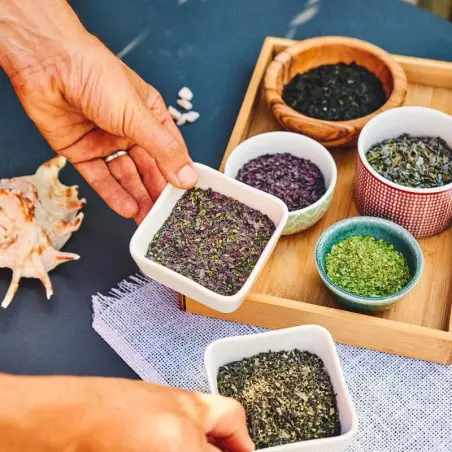
This is the ground where I've spent many of my years of practice. Brown seaweeds (wakame, kombu, dulse, kelp) contain two molecular classes that have been extensively studied for their affinity with heavy metals: alginates (cell wall polysaccharides) and fucoidans (sulfated polysaccharides).
Several in vitro and animal model studies have shown that alginates bind cadmium in the intestinal lumen and reduce its absorption. Concretely, what happens: the alginate molecule forms a complex with the cadmium ion that is no longer absorbable by the intestinal mucosa, and that leaves with the stool rather than entering the bloodstream. This mechanism has been documented since the 1960s — it has been used in emergency medicine for radioactive contamination.
To bring this back into your daily life: integrating 1 to 3 grams of dried brown seaweed per day (for instance a stamp-sized piece of kombu in the broth, or a teaspoon of rehydrated wakame in a salad) remains a simple, documented approach that requires no equipment.
Sprouted brassicas: sulforaphane and the Nrf2 pathway
The second pillar is the family of sprouted brassicas: broccoli, radish, mustard, kale sprouting seeds. When you sprout them, their sulforaphane content (and precursors) literally explodes — up to 50 to 100 times more than in the mature plant. Sulforaphane activates a cellular pathway called Nrf2, which orchestrates the expression of several defense enzymes, including glutathione-S-transferase, involved in the conjugation and elimination of various toxic compounds.
What this changes in how you perceive a meal: adding a handful of broccoli sprouts to a midday plate isn't a superfood gesture. It's a subtle support of an enzymatic system your body already has — but that it needs to mobilize.
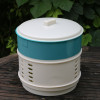
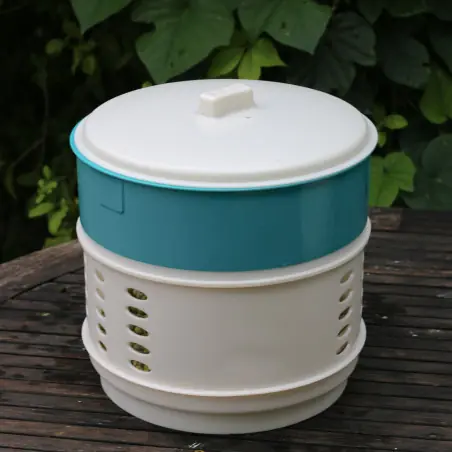
I designed the EasyGreen sprouter precisely for this: having fresh sprouts at home, every day, without complicated equipment, without rinsing three times a day. You put the seeds in, you come back three days later. For anyone who wants to integrate sprouted brassicas into their routine without mental load, it's the most accessible tool I know.
Nutritional antagonists: zinc, selenium, iron, calcium
Remember the ionic mimicry of cadmium with zinc and calcium. That's where it gets interesting: a correct nutritional status in zinc, selenium, iron, and calcium reduces intestinal absorption of cadmium, because the cellular transporters are already occupied by the legitimate minerals.
It's very different from a "detox cure". It's just a solid nutritional foundation. Concretely: pumpkin seeds (zinc), Brazil nuts (selenium, 1 a day is enough), legumes (iron), tahini and almonds (plant calcium). Nothing exotic. Nothing expensive. Just a dense base on the plate.
Antioxidants: vitamin C, vitamin E, polyphenols
Last pillar, more general: dietary antioxidants support the cellular response to oxidative stress induced by cadmium in tissues where it accumulates (kidney, liver). Colorful vegetables, red berries, green tea, fresh aromatic herbs. Not spectacular on Instagram, but cumulative over a lifetime.
What Biovie customers say
"I've been ordering from Biovie for years — fresh seaweed for my seaweed tartare, Nori sheets for my sushi, sea plasma, my yogurt and vegan cheese ferments, and many other delicious products. I've always been delighted with the quality of the products and the service."
— Florence D., Google review 5/5 (translated from French)"I've been ordering from Biovie for some time now and I'm always satisfied with the excellent quality/price ratio plus the quality of service from the team: responsiveness, professionalism. A committed team. The sprouted seeds yield well, the EasyGreen sprouter makes germination child's play."
— Meriem L., Google review 5/5 (translated from French)"The best online shop dedicated to living and vegan food that one can find in France. The products are of excellent quality, from ethically responsible suppliers, and customer service is top notch!"
— Carole W., Google review 5/5 (translated from French)
What to do, starting tomorrow
Here are the five levers, ranked by real-world impact, from the most powerful to the finest. If you can only keep three, take the first three.
1. If you smoke, quit. By far the most powerful individual measure against cadmium. Doubling your impregnation over 20 years through the pulmonary route, no dietary adjustment compensates for that. If full quitting feels out of reach today, cut by half to start. You'll come back to it.
2. Vary your cereals and look at the origin of your bread. Step out of wheat monoculture. Integrate buckwheat, millet, quinoa, einkorn. For bread, favor sourdough breads made from varied flours, from short French or organic supply chains. You don't remove anything — you replace part.
3. Put a brown seaweed in the broth, two to three times a week. A piece of kombu (stamp-sized, really) in the pot while simmering a soup or rice. It lightly perfumes, it delivers the alginates, and it becomes an invisible habit within two weeks. For our part, we recommend going further — I talk about all this in our podcast Algues au quotidien.
4. Add a handful of sprouted brassicas three times a week. Broccoli, radish, mustard. On a salad, in a wrap, in a raw or cooked soup. 30 seconds when plating. That's it.
5. Care for your zinc, selenium, iron, plant-calcium status. No multivitamin complex as a first-line move. Real foods: pumpkin seeds, Brazil nuts (just one a day covers selenium), sprouted legumes, tahini, almonds. If you suspect a deficiency, a blood panel with your doctor costs 20 euros and settles the question.
One more word, because it has to be said: there is no "miracle cadmium detox cure". No seaweed, no plant, no protocol will magically "extract" the cadmium already settled in your kidneys. The only real lever is to reduce intake and properly support the terrain — we'll come back to this in a future article. Patience plays for you: one microgram not absorbed today is one microgram that won't be there in 15 years.
FAQ: your questions about cadmium
What foods are highest in cadmium?
By raw concentration, the highest are organ meats (kidneys, liver) and certain mollusks (oysters, mussels), which can exceed one milligram per kilo. By actual contribution to your daily exposure, however, cereals and bread dominate by a wide margin (25-35% of total intake in adults), followed by potatoes (10-15%). It's the combination of concentration × quantity consumed that counts.
How do you remove cadmium from your body?
Let's be clear: cadmium already accumulated in the kidneys does not eliminate quickly — its biological half-life is 10 to 20 years. There is no validated "cadmium detox" to date. What several levers can do is reduce absorption of new intake (alginates from brown seaweeds, correct nutritional status in zinc, selenium, iron, and calcium) and support cellular defenses (sulforaphane from sprouted brassicas). The realistic path is to reduce intake and care for the terrain — not to try to "purge" what's already settled.
How can I reduce cadmium exposure in my diet?
Five actions, ranked by impact: if you smoke, quit (measure #1); vary your cereals beyond wheat; integrate a brown seaweed into broths 2 to 3 times a week; add sprouted brassicas several times a week; care for your zinc, selenium, iron, and calcium status. None of these actions eliminate the cadmium already present, but all reduce future accumulation.
What bread should I eat to avoid cadmium?
Favor sourdough breads made from varied flours (einkorn, buckwheat, rye, blends) from short French or organic supply chains. Conventional monoculture wheat carries the most. Industrial white bread isn't a good alternative — less cadmium perhaps, but also fewer fibers, fewer minerals, and a high glycemic index. Diversification remains the best strategy.
Is coffee high in cadmium?
No, coffee is not a significant source of cadmium in everyday diet. Coffee beans contain traces, but brewing transfers only a tiny fraction of those traces into the cup. Its contribution to total exposure is negligible — well below 1%. No reason to modify your coffee intake for this reason.
Why is there cadmium in chocolate?
Cacao trees often grow in volcanic soils of Latin America (Peru, Ecuador, Bolivia) that are naturally richer in cadmium. The cacao bean absorbs and concentrates this metal. The higher the cacao percentage in the bar (70, 80, 85%), the higher the cadmium content. But the overall contribution of chocolate to French dietary exposure remains around 2-3% — modest compared to cereals (25-35%). No chocolate panic, then — unless very massive and exclusive consumption of high-percentage South American cacao.
Why is there cadmium in fertilizers?
Phosphate fertilizers are made from phosphate rocks extracted mainly from Morocco (about 70% of global reserves), Tunisia, and Russia. These rocks naturally contain cadmium in variable amounts. European regulation EU 2019/1009 now caps the authorized content in fertilizers sold, but European agricultural soils received decades of inputs before this cap. France's Labbé-Biteau bill of April 14, 2026, aims to tighten these thresholds further on French territory.
How do I find out my cadmium level?
The most-used measurement is cadmiuria (cadmium in the urine), which reflects chronic impregnation. It's prescribed by a physician at a medical analysis laboratory. Cost: generally between 25 and 50 euros, not reimbursed by health insurance routinely except in specific medical situations (occupational exposure, kidney issues being explored). For most people, the test isn't essential — adopting the preventive dietary measures is the pragmatic approach. For those who want a benchmark, talk to your physician.
To conclude
47.6% of French adults concerned, 98% of impregnation from dietary origin, a half-life of 10 to 20 years in the kidneys, and a rising trend over 20 years. These figures aren't anxiety-inducing — they are actionable. For 98% of the problem, your kitchen steers the ship.
And what's reassuring is that the levers don't demand an exceptional budget or lab equipment. Diversify the cereals. Drop a stamp of kombu into the broth. Grow broccoli sprouts on the countertop. Care for zinc-selenium-iron-calcium status with real foods. And — for those concerned — quit smoking.
If you want to explore the topic more deeply, at Biovie we've sourced the brown seaweeds I use at home myself since 2009 (kombu, wakame, dulse), the brassicas sprouting seeds bundled with the EasyGreen sprouter, and chlorella powder that can complement the setup. All in traceable short supply chains, with an annual chlorella harvest we systematically test before shelving.
With Aurélie, we devoted chapter 7 of Algues au quotidien to the culinary and nutritional use of brown seaweeds — if you want the historical context, the traditional cuisine methods from Asia and Brittany, and everyday recipes, the book goes well beyond what I can say here.
References
- ANSES (2026). "Cadmium: take action immediately at the source of soil contamination". Report, February 2026.
- EFSA Panel on Contaminants in the Food Chain (2009). "Cadmium in food — Scientific opinion of the Panel on Contaminants in the Food Chain". EFSA Journal, 980, 1-139. DOI: 10.2903/j.efsa.2009.980
- EFSA (2011). "Statement on tolerable weekly intake for cadmium". EFSA Journal, 9(2):1975.
- IARC (2012). "Cadmium and cadmium compounds". IARC Monographs on the Evaluation of Carcinogenic Risks to Humans, Volume 100C.
- ANSES (2026). "What is cadmium and how can we reduce our exposure to it?". General information page, ANSES.
- ANSES — CIQUAL (2026). "French food composition table — Cadmium content".
Last update: May 2026. Article reviewed by Éric Viard, Biovie founder and ISTOM engineer, co-author of "Algues au quotidien" (Gallimard, 2024) — World's Best Cookbook, Gourmand Cookbook Awards 2025, and Best French Cookbook, Académie Nationale de Cuisine 2025.
The information presented in this article is provided for informational purposes and does not constitute medical advice. Consult a healthcare professional before making any significant change to your diet or supplementation, particularly in case of pregnancy, breastfeeding, ongoing medical treatment, or for children. Statements in this article have not been evaluated by the FDA; they are not intended to diagnose, treat, cure, or prevent any disease.