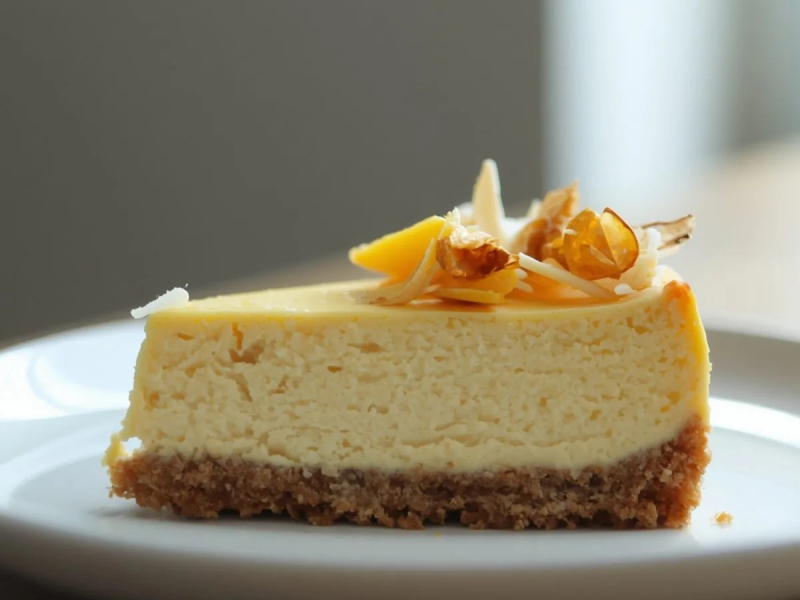

There's something a little theatrical about slicing into a cheesecake and finding dark blackberry ribbons running through its heart. This raw, no-bake version pairs a bright, tangy filling with a blackberry swirl, and the effect is far easier to pull off than it looks: a squeeze bottle and a chopstick do almost all the work.
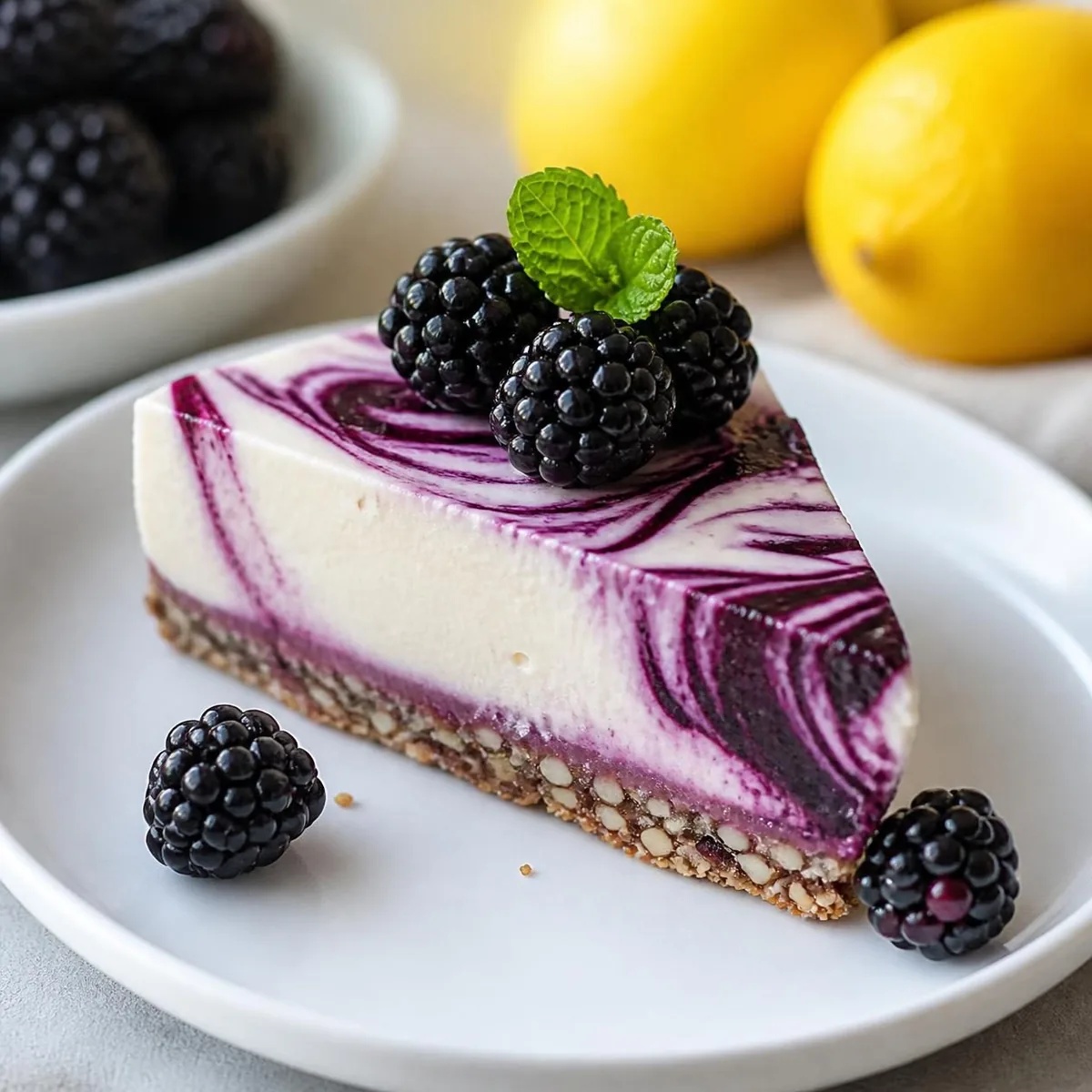
Raw Lemon and Blackberry Cheesecake

Share this article

Ingredients
Crust
- 2 cups raw almonds
- 3 oz date paste (about 85 g)
- 1 tsp vanilla extract
- ⅛ tsp sea salt
Blackberry swirl
- 1 cup frozen blackberries, thawed
- 3 pitted dates (a short soak helps but isn't essential)
- 1 tsp lemon juice
- ¾ cup reserved juice from the thawed blackberries
Cheesecake filling
- 3 cups raw cashews, soaked 2 hours
- 1½ cups almond milk
- ¾ cup raw agave syrup
- 1 cup fresh lemon juice
- 1 tbsp liquid vanilla
- ¼ tsp sea salt
- 3 tbsp lecithin
- ¾ cup melted coconut oil
- 2 punnets organic blackberries, for garnish (optional)
Method
- Process the almonds in a food processor fitted with the S-blade until finely ground. Add the salt, vanilla and half of the date paste, then keep processing, scraping down the sides, until the mixture climbs up the walls of the bowl.
- Add the rest of the date paste and process until smooth — the dough should hold together when pinched between your fingers.
- Turn a 20 cm springform pan upside down so the base sits inverted (this will make unmolding easier later) and lightly grease it with coconut oil. Press the crust mixture evenly into the bottom, using gentle, even pressure so it doesn't stick. Bringing it up the sides is optional. Set the pan aside.
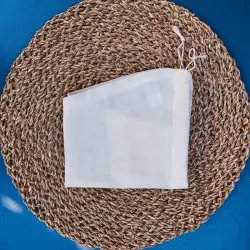
- For the swirl, blend the thawed blackberries, dates, lemon juice and reserved juice until perfectly smooth. Strain the mixture through a nut milk bag to remove the seeds and pulp, then pour the strained syrup into a squeeze bottle.
- For the filling, blend the cashews, almond milk, agave, lemon juice, vanilla and salt — everything except the coconut oil and lecithin — until silky, which can take several minutes.
- Add the coconut oil and lecithin and blend again just until fully incorporated.
- Pour the filling over the prepared crust, filling almost to the top, and tap the pan on the counter to release any air bubbles.
- Press the tip of the bottle into the filling at about ten spots spread across the pan, releasing a little syrup each time — you won't see any colour yet at this stage.
- Slide a chopstick or skewer through the filling in swirling motions to bring the hidden syrup up in visible ribbons, staying close enough to the surface so as not to disturb the crust underneath.
- Add a little more syrup on top, then run a clean chopstick through it to finish the swirl pattern on the surface.
- Freeze for 1 to 2 hours, until the centre feels firm to the touch.
Keeps in the fridge for up to about four days.
The full range Oilseeds, nuts, seeds
20 products
Discover the full range
FAQ: your questions about the raw blackberry cheesecake
How does a no-bake cheesecake hold together?
The structure comes from the combination of coconut oil and lecithin in the filling: when chilled, the coconut oil hardens and the lecithin binds everything together, allowing the cheesecake to hold its shape without gelatine or baking. 1 to 2 hours in the freezer is enough for it to slice cleanly.
What kind of cheese goes in a no-bake cheesecake?
In a vegan, raw version like this one, there's no cheese at all: soaked cashews, blended with almond milk and lemon juice, replace cream cheese and give a texture that's just as creamy, with a light tang.
How many blackberries can you eat per day?
There's no official recommended amount, but a typical serving is around 100 to 150 g, or a small handful. Blackberries are low in calories and fit easily into everyday eating, especially in a dessert like this one, where they add colour and freshness without excess added sugar.
What are the digestive benefits of blackberries?
Rich in fibre and water, blackberries support healthy digestion and bowel comfort. They also provide antioxidants such as anthocyanins, which help protect cells, making them both a delicious and nutritionally interesting ingredient.
Share this article