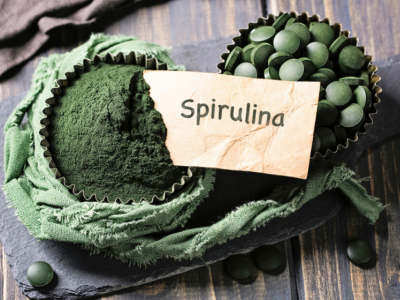
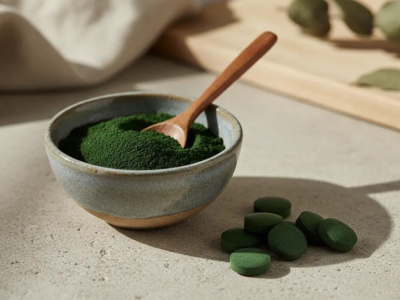
Spirulina, carotenoids, phycocyanin, Klamath algae, and chlorella: can living foods really prepare your skin for the sun and enhance your tan? Here is a 2026 Biovie guide, sourced, honest, and compliant with European regulations - because your skin deserves better than empty promises.
Spirulina and tanning: what diet can (and cannot) do for your skin
Let's be clear right away: no food or supplement can replace sunscreen, a hat, or covering clothing. Since 2012, European regulations (Regulation EC No 1924/2006) prohibit dietary supplements from claiming sun protection. This is an essential safeguard: oral photoprotection exists, but it remains marginal compared to well-applied topical protection.
That said, what living foods truly do for your skin is considerable. Clinical studies published in Photodermatology, Photoimmunology & Photomedicine show that carotenoids ingested regularly reduce UV-induced oxidative stress, improve skin elasticity, and support melanin regulation (Baswan et al. 2021, PMID 33955073). In this context, spirulina is not a "super-sunscreen" - it is a nutrient-dense food, rich in antioxidants, pigments, and micronutrients, that supports the skin before, during, and after exposure.
Here's how, in this article, we will address the topic: the real mechanisms, the molecules of interest (carotenoids, phycocyanin, fatty acids), the practical 4 to 6-week ritual, ANSES precautions and contraindications, and simple recipes to incorporate spirulina into your summer diet.
Preparing your skin for the sun from the inside: the 3 nutritional levers that matter
Carotenoids (provitamin A) and melanin
Carotenoids - beta-carotene, lycopene, lutein, astaxanthin - are fat-soluble plant pigments. A portion (mainly beta-carotene) is converted into vitamin A (retinol) by the body. Vitamin A supports the cellular renewal of the epidermis, while the non-converted carotenoids accumulate in the lipid layer of the stratum corneum, where they neutralize free radicals generated by UVA. They are not "sunscreens" in the dermatological sense - but they limit secondary damage.
Antioxidants and UV-Induced Oxidative Stress
The sun not only attacks the skin on the surface: it generates reactive oxygen species (ROS) deep down that damage collagen, the DNA of keratinocytes, and the extracellular matrix. A diet rich in antioxidants (vitamin C, vitamin E, polyphenols, phycocyanin, chlorophyll) reduces this oxidative stress. Spirulina, specifically, is a cyanobacterium whose antioxidant profile has been extensively studied.
Essential Fatty Acids and Skin Barrier
Well-hydrated and supple skin better withstands heat and UV rays. Omega-3 fatty acids (ALA) from flaxseed oil and phospholipids strengthen the skin's lipid barrier. Adding a drizzle of raw flaxseed or rapeseed oil to a dish is also the best way to optimize the bioavailability of carotenoids, which are fat-soluble.
Spirulina: The Super Ally for Your Sun Capital
Nutritional Composition (Ciqual - ANSES, per 100 g of dried spirulina)
Energy: 388 kcal
Proteins: 57.5 g (all essential amino acids)
Iron: 28.5 mg
Beta-carotene: 342 µg
B vitamins (B1, B2, B3, B6)
Magnesium, potassium, zinc, copper
Phycocyanin: unique blue pigment (up to 15-20% of dry weight depending on strains)
With 342 µg of beta-carotene per 100 g, 5 g of daily spirulina provides about 17 µg - a tiny fraction of the recommended intake. For comparison, 100 g of raw carrot contains 38 times more (≈ 12,800 µg). Spirulina is not a major source of dietary carotenoids - this is an important clarification to avoid overselling its virtues.
What it does provide, however, is a cocktail of micronutrients hard to match: complete proteins, bioavailable iron, B vitamins, phycocyanin (detailed below), chlorophyll, enzymes. For more on its general benefits, check out our comprehensive guide to scientifically proven benefits.
Spirulina and Skin: What Research Observes
Several studies explore the effects of spirulina extracts on skin models in vitro or in vivo. A clinical review published in 2021 highlights that carotenoids ingested at nutritional doses support systemic antioxidant capacity and reduce certain markers of UV-induced skin inflammation (Baswan et al. 2021). These effects, modest but real, justify the interest in a rich and varied diet - of which spirulina can be a part.
Phycocyanin: The Photoactive Pigment of Spirulina
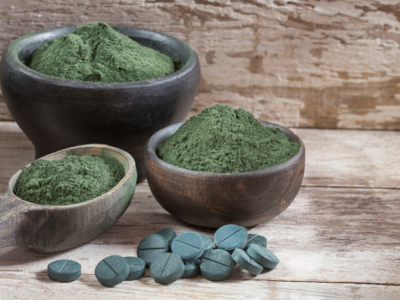
Phycocyanin (C-PC) is the molecule that gives spirulina its intense blue-green color. It represents up to 15-20% of spirulina's dry weight and has been the subject of active research for fifteen years.
What Science Observes About C-Phycocyanin
Park et al. 2021 - protective effect of C-phycocyanin against UVB damage on human HaCaT keratinocytes: reduction of apoptosis, better cell viability (PMID 33809667).
Chen et al. 2023 - anti-photoaging effect of topically applied C-PC on UVB-irradiated mouse skin: reduction of epidermal thickening, preservation of dermal collagen fibers (PMID 37675406).
Works 2024 - exploration of phycocyanin nanoparticles as an adjuvant in solar systems, with good cellular biocompatibility.
Note: these studies mainly focus on purified extracts applied topically or tested in cells. They do not demonstrate that ingesting 5 g of spirulina will protect you from sunburn. However, they suggest that phycocyanin is an interesting active molecule for the skin - which reinforces the coherence of using spirulina nutritionally in a comprehensive strategy.
Klamath Algae, Chlorella, and Other Complementary Micro-Algae
Klamath - The Freshwater Algae from Volcanic Lakes
Klamath algae (Aphanizomenon flos-aquae) is a cousin of spirulina, harvested from Klamath Lake in Oregon. Its carotenoid profile is even richer, providing phenylethylamine (PEA, naturally) and a full spectrum of micronutrients. It ideally complements spirulina for a "freshwater algae" approach to sun preparation.
Chlorella - Chlorophyll and Internal Terrain
Chlorella is the world's richest micro-algae in chlorophyll. Its benefits for the skin include supporting the emunctories (liver, intestines), enhancing cellular hydration quality, and its density in antioxidants. Combining spirulina + chlorella provides a duo that covers proteins, iron, carotenoids, chlorophyll, and antioxidants in just a few spoonfuls.
Marine algae beautifully complement the regimen. Nori provides porphyran (an exclusive antioxidant), dulse is rich in iron and trace elements, and wakame in calcium and fucoxanthin (a brown carotenoid studied for its metabolic effects). Our article dedicated to algae for skin health and our range of fresh and dried marine algae detail practical applications.
Natural Carotenoids: Living Foods to Include in Your Summer Plate
Top 10 Foods Rich in Beta-Carotene (according to Ciqual)
Raw Carrot - approx. 12,800 µg / 100 g
Cooked Sweet Potato - approx. 9,400 µg / 100 g
Raw Spinach - approx. 7,240 µg / 100 g
Raw Pumpkin - approx. 6,020 µg / 100 g
Raw Kale - approx. 5,350 µg / 100 g
Fresh Parsley - approx. 5,050 µg / 100 g
Raw Red Bell Pepper - approx. 1,620 µg / 100 g
Fresh Mango - approx. 640 µg / 100 g
Fresh Apricot - approx. 590 µg / 100 g
Dried Nori Seaweed - approx. 440 µg / 100 g (in culinary usage doses)
Lycopene, Astaxanthin, Lutein: Other Important Carotenoids
Lycopene (cooked tomato, watermelon, pink grapefruit) is one of the most studied carotenoids in nutritional photoprotection. Lutein (spinach, kale, organic egg yolk) supports both skin and eyes. Astaxanthin is found in certain microalgae (Haematococcus pluvialis) - not present in spirulina, but an interesting supplement to know about.
Bioavailability: Oil Changes Everything
Carotenoids are liposoluble. Consuming a carrot without fat absorbs only a modest fraction. Add a drizzle of flaxseed oil, rapeseed, or raw olive oil, and absorption can be multiplied by 3 to 6 times. The same principle applies to spirulina sprinkled on a salad with dressing.
Preparation Ritual Over 4 to 6 Weeks Before Exposure
The effect of carotenoids and antioxidants on the skin is not instantaneous: it builds over several weeks. Here is a realistic and moderate ritual.
Weeks 1-2: Gradual Introduction of Spirulina
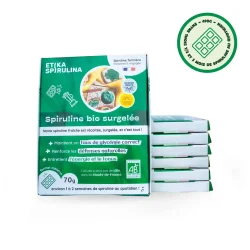
Day 1 to Day 4: 1 g / day (about 2 tablets or ½ level teaspoon), at breakfast, in a fruit juice or smoothie.
Day 5 to Day 10: increase to 2-3 g / day.
Day 11 to Day 14: reach 3-5 g / day depending on your digestive tolerance.
Regulatory Framework: No "Sun Protection" by Supplement
It must be clearly stated: since the full implementation of the Regulation EC No 1924/2006 and the 2012 EFSA opinions, no dietary supplement can claim to provide protection against UV. Living food supports the skin - it does not protect it from sunburn. Sunscreen, hats, and covering clothing remain essential.
ANSES Limit on Beta-Carotene via Supplements: 7 mg/day
ANSES has set the safety limit for beta-carotene intake via dietary supplements at 7 mg per day. Beyond this, the pulmonary risk for smokers (CARET study) is documented. With 5 g of daily spirulina, you are far from this limit - but if you combine several "tanning" supplements (specific capsules, carrot oil, etc.), do the math.
The report Vigil'Anses No. 4 on spirulina-based dietary supplements also details the risks of contamination (heavy metals, cyanotoxins) - which is why we keep reminding: choosing a quality-traced organic spirulina is not a luxury, it's a necessity.
People to Watch
Hemochromatosis: Spirulina is rich in iron, a relative contraindication.
Phenylketonuria: Spirulina contains phenylalanine, a strict contraindication.
Pregnancy and breastfeeding: Seek medical advice before any prolonged use.
Children: Adjust doses (1 to 2 g maximum for younger children, pediatrician's advice).
Quality: Organic, Traced, Without Contaminants
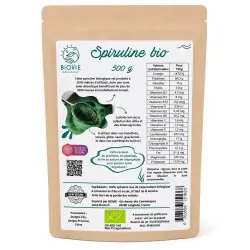
Not all spirulinas are equal. Demand a clearly identified origin, organic certification, regular analyses for heavy metals and cyanotoxins, a recent harvest date, and gentle processing (low-temperature drying to preserve phycocyanin). Our range of organic spirulina meets these criteria.
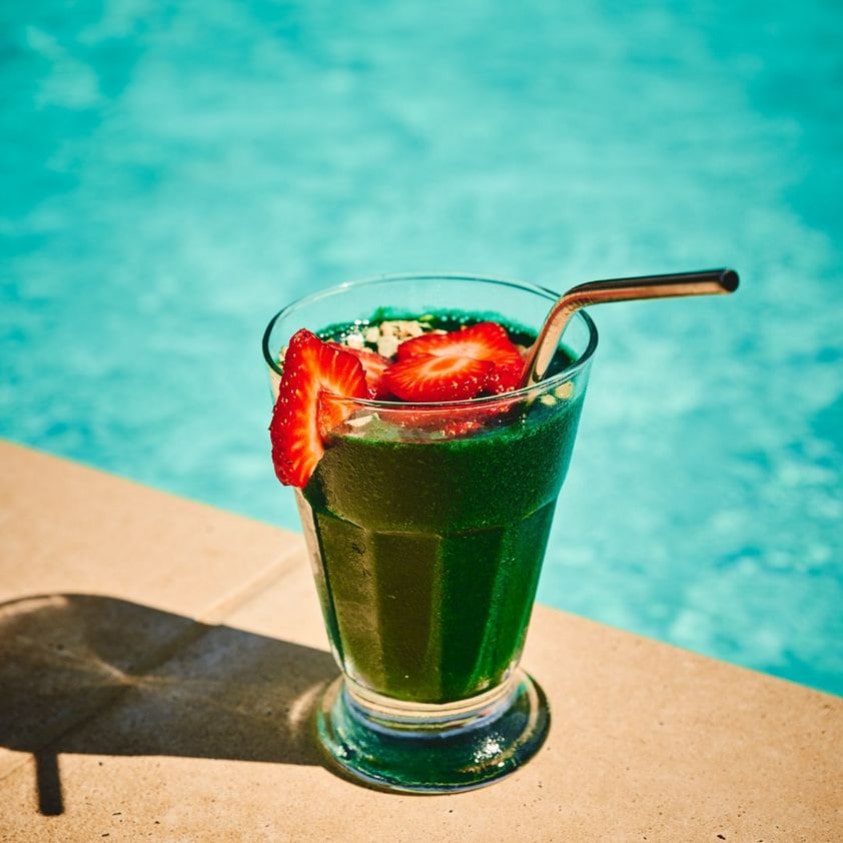
Blend for 30 seconds, serve immediately. Perfect morning drink during sun preparation period.
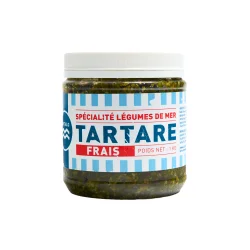
Dulse-Wakame Seaweed Tartare (fresh starter)
Soak dried dulse and wakame for 5 minutes, drain, chop finely. Mix with a bit of chopped shallot, olive oil, lemon, pink peppercorns. Serve on sprouted seed crackers - an iodized starter, rich in brown carotenoids and minerals.
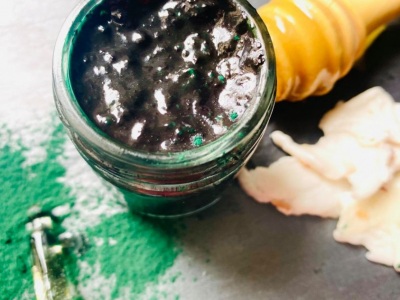
After a day of sun exposure, a soothing mask made from coconut oil and spirulina relieves sunburned skin. Find the detailed recipe in our article Coconut-Spirulina After-Sun Mask.
Pre-Sun Scrub Ritual
To reveal a radiant complexion before the first exposures, a gentle scrub made from coconut sugar and olive oil prepares the skin. Our complete guide: Scrub: Prepare Your Skin for the Perfect Tan.
No, not directly. Spirulina does not significantly increase melanin production. It provides antioxidants (phycocyanin, modest carotenoids) and supports the skin during exposure, but it does not "make you tan" like sun exposure would. European regulations prohibit any such claims on dietary supplements.
How much spirulina per day to prepare the skin for the sun?
As part of a balanced diet, a daily dose of 3 to 5 g of spirulina (equivalent to 1 to 1.5 level teaspoons, or 6 to 10 tablets of 500 mg) is the most common range. Start gradually (1 g in the first few days) to assess your digestive tolerance. Adhere to the ANSES limit of 7 mg of beta-carotene/day from all supplements combined.
When to start a spirulina regimen before summer?
Ideally 4 to 6 weeks before your first exposures. Carotenoids and antioxidants gradually accumulate in the tissues, and their skin-supporting effect builds over time. Maintaining the regimen throughout the summer season enhances the effects.
Does spirulina replace sunscreen?
Absolutely not. No food or dietary supplement replaces topical sun protection (cream with SPF 30-50), a wide-brimmed hat, sunglasses, and covering clothing. Spirulina and a healthy diet support the skin from the inside - they do not filter UV rays.
Which foods are rich in carotenoids for a natural tan?
In descending order according to Ciqual data: carrot, sweet potato, spinach, pumpkin, kale, parsley, red bell pepper, mango, apricot, seaweed. Consume them raw or lightly cooked, with a drizzle of flaxseed, canola, or raw olive oil to maximize the absorption of fat-soluble carotenoids.
Does phycocyanin protect the skin from the sun?
In vitro studies (Park 2021, PMID 33809667) and in vivo studies on animal models (Chen 2023, PMID 37675406) suggest that C-phycocyanin reduces certain UVB damage and photoinduced skin thickening. These results mainly concern purified extracts. This does not mean that a spirulina regimen protects you from sunburn, but it justifies the nutritional interest of phycocyanin as skin support.
What are the contraindications with spirulina?
Main contraindications: phenylketonuria (strict), hemochromatosis (rich in iron), severe autoimmune diseases (immune modulation by phycocyanin). Caution during pregnancy, breastfeeding, and in children - medical advice recommended. Choose traceable organic spirulina to avoid any risk of contamination (heavy metals, cyanotoxins).
Can spirulina, chlorella, and klamath be combined to prepare the skin?
Yes, this synergy is interesting: spirulina provides proteins, iron, and phycocyanin, chlorella adds chlorophyll and detox support, klamath enriches with carotenoids and PEA. Start with a single microalgae, then gradually add the others. Cumulative doses of 3-5 g of each are common, to be adjusted according to your tolerance and provided there are no contraindications.
Disclaimer: The information presented in this article is provided for informational purposes only and does not constitute medical advice. Consult a qualified healthcare professional before making any significant changes to your diet or supplementation. As part of a varied and balanced diet and a healthy lifestyle.