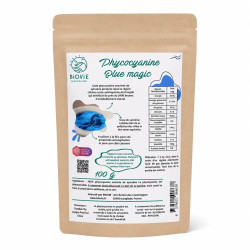



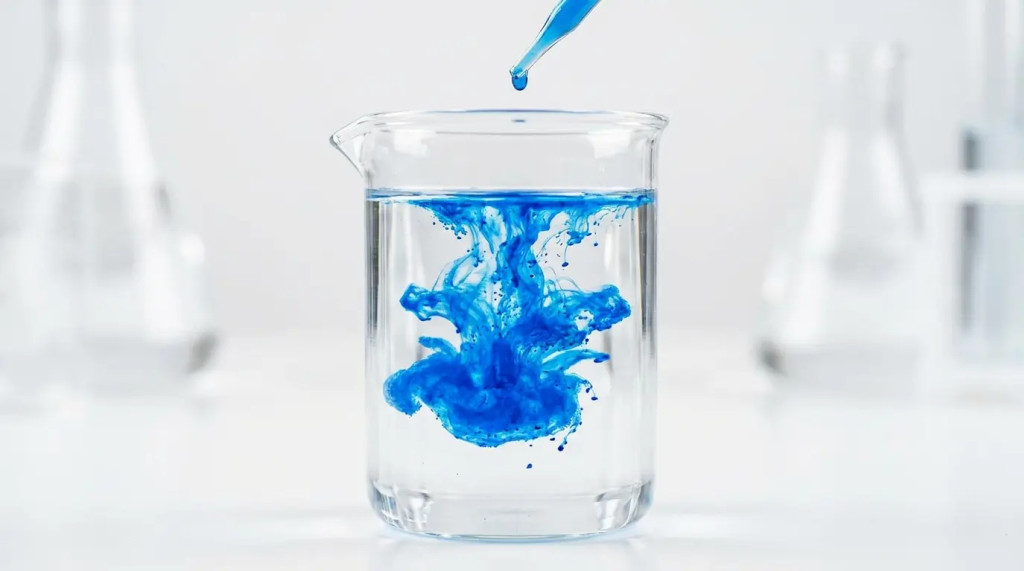
Blue spirulina is a concentrated extract of phycocyanin, the blue pigment naturally present in spirulina.Arthrospira platensisIt is not a different species of algae: it is the same green spirulina, transformed to isolate the blue pigment. The result is an electric blue powder, almost tasteless, containing between 60 and 80% active phycocyanin, compared to only 15 to 20% in the complete green spirulina. Specifically, 2,400 people in France search each month for what blue spirulina is (+19% over the quarter). This renewed interest is not a coincidence: it accompanies the rise of blue smoothie bowls on social media, but the reality of this product goes far beyond the aesthetics of an Instagram photo.
What exactly is blue spirulina ?
Blue spirulina = phycocyanin extracted from green spirulina
Here is what often causes confusion: blue spirulina is not a distinct botanical variety. There is noBlue Arthrospira in nature. What is referred to as "blue spirulina" in commerce is phycocyanin, more specifically C-phycocyanin, extracted and concentrated from the standard green spirulina.
The process is quite simple to understand. Fresh spirulina naturally contains several pigments: chlorophyll (green), carotenoids (orange), and phycocyanin (blue). When only phycocyanin is extracted through an aqueous process, you get this intensely blue powder, almost unreal. The green spirulina we know retains all its pigments, hence its dark color and pronounced taste.
As the founder of Biovie since 2007 and co-author of "Algues au quotidien" (Gallimard, 2024), I have closely followed the development of this product in the French market. What struck me was the speed at which it transitioned from food photographers' smoothie bowls to the shelves of organic grocery stores, and now, to serious questions about its nutritional properties. It is precisely this journey that deserves our attention.
Why is spirulina blue? The role of the pigment phycocyanobilin
The blue color of phycocyanin comes from a specific chromophore, the Phycocyanobilin. This chemical group absorbs the red and orange wavelengths of visible light, which gives the molecule its characteristic blue color, exactly the same principle as chlorophyll, which absorbs red and blue to appear green.
Phycocyanin as a whole, the protein that surrounds this chromophore, is classified among the pigment proteins, called biliproteins, found in cyanobacteria like spirulina as well as in certain red algae.
To learn more about the molecule itself, you can consult our article dedicated to the properties of phycocyanin.
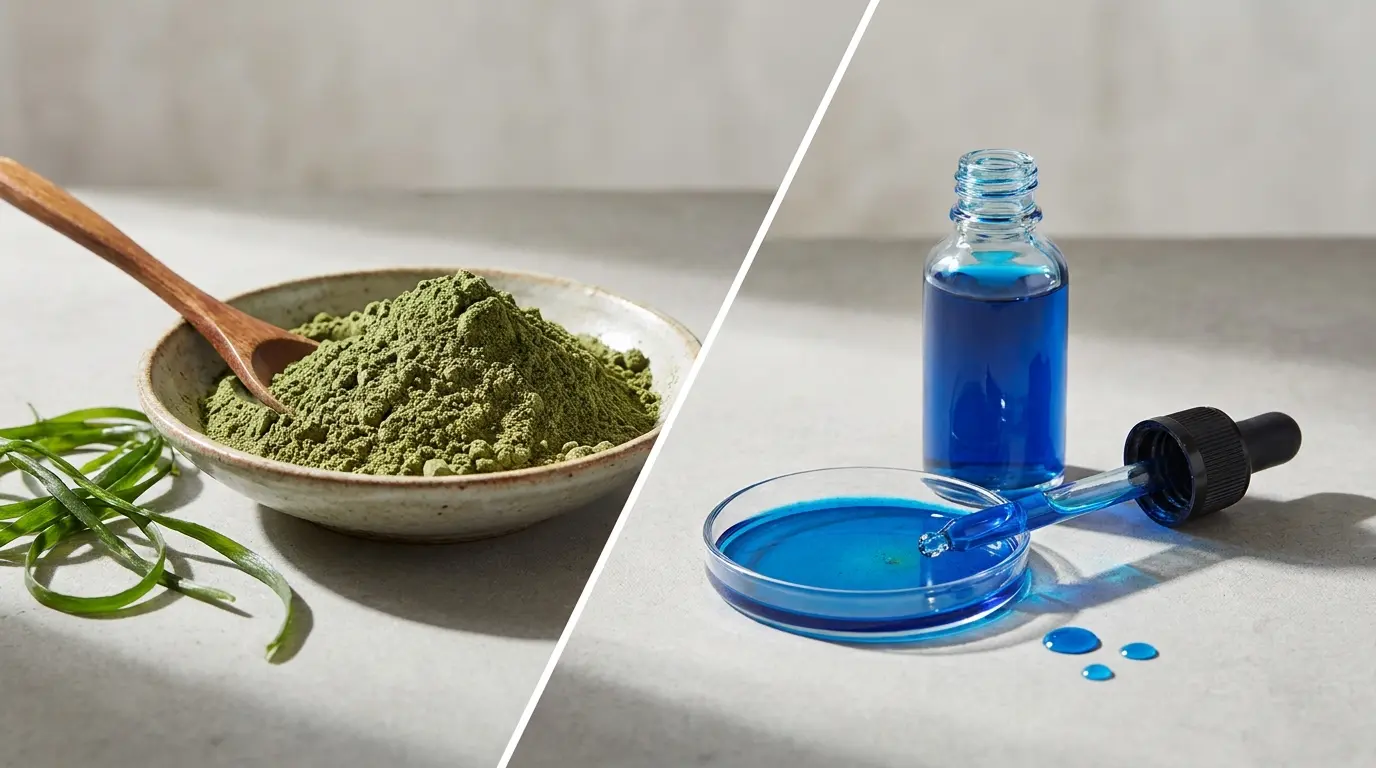
Blue spirulina or green spirulina: what are the concrete differences ?
Comparative nutritional composition
The two products do not have the same nutritional profile at all. Green spirulina contains 60 to 70% protein on a dry matter basis.
Blue spirulina, on the other hand, is a concentrated extract focused on a single pigment. It contains practically no proteins, no iron, no B vitamins, however, it has 60 to 80% active phycocyanin. It's like comparing a whole nut to an oil extract: both have their benefits, but for different uses.
| Criterion | Green spirulina (powder) | Blue spirulina (phycocyanin extract) |
|---|---|---|
| Phycocyanin content | 15–20% | 60–80% |
| Proteins | 60–70% (dry matter) | Line |
| Iron | Yes | No |
| B vitamins | Yes | No |
| Taste | Pronunciation (algae) | Almost neutral |
| Color | Dark green | Electric blue |
| Indicative daily dose | 3 to 5 g/day | 1 to 3 g/day |
| Culinary use of coloring | Limited | Excellent |
Taste, color, and use: what changes in practice
Honestly, that's often where everything is decided. Many people, I hear it regularly in feedback from our clients, have tried green spirulina, and they didn't like the taste. That strong algae taste that dominates any preparation. (We even dedicated an entire article to 12 tips to mask the taste of spirulina, and it is widely read, which says something.)
Blue spirulina powder is radically different. It is almost tasteless. Half a teaspoon in a smoothie, about 1.5 g, and you get that bright blue color without altering the taste of your preparation. For those who are averse to the taste of algae, it's an entry into the world of microalgae without the obligatory taste hurdle.
Which one to choose according to your goal ?
The answer really depends on what you are looking for. It's not one against the other, they are complementary.
- Are you looking for a daily source of protein? Then green spirulina is the base. It is what Aurélie and I have been consuming every day for years, at a rate of 3 to 5 g in a morning smoothie.
- You want a natural food coloring for your recipes, or you simply dislike the taste of seaweed: blue spirulina better meets your needs.
- Ideally? Both. Green spirulina for its protein, blue spirulina for its color. They complement each other without competing.
➡ Do you prefer whole green spirulina? Discover our Tips for choosing a high-quality organic spirulina.
How to use blue spirulina daily ?
In the kitchen: smoothie bowls, lattes, and natural coloring
This is where blue spirulina powder truly shines. It is a 100% natural food coloring with impressive effectiveness. Half a teaspoon is enough to transform an ordinary smoothie into a bright blue concoction. And, its true culinary advantage, it does not alter the taste.
Some practical uses:
- Smoothie bowl : 1 g in a blender with banana, mango, and plant-based milk → electric blue, unchanged fruity taste
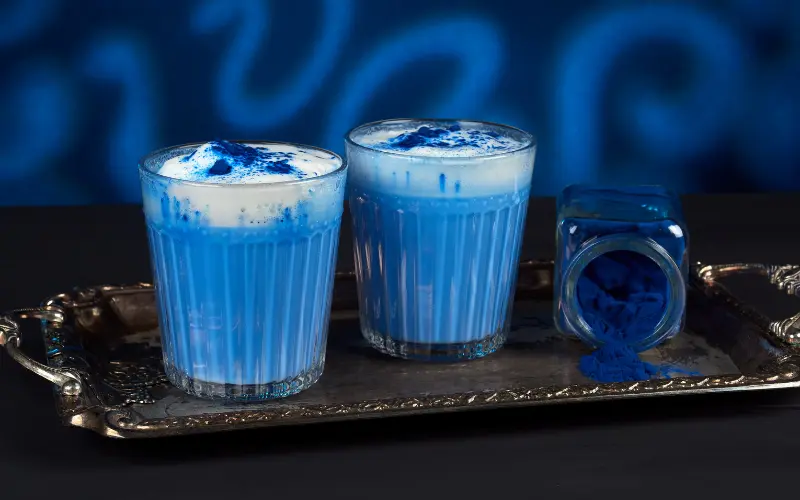
- Blue latte (Butterfly pea latte revisited): 0.5 g in hot plant-based milk with a hint of vanilla → spectacular color, reasonable use
- Homemade ice creams and sorbets : 1 to 2 g to color without additional flavor
- Pastry glazes : to incorporate into a ganache or a white glaze to achieve a natural pastel blue
Attention to the heat: Phycocyanin degrades above 60°C. Avoid incorporating the powder into very hot preparations if you want to preserve the color, which turns green and then disappears at high temperatures.
What is the recommended daily dose of blue spirulina ?
The concentration of phycocyanin is significantly higher than that of green spirulina. Therefore, the doses are lower.
- To start: 0.5 g (a knife tip) the first week, to assess your personal tolerance
- Common dose: 1 to 3 g per day, in a varied and balanced diet
- Culinary use only: very small quantities (0.3 to 0.5 g) are sufficient for the coloring effect, without any nutritional purpose
Specifically, 1 g of blue powder fits in a level teaspoon, approximately. It's very little, this is precisely what explains the economic interest of the product despite a higher unit price than green spirulina: much less of it is used.
Precautions: Who should avoid blue spirulina ?
Phycocyanin is generally well tolerated. A few common-sense precautions:
- People on immunosuppressive or anticoagulant treatment: consult your doctor before any supplementation, as a precaution
- Pregnant or breastfeeding women: caution is advised in the absence of specific clinical data on these populations
- Allergy to algae: Even though blue spirulina is an extract, caution is still advised.
- Phenylketonuria: as with any product containing amino acids, check with your doctor
The main risk with blue spirulina does not come from the molecule itself, it comes from the quality of the product. Poorly produced or insufficiently controlled phycocyanin may contain heavy metals or microcystins (toxins produced by certain cyanobacteria). This is why demanding a certificate of analysis from an independent laboratory is, for me, the non-negotiable condition before purchasing.
How to choose the right blue spirulina ?
Powder or liquid: which form should be preferred ?
On the market, blue spirulina is available in two main forms: powder and liquid. (There are also tablet forms from certain brands, but this form has its own stability and absorbance constraints, which we will not discuss here.)
The powder is the most versatile form:
- Culinary use: natural food coloring
- Precise dosage by spoon (in grams)
- Good stability at room temperature, protected from light and moisture.
- Quantity/price ratio often advantageous
The liquid (concentrated aqueous extracts) have the advantage of containing phycocyanin already in solution, but its stability is much lower, and it generally needs to be stored in the refrigerator once opened and consumed quickly.
For most daily uses, powder remains our recommendation at Biovie. It is the form we have selected for its versatility and practicality.
What quality criteria should be checked before buying ?
Here are the criteria I systematically examine after eighteen years of selecting products at Biovie:
- The E6 index (purity index): A good phycocyanin extract shows an E6 greater than 0.7. Below that, the purity is insufficient. This is the first question to ask any supplier.
- The certificate of analysis from an independent laboratory: absence of heavy metals (lead, mercury, cadmium, arsenic) and microcystins, mandatory, without exception
- Complete traceability: know the country of origin, the cultivation conditions, and the extraction process. At Biovie, we provide this information upon request.
- The announced phycocyanin content: verifiable via the certificate of analysis. Beware of products that do not mention their actual content
Moreover, to understand what distinguishes high-quality spirulina from low-grade spirulina beyond just the blue extract, our article on the organic quality spirulina Detail the selection criteria step by step.
And if you discover green spirulina at the same time and want to know more about it Chlorella, the other flagship microalgae of Biovie, is a very useful complementary read.