




For 30 years, I have been using and testing filtration systems. The topic has never been as critical as it is today.
The three most effective methods for removing pollutants from tap water are reverse osmosis, ceramic filtration, and activated carbon. Each targets different contaminants: reverse osmosis filters up to 99% of PFAS and heavy metals, activated carbon neutralizes chlorine and pesticides, and ceramic blocks bacteria and microplastics.
Do you drink tap water with confidence? In 2024, 43% of the samples tested in France contained PFAS - those "forever" pollutants that your Brita pitcher doesn't filter out. I'm not telling you this to scare you, but because as an agronomist, when I see these figures, I think it's time to talk about it clearly. The good news is that simple, natural, and accessible solutions exist to filter tap water from pollutants. And that's exactly what I will detail in this article.
Why filtering tap water in France has become necessary
Pollutants detected in tap water in 2024-2025
When we talk about water quality in France, we often hear "our water is among the most monitored in the world." This is true. However, monitored does not mean free of pollutants.
Specifically, here is what recent analyses reveal:
- PFAS (Per- and polyfluoroalkyl substances): 43% of tap water in France contains detectable PFAS, according to data from Générations Futures and ARS in 2024. These substances are nicknamed "forever pollutants" because they almost never degrade in the environment. They are found in food packaging, non-stick pans, waterproof textiles, and they end up in our groundwater.
- Vinyl chloride monomer (VCM) : 6,410 non-conformities detected by the ARS in France in 2024. This compound, classified as carcinogenic, mainly comes from the degradation of old PVC pipes.
- Pesticides and nitrates : In agricultural areas, the concentrations remain concerning despite the regulations.
- Microplastics : recent studies confirm their almost systematic presence in tap water, even though current standards do not yet measure them in a standardized way. For those who want to understand this topic in depth, see our detailed section on activated carbon which details each contaminant.
- Drug residues : a still emerging topic, but traces of antibiotics, hormones, and anti-inflammatories are increasingly documented.
The problem is that French standards do not yet cover all these emerging pollutants. European standards on PFAS, for example, will not come fully into effect until 2026 with the European directive 2020/2184. In the meantime, we are drinking water that complies with current standards, but these standards lag behind the chemical reality of our environment.
Who is actually affected? The map of risk areas
Frankly, we would like to be able to say that only a few isolated areas are affected. But the reality is different.
The most exposed areas are regions with high industrial activity (Rhône Valley, northern France), intensive agricultural zones (Beauce, Brittany, cereal plains), and areas where the pipelines are old. But even in cities, chlorine treatment-necessary for disinfection-leaves a taste and odor in the water that many find unpleasant, not to mention the chlorination by-products (trihalomethanes) that form when chlorine reacts with organic matter. It is for this reason that filter the shower and bath water has also become a reflex for many families.
In reality, everyone is potentially affected. The question is not "does my water contain pollutants?" but rather "in what quantity and which ones?" Families with young children have even more reason to be vigilant, as developing bodies are more sensitive to these contaminants.
What your classic pitcher does NOT filter
Here is a point that I find essential to understand. Many households use a type of filter pitcher thinking that their water is perfectly filtered. It's a good first step, don't get me wrong. But traditional filter pitchers have very real limitations.
A water filter pitcher improves taste by removing a good portion of chlorine. That's something. However, it allows most PFAS, pesticides, and heavy metals to pass through. This was confirmed by 60 Millions de Consommateurs in their comparative tests of August 2024: for complete filtration of tap water pollutants, one must turn to other technologies.
It is precisely for this reason that we have included the Ecofiltro in our range at Biovie. After testing it daily for over 6 months, we were convinced by its effectiveness-simplicity ratio. But I will return to this in the comparison that follows.
Comparison of Filtration Systems: Actual Efficiency by Pollutant
The home filtration market is booming: it is expected to reach 14.26 billion dollars globally by 2025, with a projection of 45.81 billion by 2034. This is not surprising: 67% of filter purchases are driven by health concerns, and 41% of consumers prefer eco-friendly solutions.
But faced with this overwhelming offer, how do you find your way? Here is an honest comparison, system by system, pollutant by pollutant.
The 6 systems facing the 8 main pollutants
To make it as clear as possible, here is what each water filtration system actually filters:
Reverse osmosis
- PFAS: eliminates up to 99%
- Pesticides: eliminates 95% +
- Chlorine: yes
- Heavy metals: eliminates 99%
- Microplastics: yes
- Bacteria: yes
- Average price: €200 to €600
- Maintenance: membranes to be replaced every 2-3 years
Block activated carbon
- PFAS: approximately 73% (according to independent tests)
- Pesticides: 80%+
- Chlorine: yes
- Heavy metals: partial
- Microplastics: partial
- Bacteria: no
- Average price: €30 to €150
- Maintenance: cartridge every 6 months
Ceramic + activated charcoal (Ecofiltro type)
- PFAS: partial
- Pesticides: yes
- Chlorine: yes
- Heavy metals: partial
- Microplastics: yes
- Bacteria: yes
- Average price: €80 to €130
- Maintenance: monthly cleaning, lifespan 2 years
Classic water filter pitcher
- PFAS: low
- Pesticides: limited
- Chlorine: yes
- Heavy metals: no
- Microplastics: no
- Bacteria: no
- Average price: €20 to €50
- Maintenance: cartridge every month
UV (ultraviolet)
- PFAS: no
- Pesticides: no
- Chlorine: no
- Heavy metals: no
- Microplastics: no
- Bacteria: yes, 99.9%
- Average price: €100 to €300
- Interview: annual lamp
Distillation
- PFAS: yes
- Pesticides: yes
- Chlorine: yes
- Heavy metals: yes
- Microplastics: yes
- Bacteria: yes
- Average price: €150 to €400
- Maintenance: regular cleaning, very energy-consuming
Reverse osmosis: the most effective but not for everyone
Reverse osmosis is the all-around champion in terms of pure efficiency. Water is forced through an ultra-fine membrane that retains 95 to 99% of all contaminants. It is the only household system certified for the near-total removal of PFAS and heavy metals, as confirmed by 60 Millions de Consommateurs.
But there are trade-offs. The installation is more complex (usually under the sink, with a connection to the water supply). The system discharges a significant amount of water (about 2 to 3 liters discharged for 1 liter filtered, depending on the models). It also removes beneficial minerals from the water, which sometimes requires remineralization downstream. The initial cost is also higher.
For whom? If you live in a highly polluted area (industrial proximity, documented PFAS contamination), reverse osmosis is probably the safest choice.
Activated charcoal: the versatile natural filter
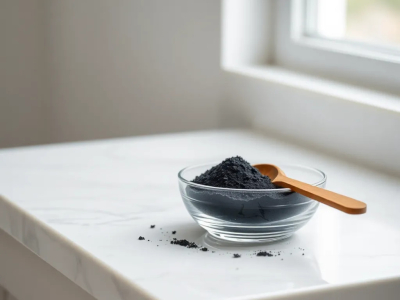
Activated charcoal is an ancient solution that has proven its effectiveness. Its principle is adsorption: pollutants adhere to the porous surface of the charcoal. In compressed block form, it retains about 73% of PFAS according to independent tests, and it is very effective on chlorine and many pesticides.
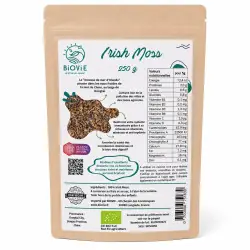
Binchotan, this traditional Japanese activated charcoal, is particularly interesting for its simplicity of use: you place it directly in your water carafe. At Biovie, we offer quality activated charcoal that we have studied. the properties of activated carbon in filtration in detail.
On the other hand, activated carbon alone is less effective on heavy metals and does not filter bacteria. That is why it is often combined with other technologies, such as ceramics.
Ceramic and gravity filtration: the zero electricity solution
Here is the category that excites me the most, and for good reason: it is the one that best aligns with our philosophy at Biovie. Gravity filtration is the simplest principle that exists. You fill a reservoir at the top, the water passes through a ceramic filter (and often an additional activated carbon filter) solely by the force of gravity, and you collect filtered water at the bottom. Zero electricity, zero connections, zero plastic.
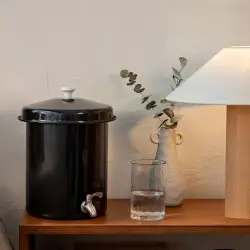
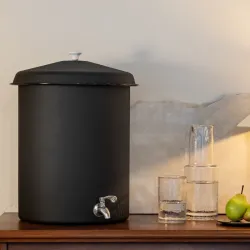
The Ecofiltro is an excellent example of this approach. It is a handcrafted Guatemalan clay filter that combines high-density ceramic, activated charcoal, and silver colloid. After our field test of over 6 months, the conclusion is clear: soft water, without a chlorine taste, at a negligible usage cost. We have also written A complete article on the Ecofiltro ceramic filter for those who want to know everything about this system.
Danièle R., a Biovie customer, shares her experience on Trustpilot: "After a few days, the Ecofiltro filter convinced me. The water is light and smooth to drink, and it's easy to use. A purchase to recommend." And Nicole B. adds: "I bought the Ecofiltro clay water filter which provides excellent filtered water. I recommend it."
An important point to note: Berkey filters, long popular in this category, have been condemned in the United States (FIFRA) for unproven filtration claims. The U.S. EPA has questioned their actual effectiveness against the advertised contaminants. This is an important reminder: always check independent certifications (NSF, ACS) before investing in a filtration system.
We also made a video about the Naturalizer filter., a system based on volcanic rocks that replicates natural filtration - watch the video.
Activated carbon close up: how it's made, its structure and its lifespan
Activated carbon shows up in almost every system, from the €20 pitcher to the under-sink block. Understanding how it is made and why it wears out explains most of the disappointments people have with it.
Adsorption, not absorption
Activated carbon does not "drink" pollutants, it binds them. Its surface is riddled with micro-cavities onto which molecules stick as water passes through - that is adsorption. A single gram of activated carbon develops an internal surface of several hundred square metres: this multiplication is what explains its effectiveness on chlorine, disinfection by-products, many pesticides, and part of the organic compounds.
How activated carbon is made
It starts from an organic material - most often coconut shells, sometimes wood or agricultural residues - and goes through four steps:
- Carbonisation: heating at high temperature in a low-oxygen atmosphere (pyrolysis), which turns the material into carbon and creates an initial porosity.
- Activation: a second, more intense heating, in the presence of steam or carbon dioxide. This is what carves out the porosity and pushes the specific surface area into a different order of magnitude.
- Washing and drying, which remove process residues.
- Sieving, which separates the granules intended for domestic filters from the powder reserved for industrial uses.
The quality of the carbon depends directly on these steps: two activated carbons of the same weight can have very different adsorption capacities, something a supermarket pitcher's packaging never mentions.
What's inside a carbon filter
- The housing, plastic, glass or metal, which holds the media and channels the water.
- The filtering media: granules, powder or a compressed block. The block, being denser, retains more than loose granules for the same volume.
- The pre-filter, present on good systems: it stops sediment and extends the carbon's life accordingly.
- The water outlet, tap or fitting.
There is also stick carbon, the well-known binchotan, dropped directly into a carafe: simple, inexpensive, it mainly works on taste and chlorine, and needs to be rinsed and re-boiled regularly.
How long does a carbon filter last?
It depends on the volume of media, the flow rate and how loaded your water is with pollutants. The common-sense rule is mechanical: the smaller the amount of carbon, the more often it needs replacing - and in a filter pitcher, the cartridge holds the equivalent of a thimble's worth of media, which is why it needs replacing monthly.
The point not to overlook: a saturated carbon filter does not simply let pollutants through, it becomes a damp, nutrient-rich medium where bacteria thrive. A forgotten filter degrades water quality instead of improving it. Some systems allow a back-flush that partially regenerates the media and extends its service life; failing that, stick to the manufacturer's replacement schedule, and shorten it if your water is particularly loaded.
How to choose the right filter for your situation
There is no perfect universal filter. The best water filtration system is the one that suits your situation, budget, and priorities. Here's how I see things.
In an apartment: compact solutions
If you live in an apartment, you have two main options:
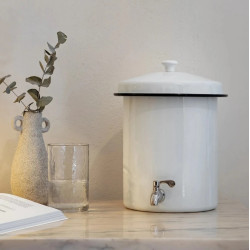
- On the counter : A gravity filter like the Ecofiltro is placed directly on your countertop. No installation, no tools. You fill it up and you're good to go. It's the solution I recommend first for its absolute simplicity.
- Under sink : A block activated carbon filter is connected under the sink. It's a bit more technical to install (or you can call a plumber), but it frees up space on the countertop and the filtered water flows directly from the tap.
For a family in an apartment, the countertop Ecofiltro is truly the most obvious solution: no installation, unlimited pure water, and the children can help themselves.
.webp)