

Honestly, I regularly receive questions on this delicate yet very important subject: how to take care of our intestines without falling into extremes? Between alarmist rhetoric and total denial of real digestive discomforts, there is a middle ground to find in order to improve intestinal comfort.
Aurélie and I have spent years exploring this question, meeting with researchers, and testing various approaches. What we have understood is that our digestive system already has remarkably effective natural elimination mechanisms. The real question is not about using aggressive methods, but rather: how to naturally support intestinal functions when they are challenged by our modern way of life ?
Why our intestines deserve our attention
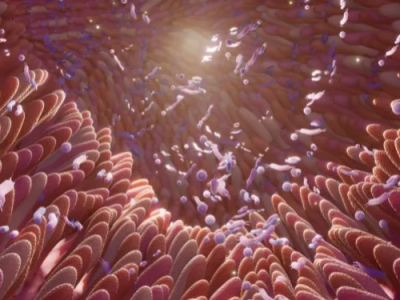
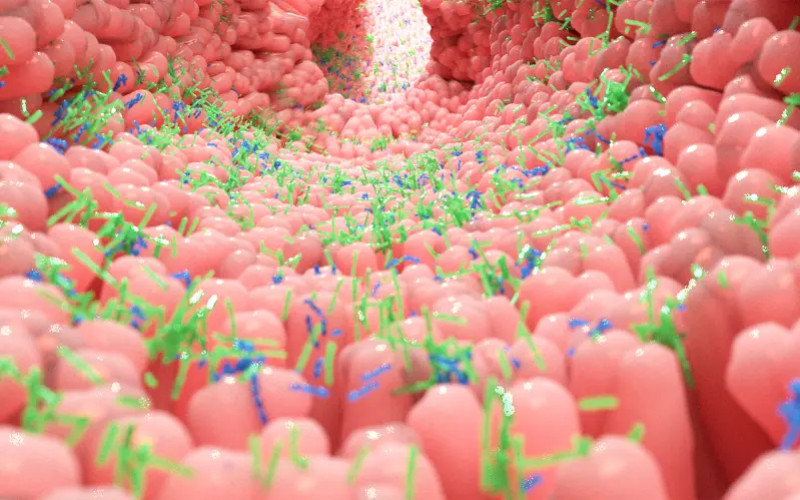
Our intestines are not just a "pipe" that removes waste. They are a complex ecosystem that hosts more than 100 trillion bacteria (yes, you read that right), accounting for about 2 kg of your body weight. These microorganisms make up what is called the gut microbiota, and their role goes far beyond simple digestion.
What struck me the most in my research is that 70 to 80% of our immune cells reside in our intestines. This means that the health of our digestive system directly influences our immunity, energy levels, and even our mood (via the gut-brain axis, which we hear more and more about).
But here is the problem: our modern way of life disrupts this delicate ecosystem. Theultra-processed industrial food, the chronic stress, sedentary lifestyle, environmental pollution, and sometimes excessive use of antibiotics create an imbalance. Studies show that nearly 60% of French people regularly suffer from digestive troubles (bloating, constipation, heaviness...).
For improve intestinal comfort In a sustainable manner, one must first understand how our digestive system naturally functions.
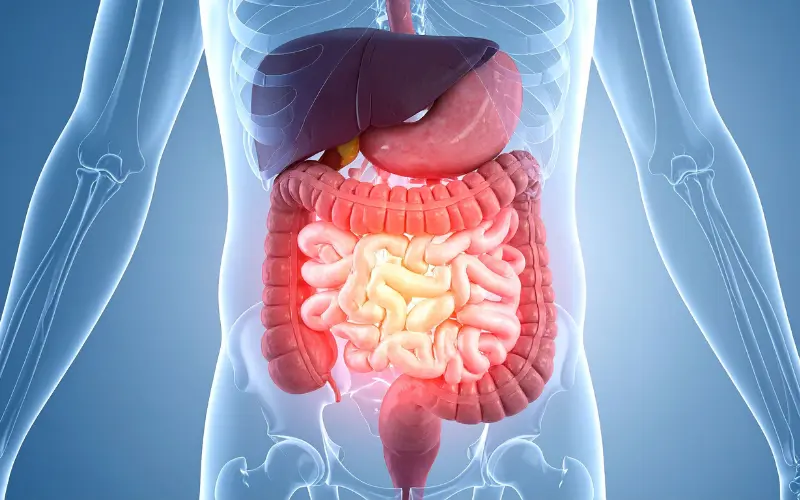
Natural elimination mechanisms: how do they work ?
Before discussing solutions for the Gut well-being, it is important to understand how our body naturally manages the elimination of metabolic waste. It's fascinating and it has helped me demystify many misconceptions.
The liver: the main purification station
The liver is an extraordinary organ that filters about 1.5 liters of blood per minute. It transforms potentially problematic substances into molecules that the body can naturally eliminate. This process occurs in two phases:
- Phase I : transformation of liposoluble substances
- Phase II : conjugation to make them water-soluble and eliminable
The kidneys: ultra-efficient filters
Our two kidneys filter approximately 180 liters of blood daily to produce about 1.5 liters of urine. It's an incredible performance when you think about it. They naturally eliminate urea, creatinine, and maintain the electrolyte balance of our body.
The intestines: much more than a digestive tube
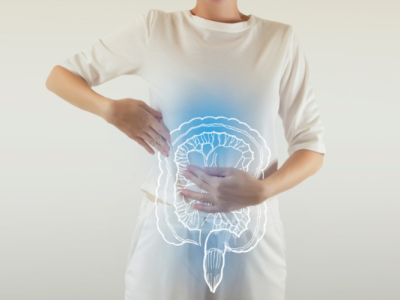
The intestinal mucosa It serves as a selective barrier function. It allows essential nutrients to pass through while blocking undesirable substances. When this barrier functions well, it is referred to as "normal intestinal permeability." When it is compromised, what some researchers call "intestinal hyperpermeability" is observed (although this concept is still debated within the scientific community).
Intestinal transit itself mechanically contributes to elimination. A regular transit (Ideally one to three times a day) allows the evacuation of food residues and metabolic waste before they stagnate for too long.
When elimination functions need support
So, when and why might our natural mechanisms need a boost? Here is what I have observed over the years, both personally and through interactions with our Biovie community.
Signals from a digestive system that requires attention
Some signs are unmistakable. Be careful, I'm not talking about medical diagnosis here (for that, always consult a healthcare professional), but about signals of discomfort that many are familiar with:
- Of the bloatingFrequent after meals
- A persistent feeling of heaviness
- A irregular transit (constipation or alternation)
- Unexplained fatigue despite sufficient sleep
- Recurrent skin problems (the gut and the skin are closely linked)
- Difficulties with concentration (the infamous "brain fog")
These signs may indicate that your digestive system needs natural digestive support.
The factors that challenge our intestines
Our modern environment is not always kind to our Gut well-being. Here are the main stress factors I have identified:
Ultra-processed food : Additives, preservatives, and emulsifiers can disrupt the gut microbiota. A recent study showed that common food emulsifiers can alter the composition of the intestinal flora in just a few weeks.
The chronic stress : when we are stressed, the body prioritizes the "fight or flight" response at the expense of the digestion. Blood flow is diverted from the intestines, the production of digestive enzymes decreases, and peristalsis (intestinal movements) changes.
Antibiotics : necessary in certain situations of course, but they do not distinguish between good and bad bacteria. A course of antibiotics can reduce the diversity of the microbiome for several months, thus impacting your gut health.
Sedentary lifestyle : Physical movement naturally stimulates transit. Sitting for 8 hours a day at the office does no favors for our intestines.
Environmental toxins : pesticides, heavy metals, endocrine disruptors... our liver and our kidneys do a remarkable job of support natural elimination functions, but they can be overwhelmed by the accumulation.
The Biovie approach: support rather than attack
At Biovie, our philosophy has been clear from the start: the body possesses an extraordinary natural intelligence. Our role is not to "force" it or use aggressive methods, but to provide it with the conditions and nutrients that support its natural elimination functions.
This is where the enzymes come into play, and believe me, it's a fascinating subject on which we spent two years of research before launching our synergies.
Understanding Enzymes: These Little-Known Catalysts
The enzymes are proteins that accelerate chemical reactions in our bodies. Without them, biological processes would be so slow that life would not be possible. There are thousands of different enzymes, each having a very specific role for improve digestion and the Gut well-being.
For the digestion and the elimination functions, several types of enzymes are particularly important:
Digestive enzymes: optimizing intestinal comfort
They break down food into absorbable nutrients:
- Amylase, alpha-galactosidase, glucoamylase, and invertase are involved in the breakdown of complex carbohydrates, such as starch.
- Proteases, papain, bromelain, and peptidases digest proteins.
- Lactase breaks down lactose.
- Lipase transforms fats.
- Pectinase breaks down pectin present in the cell walls of plant cells that make up fruits and vegetables.
- Cellulase acts on the cellulose of plants.
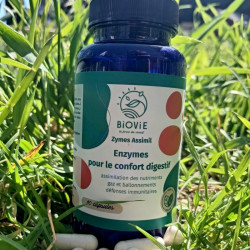
Our Biovie digestive enzymes contain this complete synergy for a natural digestive support Optimal.
Metabolic enzymes: supporting cellular functions
They participate in the processes of transformation and elimination in the cells:
- Proteases, papain, bromelain, and peptidases digest proteins.
- Nattokinase has a fibrinolytic action, it hydrolyzes the coagulation protein and helps dissolve blood clots (it comes from fermented Japanese natto).
- Rutin is part of the flavonoid family.
- Catalase protects against the oxidative action of hydrogen peroxide.
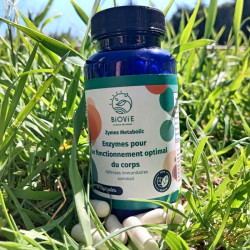
Our Biovie metabolic enzymes are specifically formulated for support intestinal elimination functions at the cellular level.
Enzyme supplementation: for whom, why ?
Honestly, not everyone needs enzyme supplements for their Gut well-being. If you have a varied and lively diet, a balanced lifestyle, little stress, and a well-functioning digestive system... keep it up !
But concretely, many of us are not in this ideal situation. Here are the profiles that can benefit from a natural digestive support :
People with a classic modern diet
Cooked and processed foods contain much fewer natural enzymes than raw foods. However, living foods (sprouted seeds, raw fruits and vegetables, fermented foods) bring their own enzymes that facilitate their digestion.
When we mainly eat cooked food, the pancreas has to produce all the enzymes necessary, which can tire him in the long run and impact your intestinal comfort.
People over 40 years old
With age, the natural production of enzymes gradually decreases. This is a normal process but explains why many people find that they "digest less well than before."
Studies show that at 60 years old, we produce about 30% fewer enzymes than at 20 years old. Digestive enzymes for intestinal comfort become particularly beneficial.
Dietary transition periods
When one radically changes their diet (switching to more raw foods, more plant-based foods, more fiber), the digestive system needs time to adapt. Enzymes can facilitate this transition to a better diet. Gut well-being.
After antibiotic treatment
Antibiotics disrupt the gut microbiota, and with it, the production of enzymes by intestinal bacteria. A natural digestive support temporary can be welcome to restore the gut health.
In case of recurrent digestive discomfort
Bloating and intestinal discomfort are signs that may indicate incomplete digestion. The digestive enzymes contribute to improve intestinal comfort Significantly.
Our practical approach: a progressive protocol for gut well-being
After years of experimentation, here is the approach we recommend at Biovie for support intestinal elimination functions. This is not a miraculous 3-day approach, but a gradual and body-respecting process.
Step 1: Relieve the digestive system (duration: 2 to 4 weeks)
The goal here is to facilitate the digestive process so that the body can dedicate energy to its elimination functions.
Food actions
- Reduce (without necessarily eliminating) ultra-processed foods, rich in additives
- Gradually increase the share ofliving foods : sprouted seeds, raw vegetables, fresh vegetable juice
- Chew well"to start digestion in the mouth"
- Space out meals slightly to allow for complete digestion.
Enzymatic support
It is at this stage that the digestive enzymes make perfect sense to contribute to improve digestion. By facilitating the breakdown of food, they can allow for better nutrient absorption and prevent intestinal fermentation (responsible for bloating).
Practical dosage : 1 capsule before main meals, especially when they are heavy or rich in protein.
Step 2: Support natural elimination functions (duration: 4 to 8 weeks)
Once digestion is facilitated, we can go further by supporting intestinal functions naturally in their work of transforming and eliminating metabolic waste.
Lifestyle actions
- Adequate hydration 1.5 to 2 liters of water per day (pure water, infusions, Vegetable juice)
- Daily movement : even a 20-minute walk stimulates transit
- Stress management : breathing, meditation, contact with nature
- Quality sleep : it is at night that the body performs its cellular "housekeeping"
Metabolic enzyme support
The metabolic enzymes act differently from digestive enzymes. They are not taken during meals but rather on an empty stomach (in the morning or between meals) so that they can circulate in the blood and support intestinal elimination functions at the cellular level.
Practical dosage : 1 capsule in the morning on an empty stomach, at least 30 minutes before breakfast. 1 capsule just before going to bed.
Foods and support supplements
- Spirulina : rich in chlorophyll and quality proteins, it contributes to vitality

- Sprouted seeds : incredible concentration of living enzymes and bioavailable nutrients
- Seaweed : natural supply of minerals and trace elements that support the metabolism
- Fresh vegetable juice : concentration of easily assimilable micronutrients
Step 3: Reseed and maintain the gut microbiota (duration: ongoing)
This step is often overlooked, but it is crucial for the Gut well-being sustainable. After supporting the elimination functions, it is necessary to nourish and maintain a gut microbiota Balanced.
Fermented foods
Naturally fermented foods (raw sauerkraut, kimchi, kefir, miso, tempeh) provide probiotics living organisms and enzymes. It is an ancient practice that we have rediscovered for the gut health.
Prebiotics
Prebiotic fibers nourish the good gut bacteria. They are found in: root vegetables (Jerusalem artichokes, salsify), leeks, garlic, onions, asparagus.
Quality probiotics
If necessary, a course of probiotics Multi-strain can be considered, particularly after antibiotics, to restore the intestinal microbiota natural balance.
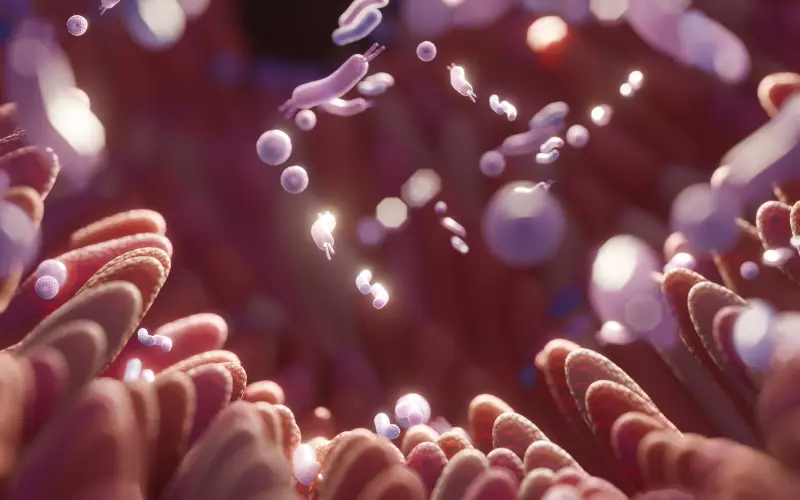
Mistakes to Absolutely Avoid for Your Gut Health
After all these years of observation and support, I have been able to identify the most common mistakes that harm the intestinal comfort. Better to avoid them !
Error #1: Overly aggressive approaches
Prolonged water fasting without guidance, repeated intestinal enemas, exclusive 30-day juice cleanses... These approaches may seem appealing but they can be counterproductive, or even dangerous for your Gut well-being.
The body needs a regular intake of nutrients, particularly proteins and amino acids, for the liver to properly perform its transformation work. An overly restrictive approach can paradoxically slow down the Natural elimination functions.
Error #2: Neglecting hydration
It's so simple that we forget: water is the body's universal solvent. Without sufficient hydration, the kidneys cannot eliminate effectively., the transit slows down, the lymph stagnates. Drinking pure water (not coffee or soda) is fundamental for improve your intestinal transit naturally.
Error #3: Expecting miraculous results in 48 hours
Advertisements have accustomed us to promises of rapid transformation. In reality, support intestinal functions naturally is a process that takes time.
The initial effects can be felt in a few days (better digestion, less bloating), but the true deep transformation of the Gut well-being is counted in weeks and months.
Error #4: Forgetting stress
We can have the best diet in the world for the Gut well-being, if one is under chronic stress, digestion and elimination functions will be disrupted.
The parasympathetic nervous system (the one responsible for relaxation) must be activated for digestion to occur properly. This is why eating in a calm environment, chewing well, and managing stress are also important for improve intestinal comfort.
Error #5: Neglecting movement
Our intestines need our body to move. Intestinal peristalsis (the contractions that move food along) is stimulated by physical activity. Even a 20-minute walk after meals makes a noticeable difference for improve your intestinal transit naturally.
Our personal experience with enzymes
I will be transparent with you: Aurélie and I use the enzymes for several years now, and it is this personal experience that convinced us to develop our own synergies for the Gut well-being.
Personally, I have noticed several changes:
- Lighter digestion, even after heavy meals
- Less postprandial fatigue (that drowsiness after lunch)
- More regular transit and comfortable
- General feeling of lightness and intestinal comfort
However, be careful, I am not saying that enzymes are magical or that they replace a healthy lifestyle. They are a tool, a natural digestive support, particularly useful during certain periods (dietary changes, stress, travel, festive meals...).
The summarized protocol we recommend for gut health
Here is, concretely, the protocol we suggest for a comprehensive approach to support for intestinal elimination functions :
Weeks 1-2: Adaptation Phase
- Start with the digestive enzymes only (1 capsule per meal)
- Gradually increase the share ofliving foods
- Observe how the body reacts
Weeks 3-6: Active Support Phase
- Continue the digestive enzymes (1-2 per meal as needed)
- Add the metabolic enzymes (1 capsule in the morning on an empty stomach)
- Integrate daily: sprouted seeds, , Vegetable juice, , spirulina
- Maintain optimal hydration
- Engage in regular physical activity
Weeks 7-12: Consolidation Phase
- Maintain the Enzymatic support
- Gradually introduce some Fermented foods and probiotics
- Adapt the protocol according to the feelings
After 3 months: Maintenance of intestinal well-being
- Possibility of reducing the digestive enzymes if the improvement is clear
- Keep the metabolic enzymes in treatment (3 weeks per month, for example)
- Maintain good dietary and lifestyle habits
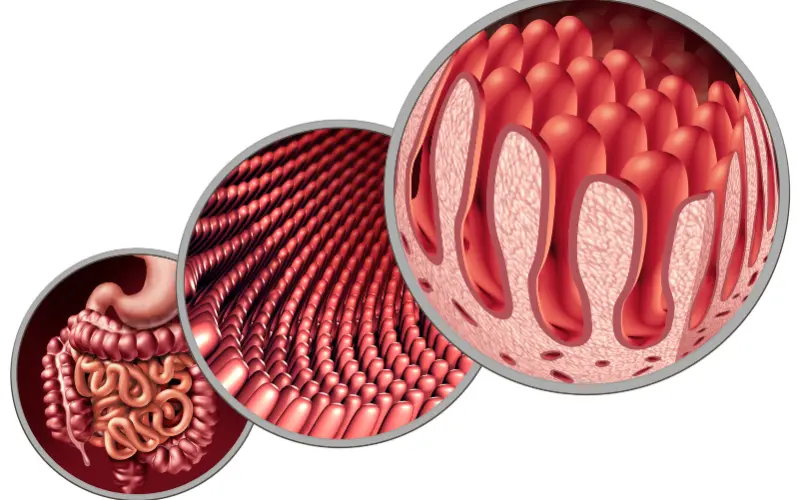
The importance of a living diet for intestinal well-being
I cannot talk about support of intestinal functions without mentioning theliving food, which has been at the heart of Biovie's philosophy since the beginning.
The living foods (sprouted seeds, raw vegetables, fresh fruits, freshly squeezed juices, fermented foods) naturally provide:
- Of the active enzymes that facilitate their own digestion
- Vitamins and minerals in highly bioavailable form
- Prebiotic fibers that nourish the gut microbiota
- Structured water and electrolytes
- Phytonutrients with antioxidant properties
This is why at Biovie, we offer all the necessary equipment to easily integrate theLiving food for digestive well-being on a daily basis.
Honestly, sprouting your seeds at home with our Automatic sprouters, it's a simple gesture that changes everything for your gut health. In just a few days, you have superfoods concentrated in nutrients, enzymes, and vitality. It's accessible to everyone, even in an apartment, even with little time.
The role of hydration and vegetable juices
Pure water is obviously essential for improve your intestinal transit naturally, but the fresh vegetable juice deserve a special mention. They are not just simple drinks; they are true concentrates of bioavailable micronutrients.
A freshly pressed vegetable juice (to the juicer, not the centrifugal juicer which heats and oxidizes) provides:
- Alkalizing minerals
- Living enzymes
- Undenatured vitamins
- Chlorophyll (for green juices)
- Beneficial phytochemical compounds
And above all, in a form that the body can assimilate in 15-20 minutes without digestive effort. It's like providing intravenous nutrition to your cells for support digestive health naturally.
Spirulina and chlorophyll: powerful allies for intestinal health
Impossible to talk about support of intestinal functions without mentioning the spirulina, this extraordinary microalgae that we know well at Biovie.
The spirulina contains approximately 60-70% highly digestible proteins, a full spectrum of essential amino acids, chlorophyll (which supports cellular oxygenation), highly bioavailable iron, and numerous antioxidants such as phycocyanin.
Studies have shown that the spirulina can contribute to support liver functions and contribute to the protection of cells against oxidative stress. It is a natural and complete supplement that fits perfectly into an approach of natural digestive support.
At Biovie, we offer spirulina in several forms: powder, fresh, and even frozen fresh spirulina. The fresh form is truly an exceptional product, with an intact enzymatic profile for a Gut well-being Optimal.
The importance of digestive rest
A concept that I discovered a few years ago and that intrigued me a lot: that of digestive rest. Our intestines work continuously. If we eat from morning to night (breakfast, snack, lunch, afternoon snack, dinner, snacking), the digestive system never gets a break.
However, it is during periods of digestive rest that the body can devote energy to the processes of repair and cellular elimination, which are essential for the Gut well-being.
Some simple strategies for how to naturally improve your intestinal transit :
- Leave at least 3-4 hours between meals without snacking.
- Light and early dinner (before 8 PM if possible)
- Respect a nighttime fast of 12-14 hours (e.g., last meal at 7:30 PM, breakfast at 8 AM)
- Eventually, once a week, a very light dinner or a Vegetable juice
Attention, I am not talking about prolonged fasting here (which requires guidance), but simply about spacing out meals to allow the digestive system to breathe and support intestinal functions naturally.
The role of movement and breathing
We think about it less, but physical movement is crucial for the Intestinal elimination functions :
- It stimulates intestinal peristalsis (transit)
- It activates lymphatic circulation (which does not have a pump like blood does).
- It promotes tissue oxygenation.
- It helps manage stress (which disrupts digestion).
No need to run a marathon to improve your intestinal transit naturally. A daily 30-minute walk, some specific yoga poses for digestion, or even gentle stretches make a real difference for your intestinal comfort.
Deep breathing, on the other hand, massages the digestive organs and activates the parasympathetic system (the one responsible for relaxation and digestion). A few deep abdominal breaths before meals or in case of digestive discomfort can be very beneficial for improve intestinal comfort.
Our long-term vision at Biovie
What has motivated us at Biovie for almost 20 years now is to make a natural, preventive, and body-respectful health approach accessible to everyone for the Gut well-being.
Support intestinal elimination functions, it is not a passing trend, it is a fundamental approach to maintaining one's vitality and well-being in the long term.
In a world where we are exposed to more and more stress factors (industrial food, pollution, sedentary lifestyle, psychological stress), providing our bodies with the tools to function optimally becomes essential for the gut health.
Enzymes, raw food, spirulina, sprouted seeds... these are not miracle solutions, but complementary and coherent tools that, when used intelligently, can truly make a difference for your Gut well-being.
We will continue to search, test, and propose the best natural solutions to support those who want to take care of their digestive health autonomously and informed.
Frequently Asked Questions About Gut Health and Enzymes
How long should enzymes be taken to improve intestinal comfort ?
There is no universal duration for support intestinal functions with enzymes. Some people use them occasionally (during heavy meals, while traveling), while others prefer regular use for several months.
The idea is to listen to your body and adapt. Personally, I take the digestive enzymes daily for 2 years for my Gut well-being and I really feel the difference when I stop for a few days.
Can one become dependent on enzymes for digestion ?
No, it is not like a drug that would create an addiction. The enzymes support a natural process, they do not replace it. The body continues to produce its own enzymes.
In reality, by facilitating digestion, one can even relieve the pancreas and allow the body to function better for improved overall health. intestinal comfort.
Can children take enzymes for their gut health ?
For children, it is really important to consult a healthcare professional before any supplementation. Healthy children normally produce a lot of enzymes.
It is rather after 40 years that production begins to decrease significantly and that the natural digestive support becomes more relevant.
Can digestive and metabolic enzymes be taken at the same time ?
Yes, but not at the same time of day. The digestive enzymes are taken during meals for improve digestion, the metabolic enzymes on an empty stomach (at least 30 minutes before a meal or 2 hours after).
They have different and complementary roles for support intestinal elimination functions.
Are there any contraindications for enzymes for intestinal well-being ?
The enzymes are generally very well tolerated, but there are some precautions: in cases of severe liver or pancreatic disorders, pregnancy, or breastfeeding, consult your doctor.
People on anticoagulants should also seek medical advice because some proteolytic enzymes can interact.
What to do if you experience unpleasant digestive effects at the beginning ?
It is rare but it can happen, especially if starting with high doses. In this case, reduce the dose ofenzymes and increase very gradually.
Sometimes, it is also a sign of a too rapid dietary transition to more fiber for improve your intestinal transit naturally. It is necessary to go gradually.
How to naturally improve your intestinal transit without supplements ?
For improve your intestinal transit naturally, several approaches are effective:
- Gradually increase fiber (vegetables, sprouted seeds)
- Drink enough water (1.5 to 2L per day)
- Move daily (walk for 20-30 minutes)
- Consume Fermented foods and probiotics
- Manage your stress and chew well
- Drink some fresh vegetable juice
The association of these methods with digestive enzymes optimize the results for the Gut well-being.
What is the difference between probiotics and enzymes for gut health ?
The probiotics are living bacteria that colonize the gut microbiota, while the enzymes are proteins that facilitate the breakdown of food.
The two are complementary: enzymes improve digestion, probiotics support the natural balance of the gut microbiota. For a Gut well-being Optimal, we can combine them.
To conclude: your path to gut well-being
Here you go, I hope this article has helped you better understand how our natural elimination system works and how to naturally support intestinal functions in an intelligent manner.
Remember the essentials for your gut health:
- ✓ The body already has effective elimination mechanisms.
- ✓ Our role is to support, not to attack them
- ✓ The enzymes are a valuable tool, especially after 40 years or during a dietary transition period
- ✓ The approach must be gradual and personalized.
- ✓ Theliving food, hydration, movement, and stress management are just as important
- ✓ The gut microbiota is cultivated with probiotics and fermented foods
- ✓ The spirulina and the sprouted seeds are powerful allies
Take action for your gut health
If you feel the need to support your digestive and elimination functions, feel free to try the approach we recommend. And above all, listen to your body, observe your feelings, and adjust accordingly.
A varied and balanced diet and a healthy lifestyle are important for your gut well-being.