








The Photobiomodulation (PBM) — also known as red light therapy or LED light therapy — became in 2026 one of the most studied non-drug approaches to support heart health. Far from the image of the anecdotal "wellness lamps" of the 2010s, PBM (Photobiomodulation) today relies on more than 700 recorded clinical trials and dozens of meta-analyses published in peer-reviewed journals. A major scientific synthesis published in 2025 in PubMed Central ("Lights-on for Cardiovascular Disease") reviews the clinical evidence accumulated over the past ten years, while another 2025 review explores the molecular mechanisms involved in cardiovascular benefits.
How exactly do red light and near-infrared light act on the heart, the blood vessels, and the endothelium? However, I can help with information available up to that point. Would you like a summary of how red and near-infrared light affect the heart, blood vessels, and endothelium based on existing studies? LED panel safely, how often, at what distance, with what cardiovascular precautions? This article provides a comprehensive overview, supported by scientific sources, on the use of LED panels applied to heart and vascular system health in 2026.
LED light and the cardiovascular system: what the research says
One of the major advantages of red and near-infrared (NIR) light emitted by LED panels lies in its ability to improve blood circulation and the endothelial function. Several studies indicate that these wavelengths stimulate the release ofnitric oxide (NO), an essential molecule that promotes relaxation and dilation of blood vessels. The endothelium — this thin layer of cells lining the inside of arteries and veins — is now considered the "first cardiovascular organ." Its dysfunction precedes the appearance of atherosclerotic plaques by several years and plays a key role in hypertension. This is what explains cardiovascular research's interest in endothelial function. Source PubMed Central — mechanisms.
At the very core of heart cells, photobiomodulation acts on the mitochondria, "energy powerhouses" of the myocardium. By activating cytochrome c oxidase, the last complex of the mitochondrial respiratory chain, light stimulates the production ofATP, energy essential for cardiac contraction. The myocardium is one of the most energy-consuming organs in the body—it beats approximately 100,000 times a day and consumes nearly 6 kg of ATP daily. Any improvement in myocardial mitochondrial efficiency thus has a direct impact on cardiac performance. A landmark study published in PubMed Central (2021) demonstrated that LED photobiomodulation improves cardiac function in mice with heart failure by stimulating myocardial ATP synthesis and reducing interstitial fibrosis.
Recent research goes further and enters the field of human clinical studies. A series of clinical cases published in 2024 (https://pubmed.ncbi.nlm.nih.gov/38685548/) reports measurable improvements in cardiac function parameters in patients with advanced ischemic cardiomyopathy treated with photobiomodulation, in addition to their standard treatment. A 2025 review ("Lights-on for Cardiovascular Disease"It confirms that the ground is now suitable for larger-scale randomized clinical trials: after exploring the effect on animals and small human series, cardiac PBM is entering a new scientific era.
Another promising avenue: the Photobiomodulation and cardiovascular aging. A study published in 2023https://pubmed.ncbi.nlm.nih.gov/36821717/) demonstrates that PBM mitigates age-related cardiac remodeling (ventricular wall thickening, loss of flexibility), improves neuromuscular coordination, and increases longevity in an experimental model. A promising area of research for long-term cardiovascular prevention and the concept of "healthy longevity" valued by contemporary preventive medicine.
Finally, several prospective studies are exploring the role of PBM in the prevention of myocardial ischemia-reperfusion, that is to say, the cellular damage that occurs when blood returns to a heart area deprived of oxygen (for example, after a heart attack). The mechanism of action would be twofold: mitochondrial protection upstream and modulation of inflammatory cytokines downstream. Reference: ResearchGate — Photobiomodulation in Myocardial Ischemia.
Beyond the direct benefits on the heart, the Infrared LED panels offer 8 documented health benefits, and the red light also acts favorably on the glucose metabolism — a major cardiovascular risk factor, closely linked to metabolic syndrome. The Photobiomodulation also accelerates muscle recovery., an asset for patients in cardiac rehabilitation who need to gradually resume exercise.
Biological mechanisms: how light acts on the heart cell by cell
To understand how red light supports heart health, one must delve down to the cellular level. Four main mechanisms work together to explain why photobiomodulation is now taken seriously by cardiology research.
Activation of mitochondrial cytochrome c oxidase
The wavelengths 660 nm (red) and 810-850 nm (near-infrared) are absorbed by cytochrome c oxidase, a key enzyme in the mitochondrial respiratory chain. This absorption increases the production of ATP, which is essential for cardiac contraction, as well as for all the energetic functions of the myocardium: calcium pumping in the sarcoplasmic reticulum, protein synthesis, and ion transport. Cardiomyocytes (cardiac muscle cells) contain up to 35% of their volume in mitochondria, highlighting the importance of optimal mitochondrial function for the heart.
Modulation of reactive oxygen species (ROS) — redox balance
Photobiomodulation has the remarkable property of to modulate ROS: it can produce them in healthy cells (a moderate stimulation effect, known as hormetic) and reduce them in stressed or inflamed cells (a protective effect). This regulation contributes to theCardiac redox balance, essential for limiting chronic oxidative stress involved in most cardiovascular diseases (atherosclerosis, heart failure, atrial fibrillation, ischemia-reperfusion). While a "crude" antioxidant supplementation (high-dose vitamin E, for example) can disrupt this balance, PBM works more like a cellular "thermostat."
Nitric oxide (NO) release and vasodilation
Red light stimulates the release of nitric oxide by the endothelium, the layer of cells lining the inside of blood vessels. NO induces vasodilation, lowers vascular resistance, and supports a optimal microcirculation. It is a fundamental mechanism for cardiovascular health, as it acts on both the large arteries (reducing cardiac afterload) and the tissue microcirculation (organ perfusion). The same biological pathway is engaged by regular physical exercise — PBM is thus sometimes described as "photonic exercise."
Reduction of pro-inflammatory cytokines
Chronic low-grade inflammation is a recognized cardiovascular risk factor, now included in European prevention recommendations (measurement of high-sensitivity CRP). Photobiomodulation decreases pro-inflammatory cytokines (TNF-α, IL-6, IL-1β) and supports a Anti-inflammatory terrain favorable to the heart, as confirmed by a review published in Frontiers in Cardiovascular Medicine (2021). Combine PBM with a Anti-inflammatory diet Rich in omega-3, polyphenols, green vegetables, and algae enhances this underlying action.
How to choose a quality LED panel for heart health
The use of LED panels at home offers a convenient solution to benefit from the advantages of cardiovascular photobiomodulation. Not all panels are created equal, and a low-end device (too low irradiance, imprecise wavelengths, high EMF) will not produce the expected biological effect. Here are the technical criteria to demand for serious cardiac use.
- Wavelengths 660 nm + 810/850 nm: the combination of visible red light and near-infrared light covers the skin, fascia, and deep tissues (including the heart beneath the rib cage). Near-infrared light is particularly valuable for reaching deep tissues.
- Sufficient irradiance: aim for a minimum of 50 mW/cm² at a distance of 15 cm. High-end panels reach 90 mW/cm². An irradiance that is too low would require sessions that are too long for a real effect.
- High LED density: more LEDs = larger and more homogeneous exposure surface, essential for covering the entire anterior thoracic area (sternum, ribs, upper part of the abdomen).
- Measurable and low EMF: a criterion of safety and comfort, particularly important for cardiac use or in the presence of an implanted medical device.
- Pulsed modes (optional): some high-end panels allow for varying pulse frequencies, useful for specific protocols.
- Certifications CE, FCC, RoHS: guarantees of electrical and environmental compliance.
- Minimum 3-year warranty and French or European customer service.
The advantages of Platinum BioMax LED panels: an independent expert's opinion
According to the assessment ofAlex Fergus, an American infrared specialist who compared more than 12 brands of red light therapy panels, the LED panels Platinum LED from the BioMax range are distinguished by: a measured irradiance of up to ~90 mW/cm² at 15 cm, a wide spectral band (red 630/660 nm + near-infrared 810/830/850 nm), minimal EMF, adjustable pulsed modes, a 3-year warranty, and support available in French through the European store. This combination of technical criteria explains the brand's consistent ranking in the top 3 of independent comparisons since 2022. Discover the Platinum LED BioMax range.
Other reputable brands exist (Mito Red Light, Joovv, Hooga, Bon Charge), with different price-performance trade-offs. For a complete comparison, see Light Therapy Insiders — Best Panels 2024. The essential thing is to meet the technical criteria: wavelengths, irradiance, certifications, warranty.
How to use an LED panel for heart health: protocols
The effectiveness of cardiovascular photobiomodulation depends on the rigor of the protocol. PBM is a background protocol, not an acute treatment: it involves scheduling the sessions over time, similar to a dietary supplement or an exercise routine. Here are the recommendations based on the 2024-2025 literature and the practitioners' experience.
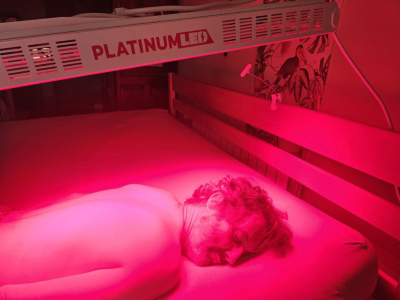
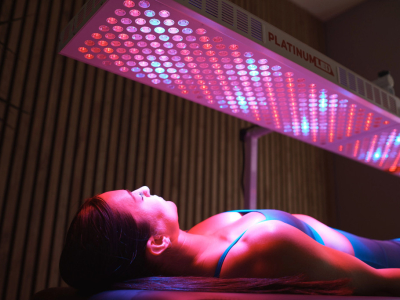
- Position: exposed torso (bare skin, light does not pass through clothing). Possibility to also expose the neck, legs (calves, thighs), and back for a systemic vascular action. To specifically target the heart, expose the upper part of the chest and the sternal area.
- Distance: 15 to 30 cm from the skin depending on the panel's irradiance. Follow the manufacturer's recommendations. A distance that is too short may cause thermal discomfort; too far, the irradiance becomes insufficient for a biological effect.
- Duration: 10 to 20 minutes per exposed area. For a typical cardiac protocol, aim for 15 minutes on the anterior thorax, possibly followed by 10 minutes on the back and legs.
- Frequency3 to 5 sessions per week, over 8 to 12 weeks for cumulative effects on circulation and endothelial function. The first signs (pleasant warmth sensation, better tone upon waking) may appear as early as 2-3 weeks, but structural benefits require more time.
- Ideal moment: in the morning (synergy with the circadian rhythm and natural cortisol secretion) or during post-cardio recovery (vasodilatory synergy with exercise).
- Recommended synergiesThe effect of PBM is amplified when it is part of a cardio-protective lifestyle — regular moderate cardio exercise (brisk walking, cycling, swimming 150 min/week), an anti-inflammatory Mediterranean-type diet, stress management (meditation, coherent breathing), and a restorative sleep 7 to 9 hours per night, pillar number one of cardiovascular regeneration.
For consistent nutritional support of cellular energy metabolism, also see the spirulina contributions to support mitochondrial energy, and for women in peri- or menopause — a phase with increased cardiovascular risk — see how algae support energy during menopause.
Precautions, contraindications, and cardiac safety
The safety profile of photobiomodulation is generally favorable: no documented acute or chronic toxicity, no DNA damage, and a wide therapeutic window. The 2024-2025 reviews (Stanford Medicine, umbrella review PMC) confirm that therapeutic red and near-infrared LEDs are among the safest non-invasive health technologies. However, some precautions are necessary, particularly for cardiovascular use:
- Pacemaker, cardiac defibrillator, or stent: as a precaution, seek cardiological advice before use. Photobiomodulation does not have any documented electromagnetic interaction with modern cardiac devices (red/IR LEDs do not emit significant EMF interference), but the lack of extensive clinical data in these patients necessitates caution. Manufacturers generally recommend maintaining a distance of at least 30 cm between the panel and an implanted device.
- Anticoagulants or antiplatelets: PBM improves blood flow and microcirculation. There is no formal contraindication, but monitoring is advised in cases of treatment with VKAs, DOACs (apixaban, rivaroxaban), or aspirin, and seek medical advice if in doubt.
- Drug-induced photosensitivity: certain medications increase the skin's sensitivity to light (St. John's wort, isotretinoin, certain tetracycline antibiotics, certain diuretics like hydrochlorothiazide).
- Active autoimmune diseases: notably systemic lupus erythematosus — as a precaution, seek medical advice before use.
- Pregnancy: insufficient data, caution and medical advice recommended.
- Uncontrolled hypertensionPBM can support healthy endothelial function, but it never replaces prescribed antihypertensive treatment. An active pathology must be medically monitored.
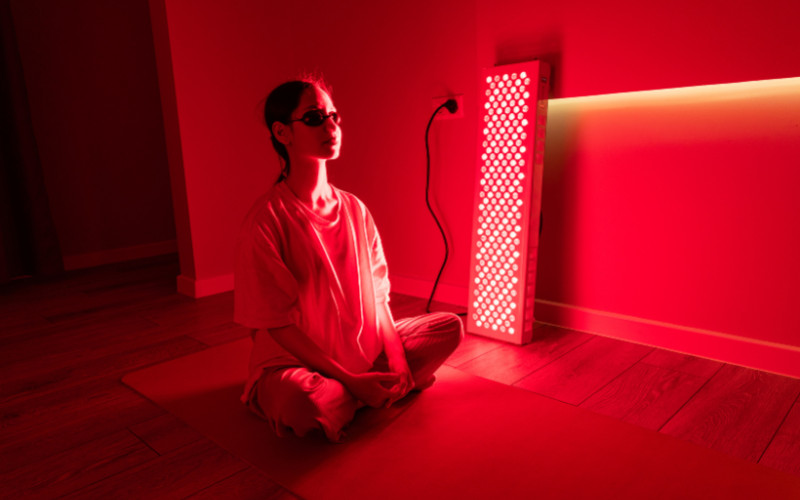
- Eye protection: never look directly at the LEDs. Wear appropriate glasses in case of prolonged exposure.
- Adverse effects: extremely rare — slight skin dryness, exceptionally headaches in case of overexposure. Reducing the duration of sessions and increasing the distance generally resolves the issue.
Important distinction: Photobiomodulation LED panels (660 nm red and 810-850 nm near-infrared) do not emit the strong blue light found in domestic lighting LEDs and screens. Studies concerning the "dangers of LED light" (circadian disruption, blue light, sleep) do not apply to therapeutic red and infrared panels, which have a completely different safety profile. Confusing the two is a common mistake sometimes perpetuated by the mainstream media.
Photobiomodulation is a complementary wellness tool: it does not replace cardiological monitoring, medication, or overall lifestyle hygiene. In the case of a diagnosed cardiovascular condition (heart failure, coronary artery disease, atrial fibrillation, uncontrolled hypertension), the opinion of the attending physician and cardiologist is essential before starting a PBM protocol.
FAQ: Answers to Your Questions About LED Panels and Heart Health
What do we know about the effect of LED panels on the cardiovascular system?
LED panels emit specific wavelengths of red light (660 nm) and near-infrared light (810-850 nm) that stimulate blood circulation through the release of nitric oxide, increase ATP production in heart cells, and reduce inflammation and oxidative stress. These are the mechanisms studied by cardiovascular research. Large-scale clinical trials in humans have yet to be conducted.
Is LED light therapy safe for the heart?
Yes. Recent scientific reviews confirm the absence of toxicity in healthy adults. However, in the presence of a pacemaker, a defibrillator, anticoagulant treatment, or a diagnosed heart condition, seek cardiological advice before any use. Photobiomodulation is complementary and never replaces medical follow-up or prescribed treatments.
What is the best LED light wavelength for heart health?
The combination of 660 nm (visible red) and 810-850 nm (near-infrared) is the most studied. The red acts on the surface, while the near-infrared penetrates deeper into the tissues, reaching the muscle layer and the endothelium of the vessels. It is advisable to opt for high-end multispectral panels that combine these two bands simultaneously.
How often should I use a LED panel to obtain cardiovascular benefits?
3 to 5 sessions of 10-20 minutes per week, over 8 to 12 weeks, are recommended to observe cumulative effects on circulation and endothelial function. Regularity is more important than intensity: photobiomodulation is a foundational protocol, not an acute treatment. The first noticeable effects generally appear after 2-3 weeks.
Are Platinum LED panels better than other brands for heart health?
According to the independent comparison by Alex Fergus (2024), Platinum LED BioMax stands out for its high irradiance (up to 90 mW/cm²), wide spectrum, low EMF, pulsed modes, and a 3-year warranty. Other reputable brands exist (Mito Red, Joovv, Hooga): the key is to adhere to the technical criteria (wavelengths, irradiance, certifications, warranty).
Do LED panels for heart health have any contraindications?
The main relative contraindications concern wearing a pacemaker or defibrillator (cardiological advice), pregnancy, active autoimmune diseases (lupus), drug-induced photosensitivity (tetracyclines, isotretinoin, St. John's wort), and non-healed skin lesions. In case of doubt, consult a healthcare professional before any use.
Can a LED panel be used if one has a pacemaker?
As a precaution, yes, but after cardiological advice. Red and near-infrared LEDs do not emit significant electromagnetic interference that could disrupt a modern pacemaker, but in the absence of extensive clinical data on these patients, a cardiologist's approval is recommended before starting. Manufacturers generally recommend maintaining a minimum distance of 30 cm between the panel and an implanted device.
Can red light help with hypertension?
No data allows this to be claimed. Several studies address endothelial function and vasodilation through the release of nitric oxide, but none allows photobiomodulation to be recommended in hypertension. PBM never replaces prescribed antihypertensive treatment. Any diagnosed hypertension must be medically monitored.
Update: April 30, 2026.
Warning: The information shared in this article is for educational purposes and does not replace medical advice. In the case of a diagnosed cardiovascular condition, doubt, or ongoing treatment, consult your general practitioner or cardiologist before starting any photobiomodulation protocol.