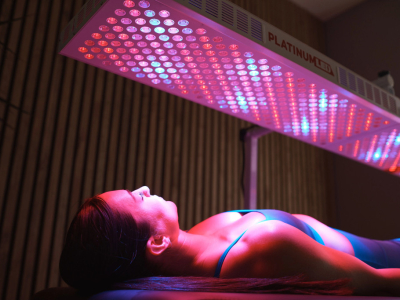








The photobiomodulation (PBM), also called red light or LED light therapy, is the subject of a growing number of publications, some of which concern the cardiovascular system. A review published in 2025 in PubMed Central ("Lights-on for Cardiovascular Disease") takes stock of this work, carried out essentially in animals or on small series of patients, and stresses that larger-scale clinical trials remain to be done.
What do the studies really say? How do you choose and use an LED panel safely, with which precautions, in particular if you have a heart problem? This article takes stock, with sources, without promises.
LED light and the cardiovascular system: what the research says
Laboratory work is studying the effect of red and near-infrared (NIR) light on the release ofnitric oxide (NO) by the endothelium, the thin layer of cells that lines the inside of arteries and veins. This is what explains the interest of cardiovascular research in the subject. This work describes mechanisms and does not make it possible to attribute an effect on circulation or on the heart to an LED panel. Source PubMed Central, mechanisms.
How to choose a quality LED panel
If you want to buy an LED panel, be aware that not all devices are equal. Here are the technical criteria to look at.
- Wavelengths 660 nm + 810/850 nm : the combination of visible red and near infrared is the one that comes up most often in publications.
- Irradiance : this is the light power received, expressed in mW/cm² at a given distance (for example 15 cm). High-end panels advertise up to 90 mW/cm².
- LED density : more LEDs means a wider and more even exposure area.
- Measurable and low EMF : a safety and comfort criterion, particularly important in the presence of an implanted medical device.
- Pulsed modes (optional) : some high-end panels allow you to vary the pulsing frequencies.
- Certifications CE, FCC, RoHS: guarantees of electrical and environmental compliance.
- Minimum 3-year warranty and French or European customer service.
Platinum BioMax LED panels: a comparison site's view
According to the assessment ofAlex Fergus, an American infrared specialist who compared more than 12 brands of red light panels, the Platinum LED BioMax range LED panels stand out for: a measured irradiance of up to ~90 mW/cm² at 15 cm, a wide spectral band (red 630/660 nm + near infrared 810/830/850 nm), minimal EMF, adjustable pulsed modes, a 3-year warranty and support available in French via the European shop. This combination of technical criteria explains the brand's regular placement in the top 3 of comparisons since 2022. Discover the Platinum LED BioMax range (affiliate link).
Other serious brands exist (Mito Red Light, Joovv, Hooga, Bon Charge), with different price-performance trade-offs. For a complete comparison, see Light Therapy Insiders, best panels 2024. The essential thing is to respect the technical criteria: wavelengths, irradiance, certifications, warranty.
How to use an LED panel safely
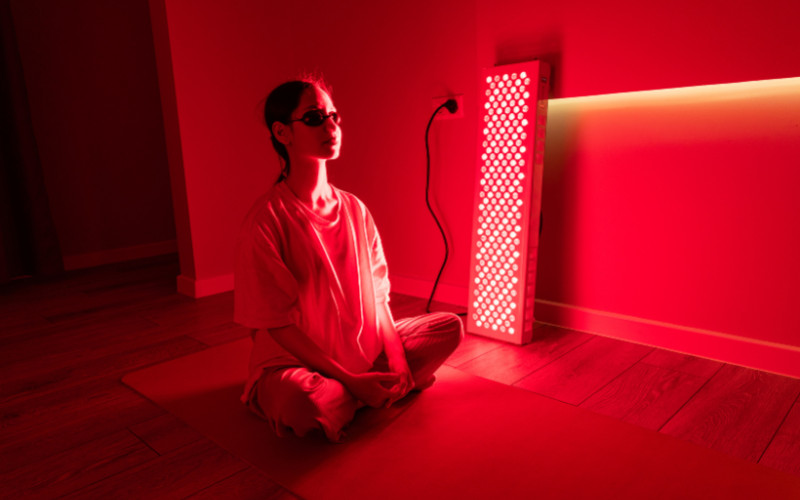
Manufacturers give usage recommendations (distance, duration, frequency): follow them. Here are the practical points to know.
- Position : bare skin, the light does not pass through clothing.
- Distance : 15 to 30 cm from the skin depending on the panel's irradiance. Follow the manufacturer's recommendations. A distance that is too short can cause thermal discomfort.
- Duration : generally 10 to 20 min per exposed area, according to the manufacturer's instructions.
Precautions, contraindications and heart safety
The 2024-2025 reviews (Stanford Medicine, PMC umbrella review) report no documented toxicity for red and near-infrared LEDs used correctly. A few precautions are nonetheless called for, in particular if you have a heart problem:
- Pacemaker, cardiac defibrillator or stent : as a precaution, ask for cardiology advice before use. Photobiomodulation has no documented electromagnetic interaction with modern cardiac devices (red/IR LEDs do not emit significant EMF interference), but the absence of broad clinical data in these patients calls for caution. Manufacturers generally recommend keeping a distance of at least 30 cm between the panel and an implanted device.
- Anticoagulants or antiplatelet agents : if you are on treatment with VKA, DOAC (apixaban, rivaroxaban) or aspirin, ask for medical advice before use.
- Drug-induced photosensitivity : certain medications increase the skin's sensitivity to light (St John's wort, isotretinoin, certain tetracycline antibiotics, certain diuretics such as hydrochlorothiazide).
- Active autoimmune diseases : notably systemic lupus erythematosus, as a precaution, ask for medical advice before use.
- Pregnancy : insufficient data, caution and medical advice recommended.
- Uncontrolled hypertension : an LED panel never replaces the prescribed antihypertensive treatment. An active condition must be followed medically.
- Eye protection : never look directly at the LEDs. Wear suitable glasses for prolonged exposures.
- Side effects : extremely rare, slight skin dryness, exceptionally headaches in case of overexposure. Reducing session length and increasing the distance generally solves the problem.
Important distinction: photobiomodulation LED panels (660 nm red and 810-850 nm near infrared) do not emit the strong blue light found in domestic lighting LEDs and screens. Studies on the "dangers of LED light" (circadian disruption, blue light, sleep) do not concern red and infrared panels. Confusing the two is a common mistake that the mainstream press sometimes perpetuates.
An LED panel is not a substitute for cardiology follow-up, for prescribed treatment, or for overall lifestyle. In case of a diagnosed cardiovascular condition (heart failure, coronary artery disease, atrial fibrillation, uncontrolled hypertension), the advice of your treating doctor and cardiologist is essential before any use.
FAQ: Answers to your questions on LED panels and heart health
What is known about the effect of LED panels on the cardiovascular system?
Studies, mostly carried out in the laboratory and in animals, look at the effect of red (660 nm) and near-infrared (810-850 nm) wavelengths on certain cellular mechanisms, such as the release of nitric oxide. This work does not make it possible to attribute an effect on the heart to an LED panel: large-scale clinical trials in humans remain to be done.
Is LED light therapy safe for the heart?
Recent scientific reviews report no toxicity in healthy adults. However, in the presence of a pacemaker, a defibrillator, anticoagulant treatment or a diagnosed heart condition, ask for cardiology advice before any use. An LED panel never replaces medical follow-up or prescribed treatments.
Do LED panels have contraindications?
The main relative contraindications concern wearing a pacemaker or defibrillator (cardiology advice), pregnancy, active autoimmune diseases (lupus), drug-induced photosensitivity (tetracyclines, isotretinoin, St John's wort) and unhealed skin lesions. If in doubt, consult a healthcare professional before any use.
Can you use an LED panel if you have a pacemaker?
As a precaution, yes, but after cardiology advice. Red and near-infrared LEDs do not emit significant electromagnetic interference likely to disturb a modern pacemaker, but in the absence of broad clinical data in these patients, a cardiologist's go-ahead is recommended before starting. Manufacturers generally recommend keeping a minimum distance of 30 cm between the panel and an implanted device.
Can red light help with hypertension?
No data make it possible to affirm this. Several studies look at endothelial function and vasodilation via the release of nitric oxide, but none makes it possible to recommend photobiomodulation in hypertension. PBM never replaces the prescribed antihypertensive treatment. Any diagnosed hypertension must be followed medically.
Updated: October 2026.
Disclaimer: the information shared in this article is educational in purpose and does not replace medical advice. In case of a diagnosed cardiovascular condition, doubt or ongoing treatment, consult your treating doctor or your cardiologist before using an LED panel.