






Fatigue during menopause is not in your head — it is in your biochemistry. 87% of menopausal women suffer from at least one debilitating symptom. according to the data from GEMVI published in Maturitas (2022, study on 5,000 women), and fatigue consistently ranks in the top 3. What I have observed over 18 years at Biovie is that the drop in estrogen creates a cascade effect on specific nutrients — and seaweeds and microalgae address these deficiencies with a precision that few foods achieve. Even though I am a man, as the founder of Biovie and co-author ofSeaweed in Everyday Life (Gallimard, 2024), I explain to you why this specific approach is not a trend. It is precision nutrition.
Discover our comprehensive guide on menopause for an overview of all available approaches.
Why does menopause cause such intense fatigue ?
14 million French women are menopausal today, and 500,000 new women reach this stage each year (Senate report, 2023). Yet, when we talk about menopause, we mention hot flashes, night sweats — rarely the profound fatigue, the kind that doesn't go away after a night's sleep. Frankly, it's a shame. Because it's often this fatigue that most degrades the quality of life.
And if your doctor tells you that your tests are "normal" while you can no longer get up with energy in the morning — you are not alone. 25% of women continue to suffer from debilitating fatigue 10 years after menopause, according to INSERM. It's not a matter of willpower. It's a matter of biochemistry.
The drop in estrogen: much more than a hormonal imbalance
Estrogens did not only regulate your cycle. They played a subtle yet fundamental role in dozens of metabolic mechanisms: intestinal absorption of iron and magnesium, sleep quality, thyroid regulation, and even the activity of mitochondria — those small powerhouses present in each of your cells.
When estrogen levels drop, the entire system is affected. Not immediately. Gradually. And this is exactly what millions of women experience during perimenopause and established menopause: a fatigue that sets in insidiously, without any apparent reason, difficult to explain to those around them. Or to the doctor.
To learn more about the Natural solutions for menopause, I have written a comprehensive article that lists the available complementary approaches.
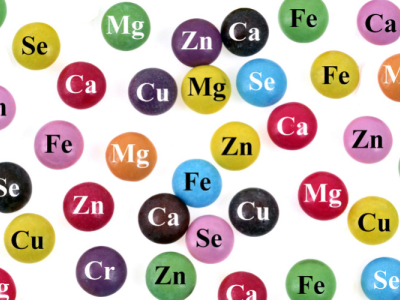
The 4 deficiencies that no one explains to you (iron, magnesium, B vitamins, iodine)
Here is what emerges from my research and 18 years of observation at Biovie. Menopause creates an almost systematic deficiency in four key nutrients:
- Iron Paradoxically, even after menstruation stops, 25% of women have an iron deficiency according to the ESTEBAN study by Santé Publique France. Intestinal absorption of iron decreases with age, and this decrease accelerates without estrogen. However, iron helps reduce normal fatigue — this is a claim validated by the EFSA. Low ferritin = guaranteed exhaustion.
- Magnesium : estrogens facilitated its absorption. Without them, magnesium is lost through the kidneys. A magnesium deficiency results in muscle fatigue, nervous fatigue, and sleep disturbances. Magnesium helps reduce fatigue — another solid EFSA claim.
- B vitamins (B6, B9, B12): essential for cellular energy production and the normal functioning of the nervous system. Menopause brain fog is often partially linked to a deficiency in B vitamins.
- Iodine : essential for the thyroid to function normally. The thyroid is closely linked to estrogen, and postmenopausal women are twice as likely to experience thyroid dysfunction. Iodine contributes to the normal functioning of energy metabolism — a claim recognized by the EFSA.
Iron deficiency can also cause dizziness and hypersensitivity to hot flashes. This is not insignificant.
Brain fog, dizziness, insomnia: a nutritional vicious circle
Menopausal brain fog — that mental haze that prevents you from finding your words or concentrating — is not an isolated symptom. It is often the direct result of a triple deficiency: low iron (less oxygen to the brain), insufficient B vitamins (affected neurotransmitters), and fragmented sleep.
Dizziness at the end of the day? Often low ferritin. Nighttime awakenings that worsen the next day's fatigue? Often a magnesium deficiency that prevents muscle and nerve relaxation. Everything is connected. And this is precisely where nutrition comes into play — to find restorative sleep naturally and break this cycle.

Seaweed: The Nutritional Answer That Menopause Calls For
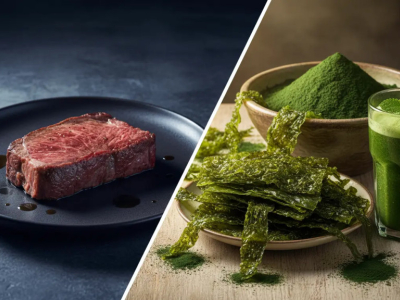
What has always fascinated me about seaweed is its nutritional density per gram, without any harmful effects. Specifically, no other food concentrates as many nutrients in such a small amount of matter. And when you look at the specific deficiencies of menopause — iron, magnesium, B vitamins, iodine, calcium — you realize that seaweed addresses them in an almost surgical way.
By the way, before telling you about the ideal seaweed combinations, we had the pleasure of sharing our passion for seaweed on France2. Few people are aware of how they are cultivated. I invite you to discover this during our segment, with a 2-minute mini-report on their cultivation as a bonus:
- Fatigue + iron deficiency → Organic spirulina — up to 200 mg of iron/100 g (bioavailability 40%). Iron helps reduce normal fatigue.
- Fatigue + magnesium deficiency → Organic spirulina — 200–400 mg of magnesium/100 g. Magnesium helps reduce fatigue and supports the normal functioning of the nervous system.
- Bone fragility + cramps → Organic wakame — calcium (1,002 mg/100 g, which is 10 times more than milk), magnesium, vitamin K2. Calcium contributes to the maintenance of normal bones and normal muscle function.
- Brain fog + cellular energy → Organic chlorella — concentrated chlorophyll, amino acids, B vitamins. Supports natural elimination functions.
- Metabolic energy + thyroid → Organic kombu / Organic dulse — natural bioavailable iodine. Iodine contributes to the normal functioning of energy metabolism.
- Deep cellular vitality Klamath — phycocyanins, 115 nutrients, complete essential amino acids. Source of nutrients involved in normal cell renewal.
Here is the secret of the longevity of Japanese women from Okinawa: a daily consumption of seaweed, for centuries. It's not a coincidence.
Spirulina, an anti-fatigue champion for menopausal women
If I had to recommend just one type of algae to start with — and this is the question most often asked by our clients in their 50s — it would be spirulina. Without hesitation. Not because it's trendy. Because its nutritional profile precisely addresses the deficiencies that menopause brings about.
A nutritional profile that addresses menopausal deficiencies point by point
SpirulinaArthrospira platensis) is technically a cyanobacterium, not an alga in the botanical sense — but it is categorized as such by usage. What matters to us here is what it contains:
- 60 to 70% complete proteins — all essential amino acids present, making it a top-quality protein source, superior to red meat of equal weight (FAO/WHO data)
- Iron up to 200 mg/100 g, with a bioavailability of 40% — significantly higher than spinach. Seaweed beats red meat in terms of plant-based iron. — I dedicate an entire article to it.
- Magnesium : 200 to 400 mg/100 g. Magnesium helps reduce fatigue and supports the normal functioning of the nervous system.
- Vitamins B1, B2, B3, B6 : all involved in normal energy metabolism. B vitamins contribute to the normal functioning of the nervous system and the reduction of fatigue.
- Vitamin B12 : present in spirulina, but honestly, its bioavailability remains debated in the scientific literature. If you are vegan, do not rely solely on spirulina for your B12 — a specific supplement is still preferable.
Spirulina is also, and this is less known, a source of Essential trace elements after 50 years : zinc, chromium, manganese, selenium.
What science says about spirulina and menopause
I provide you with the data as it is — neither sugar-coated nor exaggerated.
A systematic review published in Marine Drugs In 2020 (Cianci et al., 20 clinical trials analyzed) showed that spirulina supplementation has interesting effects on several components of post-menopausal metabolic syndrome: cholesterol, blood sugar, blood pressure. The authors are clear about an important nuance: there is still a lack of clinical trials focused solely on post-menopausal women. Research is progressing, but it is not yet complete.
A randomized controlled trial published on PubMed in 2021 (Nasab et al.) investigated the supplementation of spirulina at 1 g/day for 8 weeks. Result: a significant reduction in sleep disorders (p = 0.03) and a measurable improvement in quality of life. Insomnia is one of the main causes of menopausal fatigue. It is an indirect but clinically relevant link.
A recent meta-analysis (Barros & Lima, 2025, 21 randomized clinical trials) confirms the effect of spirulina and chlorella on reducing cardiovascular risk factors — particularly relevant in post-menopause, a period of increased risk.
Here it is: the science is encouraging. It is not "miraculous" — there are no miracles in nutrition. But the mechanisms are there, the data is there, and Biovie's 18 years of field experience confirms what studies are beginning to document.
And if you dread the taste — I understand you. Good news: integrate spirulina without suffering from it, it is entirely possible. I dedicated an entire article to the question.
How to take it concretely (dosage, form, timing)
Specifically:
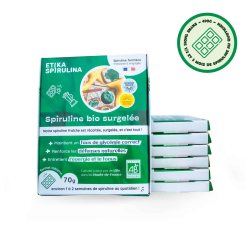
- Recommended form : Powdered or frozen, or even fresh in season.
- Start of treatment : 1 to 2 g/day in the morning (½ teaspoon of flakes in a smoothie or lemon water)
- 2-week goal : gradually increase to 3-5 g/day
- Absorption tip : pair with a source of vitamin C — lemon, kiwi, orange — to optimize the absorption of non-heme iron
- To choose : always the mention Arthrospira platensis and a controlled culture, preferably in certified organic agriculture
As part of a varied and balanced diet and a healthy lifestyle.
→ Learn more about spirulina for chronic fatigue
Chlorella, wakame, kombu: the other allies you might not know about
Spirulina is the star. But it is not alone. Depending on the person's profile — and that's what I love about precision nutrition — other algae complement the picture in a very targeted way.
Chlorella: the ally that releases cellular energy
ChlorellaChlorella vulgaris) is a freshwater microalga. What is remarkable about it: it contains the most concentrated chlorophyll in the plant kingdom, whose molecular structure is chemically similar to human hemoglobin. It is not iodized, making it accessible to all women, including those monitoring their thyroid.
Its main action? It supports the body's natural elimination functions—particularly with regard to certain heavy metals—which improves the intestinal absorption capacity of nutrients. In practice, when the digestive tract "breathes better," the nutrients from spirulina are better assimilated. It's an interesting synergy.
The meta-analysis by Barros & Lima (2025) on 21 randomized clinical trials confirms neutral effects on lipid levels but an interesting synergy when chlorella and spirulina are combined. Studies on chlorella alone remain less numerous — let's be honest.
Biovie organic chlorella, cultivated in pure water →
Wakame and calcium — the duo against bone fatigue
Wakame is the seaweed that Japanese women have been cooking in their miso soups for centuries. And clearly, they had foresight. At menopause, bone fragility begins to accelerate — bones become less dense, nighttime cramps set in, and muscle fatigue intensifies.
Dehydrated wakame contains 1,002 mg of calcium per 100 g (data from CEVA — Center for the Study and Utilization of Algae), which is about 10 times the calcium content of cow's milk. It also provides natural vitamin K2 — involved in the fixation of calcium on bones — and fucoxanthin, a pigment whose properties are the subject of active scientific studies in Japan, particularly in the context of Okinawa diet.
Calcium contributes to the maintenance of normal bone structure AND the normal functioning of muscle function — two distinct EFSA claims, particularly relevant in post-menopause where bones and muscles simultaneously weaken. As part of a varied and balanced diet. Combining wakame and regular movement is a well-founded approach.
→ All the benefits of wakame detailed here
Kombu and iodine: supporting basal metabolism with caution
Kombu is the quintessential umami seaweed — the one that gives Japanese broths their deep and rounded flavor. But what interests us here is its naturally bioavailable iodine.
Iodine contributes to the normal functioning of energy metabolism and the normal production of thyroid hormones — two functions very directly linked to fatigue. An iodine deficiency = a sluggish thyroid = a sluggish metabolism = chronic fatigue. The connection is direct.
⚠️ Important caution : Kombu is a seaweed very rich in iodine. If you have a thyroid condition — hypothyroidism, hyperthyroidism, or if you are taking a levothyroxine-based treatment — consult your doctor before any regular consumption. For others, a reasonable dose of 2 to 3 g per week is more than sufficient. Be sure to read precautions to know about seaweed and the thyroid — it is an article that I have written with the utmost care.
Organic Kombu — The Healthy Umami → | Organic dulse — Atlantic minerals →
And then there is Klamath. The algae that I gladly describe as "high-end" in our range at Biovie. It has a remarkable concentration of phycocyanins, a richness in essential amino acids, and a solid reputation among naturopathy practitioners who support women in menopause. Specific studies on this population remain scarce — but the nutritional profile is well-documented.
Klamath — the algae of cellular regeneration →
My anti-fatigue menopause algae protocol: the first 30 days
Since 2007 at Biovie, we have observed that women who gradually incorporate algae notice a difference in energy within 3 to 6 weeks. The key is the word "gradually" — that's really where it all happens. Going too fast risks digestive discomfort that can be discouraging. Going too slowly means not reaching effective doses.
Weeks 1-2: gradual introduction
One single algae, one single thing to remember:
- Organic spirulina: 1 g/day in the morning (½ teaspoon of flakes in a green smoothie, lemon water, or orange juice — the lemon has a double effect: it masks the taste and optimizes the iron)
- Drink an extra large glass of water in the morning
- Observe: energy, transit, sleep. Your body is always expressing itself.
Nothing else. No chlorella, no wakame, no kombu. One thing at a time.
Weeks 3-4: ramp-up
- Week 3 : spirulina 3 g/day + addition of 1 g of chlorella (separately or mixed)
- Week 4 : spirulina 3-5 g + chlorella 1-2 g + 1 sheet of dehydrated wakame rehydrated in a soup or a mixed salad
- Always associate the intake of algae with a source of vitamin C.
- Coffee and tea? Delay them by at least 30 minutes after consumption (tannins inhibit iron absorption).
How to incorporate seaweed into your daily meals without being put off by it
This is the number one objection I hear. "The taste of seaweed is inedible." So allow me to be honest: this is true for certain forms and certain preparations. It is completely false for others.
Spirulina flakes in a banana-mango-plant milk smoothie? You can hardly taste it. In freshly squeezed orange juice? Same. Rehydrated wakame in homemade miso soup? It's good, simply good. The key is to start with forms and recipes that work—and not to start by swallowing tablets on an empty stomach with nothing else.
I have listed 12 concrete tips for incorporating spirulina without suffering — some will surprise you.
Start my seaweed menopause treatment →
How long before feeling the effects? What you need to know honestly
The question everyone is asking — and which I will answer directly, because false promises do not interest me.
The timelines depend on your initial level of nutritional depletion — and the quality of the spirulina you choose. Here is what is typically observed:
- Background fatigue : improvement often felt as early as 2 to 3 weeks, especially in midday energy
- Ferritin (iron stores) : The reconstruction takes 4 to 8 weeks. This is the time it takes for the body to rebuild reserves. A blood test at 2 months will give you a clear picture.
- Brain fog : generally 3 to 4 weeks for a noticeable improvement in concentration and mental clarity
- Quality of sleep : 4 to 6 weeks, often alongside a reduction in magnesium as a cause of nocturnal awakenings
What algae are not: a hormone replacement therapy. They do not replace medical supervision. They are part of a comprehensive lifestyle approach—hydration, gentle physical activity, structured sleep—which I have detailed the basics of in our article on find restorative sleep naturally.
As part of a varied and balanced diet and a healthy lifestyle.
What you need to know before starting (precautions and thyroid)
I prefer to be clear on this subject rather than avoid it. Algae are foods, not medicines — but like any food dense in active nutrients, they require some precautions.
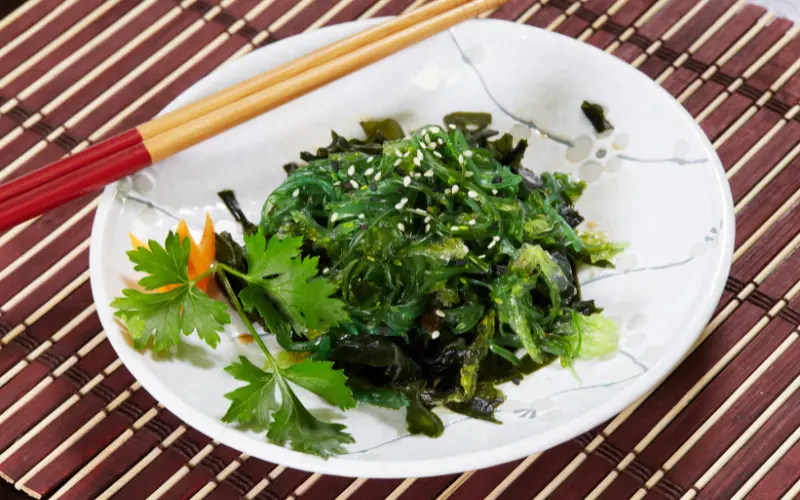
- Iodized seaweeds (kombu, wakame, dulse, nori) : to be approached with caution if you have treated hypothyroidism or hyperthyroidism, or if you are taking medication that interacts with iodine. It is imperative to read precautions to know about seaweed and the thyroid before any treatment.
- Spirulina and chlorella : freshwater microalgae, without iodine. Their safety profile is well-documented and solid for the vast majority of women.
- Anticoagulants : Wakame contains vitamin K, which can interact with anticoagulants like warfarin. If you are on anticoagulant treatment, consult your doctor.
- Shellfish allergy : if you have a confirmed allergy to shellfish or mollusks, approach seaweed with caution — freshwater algae (spirulina, chlorella) are less of a concern.
- Always start gradually : test digestive tolerance for 1 to 2 weeks before increasing the dose. It's the golden rule.
Frequently Asked Questions About Menopause Fatigue and Algae
Why have I been so tired since the beginning of my menopause ?
Menopausal fatigue results from several simultaneous mechanisms: the drop in estrogen directly disrupts cellular energy production, creates iron deficiencies (whose absorption decreases with age) and magnesium deficiencies, and causes sleep disturbances that amplify exhaustion. This is not a temporary fatigue — 25% of women continue to suffer from it 10 years after menopause, according to INSERM data. It is not a matter of willpower; it is a biochemical reality. Iron helps reduce normal fatigue as part of a varied and balanced diet.
Which algae is the most effective against fatigue during menopause ?
Organic spirulina is the top choice. It contains up to 200 mg of iron per 100 g with a bioavailability of 40%, complete proteins (60-70%), magnesium, and B vitamins — addressing the main deficiencies of menopause. Iron helps reduce normal fatigue; magnesium helps reduce fatigue and supports the normal functioning of the nervous system. It can be combined with chlorella for additional digestive support. For bone health, wakame provides calcium and magnesium. As part of a varied and balanced diet.
What dose of spirulina should be taken per day during menopause ?
Start with 1 to 2 g per day (½ teaspoon of flakes) for the first 2 weeks, then progress to 3-5 g/day. Take it in the morning with a source of vitamin C — squeezed lemon, orange juice, kiwi — to optimize the absorption of non-heme iron. The progression is important to avoid digestive discomfort. Choose a spirulina that mentions Arthrospira platensis and a controlled culture. As part of a varied and balanced diet.
How long does it take to see results with spirulina against fatigue ?
Most women notice an improvement in underlying fatigue within 2 to 4 weeks. Replenishing iron stores (ferritin) takes 4 to 8 weeks depending on the initial level of depletion. Brain fog generally improves in 3 to 4 weeks. The results depend on the quality of the spirulina chosen, the regularity of intake, and overall diet. This is within the context of a varied, balanced diet and a healthy lifestyle.
Are algae dangerous for the thyroid during menopause ?
Iodine-rich seaweeds (kombu, wakame, dulse) require caution if there is an existing thyroid condition or ongoing treatment. In contrast, spirulina and chlorella are freshwater microalgae without iodine — their profile is safe for the vast majority of postmenopausal women. If undergoing thyroid treatment, consult your doctor before starting any seaweed regimen. Read our full article on seaweed and the thyroid →
Can spirulina and chlorella be combined during menopause ?
Yes, the combination is interesting. Spirulina provides iron, complete proteins, and B vitamins. Chlorella, rich in chlorophyll, supports natural elimination functions and improves the digestive environment for better nutrient assimilation. Start with 1 g of each per day and then gradually increase. As part of a varied and balanced diet.
What diet should be adopted in case of extreme menopause fatigue to maximize the effect of algae ?
Pair seaweed with foods rich in vitamin C (citrus fruits, kiwi, peppers) to optimize the absorption of plant-based iron. Delay coffee and tea by at least 30 minutes after consumption (tannins inhibit iron absorption). Maintain sufficient hydration, regular sleep, and gentle physical activity. Seaweed should be part of an overall lifestyle approach — not as an isolated solution. Within the context of a varied and balanced diet.
In summary: what if the answer has been on our plates for centuries ?
The women of Okinawa do not eat seaweed because they have read studies on PubMed. They eat it because their grandmothers taught them it was good — and their exceptional longevity has proven them right, generation after generation.
What science documents today, Asian food tradition has been applying for centuries. And what I have observed daily at Biovie for 18 years is that women who go through menopause by relying on a dense and precise diet — which includes seaweed — fare better. Not magically. Gradually. Concretely.
Fatigue during menopause is not inevitable. It is often a signal that your body is in need of specific nutrients. Seaweeds and microalgae are among the few foods that respond to this signal with such high nutritional density per gram.
Start gradually, choose quality, and observe. That's all I ask of you. The rest, your body will tell you — in 3 to 6 weeks.
Here is the list of resources, which is of course not exhaustive. There is still much to explore on the subject of seaweed and its benefits for women aged 50. Feel free to write to us with your questions.
→ Receive our special recipes for women 50+ featuring seaweed — newsletter subscription
Scientific references
- Cianci A. et al. (2020). "Are There Any Beneficial Effects of Spirulina Supplementation for Metabolic Syndrome Components in Postmenopausal Women?" Marine Drugs, 18(12), 651. (Systematic review — 20 clinical trials)
- Nasab S.J. et al. (2021). "Effects of Spirulina supplementation on sleep quality, mental health, fatigue status and quality of life." PubMed 34107141. (Essai randomisé contrôlé, double-aveugle)
- Barros R. & Lima P.A. (2025). "The Role of Chlorella and Spirulina as Adjuvants in the Control of Cardiovascular Risk Factors." (Meta-analysis — 21 randomized clinical trials)
- GEMVI (2022). Study on 5,000 women aged 50–65. Maturitas Journal. 87% of menopausal women experience at least one bothersome symptom.
- Public Health France. ESTEBAN Study (2014-2016). Prevalence of iron deficiency in women in France. 25% deficiency among adult women.
- Senate report (2023). Women's health at work — menopause. 14 million menopausal French women, 500,000 new cases per year, 6% on HRT (Hormone Replacement Therapy).
Update: March 2026. Article approved by Éric Viard, founder of Biovie and engineer ISTOM, co-author of " Seaweed in everyday life "(Gallimard, 2024) —" Best cookbook in the world, Gourmand Cookbook Awards 2025, and Best cookbook in France, National Academy of Cuisine 2025.
Warning: The information presented in this article is provided for informational purposes only and does not constitute medical advice. Consult a qualified healthcare professional before making any changes to your diet or supplementation. As part of a varied and balanced diet and a healthy lifestyle. The beneficial effect of the mentioned nutrients is achieved with appropriate daily intake, as part of an overall balanced diet.