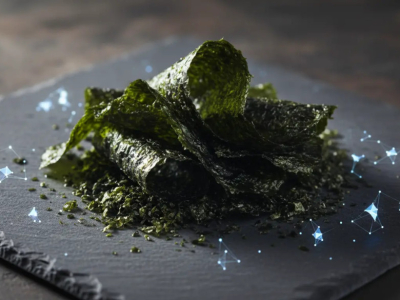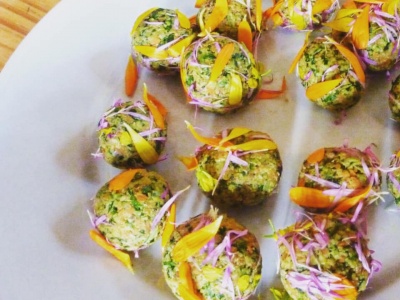

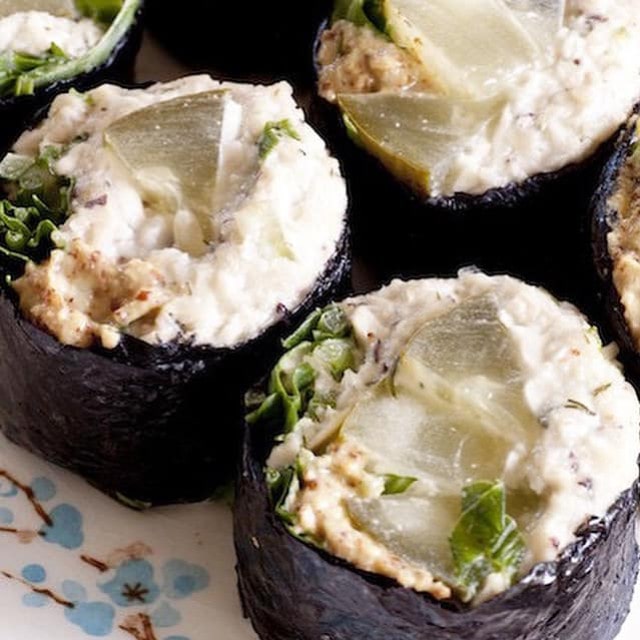

Imagine colorful vegan makis, filled with crunchy vegetables and creamy avocado, rolled in a sheet of raw nori with an intense marine aroma — without cooked rice, without pasteurized vinegar, without cooking. A 100% living recipe, ready in 20 minutes, that revisits the great Japanese classic in the spirit of raw food. At Biovie, we have been advocating for nearly twenty years the raw quality of our seaweeds: our nori sheets are simply dried at low temperatures to preserve their vitamins, enzymes, and bioactive vitamin B12. This recipe is the best illustration of that — and it is also featured in our book Algues au Quotidien (Gallimard, 2024).
What is a raw vegan maki and how does it differ from a traditional maki?
The makizushi, or simply maki, is a Japanese roll traditionally composed of a grilled nori sheet, cooked vinegared round rice, and a filling in the center (raw fish, omelet, vegetables). The classic vegan version retains the cooked rice and grilled nori, simply replacing the fish with tofu or avocado.
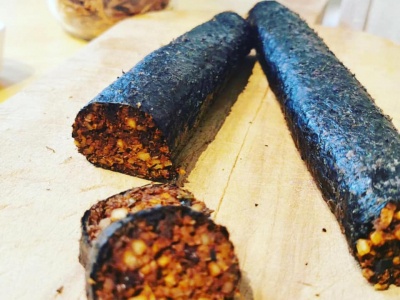
The raw vegan maki from Biovie takes the concept to the next level: no more cooked rice, no more pasteurized vinegar, no more roasted nori. Instead, a puree of sprouted sunflower seeds (or raw cashew cream) acts as a binder, and the nori sheet is served raw, in all its vitality. The result: an easy-to-prepare and incredibly nutritious raw vegan sushi.
The nutritional benefits of raw nori, the star of this recipe
The nori sheet is one of the most nutritious seaweeds in the world. According to the ANSES Ciqual table, 100 g of dried nori provide approximately 1,470 µg of iodine, 19.6 mg of iron, 260 mg of calcium, 35 g of fiber, and up to 40% protein on a dry matter basis (Dawczynski et al., 2007).
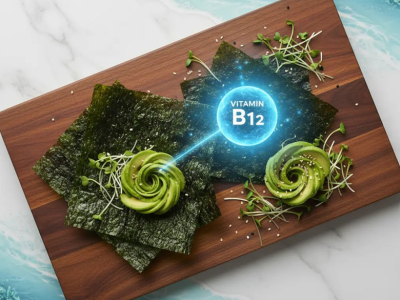
A rare feature in the plant world: nori contains bioactive vitamin B12. A study published in Nutrients (Watanabe et al., 2014) confirmed that dried nori provides 32 to 77 µg of bioactive B12 per 100 g — a valuable asset for vegans. The iodine in nori contributes to the normal functioning of the thyroid (EU regulation 432/2012).
To learn more, discover our complete guide to edible seaweeds and our articles dedicated to nori proteins and porphyran, a unique fiber in nori.
Why choose raw nori over grilled nori?
The nori sold in supermarkets is almost always grilled at 180 °C, a roasting process that destroys vitamin C, some carotenoids, and plant enzymes. The raw nori sheets from Biovie are simply dried at low temperatures (< 42 °C): all micronutrients are preserved, including bioactive vitamin B12. The taste is also more pronounced: more iodized, more marine, less "toasted".
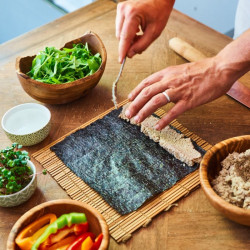
Ingredients — recipe for 4 maki rolls (32 pieces)
Favor organic, local, and seasonal ingredients to preserve the full vitality of the recipe.
- 4 sheets of raw Biovie nori (raw quality, not roasted)
- 1 cup of puree of sprouted sunflower seeds (or raw cashew cream)
- 1 ripe avocado, sliced
- 1 organic carrot, julienned
- 1/2 cucumber, cut into sticks
- 1/2 red bell pepper, thinly sliced
- 1 small handful of sprouted seeds (alfalfa, radish, or clover)
- 2 tbsp of raw tamari (or raw organic soy sauce)
- 1 tsp of black sesame seeds (unroasted, optional)
- 1 tsp of lemon juice + 1/2 tsp of raw coconut vinegar
- Optional: a few slices of dulse or sea lettuce for variety
Step-by-step preparation (20 minutes flat)
- Prepare the sprouted sunflower puree: blend 1 cup of sprouted sunflower seeds (soaked for 8 hours then sprouted for 24 hours) with 1 tbsp of lemon juice and a splash of water until spreadable.
- Wash, peel, and cut all the vegetables into thin slices or sticks 8 to 10 cm long.
- Place a sheet of raw nori on a bamboo mat (or a clean board), shiny side down.
- Spread a thin layer of sunflower puree over 3/4 of the sheet, leaving 2 cm free at the top.
- Arrange the vegetables, avocado, and sprouted seeds in a line on the lower third of the sheet.
- Roll firmly upwards, tightening well. Moisten the top edge with a little water to seal.
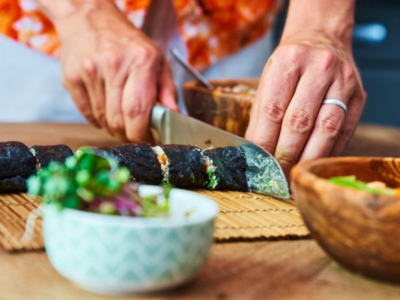
- Using a sharp knife (regularly moistened), cut each roll into 8 pieces.
- Serve immediately with raw tamari, homemade pickled ginger, and, if available, fresh wasabi.
Raw chef tips for perfect vegan makis
- No bamboo mat? A sheet of parchment paper or a clean towel will do — ideal for beginners.
- Rice substitute: raw cashew cream (cashews soaked for 4 hours + lemon juice + water) offers an ultra-creamy texture, loved by children.
- Color tip: a few strands of finely julienned red cabbage add a spectacular visual.
- Seaweed variation: replace 1 out of 4 nori sheets with a rehydrated dulse sheet for a more marine flavor. Get inspired by our dulse tartare.
- Storage: these makis do not keep — consume them within an hour. The nori sheet softens when in contact with moisture.
- Clean cut: dip the blade in lemon water before each cut to prevent sticking.
Precautions and contraindications
Since nori sheets are very concentrated in iodine, some precautions are necessary:
- Thyroid: people suffering from hyperthyroidism, Hashimoto's disease, or undergoing thyroid treatment should seek medical advice before regular consumption. The ANSES recommends not exceeding 600 µg of iodine per day for adults.
- Pregnancy and breastfeeding: moderation advised (1 to 2 sheets per week maximum).
- Children: introduce gradually from 3 years old, in small quantities.
- Allergies: sesame and soy (tamari) are allergens — replace with Himalayan pink salt and olive oil if needed.
What our customers say about our raw nori sheets
"Very good quality raw nori, well-iodized taste, perfect for my homemade makis. Fast delivery and careful packaging." — Florence D. (5/5 Google)
"I have been using Biovie nori sheets for my raw vegan makis for two years. Never disappointed, the difference with grilled nori from the supermarket is huge." — Sylvie G. (5/5 Trustpilot)
"Excellent store for living food. Raw nori is my find of the year, my children love the veggie sushi I make for them." — Bernadette M. (5/5 Google)
FAQ — Your questions about vegan makis
Can you make vegan makis without rice?
Yes, it's even the basis of the Biovie raw version. We replace cooked rice with a puree of sprouted sunflower seeds or raw cashew cream. The texture is spreadable, the perfect binder to keep the vegetables in place, and the nutritional profile is much more interesting than cooked white rice.
What is the difference between grilled nori and raw nori?
Grilled nori is roasted at about 180°C: this exposure to heat destroys vitamin C, some carotenoids, and enzymes. Biovie raw nori is only dried at low temperature (< 42°C): all micronutrients are preserved, including bioactive vitamin B12. The taste is more iodized, more pronounced, less "toasted".
How long do raw vegan makis last?
These makis should be consumed within an hour of preparation. In contact with the moisture from the vegetables and sunflower puree, the nori sheet softens quickly. Prepare them just before serving to enjoy the optimal crunchy texture.
Can you freeze vegan makis?
No, freezing is strongly discouraged. The water in the raw vegetables crystallizes and damages the structure of the nori sheet as well as the vegetables upon thawing. You will get a soggy result with no firmness.
Are vegan makis healthy?
Yes, especially in the Biovie raw version: the nori sheet provides iodine, iron, proteins, and bioactive vitamin B12 (Watanabe et al., 2014), raw vegetables preserve vitamins and enzymes, and sprouted seeds complete the intake of proteins and minerals. All contribute to a balanced and living diet.
How to replace tamari in a raw vegan maki recipe?
To avoid soy, replace tamari with Himalayan pink salt mixed with a drizzle of first-press olive oil and a few drops of lemon juice. Another option: coconut aminos, which replicate the umami taste of tamari without soy or gluten.
In Practice: The Opinion of Eric Viard, Tropical Agronomist Engineer
"Raw vegan makis are, for me, one of the most beautiful gateways to living food: we keep the festive and convivial aspect of sushi, eliminate raw fish and its risks, replace cooked rice with sprouted seeds full of enzymes, and above all, use a raw nori sheet rich in iodine and bioactive B12. It's also a recipe I love to share in training, and it's among my favorites in our book Algae for Everyday Use — proof that raw cuisine can rival classic gastronomy." — Eric Viard, founder of Biovie.
Update: April 2026. Article validated by Éric Viard, founder of Biovie and ISTOM engineer, co-author of "Algae for Everyday Use" (Gallimard, 2024) — Best Cookbook in the World, Gourmand Cookbook Awards 2025, and Best Cookbook in France, National Culinary Academy 2025.
Disclaimer: The information presented in this article is provided for informational purposes only and does not constitute medical advice. Consult a qualified healthcare professional before making any significant changes to your diet or supplementation. As part of a varied and balanced diet and a healthy lifestyle.
Find all our organic ingredients for living food at https://www.biovie.fr/en/