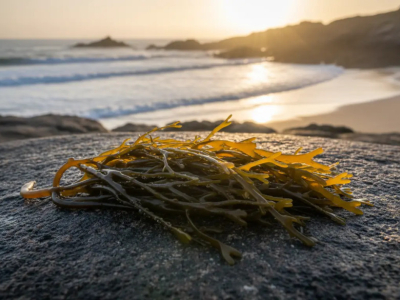

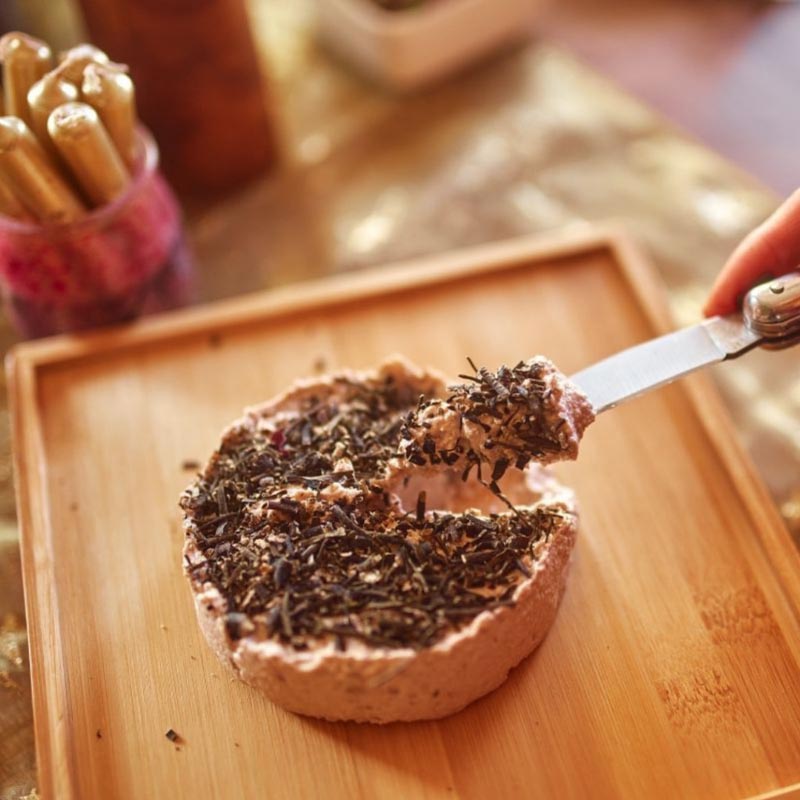

Long like a noodle and flexible like a shoelace, the sea bean (Himanthalia elongata) is a wild brown algae that grows at low tide on the Breton coasts. Also known as sea spaghetti, it is distinguished by a delicate, iodized but not overly marine flavor, and a nutritional profile that places it among the most interesting edible algae. In this guide, you will discover its benefits, precise nutritional composition, culinary uses, precautions, and the keys to choosing it well.
This guide extends the work of our book Algae in Everyday Life (Gallimard, 2024), awarded both by the Gourmand World Cookbook Awards 2025 and by the National Academy of Cuisine 2025.
What is the sea bean?
The sea bean, scientifically named Himanthalia elongata, belongs to the family Himanthaliaceae, within the large class of brown algae (Phaeophyceae). It is known by several common names depending on the regions and languages:
- Sea spaghetti (the most common commercial name in France)
- Sea spaghetti (English)
- Sea lace (old name)
- Thong weed (popular English)
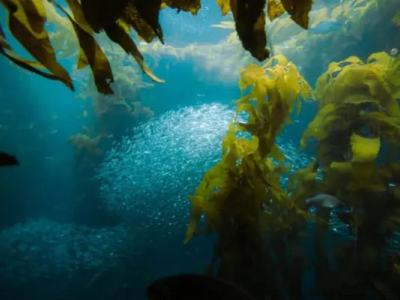
This algae grows on the rocky coasts of the Northeast Atlantic, from Norway to Spain, with a particularly strong presence in Brittany. It thrives in areas swept by waves, between low tide and the infralittoral zone. Its morphology is unique: small button-shaped receptacles allow long flattened, rubbery-looking strips to grow in the spring, which can reach 2 to 3 meters. This is the part that is harvested and consumed, mainly between May and October.
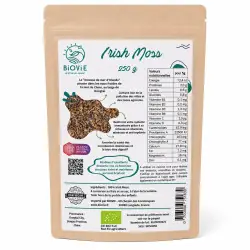
At Biovie, we select organic dehydrated sea spaghetti, hand-harvested in Brittany, then dried at low temperatures to preserve their nutritional qualities.
Nutritional composition of the sea bean
According to data from the Ciqual (ANSES) table and several recent scientific studies, dehydrated sea bean has a remarkable profile.
Macronutrients (per 100 g of dry product)
- Proteins: 8 to 11 g, with a balanced amino acid profile.
- Dietary fibers: 33 to 36 g, with a notable portion of soluble fibers (alginates and fucoidans).
- Lipids: less than 2 g, mainly polyunsaturated fatty acids including omega-3s.
- Carbohydrates: mainly in the form of non-digestible polysaccharides.
- Energy value: low (about 150 to 220 kcal/100 g dry).
Minerals and trace elements
The sea bean is distinguished by its richness in minerals, characteristic of brown algae:
- Iodine: between 12 and 20 mg / 100 g dry (source to monitor, see precautions).
- Calcium: 700 to 900 mg / 100 g dry.
- Magnesium: 400 to 600 mg / 100 g dry.
- Iron: 5 to 7 mg / 100 g dry.
- Potassium: very abundant, while sodium remains moderate.
- Vitamin C: present at a notable level for an alga, which distinguishes sea beans among brown algae.
Bioactive Compounds
Brown algae, and sea beans in particular, contain several families of bioactive compounds studied in research:
- Fucoidans: sulfated polysaccharides.
- Alginates: gelling soluble fibers.
- Phlorotannins: polyphenols specific to brown algae.
- Carotenoids including fucoxanthin, a characteristic pigment.
The Benefits of Sea Beans
A Natural Source of Iodine
Iodine is a trace element essential for the production of thyroid hormones. According to the EFSA, the daily requirement for an adult is about 150 µg. Sea beans, like all marine algae, are a concentrated source of iodine: a few grams are more than enough to meet the intake. This is precisely why it should be consumed in moderation (see precautions section).
An Interesting Fiber Intake
With more than 30% fiber, sea beans contribute, as part of a varied diet, to a useful intake of dietary fiber. Alginates form a gel in the digestive tract that contributes to the feeling of fullness and digestive comfort.
A Complete Mineral Profile for Plant-Based Diets
For people following a plant-based, vegetarian, or vegan diet, algae like sea beans are an interesting resource: calcium, magnesium, iron, and potassium are present in appreciable quantities. They naturally find their place in a diet regularly incorporating algae and microalgae.
Bioactive Compounds Studied by Research
The fucoidans and polyphenols of brown algae are the subject of numerous scientific publications. According to the review published by Peñalver et al. (2020) in Marine Drugs, marine algae are studied as a functional ingredient for their potential effects on gut health, metabolism, and oxidative stress. These studies remain experimental or preliminary at this stage and do not constitute a health claim: they nevertheless demonstrate the growing interest in these compounds. Also note that for a specific focus on sea beans, a Breton algae rich in vitamin C, we offer a second more narrative article.
How to Use Sea Beans in Cooking?
Rehydration, an Essential Step
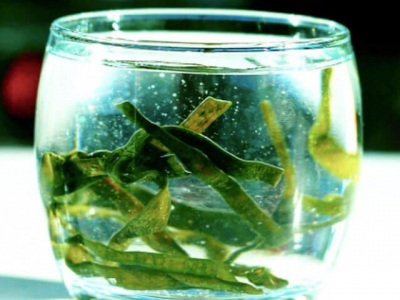
Dehydrated sea beans must be rehydrated before use:
- Place the strips in a salad bowl.
- Cover generously with warm water (not boiling).
- Let sit for 10 to 15 minutes.
- Rinse with clear water and drain.
Count approximately 1 to 4 in volume: 100 g dry yields about 300 to 400 g of ready-to-use product. No need to salt the water: the seaweed naturally retains a slight salinity.
Recipe idea: warm sea bean and celeriac salad
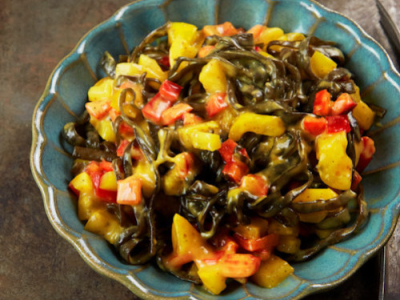
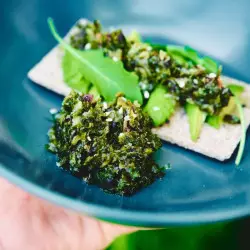
A signature recipe we love: rehydrated sea beans, quickly sautéed in olive oil with julienned celeriac, sprinkled with toasted sesame seeds, lemon zest, and fresh parsley. The full version of this recipe is available in our article celeriac salad with sea beans.
Other usage ideas
- In seaweed tartare: mixed with other seaweeds like dulse, see our recipe for dulse tartare with hazelnuts.
- In miso soup: added at the end of cooking to preserve its texture.
- In wok dishes: quickly sautéed with crunchy vegetables and ginger.
- As a garnish: accompanying white fish, marinated tofu, or grilled tempeh.
- In summer salad: mixed with raw vegetables, lemon-tamari dressing.
To discover all edible seaweeds, we invite you to consult our complete guide to edible seaweeds (dulse, wakame, sea lettuce, sea beans).
Precautions and contraindications
Seaweeds are concentrated foods: their nutritional benefits should be accompanied by moderate consumption.
- Iodine content: according to the recommendations of ANSES, it is advised not to exceed 1 g of dry product per day for iodine-rich seaweeds, in healthy adults.
- Pregnancy and breastfeeding: seek medical advice before regular consumption of marine seaweeds.
- Thyroid disorders (hyper or hypothyroidism, levothyroxine treatment, Hashimoto's or Graves' disease): medical supervision is essential.
- Anticoagulant treatment: seaweeds contain vitamin K, which can interfere with vitamin K antagonists. Discuss with your doctor.
- Children: introduce seaweeds gradually and in small quantities.
- Iodine allergy (rare): avoid.
How to choose and store sea beans?
Favor a traced and organic origin
Sea beans absorb minerals from their environment — it is therefore essential to choose them from a controlled harvest area. Breton seaweeds certified European Organic or Nature & Progrès undergo regular water quality checks. At Biovie, our sea beans are hand-harvested on the Breton foreshore.
Dehydrated or Fresh?
The dehydrated can be stored for several months at room temperature, protected from moisture and light. It concentrates nutrients and rehydrates easily. The fresh or brined, available from some Breton producers in season, requires quick consumption but offers an incomparable texture.
Storage
In its original closed packaging, dehydrated sea beans can be stored for up to 18 months. Once opened, we recommend transferring it to an airtight glass jar, in a cool, dry place. After rehydration, consume within 48 hours (in the refrigerator).
Frequently Asked Questions (FAQ)
Is sea bean really a bean?
No, it is a brown algae (Himanthalia elongata), also called sea spaghetti. Its common name comes solely from its elongated shape, reminiscent of a very long green bean.
What does sea bean taste like?
Sea bean has a fine, slightly iodized and marine flavor, but much milder than dulse or nori. Its texture, once rehydrated, is reminiscent of al dente spaghetti, with a slight crunch.
How much sea bean can I eat per day?
For regular consumption, it is recommended not to exceed 1 g of dry product per day for a healthy adult, according to ANSES recommendations. This corresponds to about 3 to 4 g of rehydrated product, or a small portion as a side dish.
Is sea bean suitable for vegetarians and vegans?
Yes, sea bean is 100% plant-based. It provides proteins, fibers, calcium, magnesium, and iron, nutrients that are particularly interesting in the context of a varied plant-based diet.
Can you eat sea bean during pregnancy?
As a precaution, we recommend seeking medical advice before any regular consumption of marine algae during pregnancy and breastfeeding, due to their high iodine content which may exceed the specific needs of this period.
Where to buy organic sea bean in France?
Organic dehydrated sea bean is available in organic stores, in some fine grocery stores specializing in algae, as well as on online shops dedicated to living food like ours. We offer organic sea spaghetti harvested in Brittany on biovie.fr.
In Practice: Eric Viard's Opinion, ISTOM
"Sea bean is the algae I recommend to those who want to discover edible algae without immediately diving into strong flavors. Its vegetable pasta texture and delicate taste make it an accessible ingredient, which I regularly use at home in salads, stir-fries, or tartares. In Algae Daily, we dedicate several recipes to it because it is an excellent gateway to the daily use of Breton algae." — Eric Viard, founder of Biovie.
Update: April 2026. Article validated by Éric Viard, founder of Biovie and ISTOM engineer, co-author of "Algues au quotidien" (Gallimard, 2024) — Best Cookbook in the World, Gourmand Cookbook Awards 2025, and Best Cookbook in France, National Culinary Academy 2025.
Disclaimer: The information presented in this article is provided for informational purposes only and does not constitute medical advice. Consult a qualified healthcare professional before making any significant changes to your diet or supplementation. As part of a varied and balanced diet and a healthy lifestyle.
Find all our organic ingredients for living food on https://www.biovie.fr/en/