


Here it is prunes that stand in for dates in the base: blended with walnuts, they give a dense, sticky bottom that presses into a tart tin without ever seeing an oven. The filling draws its structure from chia seeds swollen into a thick gel rather than from a nut cream alone, which lets a full 170 grams of melted raw cacao paste carry a deep, almost bitter chocolate flavour without the mixture turning grainy or splitting. Lucuma and dates round out the sweetness, tahini slips a savoury note under the chocolate, and blended almond milk loosens the whole thing into a pourable texture that firms back up in the cold. Several hours in the fridge, ideally a full night, turn that pourable cream into a tart that slices cleanly rather than oozing, with a mouthfeel closer to a set mousse than a baked custard. It is rich enough that a thin slice goes a long way, which makes it a good choice for a dinner or a festive table where a lighter portion still feels generous. Compared with a baked chocolate tart, this version has a cooler, denser mouthfeel and none of the structure an egg custard would bring. Cut it straight from the fridge, never after time at room temperature.
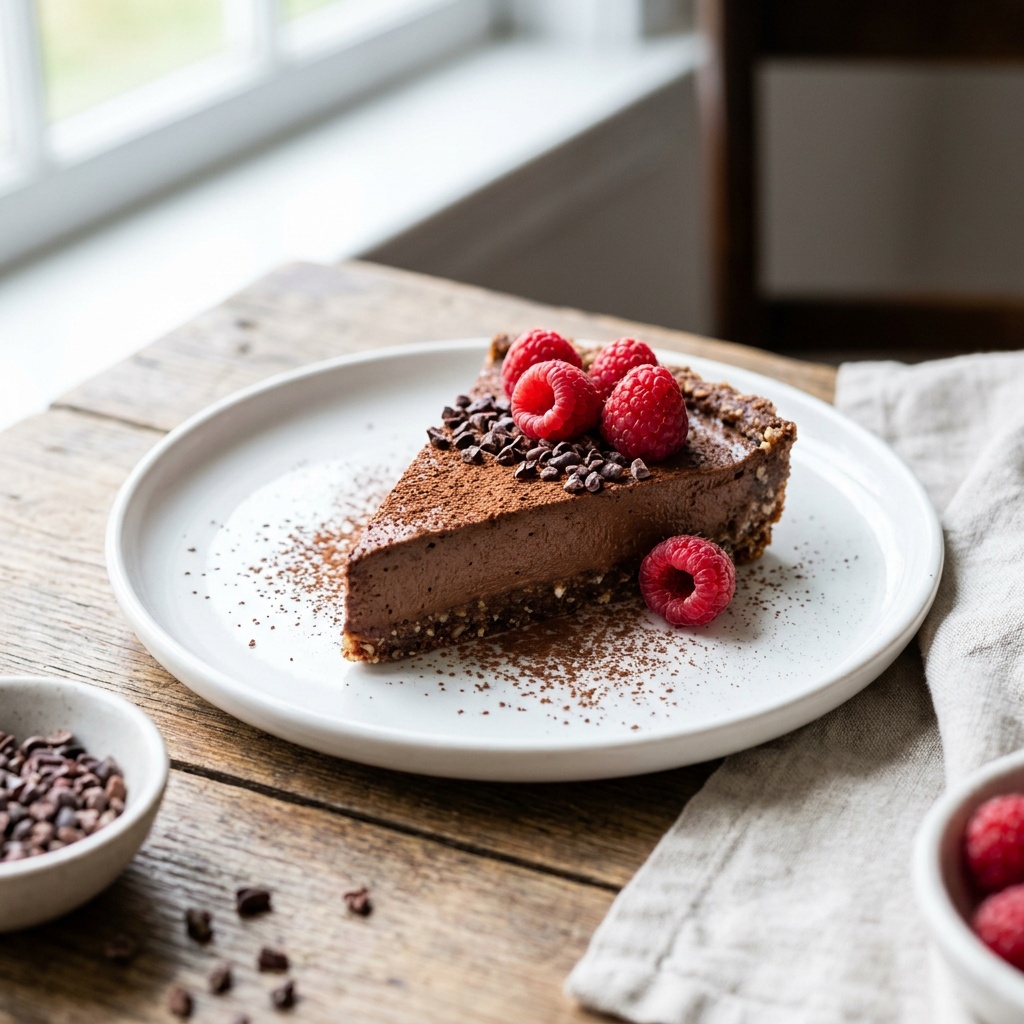
Raw chocolate mousse tart on a walnut and prune base

Share this article
Ingredients
Base
- 1 cup walnuts
- 1 cup prunes
- 2 tablespoons carob or cocoa powder
- A little water, if needed
Chocolate cream
- 6 tablespoons chia seeds
- 1/2 cup water
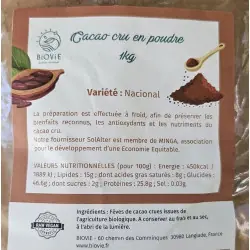
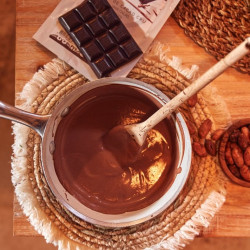
- 170 g unsweetened raw cacao paste, melted
- 2 tablespoons lucuma powder
- 2 tablespoons carob powder
- 1 teaspoon vanilla powder
- 2 tablespoons tahini
- 10 dates
- 2 cups almond milk
Preparation
- Pulse the walnuts and prunes in a food processor until finely chopped.
- Add the carob or cocoa powder and mix well, adding a touch of water only if the mixture struggles to come together.
- Press the base evenly into a parchment-lined mould or tart tin, then chill it in the fridge while you make the filling.
- Stir the chia seeds and water together and let the mixture sit for about ten minutes, until it thickens into a gel.
- In a high-speed blender, combine the chia gel with the melted cacao paste, lucuma, carob, vanilla powder, tahini, dates and almond milk; blend until completely smooth.
- Pour the chocolate cream over the chilled base, smooth the top, then decorate as you like.
- Refrigerate for several hours, ideally overnight, until fully set before slicing.
Tip
This tart slices most cleanly straight from the fridge rather than after time at room temperature, since the chia-thickened filling softens quickly once it warms up. If you do not have raw cacao paste on hand, melted 100% unsweetened chocolate can stand in, with a slightly less bitter result on the palate.
The full range Cacao
6 products
Online only
FAQ: your questions about raw chocolate mousse tart
How do you make a no-bake chocolate tart?
The principle comes down to two layers and a spell in the cold. For the base, nuts blended with sticky dried fruit - prunes, dates - press straight into the tin: the fruit's fibre and sugar do the binding, in place of butter and flour. For the filling, you need a setting agent: melted chocolate or cacao paste that firms in the cold, a nut butter, or, as here, a chia gel. The rest is a matter of patience: several hours in the fridge, never less.
How do you make a no-bake chocolate cake ready in 5 minutes?
In five minutes you will not make a whole tart, but you can assemble small glasses that keep the essentials. Blend soaked dates with cocoa powder, a nut butter and a little plant milk until smooth, divide between glasses and scatter with chopped nuts. Resting time in the cold remains the one shortcut you cannot take: without it, the texture stays that of a cream, never that of a cake that holds. This particular recipe asks for a night, but the assembly itself takes about twenty minutes.
How do you use raw cacao?
As a paste, as in this recipe, it melts over a very gentle bain-marie and is folded into an already blended mixture - beyond about 42 °C it loses its raw status. As a powder, it goes straight into dry mixtures or smoothies. As beans or crushed nibs, it is eaten as is or scattered over a dessert. One rule holds for all its forms: raw cacao is more bitter and more intense than roasted cocoa, so dose slightly below what you would normally use, then taste.
Share this article