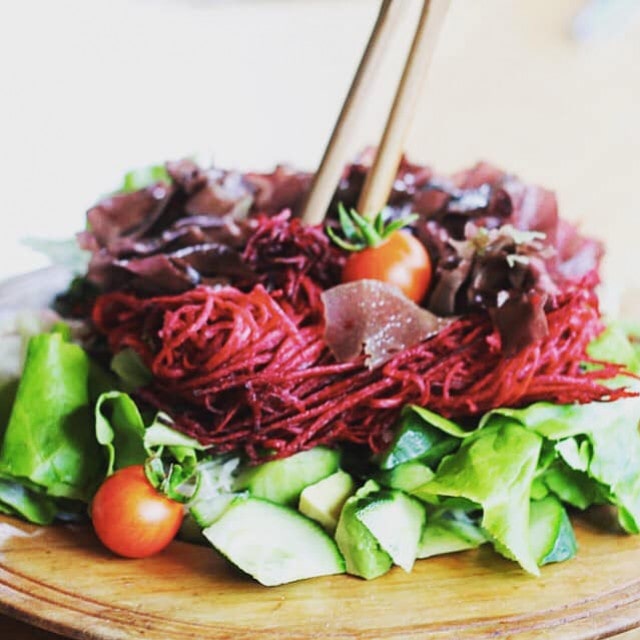
Marine red and terrestrial red, iodine and nitrates, red algae and bloodroot: the dulse beet salad is one of the most exhilarating encounters of raw food. In fifteen minutes, without cooking, you place on the table a raw dish that combines the mineral power of the Palmaria palmata - the most protein-rich Breton red algae - with the sweet-earthy softness of freshly grated beetroot. This duo is far from anecdotal: it ticks the boxes for highly bioavailable plant-based iron, cardiovascular nitrates, and antioxidant betalains. In this guide, I share the recipe we have been serving at home for nearly twenty years, the sourced benefits of this signature dish, the essential iodine precautions before increasing your algae consumption, and the variations to adapt this living base throughout the year.
Why combine dulse and beetroot in a raw salad ?
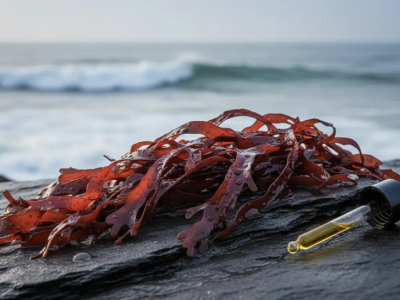
The combination of dulse + beetroot is based on a rare nutritional complementarity. The dulsePalmaria palmata) is one of the most protein-rich red algae on the European coast: according to the research by Galland-Irmouli published in the Journal of Nutritional Biochemistry, its protein content ranges from 11.9% to 21.9% of dry matter depending on the season, with an essential amino acid profile comparable to that of a legume (https://pubmed.ncbi.nlm.nih.gov/15539310/It also contains 35 to 50 mg of iron per 100 g of dry matter, naturally occurring vitamin B12 (rare in the plant kingdom), and bioavailable marine iodine.
Raw red beetroot, on the other hand, provides what the seaweed lacks: a remarkable dose of dietary nitrates (~150 mg/100 g according to the table Ciqual ANSES), antioxidant betalains (red pigments with documented hepatoprotective effects), vitamin C, potassium, and prebiotic fibers. It is precisely this vitamin C which optimizes the intestinal absorption of non-heme iron provided by dulse: the duo thus becomes synergistic in the strict sense of the term.
Finally, keeping the two ingredients raw preserves the enzymes, the heat-sensitive vitamins (C, B9), and the betalains - all of which are largely degraded by cooking. This is the whole point of the approach of theliving food that we have been advocating at Biovie since 2007.
The ingredients of the recipe for 2 people
Fresh organic dulse or dehydrated: the right choice
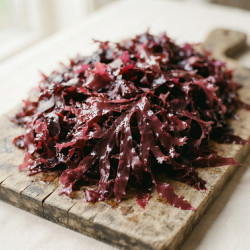
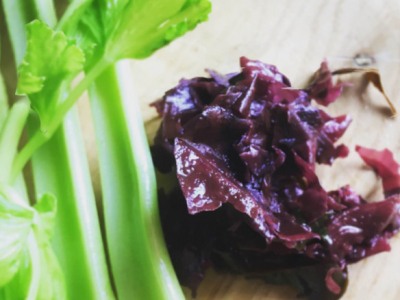
For this salad, you have two options. The fresh dulseIn brine, it is the holy grail: fleshy fronds, a distinct marine taste, and a melting texture. Simply rinse it briefly with clear water to remove excess salt, then chop it finely. Use 30 to 40 g for two people. If not, the organic dehydrated dulseIn sheets works perfectly: 5 to 6 g dry is equivalent to 30 g fresh. It rehydrates in 5 to 10 minutes in a bowl of warm water, then is drained and chopped like fresh. At Biovie, we distribute both formats, sourced exclusively from the supply chain Bretalg in Roscoff, the oldest organic seaweed harvester in France, low-temperature drying at 40°C to preserve heat-sensitive minerals.
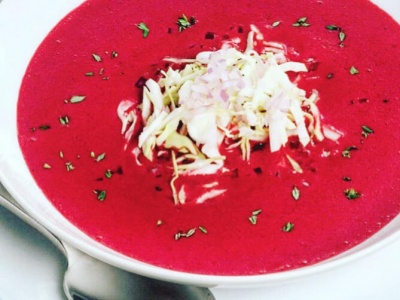
Choose an organic red beetroot that is firm and without any wilting. Peel it with a vegetable peeler, then grate it into Fine tagliatelle (wide grid) or julienned. Raw beetroot retains all its betalains - these red antioxidant pigments that cooking largely destroys - as well as its vitamin C, nitrates, and folates. Consider one small beetroot (120 to 150 g) for two people. Avoid commercially vacuum-packed cooked beets: they are convenient but lack live nutritional value.
The rest of the ingredients: freshness and seasonality
Complete with what the season offers: half a cucumber in cubes, a handful of cherry tomatoes halved, a few leaves of young lettuce or lamb's lettuce, a bit of chopped chives. For the dressing, keep it simple: two tablespoons of extra virgin olive oil, the juice of half a lemon, a pinch of Guérande salt, a twist of the pepper mill, and - here's the secret - a second pinch of peppered dehydrated dulse on top as a finishing touch. As a nod to exoticism, you can add a few strips of freeze-dried organic durian for an unexpected tropical fruity note.
Step-by-step preparation (15 minutes)
This raw recipe requires no cooking or special equipment. Here are the steps:
Rehydrate the dulse (if dehydrated): soak 5 to 6 g of dried leaves in a bowl of warm water for 5 to 10 minutes, until they become soft and plump. Drain well, gently squeeze, then chop. If fresh dulse in brine: briefly rinse under clear water, drain, chop.
Grate the raw beetroot into fine tagliatelle using a coarse grater. Place in a salad bowl.
Prepare the fresh vegetables : cut the cucumber into small cubes, halve the cherry tomatoes. Chop the chives. Add to the beetroot with the chopped dulse.
Compose the plate : arrange on a bed of young lettuce. Generously spread the beet-dulse-vegetable mixture in the center.
Season : In a small bowl, emulsify olive oil, lemon juice, salt, and pepper. Drizzle over the salad. Finish with a pinch of peppered dehydrated dulse and a few toasted sesame seeds.
Chef's tip: let the salad marinate for 10 to 15 minutes in the fridge before serving. The beet nitrates and the iodized compounds of the dulse soak up the dressing, and the flavors develop. This is a tip that Aurélie and I noted in Seaweed in Everyday Life (Gallimard) after numerous tests: short patience multiplies the gustatory pleasure.
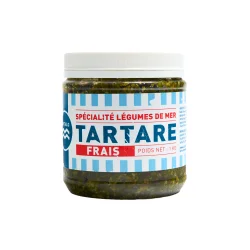
"I have been ordering my fresh seaweed from Biovie for years to make my seaweed tartare, nori sheets, and many other products. Always of excellent quality." - Florence, Biovie customer.
The health benefits of this living salad
Liver detoxification and blood purification
Raw beetroot has long been a classic in detox cures, and modern science is beginning to document it. The betalains (betanin, vulgaxanthin) have demonstrated antioxidant and hepatoprotective properties In vitro and in animals. According to a comprehensive review published in 2020 (https://pmc.ncbi.nlm.nih.gov/articles/PMC7600128/Beetroot helps support phase 2 liver detoxification systems thanks to its betalains and its richness in folic acid. Dulse, on the other hand, provides chlorophyll and marine antioxidants that contribute to overall balance.
Bioavailable plant-based iron for fatigue and anemia
With 35 to 50 mg of iron per 100 g of dry matter, dulse is one of the most concentrated plant sources of iron. A 5 g serving of dehydrated dulse in a salad provides about 1.7 to 2.5 mg of non-heme iron, which is 10 to 15% of the Recommended Dietary Allowance (RDA) for adult women. Combined with the vitamin C from beets and lemon, intestinal absorption is increased, making it a relevant option for people sensitive to iron deficiency fatigue. To learn more, I invite you to read our report. Dulse, plant-based iron, and anemia in women.
Marine iodine and normal thyroid function
Dulse is a natural source of iodine (150 to 200 µg/g of dry matter), and according to health claims authorized by the EFSA, iodine contributes to the normal functioning of the thyroid and to a normal production of thyroid hormones. A reasonable portion of 2 to 3 g of dehydrated dulse provides an interesting iodine supplement for people who eat little fish or marine products - which is the case for the majority of vegan diets.
Beetroot nitrates and cardiovascular health
Clinical research is now robust: the dietary nitrates of raw beetroot (~150 mg/100 g) are converted in vivo into nitric oxide, a powerful vasodilator. Several randomized trials have shown a modest but significant effect on systolic blood pressure, athletic endurance, and tissue perfusion. A comprehensive review (PMC 11595611, 2024) confirms the cardiovascular and metabolic potential of this vegetable. Note: prolonged cooking destroys some of the nitrates - another reason to prefer raw beetroot. For proteins, our dedicated article explains why Dulse contains as much protein as soy..
Precautions: iodine, thyroid, pregnancy, and kidney disorders
This is the section that is too often overlooked on the web - I am deliberately placing it prominently. Dulse is a powerful seaweed, and its consumption should remain moderate.
Iodine and thyroid. In its opinion NUT-2017-SA-0086, ANSES recommends not exceeding 600 µg of iodine per day for adults (upper safety limit, UL) and warns about the risks associated with excessive consumption of seaweed. A 2020 studyhttps://pubmed.ncbi.nlm.nih.gov/32803579/) confirms the necessary vigilance. If you suffer from a thyroid condition (Hashimoto's, Graves', nodules, goiter) or are taking a treatment like Levothyrox, consult your doctor before incorporating dulse into your diet. For a complete analysis, see our report. relationships between algae, iodine, and thyroid.
Pregnancy and breastfeeding. Iodine needs increase (200 to 250 µg/day according to the WHO), but the margin before the UL narrows. Limit yourself to 1 to 2 g of dehydrated dulse per week during this period, and favor small regular amounts rather than a large one-time intake.
Kidney troubles and oxalates. Raw beetroot contains oxalates. In the case of recurrent calcium oxalate kidney stones, limit portions and seek advice from your doctor or dietitian.
Urinary coloration. Raw beetroot can color urine pink-red (beeturia) for 24 to 48 hours in about 15% of the population: it is a benign phenomenon without consequences.
Allergies. Allergic reactions to algae proteins are rare but documented. If you are allergic to seafood or iodine, test first in a very small amount.
Variations and tasting tips
This dulse-beet base can be adapted infinitely according to the seasons and desires.
Winter citrus variant. Replace the cherry tomatoes with blood orange or pink grapefruit segments. The tangy side enhances the absorption of iron from the dulse, and the palette of reds becomes spectacular on the plate.
Walnut and endive variation. In winter, swap lettuce for thinly sliced endive leaves, and add a handful of crushed walnut kernels. The bitter-iodine-fat trio is incredibly tasty.
Sprouted seed variant. A generous handful of sprouted seeds such as alfalfa, radish, or fenugreek transforms the salad into a complete dish with high nutritional density - this is the version we serve at the Biovie workshop during our live food training sessions.
"I am always satisfied with all the products ordered. The seaweed tartare recipe has become a staple in our home." - Mickael, Biovie customer.
Where to buy dulse and which Biovie products to choose
At Biovie, we have been working for over fifteen years with the cooperative Bretalg in Roscoff, the oldest organic seaweed sector in France. Our seaweeds are hand-harvested in Brittany, free from heavy metal pollution, and dried at low temperatures (40 °C) to preserve their heat-sensitive minerals. For this recipe, two products are perfectly suited: the fresh organic dulse in brine (refrigerated delivery, long-term cold storage) and the Organic dehydrated dulse in leaves (format poster, ready to rehydrate). To delve deeper into seaweed cuisine, the book Seaweed in Everyday Life (Editions Gallimard, 2024) offers 80 recipes by Aurélie and Éric Viard, categorized by seaweed and by season.
FAQ - All about beet dulse salad
Can you eat dulse raw ?
Yes, dulse can be perfectly consumed raw, simply rinsed (if fresh in brine) or rehydrated for 5 to 10 minutes in warm water (if dehydrated). This is even the ideal way to consume it to preserve vitamin C, polyphenols, and essential amino acids. Finely chopped, it can be incorporated into a salad, tartare, or green smoothie. Use 2 to 5 g of dried dulse per adult serving.
What are the benefits of dulse seaweed ?
Dulse (Palmaria palmataIt provides complete proteins (11 to 22% dry matter depending on the season), bioavailable plant-based iron (35 to 50 mg/100 g dry matter), marine iodine which contributes to the normal functioning of the thyroid, vitamin B12, omega-3 EPA, and antioxidant polyphenols. It helps meet iron intake requirements in women and maintains a good iodine balance in vegans. Its effects on vitality have been documented since 1999 by the work of Galland-Irmouli.
How much dulse should be consumed per day ?
ANSES recommends not exceeding 600 µg of iodine per day for adults. For dulse, this corresponds to about 3 to 5 g of dehydrated leaves per day at most, and preferably 2 to 3 g spread over the week for regular use. People with thyroid conditions, pregnant or breastfeeding women should seek their doctor's advice before any regular consumption and limit themselves to 1 to 2 g per week.
Is raw beetroot better than cooked ?
Yes, for a health objective. Raw beetroot fully preserves its antioxidant betalains, vitamin C, folates, and especially its dietary nitrates (~150 mg/100 g), which are only partially destroyed by prolonged cooking. It also offers a lower glycemic index. A simple grating or quick marination in lemon juice is enough to make it tender and digestible. People with a sensitive digestive system can cut it more finely and let it marinate for 15 minutes in vinaigrette.
How to prepare dehydrated dulse ?
Soak the dulse leaves in a bowl of warm water for 5 to 10 minutes. They will double in size and become supple and fleshy. Drain them, gently squeeze out the excess water, then chop them. Use 5 to 6 g of dried dulse to obtain the equivalent of 30 g of fresh dulse. The soaking water can be saved to flavor a miso soup or vegetable broth - it is rich in minerals and marine flavor.
Is beetroot dulse salad suitable during pregnancy ?
In very small occasional quantities, yes. Dulse provides useful iodine during pregnancy (requirement of 200 to 250 µg/day according to the WHO), but the margin before the safety limit of 600 µg/day is narrow. Limit yourself to 1 to 2 g of dehydrated dulse per week and favor small regular amounts. In case of pre-existing thyroid pathology or doubt, seek the advice of your midwife or doctor before any consumption.
"I served this dulse-beet salad at home for the first time nearly twenty years ago, when Aurélie was testing ideas for what would become Seaweed Daily. Since then, it has become our signature spring dish. What touches me about this recipe is that it brings together everything I've advocated for since my years as an agricultural engineer: raw ingredients that preserve enzymes, the plant-marine combination that covers the nutrients modern diets have lost, and above all, the immediate pleasure of the vibrant red colors that catch the eye. A salad that heals the liver and the eyes at the same time is rare. But I always remind our interns: dulse is precious, not ordinary. A good handful per week, no more, and you get the best out of it." - Eric Viard, founder of Biovie.
Warning: The information presented in this article is provided for informational purposes only and does not constitute medical advice. Consult a qualified healthcare professional before making any significant changes to your diet or supplementation. As part of a varied and balanced diet and a healthy lifestyle.