

A plant-based cheese that develops a real rind takes time but very few steps, and the result surprises even those who expect nothing from this kind of preparation. The principle: cashews soaked then blended for a long time with water and a culture powder, until the texture is perfectly silky. Soaking plays two roles: softening the nuts so they blend without grain, and reducing their phytic acid content. Watch the heat during blending: if the blender jar feels warm to the touch, stop and let it cool before continuing, or you risk damaging the cultures. The mixture is then drained in a cheesecloth, under a modest weight, and left to mature 24 to 48 hours at room temperature. During this time it takes on a distinctly cheesy smell, which is a good sign. It's then seasoned, moulded, set in the freezer, and finished off with a spell in the dehydrator that brings out the rind all around. The result: a dry rind on the outside, a creamy heart inside.
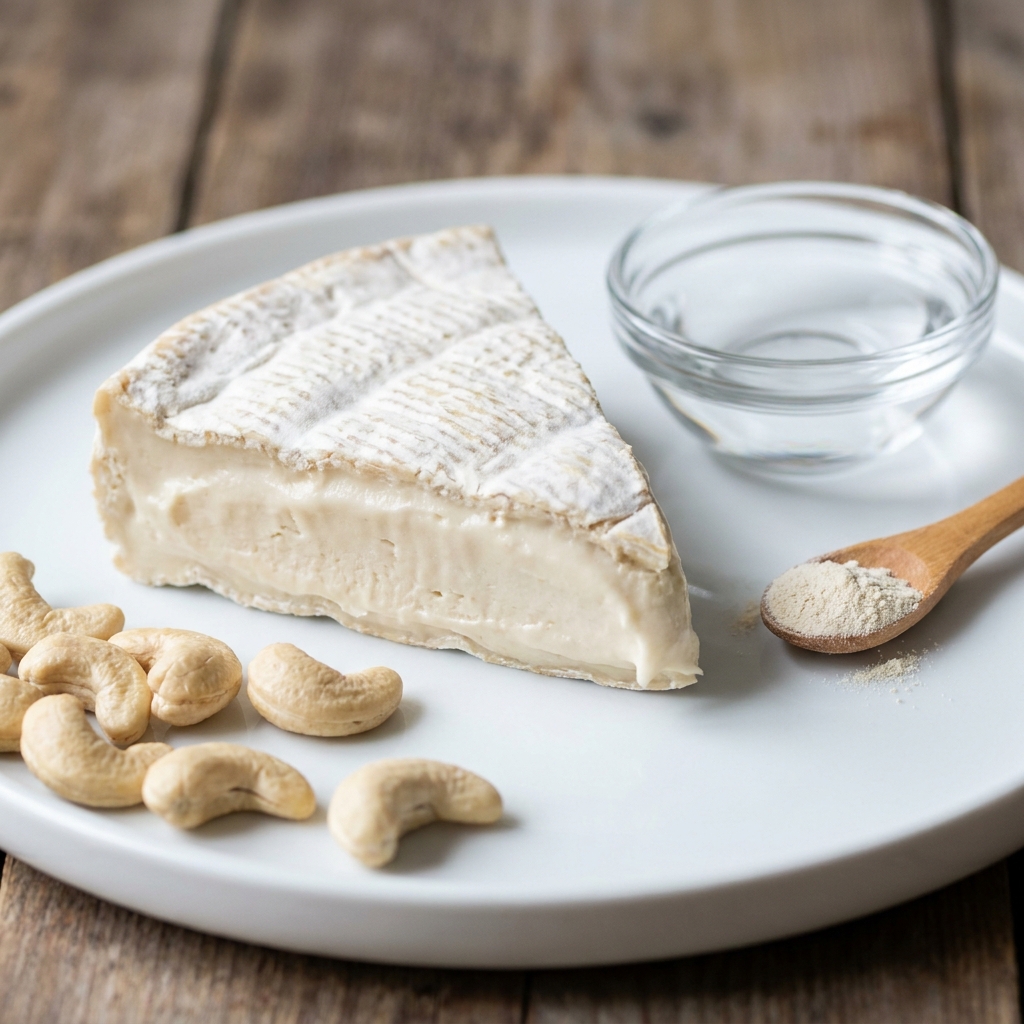
Aged Cashew Cheese, Brie-Style, With Its Rind

Share this article
Ingredients
- 300 g raw cashews, soaked 2 to 4 hours
- 25 cl water
- 1 teaspoon powdered cultures
- 3 teaspoons nutritional yeast, optional
- 1/2 teaspoon sea salt
Method
- Put the cashews in a bowl and cover them with twice their volume of water. They will absorb the water and swell during soaking.
- Drain them and discard the soaking water.
- In a powerful blender, combine the cashews, water and cultures. Blend until perfectly silky, which can take 2 to 4 minutes depending on the machine. Check by rubbing a little of the mixture between your thumb and index finger: if there's the slightest grain, keep going. Watch the heat of the jar and pause if it warms up. With a less powerful blender, blend the water and nuts first, and only add the cultures once the mixture is smooth.
- Set a fine sieve over a bowl and line it with a double layer of cheesecloth.
- Pour the mixture into the centre of the cloth.
- Gather the edges of the cheesecloth, twist firmly and fold the bundle onto itself.
- Put a small plate on the bundle, then a weight: a jar filled with water or dried beans works well. The weight should press without crushing to the point of forcing the mixture through the cloth. The bowl collects the whey that drains out.
- Cover the bowl with a cloth and leave to mature on the counter for 24 to 48 hours. The warmer the room, the faster the maturation: keep an eye on it. A pronounced cheesy smell develops during this time.
- Transfer the mixture into a clean bowl.
- Add the salt and nutritional yeast, then mix thoroughly.
- Mould the cheese in a pastry ring or the ring of a springform tin, lining the base with cling film.
- Place the mould in the freezer for several hours, until the cheese sets firmly.
- Unmould gently, place the cheese on a non-stick sheet and slide it into the dehydrator. Dry for 1 hour at 63°C, then lower to 45°C and continue for up to 24 hours. Halfway through, remove the non-stick sheet and place the cheese directly on the mesh: air circulates better and drying speeds up. This is the stage that brings out the rind.
Tip
Keep the cheese in an airtight container in the fridge, for about a week. It keeps maturing, but much more slowly once chilled. If the rind seems too dry after 24 hours of dehydrating, take it out earlier next time: the centre should stay creamy.
FAQ: your questions about cashews
What cheese is made from cashews?
It's called a fauxmage, or cashew plant-based cheese. The principle is always the same: soaked cashews, blended with water until perfectly smooth, then fermented with dairy-free cultures or simply acidified with lemon juice. Depending on the fermentation time, water content and draining, you get a fresh spreadable cheese, a firm log to slice, or, as here, an aged cheese that develops a rind.
What are the downsides of cashews?
The first is cost, noticeably higher than most other nuts. The second is allergy risk: cashews are a tree nut, to be avoided in case of allergy. Nutritionally, they're higher in carbohydrates and lower in omega-3 than walnuts or almonds, and they remain very calorific: a thirty-gram handful is enough. Finally, the supply chain raises real social and environmental questions depending on origin, which makes it worth checking where they come from.
Should you choose raw or roasted cashews?
For a plant-based cheese, you absolutely need raw nuts, not roasted and not salted: roasting hardens the cells and gives a toasted taste that overwhelms the fermentation. Watch out, though, for the word 'raw' on packaging: cashews always go through a heating step during shelling, essential for removing an irritant substance from the shell. A cashew sold as raw simply hasn't been roasted afterwards, which is exactly what we're looking for here.
Share this article