


A classic chia pudding, taken out of the usual vanilla-cinnamon territory by fresh grated ginger and orange zest. The liquid is first blended so the ginger spreads evenly instead of staying in pieces, then poured over the seeds. The one step that really matters comes next: stir every five minutes during the first quarter of an hour, otherwise the seeds clump together at the bottom and the pudding sets unevenly. A night in the fridge gives the best texture. Crushed pistachios and goji berries add crunch just before serving.
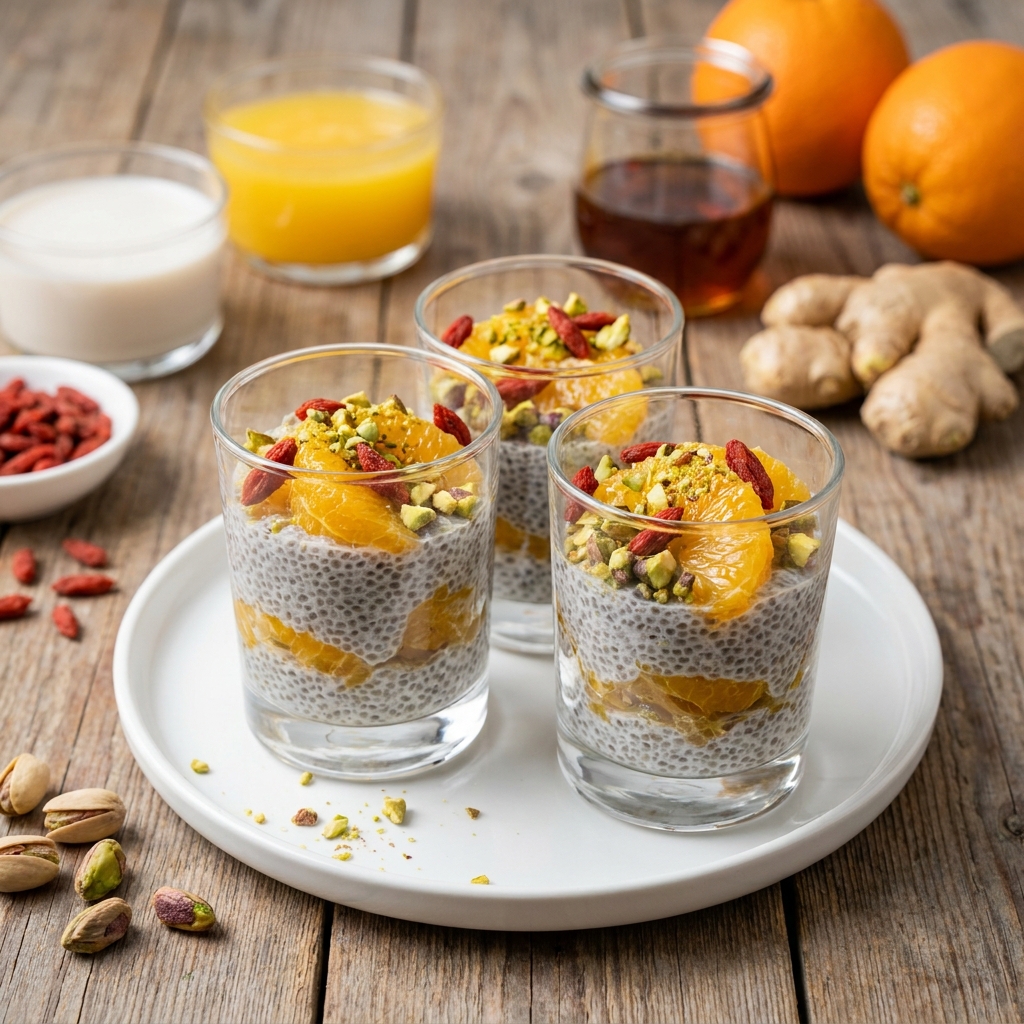
Orange-Ginger Chia Pudding Jars with Pistachios and Goji Berries

Share this article
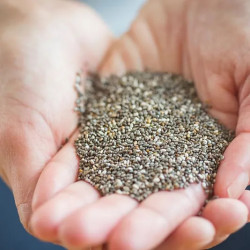
Ingredients
- 2 cups almond milk
- 1 tbsp fresh ginger, grated or finely chopped
- Zest of one orange (about 1 1/2 tbsp)
- 1/4 cup orange juice, freshly squeezed if possible
- 2 tbsp maple syrup, or to taste
- 6 tbsp chia seeds
- 1/2 cup shelled, crushed pistachios
- 1/4 cup goji berries
Method
- Blend together the almond milk, ginger, zest, orange juice and maple syrup.
- Pour the mixture over the chia seeds in a medium bowl. Whisk well, then give it another stir every five minutes for the next twenty minutes.
- Refrigerate for at least two hours, ideally overnight.
- When ready to serve, divide the pudding between four jars, glasses or bowls. Top each with two tablespoons of pistachios and a tablespoon of goji berries.
Tip
The reference ratio for a chia pudding is about three tablespoons of seeds per cup of liquid, which makes a proper breakfast portion. The four jars in this recipe are therefore more of a snack or dessert size: divide the mixture into two bowls instead of four for a full breakfast.
The full range Sprouted seeds
46 products
Discover the full range
FAQ: your questions about chia seeds
Is chia pudding good for you?
Chia pudding is no miracle food, but it's a genuinely wholesome breakfast: soluble fibre, plant-based omega-3 fatty acids, a bit of protein and calcium, with no added sugar if you control the sweetener yourself. Its real strength is satiety: the gel formed by the seeds slows down gastric emptying, so you stay full until lunch. Everything then depends on what you put around it: unsweetened plant milk and fresh fruit, or a generous drizzle of syrup and processed granola make for two very different bowls.
When should you eat chia seeds, morning or evening?
There's no compulsory time slot. Morning remains the most common, simply because the pudding is made the night before and waits in the fridge. Some people digest them better away from a large meal, others enjoy a small portion in the evening to curb a late hunger pang. One thing matters more than the timing: always eat the seeds well hydrated, never dry by the spoonful, and drink enough throughout the day.
Why do chia seeds cause weight loss?
This is a very widespread belief, and it deserves some nuance: chia seeds don't cause weight loss on their own. What they do is swell to up to ten times their volume in water and form a filling gel, which helps reduce snacking between meals. The available research on weight loss remains limited and inconclusive. Think of them as a fibre-dense food that makes a breakfast more filling, not as a dieting lever.
Share this article