 Fast delivery
.png) Rating 4.8/5
Rating 4.8/5
 Fair prices
| | |
| Fast delivery | Rating 4.8/5 | Fair prices |


 0
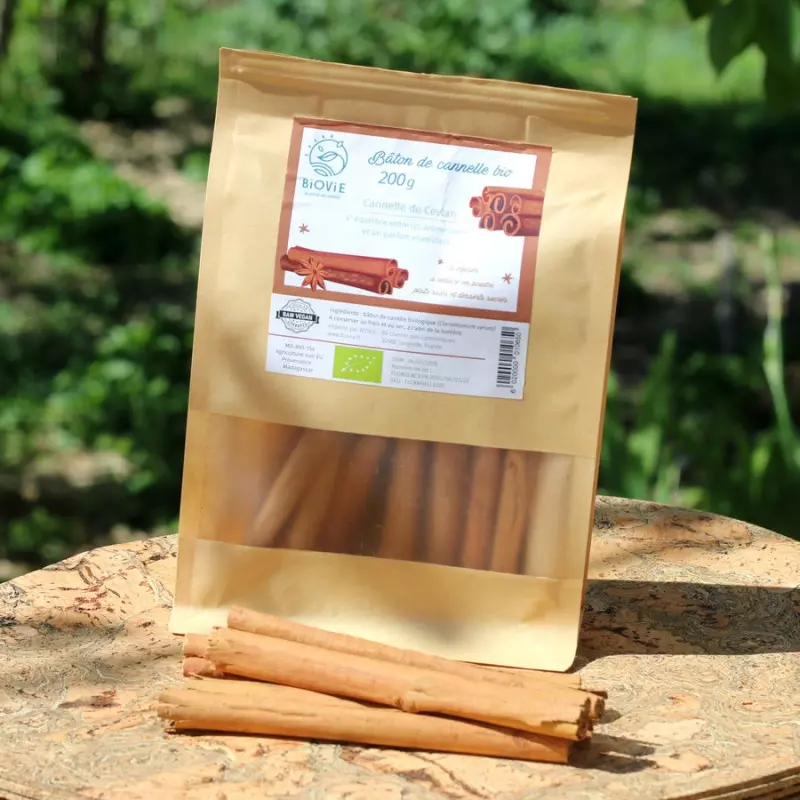
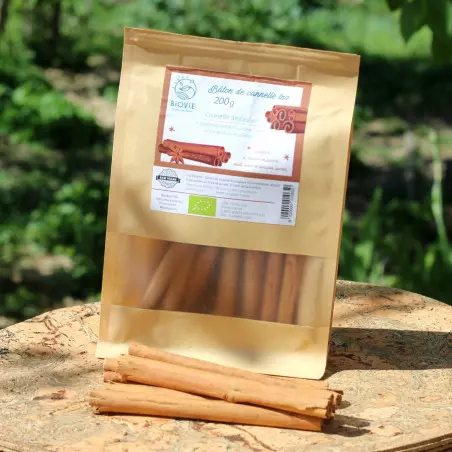
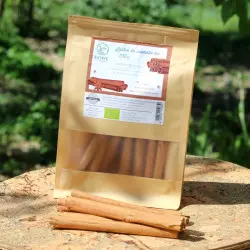
0 Organic Ceylon cinnamon sticks dried at low temperature, 200 g
Organic Ceylon cinnamon sticksCinnamomum verumThey are used in infusion, in your hot drinks, or ground just before use for a much more aromatic powder. The most noble variety and the lowest in coumarin - about 0.017 g/kg compared to 7 g/kg for commercial Cassia - it is suitable for daily use. Origin Madagascar, certified organic.
Ceylon cinnamon is one of the most noble and aromatic varieties of cinnamon. Unlike the more common Chinese cinnamon, it has subtle and developed aromas, with a sweeter and more refined flavor.
Cinnamon is used in both savory and sweet cooking, for infusions, desserts (the famous cinnamon roll), soups, traditional dishes (tagines, curry...), or to add warmth to a more classic dish. It brings comfort and sweetness to your preparations.
• As an infusion: Simmer a stick for 10 minutes in 25 cl of water. Pleasant in the morning or after meals.
• In hot drinks: Add a stick to your tea, coffee, or hot chocolate - fresh cinnamon reveals all its aromas when it comes into contact with heat.
• Golden milk: associate cinnamon with warm plant-based milk, with turmeric and ginger for a comforting Ayurvedic-inspired drink.
• In fresh powder: Finely grind the stick just before use to obtain a powder that is much more aromatic than commercially pre-ground cinnamon.
• In a gourmet duo: a pinch of ground cinnamon with a hint of organic Bourbon vanilla powder transform a porridge or a homemade plant-based milk.
🟫 Whole for better preservation
We have chosen the stick format to preserve its aromas for a longer time (compared to powder). You can finely grind the stick for use as a powder just before using it: freshly ground cinnamon will reveal all its most subtle aromas !
🟫 Ethics, quality, and social development
Cinnamon is actually the dried bark of the cinnamon tree. Nothing more. When the branches reach about two meters in length and two centimeters in diameter, the harvest can begin. Cinnamon trees are native to Sri Lanka and are cultivated in various tropical regions such as India or Madagascar - from where this one comes.
Our organic cinnamon is produced according to strict organic standards and goes even further: each batch is traceable, analyzed, and guaranteed to be free of pesticides and phytosanitary residues.
Our supplier Floribis wants, as few companies do in Madagascar, for the farmers with whom they create sustainable partnerships to be able to make a decent living from their crops. Unfortunately, even in organic farming, there are still many issues in Madagascar, and some farmers work under very difficult conditions.
Floribis is creating a virtuous circle of jobs and sustainable economic development in the region on its own scale (learn more in the "sector" tab).
Note regarding the coumarin molecule: The cinnamon we offer here is the true Ceylon cinnamon (Cinnamomum verum) and as such has a very low content. The coumarin levels present in Ceylon cinnamon are extremely low - about 0.017 g/kg - unlike cinnamon of the Cassia variety (very often from China), which has a much higher level, around 7 g/kg. This difference is confirmed by evaluations from theEuropean Food Safety Authority (EFSA).
Cinnamon is one of the oldest spices in the world. Present for millennia in Chinese and Ayurvedic cuisines and traditions, it remains above all, for us, a great culinary spice: warm, sweet, comforting. Frankly, few spices cross cultures as much. Here is what makes our Ceylon cinnamon unique - without attributing anything more to it than what it is.
What makes up Ceylon cinnamon
- Cinnamaldehyde : the main aromatic compound, responsible for its warm flavor and its distinctive fragrance.
- Polyphenols : plant compounds that research is interested in for their antioxidant properties.
- Tannins : naturally present in the bark, they contribute to its roundness on the palate.
- A very low coumarin content : it is the major asset of the Ceylon variety (we'll come back to it just below).
A spice naturally rich in antioxidant compounds. Cinnamon regularly ranks among the spices richest in antioxidant compounds per serving - ahead of garlic, thyme, or rosemary. Of course, only a small amount is consumed, but it is very concentrated. Research associates these compounds with antioxidant properties; however, with the current state of knowledge, no health claims can be made about this.
Why Ceylon instead of Cassia ? This is the big difference, and it is concrete. The true Ceylon cinnamonCinnamomum verum) contains very little coumarin - about 0.017 g/kg - compared to about 7 g/kg for Cassia cinnamon, which is the most common in commerce and often of Chinese origin. This difference, confirmed by the EFSA, makes Ceylon the variety best suited for regular daily use. In practical terms: it's the cinnamon you can add to your porridge every morning without any concerns.
A traditionally appreciated use. In many cultures, a cinnamon infusion traditionally accompanies the end of a meal. It is a comforting gesture as much as a gourmet habit - and it is likely for this reason that it is found in so many hot drinks around the world, from Indian chai to the mulled wine of winter markets.
Cinnamon is also the subject of numerous scientific studies. These studies are still ongoing and do not allow for any health claims to be made at this time. For more information on what science says—and does not yet say—I refer you to our blog article: The 6 benefits of cinnamon.
 |  |
Floribis is an agri-food company founded in 2000, located in Madagascar. She is a leader in the market for the production, processing, and export of vanilla pods and essential oils, among others. Since its inception, Floribis has strived to engage in a win-win cooperation with local Malagasy communities. His processing plant is located 3 km from Vohémar in the northeast of the island. Floribis is the largest employer in the city of Vohémar and a major player in the life of farmers' associations. It combines traditional expertise with the most advanced technologies to 100% natural and organic production.
Eco-responsible organization: Floribis incorporates environmental impacts into its decision-making criteria and throughout all of its processes.
Floribis is committed to:
- to be self-sufficient in energy,
- reduce the consumption of polluting energy,
- Protecting primary forests: an ecosystem restoration project has been initiated in the Fanambana forest in partnership with the Water and Forests service -> conservation and planting of slow-growing trees, forest rangers, retraining of loggers, etc.
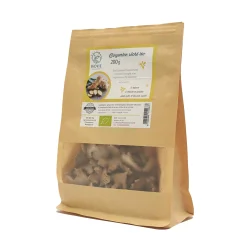
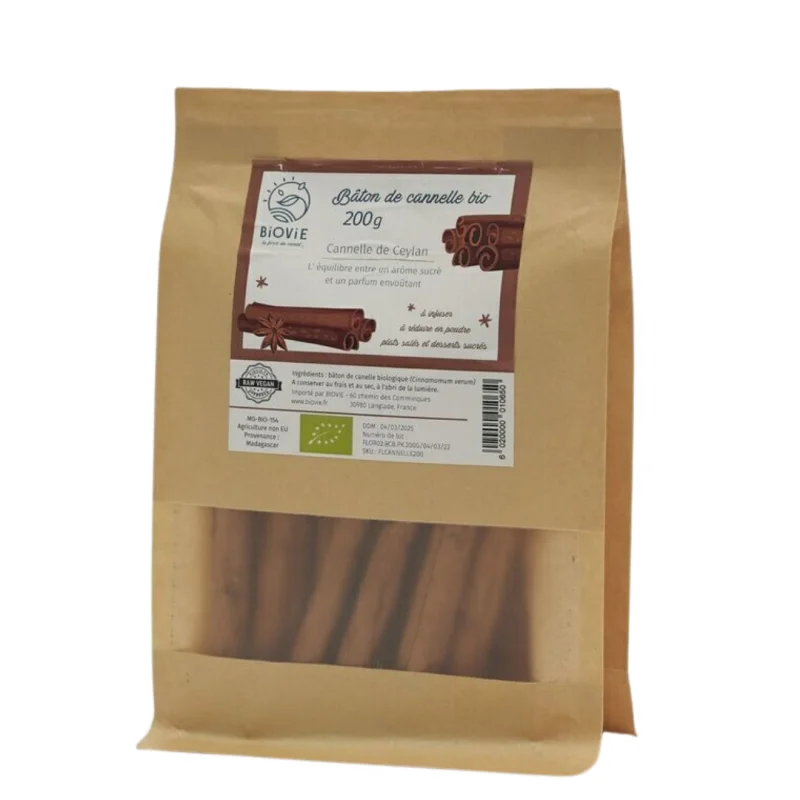
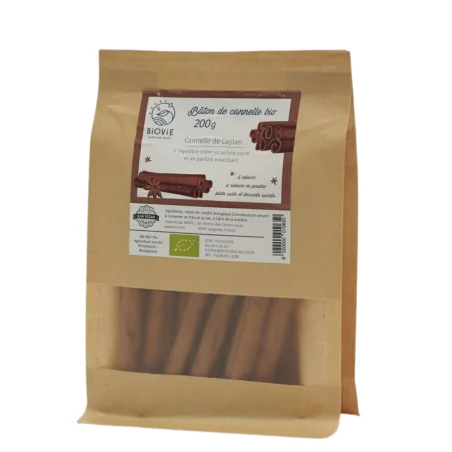
- Packaging : kraft bag with window. 200 g
- Conservation : at room temperature, in a cool, dry place. Reseal the bag tightly or place the sticks in an airtight container to limit moisture and loss of aromas.
- Shelf life : Whole sticks can be stored for 2 to 3 years under good conditions. Freshly ground powder should be consumed quickly to enjoy its aromas.
- Grinding advice : Use a spice grinder or a powerful blender to grind the stick into a fine powder. Prepare only the amount you need.
At common dietary doses, the consumption of Ceylon cinnamon is considered safe. The commonly mentioned amount is between 1 and 2 grams per day - which is about 1/2 to 1 teaspoon of fresh powder, or a small stick ground into powder. Its very low coumarin content (unlike Cassia cinnamon) makes it well-suited for regular daily use. If you are undergoing medical treatment (antidiabetics, anticoagulants), consult your doctor before significant regular use.
Ceylon cinnamon is generally well tolerated at common dietary doses. As a precaution, it is advisable to avoid excessive consumption in the following situations:
- People on anticoagulants or antidiabetic treatment (potential additive effect on blood sugar and coagulation)
- People suffering from gastric ulcers or heartburn (risk of mucosal irritation)
- Pregnant women and young children (at high doses; at regular dietary doses, consumption remains possible)
- People allergic to spices from the Lauraceae family
In case of doubt, consult your doctor or pharmacist.
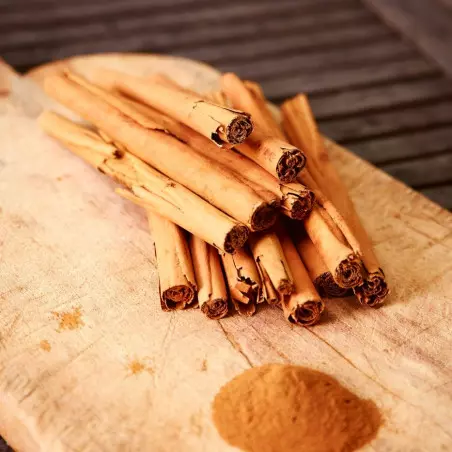
Ceylon cinnamon (Cinnamomum verum) primarily comes from Sri Lanka and Madagascar. Its bark consists of thin, rolled layers, which are lighter and more delicate. Its coumarin content is extremely low (~0.017 g/kg), unlike Cassia cinnamon (Cinnamomum cassia), widely sold commercially and often of Chinese origin (~7 g/kg). For daily consumption, Ceylon cinnamon is the variety recommended by European health authorities (EFSA).
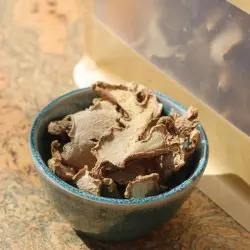
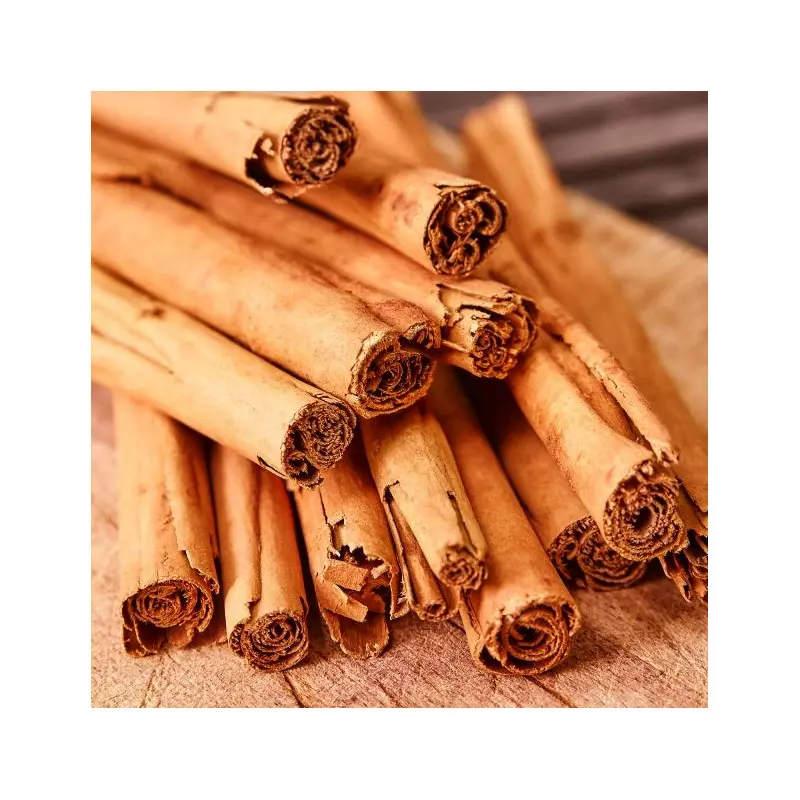
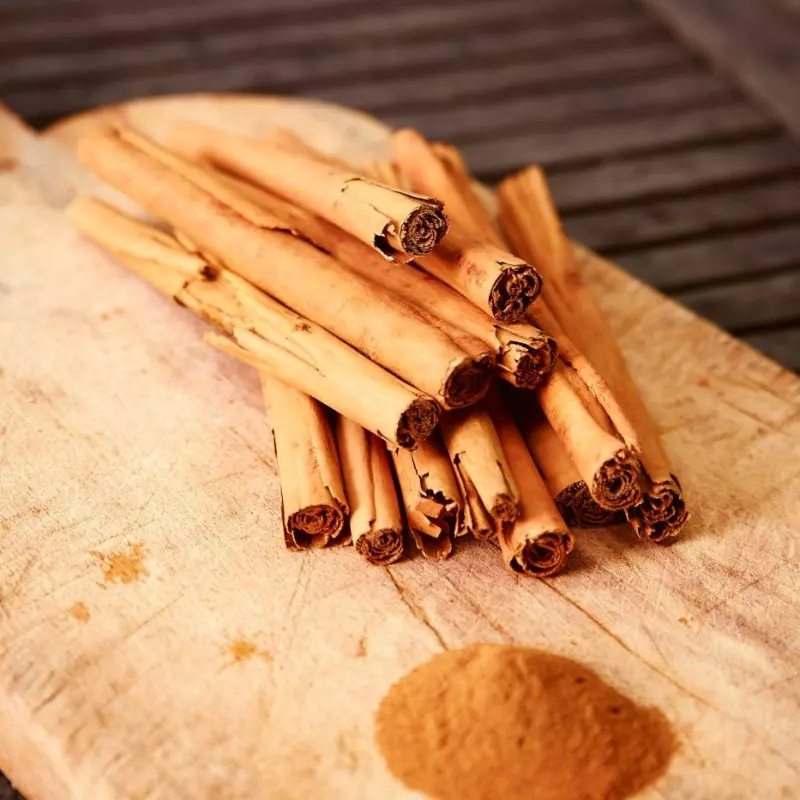
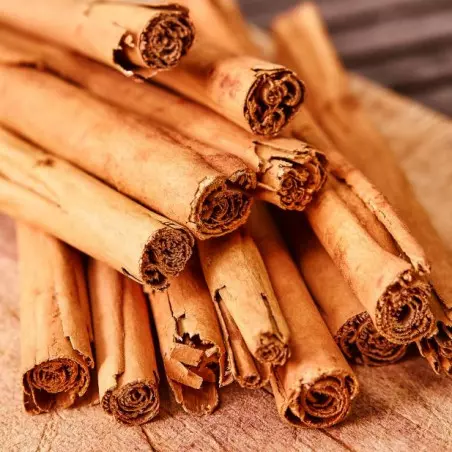
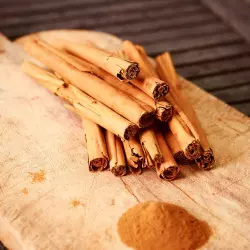
In stick form, Ceylon cinnamon features several layers of bark finely rolled, like a flaky cigar. Its color is lighter (soft beige-brown) than Cassia (dark brown and hard). Its scent is more subtle, floral, and slightly sweet, whereas Cassia is spicier and more acrid. The scientific name to look for is Cinnamomum verum or Cinnamomum zeylanicum.
At common dietary doses (up to about 2 g per day, which is half a teaspoon of powder or a small stick), Ceylon cinnamon is considered safe for the general healthy population. Its low coumarin content makes it well-suited for daily use. Higher doses or significant prolonged use require the advice of a healthcare professional.
Break the stick into pieces, then pass it through a spice grinder or a powerful blender until you obtain a fine powder. Grind only the necessary amount when you need it: freshly ground cinnamon is significantly more aromatic than pre-ground commercial powder, which loses its aroma quickly.
In sweet: porridges, compotes, rice pudding with plant-based milk, cinnamon rolls, smoothies. In savory: tagines, curries, squash soups. In drinks: tea, hot chocolate, and of course golden milk (warm plant-based milk, turmeric, ginger, cinnamon). A pinch is enough to flavor an entire preparation.
The whole stick retains its aromas much longer than the powder, which quickly loses its scent once ground. You can infuse it as is, or grind it at the last minute for a fresh and intense powder. This is the best compromise between preservation and aromatic quality.
Warning: The information presented on this page is provided for informational purposes only and does not constitute medical advice. Consult a qualified healthcare professional before making any changes to your diet or supplementation. As part of a varied and balanced diet and a healthy lifestyle.
Update: May 2026. Record validated by Éric Viard, founder of Biovie and engineer ISTOM, co-author of Seaweed in everyday life(Gallimard, 2024) - Best cookbook in the world, Gourmand Cookbook Awards 2025, and Best cookbook in France, National Academy of Cuisine 2025.
Ces produits pourraient vous intéresser