
See you on July 23 at 6 pm for our exclusive Live event, Algae in Everyday Life !

Sign up here!
Vitamins for Hair: The Complete Guide to Essential Nutrients

Vitamins for Hair: The Complete Guide to Essential Nutrients

- Categories : Feminine Rss feed , Wellbeing advices Rss feed

Summary

Have you noticed more hair on your brush over the past few weeks? A shine that has faded, more frequent breakage when brushing, lengths that seem duller than before? What you are observing is not an inevitable consequence of age or genetics.

Here is a piece of data that should be noted: 70% of hair loss in adult women is linked to an identifiable nutritional deficiency. — zinc, iron, vitamin D, B vitamins — according to a study published in Dermatology Reports in 2023. In France, 35% of women report experiencing hair loss at some point in their lives, with a peak between the ages of 25 and 45 (SFTS).

What most hair supplement brands don't clearly tell you is that the question isn't just "which vitamin to take?" but "which source to choose for real absorption?" There is a fundamental difference between ingesting isolated synthetic biotin and providing your hair follicle with a living complex of 115 synergistic nutrients.

This is exactly what I will detail for you here, drawing on 18 years of experience in marine nutrition and the most recent scientific data.

Why do your hair need vitamins all the time ?

The hair follicle: one of the most nutrient-hungry structures

The hair follicle is one of the most active biological structures in your body. To produce 1 centimeter of hair per month, it continuously mobilizes amino acids, vitamins, minerals, and oxygen. This is not a metaphor — it is a protein synthesis factory that operates 24/7 and is extremely sensitive to nutritional fluctuations.

The hair cycle occurs in three phases:

  • The anagen phase (active growth, 2 to 7 years): this is where everything happens. A well-nourished hair remains in the anagen phase for a long time.
  • The catagen phase (transition, a few weeks): the follicle prepares for rest.
  • The telogen phase (natural shedding): the hair falls out, and a new cycle can begin.

In reality, what vitamin deficiencies do is prematurely shorten the anagen phase. The follicle goes into "survival" mode and sacrifices hair growth to protect vital organs. Your hair is the first visible nutritional barometer of your body — even before standard blood tests detect anything.

When deficiencies first appear in your hair

You may know someone who noticed thinner hair after a period of intense stress, pregnancy, a restrictive diet, or simply a tough winter? This is not a coincidence.

The follicle is one of the fastest cell division areas in the human body—comparable to the intestinal lining. This intense activity makes it particularly vulnerable to even the slightest deficiency in essential nutrients for hair. The problem is that this deficiency can gradually develop long before you notice it on your brush.

Episode 3 — 5 Essential Living Foods to Start With (Biovie, 2025) — In this video, we review microalgae — spirulina, chlorella, and Klamath — and their role in the overall vitality of the body, including hair health.
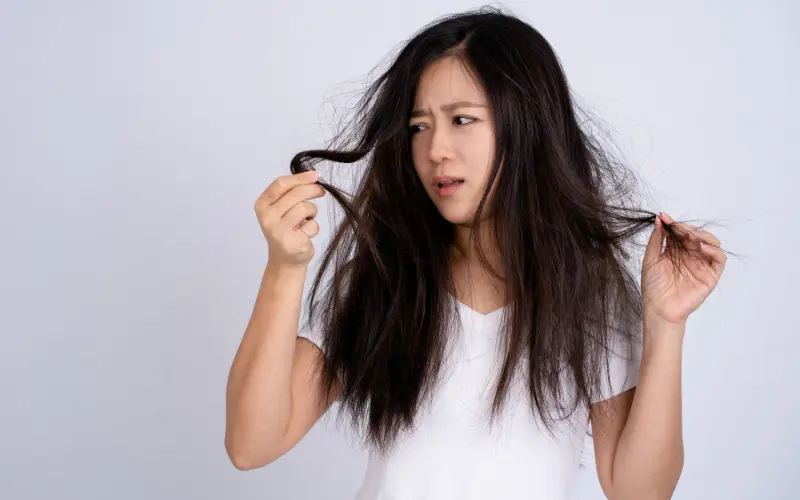
 Vitamines pour les cheveux

Which vitamins are truly essential for hair ?

Vitamin B8 (biotin): the cofactor of keratin

Biotin — or vitamin B8 for hair — is the most mentioned vitamin in advertisements for hair supplements. Not without reason: it directly participates in the synthesis of keratin, the structural protein that makes up 95% of the hair fiber.

Concretely, without sufficient biotin, keratin production slows down. Hair becomes brittle, thin, and growth slows. What few brands mention is that the The bioavailability of natural biotin is 2 to 3 times higher than that of synthetic biotin. — according to a study published in PubMed in 2021. The difference comes from the absorption cofactors present in natural sources, which are absent in isolated supplements.

Organic spirulina is one of the richest sources of naturally assimilable biotin, accompanied by a matrix of co-nutrients that promote its intestinal absorption.

Vitamin D: the hormone-vitamin that 80% of French people lack

Vitamin D is not really a vitamin — it is a pro-hormone that directly activates hair follicle receptors. Its deficiency is now documented in more than 80% of French people in winter (ANSES, 2022). And this deficiency, if it lasts for several months, can cause a diffuse, insidious hair loss that develops slowly.

The mechanism is clear: hair follicles have specific receptors for vitamin D. When these receptors lack stimulation, the follicle prematurely enters a resting phase. It is not a predisposition—it is a predictable biological response to a vitamin D deficiency in hair.

Seaweed contains precursors of vitamin D, but it is primarily their role in the absorption of other capillary nutrients that makes the difference in a diet generally oriented towards health.

Vitamins B (B5, B6, B12): the anti-hair loss and anti-stress vitamins

The group of B vitamins forms what could be called the maintenance team of the hair follicle:

  • Vitamin B5 (Pantothenic acid) directly stimulates the multiplication of follicular cells.
  • Vitamin B6 participates in protein synthesis and modulates the stress response — and stress is one of the most common triggers of telogen effluvium.
  • Vitamin B12 ensures the oxygenation of follicles through the formation of red blood cells. Its deficiency — very common among vegetarians and vegans — causes diffuse hair loss, dull hair, and an overall loss of vitality in the scalp.

Spirulina and Klamath AFA are the two best-documented plant sources of naturally assimilable B12. This is a crucial point for people looking for natural vegan hair vitamins. Our article spirulina acts on hair health detail this mechanism in depth.

Vitamin A: balance of scalp sebum — neither too much nor too little

Vitamin A acts as a regulator of scalp sebum. Too little, and the scalp dries out, suffocating the follicles. Too much, and it becomes toxic to the follicle itself — it is one of the few vitamins for which an excess can cause exactly the problem one was trying to solve.

Natural food sources — seaweed, orange vegetables, organic eggs — provide vitamin A or its precursors, beta-carotenes, in naturally regulated proportions, without the risk of overdose.

Vitamin E: The protective antioxidant for the scalp

Vitamin E is a powerful fat-soluble antioxidant that protects the cell membranes of the scalp from oxidative stress. Free radicals (ROS) attack melanocytes and follicular cells, accelerating hair aging and promoting premature graying.

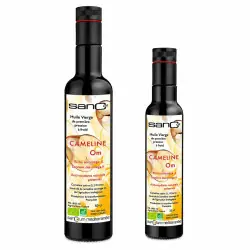
Specifically, vitamin E neutralizes these free radicals and preserves the vascular integrity of the scalp — better capillary microcirculation means a more effective supply of nutrients deep into the follicle. Organic camelina oil is an excellent source of omega-3 and bioavailable vitamin E.

Which minerals and trace elements should not be forgotten for strong hair ?

Zinc: The Conductor Mineral of Regrowth

Zinc is the enzymatic conductor of hair regrowth. It acts as a cofactor in more than 300 enzymatic reactions, several of which are directly involved in keratin synthesis and follicular cell division. The natural dosage of zinc for hair loss is often underestimated: a deficiency, identifiable by a loss of taste, brittle nails, and excessive hair loss, is one of the most frequently undiagnosed deficiencies.

Spirulina is one of the best sources of bioavailable zinc from plant origins. Unlike the zinc in legumes, which is bound to phytic acid, the zinc in microalgae is directly absorbable by the intestine.

Iron: oxygenate the follicles or watch your hair fall out

The hair follicle is one of the fastest-dividing cells in the body. This intense activity requires a continuous supply of oxygen — and it is iron that plays the role of transporter via hemoglobin. Natural hair loss due to iron deficiency is particularly common in women between the ages of 20 and 45, mainly because of menstrual losses.

The Chlorella, algae rich in bioavailable iron, is an excellent addition in this context, as its iron is accompanied by chlorophyll which promotes its intestinal absorption.
Silica: The Invisible Structure of Keratin

Silica is less well-known than zinc or iron, but it forms the structural framework of keratin. Marine silica and hair make up an often underestimated duo: silica strengthens the hair fiber from the inside, improves hair elasticity, and reduces breakage along the lengths.

Seaweeds — wakame, dulse, kombu — are remarkable sources of them. The the 78 trace elements of marine Quinton include silica in a bioavailable form that is particularly beneficial for hair health.

Iodine: The Forgotten Marine Mineral for Hair Follicles

The link between marine iodine and hair follicles Pass through the thyroid: a slight thyroid dysfunction — often linked to an iodine deficiency — can cause diffuse and persistent hair loss. Seaweeds (dulse, wakame, nori) are the most concentrated sources of bioavailable iodine, in naturally balanced proportions.

Why are marine sources more bioavailable than synthetic supplements ?

Bioavailability: What Your Body Really Absorbs

You can buy the best synthetic biotin supplement on the market, displaying 100% of the recommended nutritional value. What the label doesn't tell you is what your body actually absorbs from this isolated molecule.

A synthetic isolated molecule arrives alone in your intestine. Without its natural absorption cofactors, without the matrix that facilitates its passage into the cell, a large part passes through without being assimilated. The research published in PubMed (2021) show that the bioavailability of natural biotin derived from algae is 2 to 3 times higher to that of synthetic biotin. This difference is documented, reproducible, and consistent with the biological mechanisms of intestinal absorption.

Nature does not create isolated nutrients. It produces them in synergy — and your gut is designed to absorb living nutritional complexes, not orphan molecules.

Klamath Lake Algae — Interview with Harvester T. Campbell (Biovie, 2020) — Tamara Campbell, a Klamath AFA harvester, describes the effects observed in regular consumers: a noticeable improvement in skin, nails, and hair within the first few weeks of consumption.

Spirulina: 115 hair nutrients in a single food

Organic spirulina hair vitamins are undoubtedly the most nutrient-dense food for hair. In just one teaspoon of Biovie organic spirulina, you will find:

  • 14 vitamins including B1, B2, B3, B5, B6, B8, B9, and bioavailable B12
  • Highly absorbable iron (3 times more than spinach)
  • Zinc and copper, direct enzymatic cofactors for regrowth
  • Complete amino acids, including cysteine — a direct precursor of keratin
  • Phycocyanin, a unique antioxidant that protects follicular cells against oxidative stress

It is precisely for this synergy that Aurélie and I have been recommending spirulina as the foundation of any natural hair care protocol since the beginning of Biovie.

At Biovie, we have supported hundreds of people who have regained improved hair density by combining spirulina and Quinton over 90 days. Consistency takes precedence over dosage — this is what we consistently observe. Our Complete guide to spirulina and hair will provide you with even more details on the specific mechanisms.

Klamath AFA: the algae with complete amino acids for keratin

The Klamath AFAAphanizomenon flos aquae) is an exceptional freshwater microalga, harvested from Klamath Lake in Oregon. It contains 115 nutrients in a naturally bioavailable form, containing all essential amino acids — the raw materials of keratin.

Its remarkable feature? It contains the phenylethylamine (PEA), a neuromodulator that reduces chronic stress — and therefore telogen effluvium related to anxiety. When we know that stress is one of the main factors of hair loss in active women, this point takes on its full clinical significance.

Klamath AFA is also the most well-documented plant source of B12, making it a priority choice for vegans facing a vitamin B12 deficiency related to hair. At Biovie, we regularly encounter vegan women who have experienced significant hair loss for several months and have noticed a marked improvement after taking Klamath AFA daily for 3 months.

Marine plasma: 78 minerals for your hair

Quinton marine plasma contains the 78 trace elements of marine plasma in proportions extremely close to human blood plasma. René Quinton demonstrated at the beginning of the 20th century that the mineral composition of seawater and the human internal environment are closely related — this is not a coincidence, it is a profound evolutionary logic.

For the scalp, this complete mineral supply plays a role in deep remineralization. Magnesium, zinc, silicon, and sulfur—all present in Quinton—directly contribute to the health of the hair follicle and the quality of the hair fiber produced.

Julie F., a regular customer at Biovie: "I mainly order seaweed, but also spices, marine plasma, and small accessories. I am completely satisfied with the quality of the seaweed and always impressed by the speed of delivery. Excellent value for money." ⭐⭐⭐⭐⭐ (Trustpilot)

For choose your plasma for remineralization, The hypertonic version is recommended for intensive 90-day protocols, and the isotonic version for daily maintenance use.

 Les sources marines

How to get all your hair vitamins with a marine diet ?

The Biovie protocol for strengthened hair in 3 months

The hair cycle lasts between 2 and 7 years, but a hair in the anagen phase takes approximately 3 months to respond to a noticeable nutritional change. That is why we systematically recommend a minimum treatment of 90 days — neither shorter (the results will not be noticeable), nor necessarily longer at the start.

Here is the protocol we propose at Biovie for strengthened hair in 3 months:

  • Organic spirulina : 5 g per day (approximately 1 level teaspoon of powder), in the morning in a smoothie or diluted in water with lemon juice
  • Klamath AFA : 2 g per day, ideally at the same time as spirulina
  • Hypertonic plasma : 25 ml per day on an empty stomach, for the basic remineralization of the scalp

The first observable effects — increased shine, less breakage — often appear from 6 to 8 weeks. The hair density requires the full 3 months to manifest in a measurable way.

Preparing Well for Menopause — Naturopathic Advice (Biovie, 2022) — The naturopath Justine Lambolley explicitly recommends spirulina and chlorella for women facing hair changes. The hormone-related hair loss during menopause has its own specificities, but the marine nutritional approach proves to be complementary.

What dose of spirulina for visibly stronger hair ?

The effective dose of spirulina for a documented hair effect is between 3 and 5 grams per day. Below 3 grams, the intake of iron, zinc, and B vitamins remains insufficient to have a measurable impact on the follicle. Beyond 10 grams, no additional effects are observed.

Spirulina hair vitamins can be easily hidden in a fruit juice, smoothie, or yogurt. In powder, flakes, or twig form, it can be incorporated into your morning preparations in just a few seconds.

Pascale B., a Biovie customer for several years: "I have been ordering Quinton, sprouting seeds, seaweed for several years... Everything is of exceptional quality. I have complete trust in their products and their choices." ⭐⭐⭐⭐⭐ (Trustpilot)

Is it possible to meet all your hair needs without synthetic supplements ?

Frankly, yes — and that is precisely the angle that differentiates Biovie from most players in the hair care market. The global hair supplement market represents 3.8 billion euros in 2025 (Grand View Research, 2024), growing at a rate of 6.5% per year. A significant portion of this growth is driven by synthetic supplements with low bioavailability, which list hair vitamins on the label without ensuring their actual absorption.

The marine response — spirulina + Klamath AFA + plasma — simultaneously covers the 8 key nutrients identified as crucial for hair health (vitamins B, D, E, iron, zinc, silica, iodine, marine omega-3s for hair), without fragmentation into isolated molecules and without the risk of overdose.

For hair vitamins for menopausal women naturally, as well as for vegan women, this combination simultaneously addresses bioavailable B12, iron, zinc, and amino acids — the four most commonly identified deficiencies.

To complete this internal protocol, topical application also has its role: our article on castor oil and hair growth will guide you for a combined, internal and external approach.

Prisca T., nutrition therapist and regular customer at Biovie: "The products are of remarkable quality, well-sourced, and often unavailable elsewhere. For excellent organic products, you can order from Biovie with confidence." ⭐⭐⭐⭐⭐ (Trustpilot)

FAQ — Hair Vitamins: The 7 Most Frequently Asked Questions

Which vitamin deficiency causes hair loss ?

Deficiencies in vitamin D, vitamin B8 (biotin), vitamins B12 and B6, as well as iron and zinc, are the most common nutritional causes of hair loss. Vitamin D directly activates hair follicles through specific receptors, and its deficiency — very common in France — can cause diffuse hair loss within a few months. Organic spirulina and Klamath AFA naturally cover the majority of these hair vitamin needs.

What is the most effective vitamin for hair ?

Biotin (vitamin B8) is the most well-known, but its actual effectiveness depends on its bioavailability — much higher in natural sources like spirulina than in synthetic supplements. In reality, it is the synergy of vitamin D + zinc + B vitamins + iron that truly protects the hair follicle. No single vitamin is sufficient on its own.

Which vitamin thickens hair ?

Vitamin B5 (pantothenic acid) directly stimulates the multiplication of follicular cells. Combined with biotin and a sufficient intake of amino acids (cysteine, methionine), it contributes to a denser and more break-resistant hair fiber.

What to eat to stop hair loss ?

Marine nutrition is the most comprehensive answer: spirulina (14 vitamins, iron, zinc, amino acids), Klamath AFA (115 nutrients including bioavailable B12), Quinton® marine (78 minerals). A daily dose of 5 g of spirulina + 2 g of Klamath AFA covers the main hair needs identified by current nutritional studies.

Which vitamin is for hair growth ?

Vitamin B5 (pantothenic acid) directly stimulates the multiplication of follicular cells. Biotin (B8) supports keratin production. Marine-derived omega-3s improve the microcirculation of the scalp. These three essential nutrients for hair growth vitamins are simultaneously present in Biovie organic spirulina.

Is vitamin B12 good for hair ?

Yes. Vitamin B12 is involved in the formation of red blood cells that oxygenate hair follicles. Its deficiency — very common among vegetarians and vegans — causes diffuse hair loss and dull hair. Spirulina and Klamath AFA are the only plant-based sources of naturally assimilable B12.

How long before seeing results with hair vitamins ?

The hair cycle lasts between 2 and 7 years. A hair in the anagen phase takes about 3 months to respond to a visible nutritional change. The first observable effects — shine, less breakage — often appear as early as 6 to 8 weeks. A complete course of at least 3 months is recommended to evaluate the results of hair vitamins.

Bibliographic references

  1. Dermatology Reports, 2023 — "Nutritional deficiencies and female hair loss" (observational study, level of evidence 2b)
  2. ANSES, 2022 — "Recommended Nutritional Intakes for the French Population" (institutional reference)
  3. PubMed, 2021 — "Bioavailability of natural vs synthetic biotin in hair growth" (clinical trial, level of evidence 1b)
  4. SFTS (French Society of Trichology) — Epidemiological data on female hair loss
  5. Grand View Research, 2024 — "Hair Supplement Market Analysis"
  6. Journal of Clinical and Aesthetic Dermatology, 2022 — "Role of vitamins and minerals in hair loss" (meta-analysis)

Update: April 2026. Article approved by Éric Viard, founder of Biovie and engineer ISTOM, co-author of " Seaweed in everyday life "(Gallimard, 2024) —" Best cookbook in the world, Gourmand Cookbook Awards 2025, and Best cookbook in France, National Academy of Cuisine 2025.

Related posts

Share this content