

Vegan collagen does not exist. Period. Collagen is an exclusively animal protein — no plant, no algae, no fungus produces it. But — and this is where it gets exciting — your body knows perfectly well how to produce it. Provided you supply it with the right cofactors. As the founder of Biovie since 2007 and after 33 years of a plant-based diet, I can tell you that the question of plant-based collagen often comes up. And the answer can be summed up in one sentence: it is not collagen that you should be looking for in plants, but its precursors.
The global collagen supplements market is currently valued at nearly 5 billion dollars (2024 estimates), with an annual growth rate of around 6 to 8%. It is a colossal market dominated by animal sources — bovine, marine, porcine. However, for those of you who have chosen a plant-based lifestyle, there is another way. Specifically, it involves nourishing your fibroblasts with everything they need to produce their own collagen. And that is exactly what we are going to explore together.
Does vegan collagen really exist ?
What is collagen and why is it so important ?
Collagen is the most abundant protein in your body. It accounts for about 30% of your total proteins and makes up 75% of your skin's structure (Shoulders & Raines, 2009). Imagine a kind of fibrous lattice, a living framework that maintains the firmness of the skin, the flexibility of the joints, and the strength of the bones. Without collagen, everything sags. Literally.
And the problem is that this production decreases. Starting at around 25 years old, your body produces 1 to 1.5% less collagen each year. Do the math: by the age of 50, you have lost between a quarter and a third of your collagen reserves. This is actually one of the reasons why menopause accelerates collagen loss — the drop in estrogen significantly amplifies the phenomenon.
Why don't plants produce collagen ?
It is a question of fundamental biology. Collagen is a structural protein in the animal kingdom. Its triple helix—three chains of amino acids wound around each other—is an architecture that plants simply never developed. Plants have their own support system: cellulose, lignin, pectin. No need for collagen when you don't move.
So when you see a supplement labeled "vegan collagen" or "plant-based collagen" on a shelf, know that it's a marketing shortcut. What the product actually contains are synthesis cofactors — vitamin C, silica, amino acids — that help your body produce its own collagen. The distinction is important.
What is the difference between "vegan collagen" and "collagen booster" ?
An "effective vegan collagen" is, in fact, a collagen booster. This means a set of nutrients that support the endogenous synthesis of this protein. Honestly, it's even a smarter approach than consuming pre-made animal collagen: you provide your own cells with the tools to do the work themselves.
Most "vegan collagen supplements" you find on the market are blends of vitamin C + silica + sometimes zinc. They work partially, but they are incomplete. A holistic dietary approach — with whole foods that provide all the cofactors — is much more bioavailable and complete. And this is precisely where seaweeds come into play.
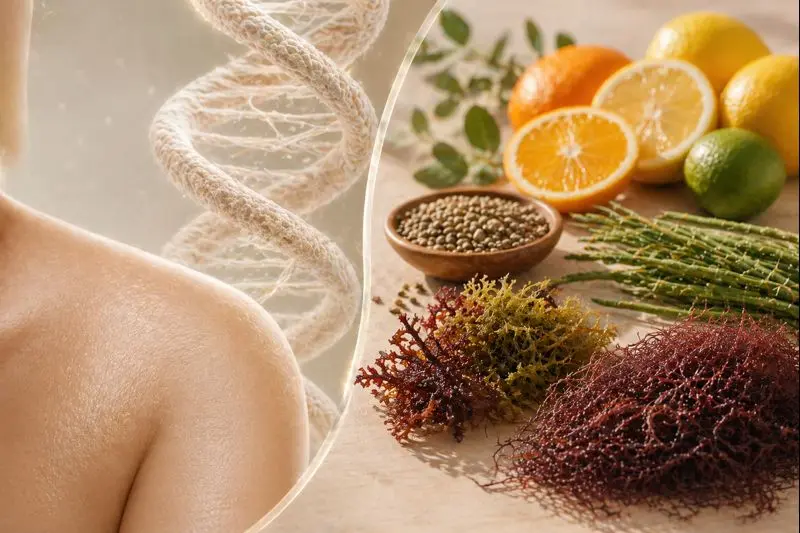
How does your body naturally produce collagen ?
What are the 7 essential cofactors for collagen synthesis ?
To produce collagen, your fibroblasts — those small cellular factories located in the dermis — need seven key elements. Not six, not eight. Seven. And if even one is missing, the production chain stalls.
- Vitamin C — Absolutely essential. Without vitamin C, collagen synthesis comes to a complete halt. This is actually what causes scurvy. Vitamin C contributes to the normal formation of collagen to ensure the normal functioning of the skin* (EFSA authorized claim). ANSES recommends an intake of 90 mg/day for an adult.
- Proline — One of the three amino acids that make up the triple helix of collagen. About one-third of the structure.
- Glycine — Present at every third position in the polypeptide chain. Without glycine, no triple helix.
- Lysine — Allows the cross-linking of collagen fibers with each other. It is what gives the tissue its mechanical strength.
- Zinc — Essential enzyme cofactor. Zinc contributes to normal protein synthesis* and the maintenance of normal skin* (authorized EFSA claims).
- Copper — Activates lysyl oxidase, the enzyme that "knits" collagen fibers together. Copper contributes to the maintenance of normal connective tissues* (EFSA authorized claim).
- Sulfur — Participates in the stabilization of the three-dimensional structure of collagen via disulfide bridges.
*As part of a varied and balanced diet and a healthy lifestyle.
Here is the complete kit. And the good news is that all these cofactors are accessible through a plant-based diet. All of them, without exception.
Proline, glycine, lysine: where to find them in a plant-based diet ?
That's often where people get stuck: "But the amino acids in collagen are mostly found in meat, right?" In reality, not necessarily. Proline is abundant in cabbage, asparagus, mushrooms, and soy. Glycine is found in large quantities in pumpkin seeds, spinach, soy, kale, and spirulina. As for lysine—an essential amino acid that the body cannot synthesize—sprouted legumes (lentils, chickpeas, black beans) are excellent sources, as are chlorella, rich in essential amino acids.
Over the years, we have observed that our clients who combine seaweed and sprouted legumes in their daily diet achieve a remarkably complete profile of plant-based amino acids. No need for complicated calculations — just vary the sources.
What are the best plant-based sources to boost collagen ?
Seaweed: The Most Complete Source of Cofactors
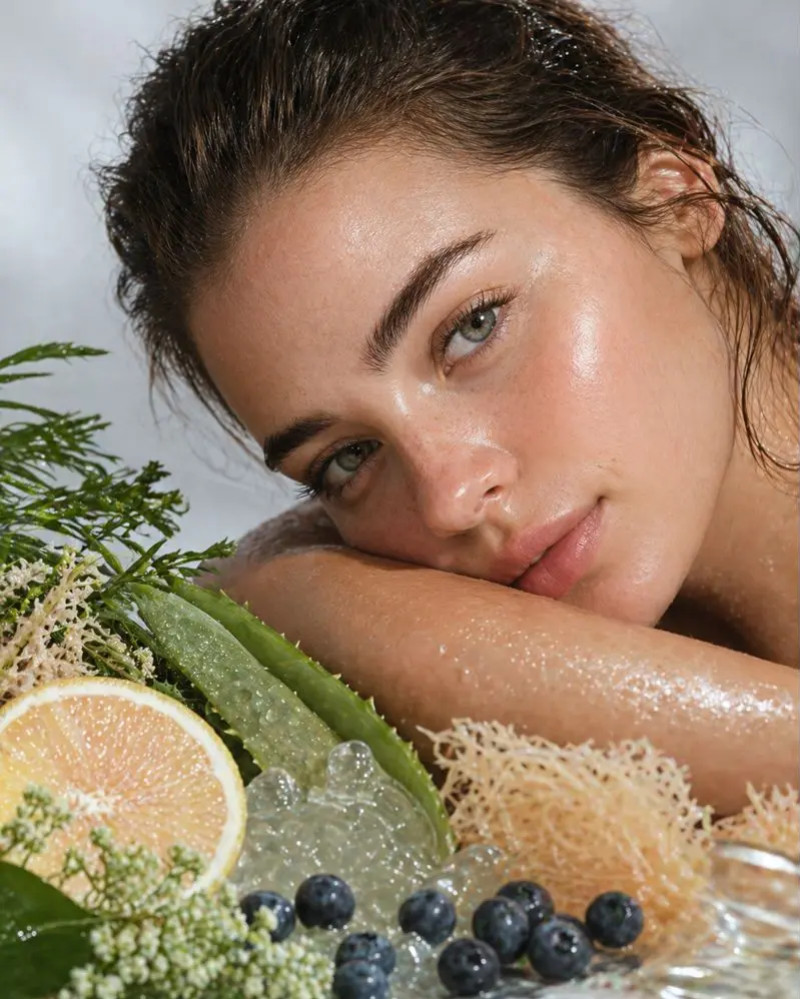
When we talk about natural collagen and a plant-based approach, seaweed is — and I choose my words carefully — the closest thing to an "all-in-one." They simultaneously provide cofactor minerals (zinc, copper, sulfur, manganese), precursor amino acids, vitamins, and protective antioxidants.
A study published by Choi et al. (2017) in International Journal of Molecular Medicine showed that a peptide derived from marine algae Pyropia yezoensis stimulated the production of type I collagen in cultured human fibroblasts (in vitro study). The results are encouraging, even though — let's be honest — these are in vitro studies that require confirmation in humans.
If you wish to discover the extent of the benefits of seaweed, I invite you to consult our complete guide to edible seaweed — dulse, wakame, sea lettuce, sea beans: each has its specific advantages.
Why is Irish MossChondrus crispus) concentrates almost all the precursors ?
Among all the algae we offer at Biovie, Irish Moss is the one that fascinates me the most in this specific context of plant-based collagen. And here's why.
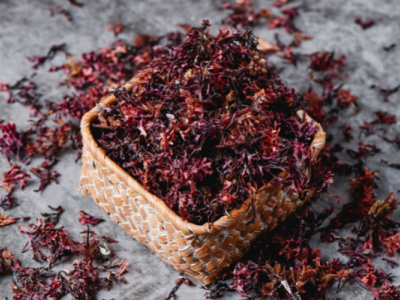
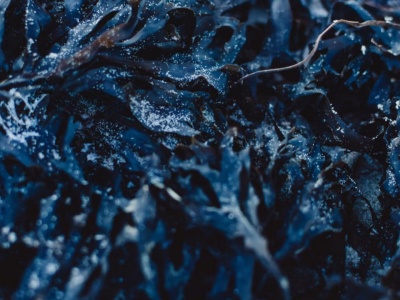
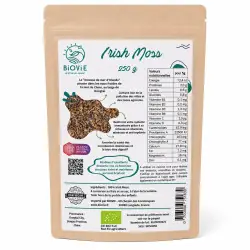
Irish Moss — this red algae from the North Atlantic, also known as Irish moss — contains more than 90 different minerals. Zinc, copper, manganese, sulfur, iron, magnesium, calcium... the list is impressive. But that's not all: it also provides amino acids that are precursors to collagen (including proline and glycine), natural vitamin C, and polysaccharides that help protect connective tissues.
Specifically, it is one of the few plant-based foods that brings together almost all the cofactors for collagen synthesis in a single source. To learn more, read our detailed article on The health benefits of Irish Moss.
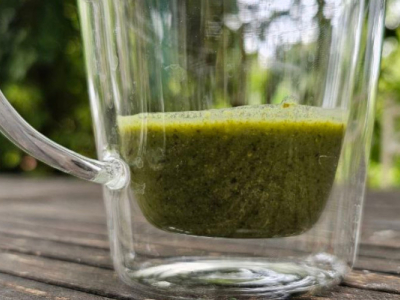
Personally, I add 3 to 5 g to my morning smoothie. It has become a reflex, like adding spirulina. Moreover, you can also use it in our vegetable broth recipe with Irish Moss — a 100% plant-based alternative to bone broth, which I developed with the specific idea of providing collagen precursors in a warm and comforting format.
Fruits and vegetables rich in vitamin C
Vitamin C is the number one cofactor. Without it, your fibroblasts simply cannot hydroxylate proline and lysine — a crucial biochemical step for collagen chains to assemble correctly. The review by Pullar et al. (2017), published in Nutrients, confirms the central role of vitamin C in skin health and collagen synthesis.
The best sources? Camu-camu (2,700 mg per 100 g — that's colossal), acerola, kiwi, red peppers, citrus fruits, strawberries, broccoli, parsley. A diet rich in colorful fruits and vegetables more than covers the 90 mg/day recommended by ANSES — and well beyond.
Legumes, seeds, and nuts: sources of essential amino acids
Lentils, chickpeas, black beans, and fava beans are your allies for lysine intake — this essential amino acid often limited in plant-based diets. Pumpkin seeds provide glycine and zinc. Brazil nuts offer selenium and copper. Hemp seeds offer a surprisingly complete amino acid profile.
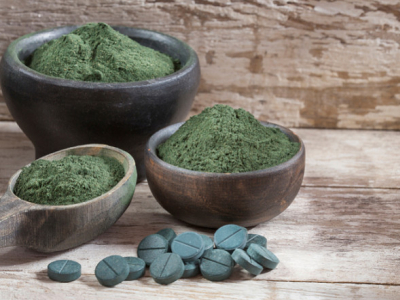
And then there is spirulina, a source of complete proteins, which contains the eight essential amino acids and combines very well with legumes to optimize the overall amino acid profile.
Raw cacao, berries, and collagen-protecting antioxidants
Producing collagen is good. Protecting it is just as important. Oxidative stress — UV rays, pollution, tobacco, chronic stress — degrades existing collagen fibers. Antioxidants play a shielding role here.
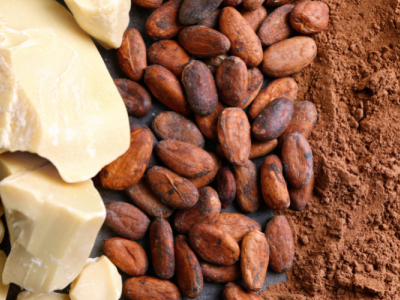
Raw cacao is a concentrate of protective flavonoids. Its polyphenols are among the most powerful in the plant kingdom. Also to discover on our blog: raw cocoa, a concentrate of protective antioxidants. Berries (blueberries, blackberries, blackcurrants, açaí) and green tea usefully complement this antioxidant shield.
And let's not forget phycocyanin — the blue pigment characteristic of spirulina — whose antioxidant properties are well documented. It can help protect cells against oxidative stress* as part of a varied and balanced diet.
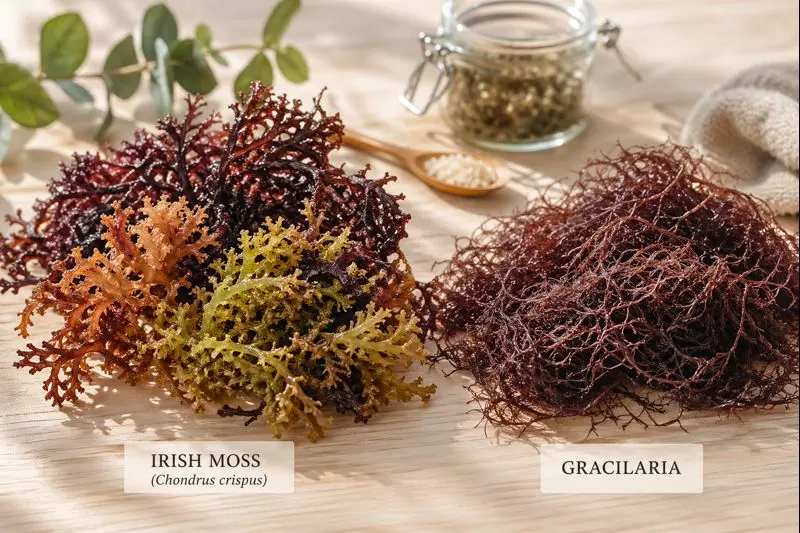
Irish Moss vs Gracilaria: how to distinguish real sea moss ?
This is an interesting topic because there is massive confusion in the market. When you buy "sea moss," you can receive two very different types of algae:
- Irish MossChondrus crispus) — Red algae from the North Atlantic. Firm and cartilaginous texture. More than 90 identified minerals. Rich in carrageenan (gelling polysaccharide). Variable colors: yellow-green, red, dark purple. Used for centuries in Ireland and Brittany. It is the true traditional sea moss.
- Gracilaria — Tropical seaweed, often cultivated in Southeast Asia or the Caribbean. Softer, filamentous texture. Significantly less rich mineral profile. Rich in agar (another polysaccharide). Often lower price, which explains its predominance in the market.
It's not that Gracilaria is "bad"—it's a perfectly respectable algae. But when it comes to vegan collagen cofactors, the mineral density and amino profile of true Irish Moss (Chondrus crispus) are not comparable. At Biovie, we exclusively offer genuine certified organic Irish Moss. No rebranded Gracilaria. No compromises.
Discover Irish Moss Biovie, a natural source of over 90 minerals.
What protocol should be adopted to support collagen as a vegan ?
What daily dose and in what form ?
In powder form, 3 to 5 g of Irish Moss per day is sufficient — about a level teaspoon. You can also prepare a gel by blending 5 to 10 g of soaked Irish Moss with a little water, then incorporate it into your smoothies, soups, or raw desserts.
For spirulina, 3 to 5 g per day is the commonly used dose (a level teaspoon, about 3 g). And for dietary vitamin C, aim for at least the 90 mg/day recommended by ANSES — but honestly, with a kiwi and half a red pepper, you're well covered.
Which foods to combine for optimal synergy ?
The concept is simple: combining cofactors in the same meal maximizes absorption and synergy. Here is an example of a typical day that I have personally practiced for years:
- Morning: Smoothie with 3 g of Irish Moss powder + 3 g of spirulina + one kiwi + a handful of spinach + almond milk made with almonds soaked overnight. (Cofactors covered: vitamin C, zinc, proline, glycine, iron, phycocyanin.)
- Noon: Soaked overnight coral lentil salad + red bell pepper + pumpkin seeds + avocado + lemon juice. (Cofactors covered: lysine, vitamin C, zinc, copper, sulfur.)
- Snack: A few raw cocoa beans + Brazil nuts + berries. (Covered cofactors: protective antioxidants, selenium, copper.)
Not complicated. Not expensive. And for less than €1 per day in Irish Moss, you get a supply of collagen cofactor minerals that no synthetic supplement can match in terms of diversity.
Is vegan collagen effective for the skin and joints ?
What studies say about plant-based collagen precursors
Let's be rigorous. Research on "vegan collagen boosters" as a specific category is still in its early stages. The majority of clinical studies focus on hydrolyzed collagen of animal origin (marine or bovine). That said, the work on individual cofactors is solid and well-established.
It is known with certainty that vitamin C is essential for collagen synthesis — it is even one of the few claims fully authorized by the EFSA. It is known that zinc and copper contribute to the maintenance of normal connective tissues*. And it is known that without the precursor amino acids (proline, glycine, lysine), the production chain stops.
The study by Choi et al. (2017) on marine algae peptides stimulating type I collagen production in vitro opens up interesting avenues. However, we should remain cautious: these are cellular studies. Transitioning to clinical proof in humans will take time. What can be said with certainty is that the nutritional composition of these foods — with Irish Moss leading the way — is exceptional for providing all the building blocks and tools necessary for collagen synthesis.
Skin: Can wrinkles really be reduced with a plant-based approach ?
Have you ever wondered why some populations have remarkable skin even later in life? The Japanese women of Okinawa, for example, have been consuming seaweed at almost every meal for centuries. Coincidence? I don't believe in nutritional coincidences.
What can be stated without risk: a regular intake of vitamin C, antioxidants, and collagen cofactor minerals can contribute to maintaining normal skin*. Visible results — better hydration, better firmness — generally take 8 to 12 weeks of regular intake. It is a slow process. But algae truly contribute to this, as explained in our article on algae, natural allies of the skin.
*As part of a varied and balanced diet and a healthy lifestyle.
Joints: What results to expect without animal collagen ?
For joints, patience is even more essential. Type II collagen — which makes up the articular cartilage — renews very slowly. Expect 3 to 6 months of regular intake of cofactors before noticing a difference. Moreover, the results depend on the initial condition of your joints, your age, and your level of physical activity.
What I recommend to our clients who suffer from joint discomfort: combine Irish Moss (for minerals and polysaccharides) with a sufficient intake of vitamin C and plant-based omega-3s (flaxseed oil, chia seeds). No miracles, no exaggerated promises. But a consistent and comprehensive approach that supports your body's natural mechanisms.
FAQ — Vegan Collagen: Your Most Frequently Asked Questions
Does vegan collagen really exist ?
No, collagen is an exclusively animal protein. What is called "vegan collagen" actually consists of synthesis boosters: plant-based cofactors (vitamin C, proline, glycine, zinc, copper) that enable the body to produce its own collagen. Irish Moss concentrates the majority of these cofactors into a single food.
What are the best plant-based sources of collagen ?
Seaweeds (Irish Moss, wakame), citrus fruits and berries rich in vitamin C, legumes (proline, lysine), nuts and seeds (zinc, copper), raw cacao (antioxidants). Irish Moss (Chondrus crispus) stands out because it provides more than 90 minerals and precursor amino acids in a single source.
Is vegan collagen effective for the skin ?
Plant-based collagen precursors can help support skin elasticity and hydration by promoting endogenous synthesis, as part of a varied and balanced diet and a healthy lifestyle. The effectiveness depends on the combined intake of vitamin C, amino acids, and cofactor minerals.
Can you support your joints without animal collagen ?
Yes, by providing the necessary cofactors for the synthesis of type II collagen (articular): proline, glycine, vitamin C, manganese, copper. Seaweed and legumes are preferred sources. Results may take 3 to 6 months.
What is the difference between Irish Moss and Gracilaria ?
Irish MossChondrus crispus) is an Atlantic red algae rich in carrageenan and over 90 minerals. Gracilaria, often sold under the name "sea moss," is a different tropical algae, significantly less rich in minerals. Biovie exclusively offers genuine certified organic Irish Moss.
How long does it take to see the effects of a vegan collagen booster ?
Collagen synthesis is a slow process. Visible results on the skin may appear after 8 to 12 weeks of regular intake of cofactors. For joints, expect 3 to 6 months.
What daily dose of Irish Moss for collagen ?
In powder form, 3 to 5 g per day is sufficient (about one level teaspoon). In gel form, 1 to 2 tablespoons per day. Irish Moss Biovie can be incorporated into a smoothie, a broth, or a face mask.
In practice
There you go. Strictly speaking, vegan collagen does not exist — and it doesn't need to exist. Your body is a remarkable machine that knows perfectly well how to produce its own collagen. It's up to you to provide it with the building blocks and tools. Seaweeds — with Irish Moss leading the way — offer the most complete combination of cofactors I have found in 33 years of plant-based nutrition.
Discover our Biovie Irish Moss — the one we've been using at home since it was added to the catalog.
References
- Shoulders, M.D., & Raines, R.T. (2009). "Collagen Structure and Stability". Annual Review of Biochemistry, 78, 929-958.
- Pullar, J.M., Carr, A.C., & Vissers, M.C.M. (2017). "The Roles of Vitamin C in Skin Health". Nutrients, 9(8), 866.
- Choi, J.W., et al. (2017). "Pyropia yezoensis peptide promotes collagen synthesis by activating the TGF-β/Smad signaling pathway in the human dermal fibroblast cell line Hs27". International Journal of Molecular Medicine, 39(1), 31-38.
- EFSA (2012). Regulation (EU) No 432/2012 — List of authorized health claims. Claim on vitamin C and normal collagen formation.
- ANSES (2021). Nutritional references for vitamins and minerals — Vitamin C: 90 mg/day (adult).
Update: April 2026. Article approved by Éric Viard, founder of Biovie and engineer ISTOM, co-author of " Seaweed in everyday life "(Gallimard, 2024) —" Best cookbook in the world, Gourmand Cookbook Awards 2025, and Best cookbook in France, National Academy of Cuisine 2025.
Warning: The information presented in this article is provided for informational purposes only and does not constitute medical advice. Consult a qualified healthcare professional before making any changes to your diet or supplementation. As part of a varied and balanced diet and a healthy lifestyle.