






Molecular hydrogen (H₂) is the smallest known antioxidant-and notably the only one capable of selectively neutralizing the most destructive free radicals in our cells, without affecting those that our body needs. More than 3,000 studies published since 2007 document its effects on oxidative stress, inflammation, and recovery. As the founder of Biovie since 2007 and an agronomist by training, I spent several years studying this subject before reaching a conviction: hydrogenated water is probably one of the most underestimated advances in preventive health.
But to understand why, we must first go back to a true story. A story that begins in an abandoned mine, in the heart of Germany.
The Discovery of Nordenau - When an Abandoned Mine Disrupts Medicine
In 1992, in the Sauerland - a hilly region in northwestern Germany - a former shale mine owner made a strange observation. The water seeping from the rock walls of his mine in Nordenau seemed to have unusual effects on the people who came to drink it. Weary hikers left with an energy they no longer had. Chronic pains faded away. Word of mouth spread - slowly at first, then exponentially.
In a few years, thousands of people travel across Europe to come and drink this water. Diabetics, people suffering from joint pain, entire families. No medical treatment, no medication. Just water.
Frankly, said like that, it sounds like an unreal story. Yet for seven years, no one could scientifically explain what was happening. Hypotheses followed one after another: The minerals? No, the analysis showed a relatively ordinary water in that regard. The pH? Not significantly different. The temperature? Neither.
It is Professor Sanetaka Shirahata from Kyushu University in Japan who will solve the mystery-and, in doing so, open a field of research that has continued to grow ever since.
The most notable study? The one published by Gadek, Hamasaki, and Shirahata in 2008 in the conference proceedings. Animal Cell Technology (Springer). 411 type 2 diabetic patients, average age 71.5 years. Simple protocol: 2 liters of water collected from Nordenau per day for 6 days. Observed result: 45% of the patients (186 out of 411) showed a significant improvement in their blood glucose and glycated hemoglobin levels.. Among them, improvement in cholesterol, LDL, HDL, and serum creatinine. And the figure that struck me the most: among the 136 patients tested for reactive oxygen species (ROS), 70.6% showed a significant decrease.
I specify: it is a prospective observational study, without a control group. It is not a traditional clinical trial in science, randomized and double-blind. We must be honest about the limitations. But 411 patients, measurable results, consistent biological data - it still gives us something to think about.
How Professor Shirahata solved the puzzle
In 1997, Shirahata published a seminal article in Biochemical and Biophysical Research Communications. He demonstrates that reduced water - including that from Nordenau - contains active hydrogen capable of neutralizing reactive oxygen species and protecting DNA from oxidative damage.
By analyzing the water from Nordenau, his team measures a concentration of 200 to 300 parts per billion (ppb) of dissolved molecular hydrogen - about 0.08 ppm. This is 200 to 300 times higher than tap water. ordinary. And this discovery is not isolated: the waters of Lourdes in France, Tlacote in Mexico, Hita Tenryosui in Japan-all these sources, which have been attributed with properties for decades, also contain high concentrations of dissolved molecular hydrogen.
It wasn't faith that had the effect. It wasn't the minerals. It was the chemistry. A tiny molecule, dissolved in water, that no one had thought to look for.
There you go. Sometimes, the simplest answers are the ones we find last.
What does molecular hydrogen do in your body ?
Free Radicals - The Paradox of Double-Edged Molecules
Before going any further, it is important to understand a fundamental concept. Free radicals are not your enemies. Not all of them, at least.
Your immune system produces them to destroy bacteria and viruses. Your cells use them for intracellular signaling. It is a necessary biological tool. The problem begins when the balance is disrupted - when the production of free radicals exceeds your body's neutralization capacity. That's oxidative stress.
And oxidative stress, concretely, what does it look like on a daily basis?
->Unexplained fatigue.
->Diffuse joint pain.
->That 3 PM mental fog that you probably know.
->Slow recovery after exertion.
Nothing spectacular - but that's precisely why it's insidious. You get used to it. You attribute it to age, stress, lack of sleep. (And sometimes, that's indeed the case. But not always.)
Why is hydrogen a different antioxidant from the others ?
That's where it gets really interesting.
Most traditional antioxidants - vitamin C, vitamin E, resveratrol - are non-selective. They neutralize free radicals, yes. But they neutralize all free radicals, including those that your body needs to function. It's a bit like using a flamethrower to extinguish a candle on a table - effective on the candle, less so on the tablecloth.
Molecular hydrogen only reacts with the most toxic radicals. : the hydroxyl radical (•OH) and peroxynitrite (ONOO⁻). These are precisely the two most destructive species for your cells - and the ones that your body cannot effectively neutralize on its own.
Another advantage: It is the smallest existing molecule. It crosses all cell membranes without exception. - including those of the mitochondria and the nucleus, where traditional antioxidants have a hard time penetrating. And after reacting with a hydroxyl radical, the byproduct is water. H₂ + •OH → H₂O. No toxic metabolite, no accumulation, no documented side effect in over 3,000 studies.
Honest Comparison - Molecular Hydrogen vs Traditional Antioxidants:
- Molecular hydrogen (H₂) : smallest existing molecule, passes through all membranes (including mitochondria and nucleus), selective - only targets the hydroxyl radical and peroxynitrite, no documented side effects in over 3,000 studies, byproduct after reaction: water (H₂O).
- Vitamin C : average molecular size, partial cellular penetration, non-selective - neutralizes all radicals indiscriminately, possible side effects at high doses (digestive disorders, kidney stones), produces oxidized derivatives.
- Vitamin E : large molecule, limited penetration, non-selective, documented hemorrhagic risk at high doses, produces oxidized derivatives.
- Resveratrol : large molecule, limited penetration, non-selective, known drug interactions, produces metabolites.
What Science Really Says - The Studies That Matter
Nature Medicine 2007 - Dr. Ohta's groundbreaking study
The article that changed everything: in 2007, Dr. Shigeo Ohta and his team published in Nature Medicine - one of the most demanding scientific journals in the world - a Foundational study in Nature Medicine demonstrating that molecular hydrogen acts as a selective antioxidant by specifically reducing cytotoxic radicals. This is the first rigorous demonstration of the mechanism of selectivity.
Before 2007, Shirahata's publications laid the groundwork. After 2007, there was an explosion: more than 3,000 studies in less than twenty years.
The most documented results: inflammation, recovery, neuroprotection
The fields where research is most advanced, with published clinical trials:
- Carbohydrate metabolism : theclinical trial diabetes (PubMed) Kajiyama et al. (2008) - a randomized, double-blind, controlled trial - on 36 type 2 diabetic patients showed an improvement in lipid and glucose metabolism after consuming hydrogen-enriched water. It is the most robust methodological reference on this subject.
- Sports recovery : several studies suggest a reduction in markers of fatigue and exercise-induced oxidative stress.
- Neuroprotection : the research is currently exploring the effects on neurodegenerative disease models - preliminary results are encouraging, but mostly still in vitro or on animal models.
What remains to be proven - scientific honesty
I prefer to be clear on this point. Yes, 3,000 studies is significant. However, the majority are in vitro studies or animal model studies. Large-scale human clinical trials (more than 200 participants, randomized, double-blind) remain few. Research is progressing - but it hasn't proven everything yet.
What can be said with certainty: the chemical composition of molecular hydrogen, its selectivity mechanism, and its safety profile are well established. Specific clinical applications, however, are in the process of validation.
For a detailed guide on Benefits of hydrogen water On a daily basis, I have prepared a comprehensive article for you that includes the main documented contributions.
Japan is 60 years ahead - and it's no coincidence
Japan authorized reduced electrolyzed water devices as medical devices as early as 1965. Sixty years ahead.
In 2016, The Japanese Ministry of Health has taken an additional step: the inhalation of molecular hydrogen has been approved as an emergency treatment post-cardiac arrest. We are not talking about dietary supplements or wellness trends. We are talking about hospital protocols.
In Japan, hydrogenated water is available in supermarkets, pharmacies, hospitals, and gyms. It is not a niche. It is a health standard.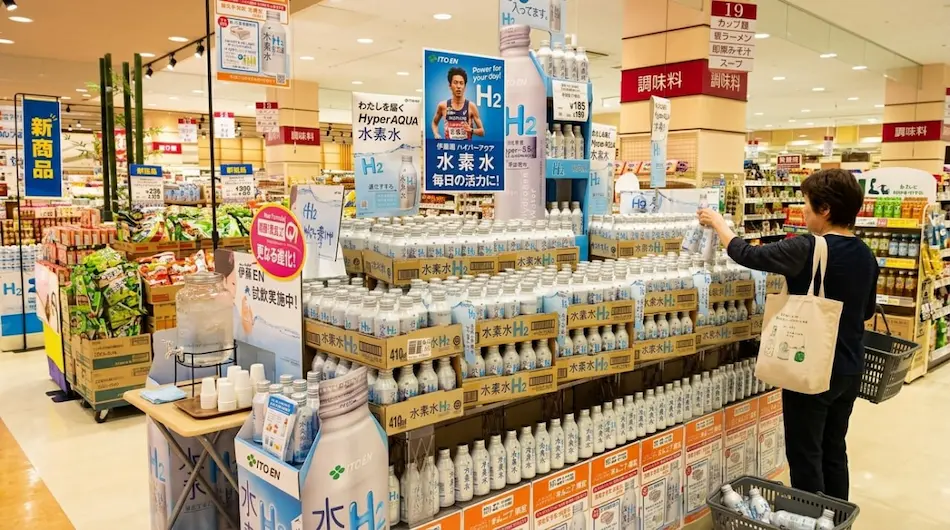
And France? We're just beginning to hear about it. The gap is striking - but it's also an opportunity. The scientific information exists, the devices exist, access is now possible. You just need to take an interest. Moreover, this gap reminds me of the one I observe in Epigenetics and longevity : Science advances, but the dissemination of information remains slow.
Is hydrogenated water dangerous? What you need to know
The question comes up systematically, and it is legitimate. Direct answer: no. No side effects of molecular hydrogen have been documented in the scientific literature - across more than 3,000 studies. The byproduct of the antioxidant reaction is water. It's about as dangerous as breathing.
That said, it is important to qualify. Hydrogenated water is not dangerous. However, a faulty device can be. Traditional electrolysis devices (without a membrane) can produce undesirable by-products: residual chlorine, ozone. This is why SPE/PEM technology (proton exchange membrane, Solid Polymer Electrolysis) makes a difference. It separates the gases at the anode and cathode, ensuring water enriched only with H₂ - without by-products.
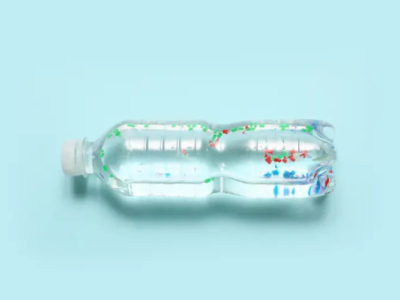
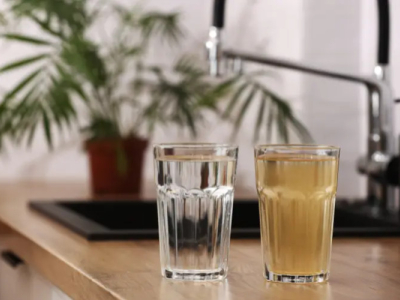
And if you are wondering about the quality of your base water before hydrogenating it, two useful resources: our guide on the microplastics in water drinkable, and our practical article on how filter tap water. Because hydrogenating contaminated water makes no sense.
How to Choose a Hydrogen Water Generator - The Criteria That Matter
Concentration in ppb - why it is the #1 criterion
Not all devices are equal. The determining criterion is the concentration of dissolved molecular hydrogen, measured in parts per billion (ppb).
To put things into perspective: the water from Nordenau - which brought thousands of people across Europe - contained 200 to 300 ppb. It was with this concentration that improvements were observed in 411 diabetic patients.
A good home hydrogen water generator must reach at least 1,000 ppb to be of interest. The best certified models go up to 5,000 ppb - which is twenty to twenty-five times the concentration of Nordenau water. Twenty to twenty-five times. In your home, in your kitchen, in three minutes.
SPE/PEM technology vs traditional electrolysis
The SPE/PEM technology uses a membrane that physically separates the production of hydrogen (cathode side) from potential by-products (anode side: oxygen, chlorine, ozone). It is the only technology that guarantees pure hydrogenated water, without residue.
Warning: traditional electrolysis without a membrane mixes everything. Result: you might be drinking H₂, but also ozone and dissolved chlorine. Not exactly what we're looking for. To delve deeper into the differences between water treatment systems, our comparison Filtered carafe or reverse osmosis system will help you to choose your filtration system.
Certification and third-party analysis - the non-negotiable minimum
A reputable manufacturer has the H₂ concentration of their device certified by an independent laboratory. Request the analysis results. Not the manufacturer's figures - the figures from a third party.
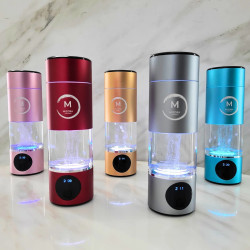
At Biovie, the best hydrogen water device we have tested is the Mizora. Certified by H₂ Analytics at 5,000 ppb, it features SPE/PEM technology and produces no by-products. It is not the cheapest on the market - but when you see the difference in concentration and purity, the choice is clear. Discover it here.
In practice - how to incorporate hydrogenated water into your daily routine
How much to drink per day? Most clinical studies use protocols of 500 ml to 1.5 liters of hydrogenated water per day. Personally, I start my day with a large 500 ml glass on an empty stomach - this is when bioavailability is the best. Then a second glass late in the morning and a third in the early afternoon.
For athletes, a glass 30 minutes before exercise and another within 30 minutes after exercise can help support recovery., as part of a varied and balanced diet and a healthy lifestyle. Several studies are exploring this avenue, and feedback from our athletic clients supports this.
For the elderly or those in recovery, molecular hydrogen has the advantage of having no documented side effects-a significant point when you are already taking several supplements or medications (be sure to consult your doctor in this case). Moreover, if you wish to calculate the impact of your lifestyle habits on your aging, our article on theBiological age vs chronological age will interest you.
And then, there is an aspect that is often forgotten: hydrogenated water naturally integrates into a holistic approach to living nutrition. With Aurélie, we combine it daily with our marine superfoods - spirulina, chlorella, algae - and our sprouted seeds. Every morning, I prepare a homemade drink as soon as I get out of bed: some marine plasma, diluted with hydrogenated water with my two https://www.biovie.fr/en/271-pro-mizora-generator.html (one for my seawater, another for my smoothie). The enzymes and metabolism play a central role in this synergy. The idea is not to look for a miracle product, but to build a set of coherent practices.