Fast delivery
.png)
 Fair prices




Liver Detox vs Drainage: Why Most Spring Cleanses Get the Order Wrong
You wake up with a slightly bloated stomach, a coated tongue, that quiet sense that "something's not quite flowing". And as every spring rolls in, the thought drifts past: maybe it's time for a liver detox. The instinct is sound. The method, more often than not, is what derails everything.
The straightforward answer: the liver does not generally need to be detoxified — it needs the downstream elimination pathways to be open. Stimulating a liver that is already working hard, while the bowel is sluggish, the lymph stagnant, the skin and kidneys under-recruited, doesn't move waste through your system: it puts it back into circulation. That is the order-flip I want to walk you through here. Aurélie and I have been observing it at Biovie for nearly two decades now: depuration isn't a hepatic sprint, it's a choreography between elimination organs.
Liver detox vs drainage: the confusion that derails most spring cleanses
When most people talk about a "liver cleanse", nine times out of ten they mean a short, intense, single-product regime. Black radish, artichoke, milk thistle, sometimes a fierce decoction over three days. In practice, on the ground, after more than thirty years of fieldwork, what I see is that those concentrated cleanses tend to fall flat — or, worse, produce the opposite effect. Headaches, fatigue, skin that worsens, digestion that pushes back. The liver isn't to blame. The downstream system is.
Why the liver does not really ask to be "detoxed"
The liver is an organ whose metabolic intensity is genuinely hard to picture. According to the Cleveland Clinic, it carries out over 500 distinct functions in parallel, every single day. In felt terms, what that figure covers is the impression so many people describe without quite naming it: a quiet "heaviness" under the right ribs on waking, a digestion that "drags" after a slightly heavy meal, a mood that dims around 4 pm for no clear reason. The organ doesn't shout — it whispers.
On the flow side, according to the American Liver Foundation, the liver filters roughly 1.5 L of blood per minute. To picture what that represents, that's about a bottle and a half of water passing through the filter every 60 seconds, without pause. When you put a stimulating cleanse on top of that while the exits (bowel, lymph, skin, kidneys) are closed, you're asking the liver to pump harder into a pipe that's already full. Not a liver problem. A downstream problem.
What "drainage" actually means
Drainage isn't about pushing harder. It's about opening up the route. The lymphatic system — the great forgotten one — circulates 2 to 3 L of lymph per day according to the same Cleveland Clinic. Translated into perception, when that flow gets blocked (sedentary days, mild dehydration, several days of denser meals), what people describe is very tangible: heavy legs at the end of the day, slightly puffy fingers in the morning, eyelids that look a bit thicker after a short night. That's not the liver speaking. It's the lymph reminding you it exists.
Drainage, then, means opening: bowel transit, circulation, perspiration, urinary function. Before — and only before — you ask the liver to step up its rhythm. That's the foundation of true lymphatic drainage, as opposed to the brutal liver cleanse you see resurface every spring.
The order of elimination pathways: why it changes everything
The order I recommend is always the same, and it follows a plumber's logic: open the lower exits before the upper ones. Bowel first (because that's where most fat-soluble waste the liver has transformed eventually leaves the body). Lymph next (because it's what brings the bulk of residues toward the elimination organs). Liver after that (because it works happily once the downstream is moving). Mitochondria as the closing layer (because that's the cellular energy that ties the loop). Inverting that order is precisely what turns a spring cleanse into five days of discomfort.
6 concrete signs your drainage pathways are overloaded
The liver, as I was saying, doesn't shout. But the whole system sends signals — telltale signs of a sluggish liver that is asking to be supported.
A bloated stomach as soon as you wake up
You went to bed with a flat stomach, you wake up with a round one. No meal to blame, no excess the night before. That's typically a sign that bowel transit slowed overnight and fermentation got ahead of evacuation. What people describe is the sense of "having eaten for two" while having eaten nothing.
Headaches after meals or on Sunday mornings
The post-meal headache that settles in mid-afternoon, or the Sunday-morning ache that follows a busy week — neither is incidental. They are often the signature of a lazy gallbladder failing to release bile at the right moment, and a liver that holds on.
Dull, reactive or breakout-prone skin
Skin is a back-up elimination organ in its own right — when bowel and liver are overloaded, it picks up the slack. You see it as a dulling complexion, small spots on the chin or temples, heightened reactivity to cosmetics you used to tolerate well. The mirror becomes a fairly accurate dashboard.
Persistent fatigue despite reasonable sleep
You sleep your seven hours and wake feeling like you slept four. That non-recovering fatigue is often the signature of an overloaded liver that diverts a slice of your available energy to deal with what it can't shift. It's not in your head. It's in the metabolism.
Slow, sticky digestion that lingers for hours
The sense that the meal "stays" three or four hours in the stomach, a heaviness under the right ribs, sometimes a bitter taste mid-morning. Sluggish bile, lazy gallbladder — that's the textbook picture of a liver that no longer has the fluidity to do its digestive work.
Changes in your breath and perspiration
Breath that turns heavier even though oral hygiene hasn't changed, perspiration that smells stronger, more metallic, with sweat marks that show up on light clothing. The body looks for exits wherever it can. When skin and breath start speaking, it's the whole system asking for help.
If you recognise two or three of these signs, the very first step — really the first — goes through the bowel. A tablespoon of lacto-fermented vegetables in everyday life at every meal for ten days often does more than three fashionable cleanses. That's what we suggest at home, and have done for years.
The 4-step sequence: gut → lymph → liver → mitochondria
Here, concretely, is what I recommend, in that order, over three to four weeks. It's an educational framework, to be adapted to your own rhythm, as part of a varied and balanced diet.
Step 1 — Gut: open up first
The first 7 to 10 days are about preparing the main exit. Concretely: 1 to 2 tablespoons of lacto-fermented vegetables at every meal (raw sauerkraut, kimchi, lacto-fermented beetroot — version doesn't matter, what matters is living bacterial diversity). Alongside, sprinkle 1 to 2 teaspoons of sprouts on your dishes: alfalfa, broccoli, fenugreek, lentil. And drink 1.5 to 2 L of filtered water a day. To picture that: roughly 6 to 8 large glasses spread through the day — not gulped down in two sittings.
What people report at this stage, first and foremost, is a transit that finds its rhythm without effort. No purge, no urgency — just something that "moves better".
Step 2 — Lymph: get what's stagnating to move again
Once the bowel is open, the lymph can begin to circulate. This is the moment to introduce a real lymphatic drainage in two parts: movement, and a mineral support.
Movement means 20 to 30 minutes of brisk walking a day, or 5 minutes of bouncing on the spot (gentle rebounding activates lymphatic flow better than many high-intensity sessions). You can do it in your pyjamas before coffee — it's not a question of equipment.
The mineral support is isotonic marine plasma — that is, sea water cold-microfiltered and brought back to the concentration of our internal milieu — at 10 mL on an empty stomach in the morning, for 3 to 4 weeks. The preparation was developed by René Quinton in the late 19th century (the researcher, not the brand), following his work on the analogy between sea water and blood plasma. Today, isotonic marine plasma offers a mineral matrix close to our internal milieu, and many people describe a different sense of "cellular hydration" after a few days — fewer mid-morning energy dips, a thirst that regulates itself.
Personally, this is a step I have never skipped. When you talk drainage, you talk minerals — and structured marine minerals are exactly what this sea water provides.
Step 3 — Liver and gallbladder: now we can support
Now, and only now, we talk about the liver. Chlorella (vs spirulina, their differences) first, in a gradual ramp: 1 g a day in the first week, then 3 to 5 g a day from the second. As powder or flakes, never in any other form — we stay with living food. Chlorella is best taken on an empty stomach or at the start of a meal, in a little water or a smoothie.
Alongside, seasonal bitters: rocket, endive, raw or pickled black radish, artichoke. These may help to support natural bile production gently — without forcing it the way a stand-alone stimulating cleanse would. One portion a day is enough. Nature does the rest.
To picture this concretely: partial liver regeneration, according to NIH-indexed research, takes 6 to 8 weeks. So you don't "rinse" a liver in three days. You walk alongside it for two months, giving it what it can use.
Step 4 — Mitochondria: closing the energy loop
Once the first three steps are in place, you reach the cellular engine. Phycocyanin extract (the origin currently available at Biovie is Chinese — worth knowing, there is no commercially available French phycocyanin at the scale and conditions we require), and klamath AFA as a complement. 1 to 2 g a day is enough.
What people report at this stage is energy returning "from underneath" — not the jolt of a strong coffee, but something steadier that holds through the day without spikes.
If you had to test only one product to start this phase, I'd begin with chlorella powder. It covers the broadest spectrum.
When a detox approach suits you — and when it doesn't
Not everyone tolerates cleanses, even well-run ones. There are constitutions to respect, and it's worth saying — because I see plenty of universal promises that really shouldn't be.
The 3 constitutions that struggle with stimulating cleanses
First, settled chronic fatigue. When exhaustion runs deep, mobilising the metabolism to drain only digs the deficit further. You start by rebuilding the terrain — denser nutrition, longer sleep, mineralisation — and you drain later, perhaps in autumn.
Second, inflammatory gut conditions (settled IBS, IBD). Lacto-fermented fibre in volume can wake up symptoms. You adapt, you start with very small doses, and you check in with a healthcare professional.
Third, pregnancy and breastfeeding. No drainage routine takes place during these periods, except on explicit advice from a trained professional — the terrain is too singular for generic protocols.
When progressive drainage is non-negotiable
Conversely, there are situations where progressive drainage is genuinely useful: after several months of richer-than-usual eating (winter, the holidays, a long trip), for people on regular medication (as a complement, never a substitute, and always with their doctor's sign-off), and when diffuse symptoms have been settling in for several weeks without an identified cause.
In those cases, the four-step approach — gut, lymph, liver, mitochondria — typically delivers what people describe as a "soft restart". No break, no transient worsening.
Frequently asked questions on liver detox and drainage
Should I do a liver detox every spring?
No, not systematically. A progressive drainage routine is justified when several signals are present at once (slow transit, persistent fatigue, dulling skin, heavy digestion). If nothing is signalling clearly, year-round upkeep — daily lacto-fermented vegetables, hydration, movement — is preferable to betting everything on one annual cleanse. The liver favours regularity over occasional efforts.
How can I tell if my liver is overloaded?
The most telling signs are concrete: bloated stomach on waking, headaches after meals, slow digestion with heaviness under the right ribs, fatigue that doesn't recover, dulling skin, breath that turns heavier. If you stack three of these signs over several weeks, the four-step approach (gut, lymph, liver, mitochondria) stands a fair chance of helping, as part of a varied and balanced diet.
What is the difference between detoxification and drainage?
Detoxification, in everyday usage, refers to a short stimulating cleanse aimed at "cleaning" the liver. Drainage opens the elimination pathways first (gut, lymph, skin, kidneys) before asking the liver to accelerate. That order shift is anything but cosmetic: it's what may make the difference between a cleanse that exhausts and a routine that supports. Detox attacks from the top. Drainage prepares from the bottom.
Does chlorella actually help with heavy metal removal?
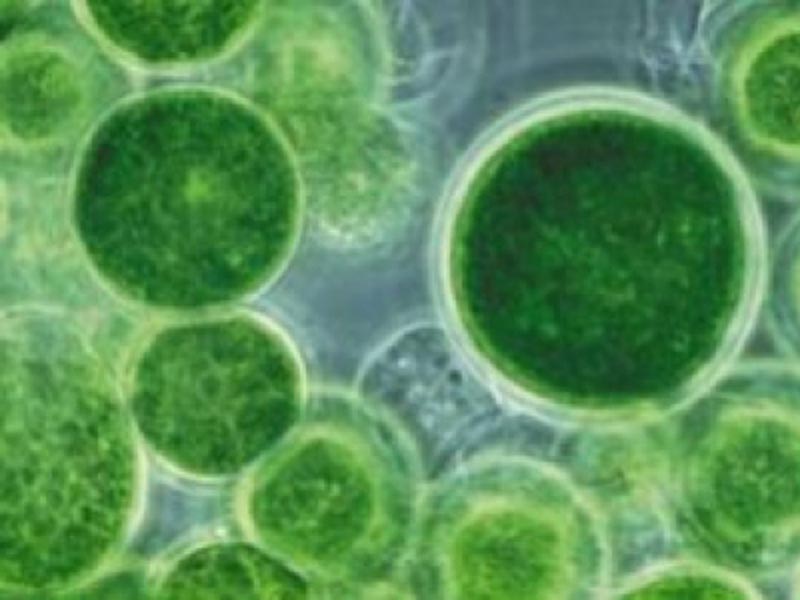
Chlorella is a freshwater microalgae recognised for its capacity to bind certain heavy metals and residues in the digestive tract — that's where it acts, not in the liver itself. As a support to a varied and balanced diet, it may contribute to digestive chelation and digestive comfort. It does not "cleanse the liver" in the medical sense, and anyone on medication or pregnant should discuss it with their doctor before use.
How long should a gentle liver support routine last?
Three to four weeks for a complete cycle — 7 to 10 days per step, step 1 (gut) alone at the outset, then each subsequent step overlapping with the previous one. For people just starting out, three cycles spread across the year (spring, late summer, autumn) are preferable to one very long cleanse. It isn't intensity that pays off — it's regularity.
In practice — Where to start this week
If you want to test, over three weeks, what this sequence shifts for you, here is the most accessible version:
- Week 1: 1 portion of lacto-fermented vegetables at every meal (start with lunch if it's simpler), 10 mL of isotonic marine plasma on an empty stomach in the morning. No need for more.
- Week 2: add chlorella powder, 1 g a day in the first week, then 3 g from the second. Keep everything else.
- Week 3: bring in phycocyanin and/or klamath AFA if the inclination is there — otherwise extend the chlorella.
That's it. Thirty seconds in the morning for the marine plasma, a tablespoon at every meal for the lacto-ferments, and a glass a day for the chlorella. Not a heroic cleanse. A change of angle.
References
- Cleveland Clinic. "Liver: Anatomy and Functions" — More than 500 metabolic functions performed daily.
- American Liver Foundation. "The Progression of Liver Disease" — Liver filters approximately 1.5 L of blood per minute.
- Cleveland Clinic. "Lymphatic System" — Lymphatic system circulates 2–3 L of lymph per day.
- Michalopoulos, G.K. & Bhushan, B. (2021). "Liver Regeneration: Biological and Pathological Mechanisms and Implications". Nature Reviews Gastroenterology & Hepatology — Partial liver regeneration in 6 to 8 weeks.
Last update: May 2026. Article written by Éric Viard, founder of Biovie since 2007, tropical agronomy engineer (ISTOM), 33 years of vegan practice.
The information in this article is provided for educational purposes only and does not constitute medical advice. Please consult a healthcare professional before changing your diet or starting any supplementation, particularly during pregnancy, breastfeeding or while undergoing medical treatment.