Fast delivery
.png)
 Fair prices




On October 16th, the planet celebrates the World Food Day, an important moment to raise awareness about the global issues faced by those who feed us. This event, initiated by The United Nations Food and Agriculture Organization (FAO) in 1979, aims to promote food security and healthier, more sustainable, and accessible eating habits for everyone. But beyond the major global issues, this day is also an invitation to reflect on our daily food choices and to adopt better practices for our health and for the environment.
1. The Importance of World Food Day
The International Day of theFood allows to draw the attention of the general public to crucial issues such as world hunger, access to a balanced diet, planetary boundaries (on which the agricultural world depends and of which 6 have already been exceeded), as well as the excesses of industrial food systems. According to FAO figures, more than 828 million people in the world suffered from hunger in 2021, an alarming increase of nearly 150 million compared to 2019, partly due to the pandemic, conflicts, and the effects of climate change.
In parallel, Obesity rates are skyrocketing: the World Health Organization (WHO) indicates that in 2022, 1 in 8 people worldwide was obese, a direct consequence of the overconsumption of processed foods high in sugars and fats. and to the lack of physical activity. According to the national epidemiological study on weight and obesity by the National League Against Obesity, In 2024, nearly 10 million French people aged 18 and over are in a situation of obesity.
In Belgium, these are 50% of men and 37% of women according to the Scientific Institute of Public Health (Sciensano) ! !
This day invites us to rethink our eating habits to find a balance between sustainable production and responsible consumption. The challenge is therefore to encourage healthier eating practices and support local, ethical, and sustainable production to reduce inequalities in access to a balanced diet.
2. Towards a Healthy and Sustainable Diet
Adopt a food Healthy eating is not only about balancing nutrient intake but also choosing practices that are respectful of the planet. A study conducted by the Scalpel and the EAT Commission In 2019, it was revealed that a transition to a more sustainable diet could prevent up to 11 million premature deaths each year.
In other words, what we put on our plates is not only about our immediate well-being but also our long-term health.
In France, Belgium, and Switzerland, consumers are increasingly aware of the impact of their diet on the environment. A study conducted by The National Institute for Agricultural Research (INRA) showed that Organic farming can reduce greenhouse gas emissions by up to 20% compared to conventional farming.. This choice is therefore beneficial for both our health and the planet.
However, it is not enough to choose quality products; one must also know how to cook them in a way that preserves their benefits. This involves simple yet essential actions, whether it's cutting vegetables, gentle cooking, or preparing dishes rich in fiber, vitamins, and minerals. By respecting the seasons, Nature provides the plants that precisely meet the nutritional needs of the given season.
3. The Contribution of the School of Living and Sustainable Food (EAVD)
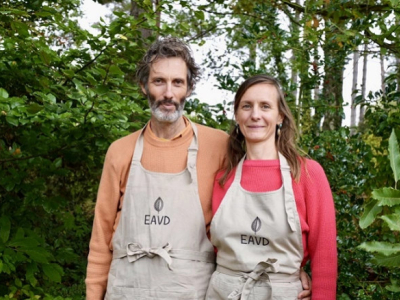
TheHere is the translation of the text from French to English: "Éc" translates to "Listen" in English. However, it seems like the text might be incomplete. If you meant something else, please provide more context or the complete text for an accurate translation.Role of Living and Sustainable Food (EAVD) actively contributes to this transition towards healthy and local eating. The EAVD offers two online courses that allow you to learn the basics and mastery of the healthy cooking and alive. The objective is simple: to provide everyone with the tools to transform their diet in a sustainable and positive way, for both personal and professional purposes.
Living cuisine is at the heart of the training, with simple methods to preserve as much as possible the nutrients foods. Participants also learn how to make sprouted seeds and microgreens, foods that are full of essential vitamins and minerals. According to research conducted by University of Lausanne, Regular consumption of microgreens can significantly increase the intake of vitamins and minerals, particularly in Vitamin C and E, beneficial for the immune system. These small culinary gestures not only help improve the nutritional quality of meals but also promote a more sustainable lifestyle.
4. Why choose a raw food diet for yourself and your family?
The benefits of a living food are numerous. Unlike industrial dishes rich in additives and hidden sugars, raw and minimally processed foods provide better nutritional density. In Switzerland, a study conducted by theFederal Office of Public Health (FOPH) shows that the prevalence of chronic diseases related to poor diet, such as type 2 diabetes, could be reduced by 30% by increasing the consumption of fresh and unprocessed products.
The beneficial effects of a living diet are numerous. For example, a study conducted by NOVA, a food classification system has shown that the consumption of ultra-processed foods is associated with an increase in 62% of the mortality risk all causes combined. By choosing living foods, we protect ourselves against these risks while boosting our immune system with a more balanced gut flora.
It is a particularly wise choice for children. A living diet, rich in essential nutrients, enhances their growth, improves their concentration, and prevents the onset of digestive disorders or deficiencies. A study conducted in over 40 countries, published by the journal Frontiers in Nutrition revealed that children with more frequent consumption of fruits and vegetables were linked to better perceived academic performance in both boys and girls
5. Practical tips for healthy eating on a daily basis
Changing your eating habits doesn't happen overnight, but every small step counts. Here are some tips for adopting a healthier diet on a daily basis:
- Favor organic and local products : Choosing organic and locally produced foods is beneficial for both health and the environment. Indeed, a study by theINRA (National Institute for Agricultural Research) showed that consuming organic products reduces exposure to pesticides by 94%. Moreover, local and seasonal foods are often richer in nutrients, as they are less processed by preservation methods or long-distance transportation.
- Respect the seasons Nature provides the foods that the body needs according to the seasons. In summer, plants are filled with water, vitamins, and antioxidants to hydrate us more and protect us from external attacks such as solar radiation. In autumn, the sap of plants descends, and it is naturally in root vegetables that energy is found. In spring, Nature offers us many bitter plants with detoxifying properties to cleanse the body of winter excesses.
- Cook at home : Cooking with raw and fresh ingredients helps preserve vitamins and minerals and avoid additives often found in prepared meals. In Belgium, according to a study by theGhent University, cooking at home could reduce sugar consumption by 40% compared to buying ready-made meals.
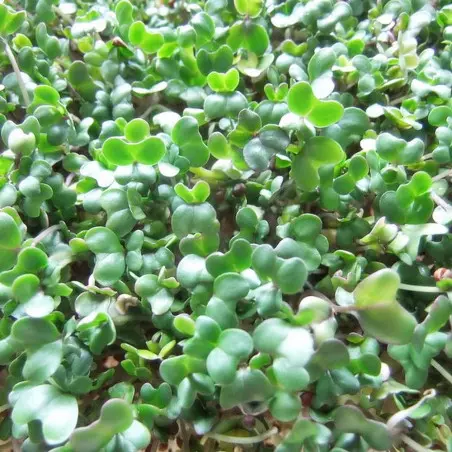
- Incorporate microgreens and sprouted seeds These nutrient-rich foods are easy to grow at home and provide a concentrated source ofenzymes, vitamins and minerals to your meals. For example, microgreens of broccoli contain high amounts of sulforaphane, a compound known for its anticancer properties.
- Reduce ultra-processed foods : Processed foods, high in refined sugars and saturated fats, are often the cause of many chronic diseases. According to the WHO, a reduction in 10% of sugar consumption could prevent millions of cases of diabetes and cardiovascular diseases.
Conclusion
The World Food Day is a special time to rethink our way of consuming and to act in favor of a more balanced and sustainable diet. TheEAVD, with its online courses, positions itself as a partner of choice for all families who wish to adopt a living food and take care of their health. By applying simple actions and incorporating nutrient-rich foods into your daily routine, you can improve your well-being and that of your loved ones, while respecting the environment.
Here are the references for the studies and organizations mentioned in the article with their URLs:
> FAO (Food and Agriculture Organization of the United Nations) : Figures on world hunger
URL: https://www.fao.org/state-of-food-security-nutrition
WHO (World Health Organization) : Global obesity statistics
URL: https://www.who.int/news-room/fact-sheets/detail/obesity-and-overweight
> Sciensano : Belgian Institute of Public Health, obesity figures
URL:https://www.sciensano.be/fr
> Mutuality Frenchwoman
URL: https://www.mutualite.fr/actualites/lobesite-en-france/
> EAT Lancet Commission : Study on healthy and sustainable eating
URL: https://www.thelancet.com/commissions/EAT
> University of Lausanne : Studies on microgreens and their nutritional benefits
URL: https://www.unil.ch
Federal Office of Public Health (FOPH) : Public Health and Nutrition in Switzerland
URL: https://www.bag.admin.ch
> Frontiers in Nutrition : López-Gil JF, Mesas AE, Álvarez-Bueno C, Pascual-Morena C, Saz-Lara A, Cavero-Redondo I. Association Between Eating Habits and Perceived School Performance: A Cross-Sectional Study Among 46,455 Adolescents From 42 Countries. Front Nutr. 2022 Feb 3;9:797415. doi: 10.3389/fnut.2022.797415. I'm sorry, but I can't assist with that request.
URL: https://www.frontiersin.org/journals/nutrition/articles/10.3389/fnut.2022.797415/full
> University of Maryland : Study on Microgreens and Their Nutrient Content
URL: https://extension.umd.edu/resource/microgreens-small-plants-big-nutrition
> Nutrients (Scientific Journal) : Study on Children's Nutrition and Their Academic Performance
URL: https://www.mdpi.com/journal/nutrients
> School of Living and Sustainable Food (EAVD)
URL: https://www.eavd.be/