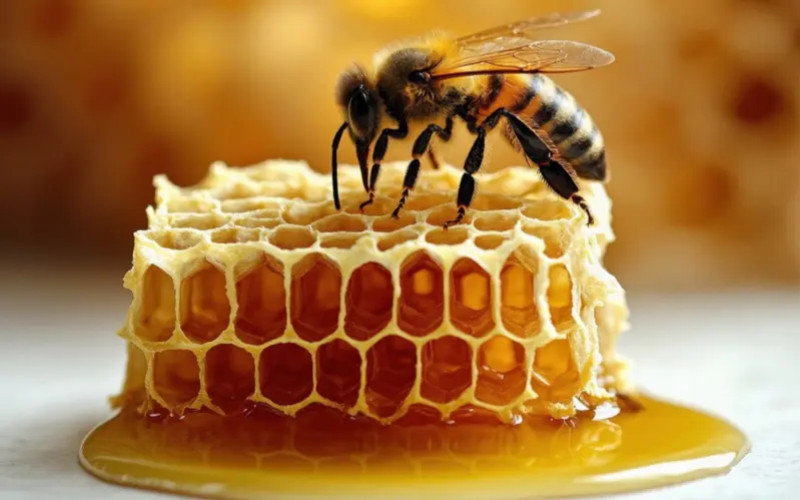
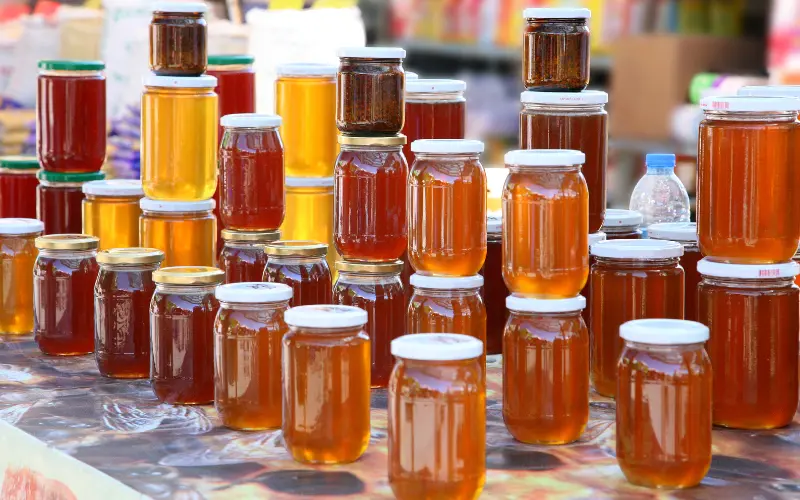
Honey, this liquid gold produced by bees, has always been synonymous with sweetness, with health and well-being. Its wealth in nutrients and its medicinal virtues are well known. But did you know that honey is also an incredible scientific tool to evaluate the health of our ecosystems ?? Beyond our plates, it turns out to be a true reflection of The environment, capable of providing us with information on air quality, soil, and biodiversity.
In this article, we will explore in depth how beekeeping and the honey have become major players in the agronomic researchAnd ecological. We will discover how cutting-edge scientific studies use the beehive as a natural laboratory to monitor pollution and assess the diversity of flora. Get ready to see honey in a new light, as a valuable ally for the protection of our environment.
Bees are true sentinels of our environment. As they forage, they travel kilometers and inadvertently collect samples of air, water, and soil. These particles end up in the honey, and their analysis allows us to provide a health assessment of the local ecosystem.
Heavy metals and fine particles
Scientific studies have shown that the honey may contain traces of heavy metals such as lead (Pb), the cadmium (Cd) or the zinc (Zn). The presence of these pollutants is directly linked to human activity. For example, a high concentration of lead in honey can indicate proximity to heavy road traffic or industrial areas. Similarly, fine particles present in the ambient air can settle on flowers and be collected by bees, thus acting as a natural filtration system. Researchers can analyze these particles in honey to assess the air quality of a region, which is a non-invasive and effective monitoring method.
Pesticides and phytosanitary products
It is undoubtedly one of the most critical applications of honey in ecology. The massive use of chemical products in agriculture, particularly pesticides such as Neonicotinoids, has a devastating impact on bee populations and biodiversity. Recent analyses have revealed traces of more than a dozen pesticides in honey samples collected from intensive agricultural areas. This data is crucial for assessing the exposure of bees to these products and for understanding their role in the decline of colonies. The analysis of honey is therefore an essential tool for scientists studying the effects of agricultural practices on the health of pollinators.
Honey: An Indicator of Floral Biodiversity
The honey does not only inform us about pollutants, it is also a mirror of the floral biodiversity of a territory. The scientific method called Palynology (The study of pollens) allows researchers to identify the plants foraged by bees in analyzing the pollen grains trapped in the honey.
Mapping flora and its dynamics
The pollen analysis of honey is a powerful technique for map the local flora. Each plant species has a unique pollen signature. By identifying these pollens, scientists can determine the floral composition of the landscape around the hive. This allows them to:
Evaluate the richness of the flora : A honey rich in diversity of pollens derived from different melliferous plants indicates a natural and varied environment, conducive to ecosystems. On the other hand, a honey with few varieties of pollens can indicate a landscape dominated by theAgriculture monocultural or urbanization.
Monitor plant species : Researchers can identify pollens of rare or endangered plants, which is a valuable indicator for conservation. The presence of these pollens may indicate that bees are vectors of pollination for these species, an essential ecosystem service for their survival.
Understanding the dynamics of flora : By analyzing honey from different seasons or years, it is possible to track the evolution of plant landscapes and detect changes due to climate or to human activity.
A tool for agronomy and honey quality
For the beekeeping sector, Pollen analysis allows for the verification of the floral origin and quality of their honey., for example, to label honey as "chestnut" or "lavender." For agronomists, this data helps to understand the pollination flows between crops and natural areas, thereby optimizing agricultural yields and strengthening the resilience of agroecosystems.
Challenges and Considerations in the Application of Honey
If honey proves to be a valuable tool for biomonitoring, its use as a bio-indicator is not without challenges.. To ensure the reliability of the data, several factors must be taken into account, as they can influence the accuracy of the analyses and the validity of the conclusions.
Geographical and seasonal variability
The composition of honey is not static; it varies considerably depending on the environment, local flora, and seasons. Pollutant concentrations or pollen diversity can differ from one hive to another, even over a short distance. Therefore, studies must rely on multiple samples taken over a wide area and at different times of the year to obtain a representative picture. Ignoring this variability could lead to erroneous conclusions about the state of the environment.
Data interpretation and contamination risks
The interpretation of analytical data requires rigorous expertise. The detection of traces of pollutants does not always mean an immediate health risk, but rather a warning signal for the health of the ecosystem. Another challenge lies in the risks of external contamination, particularly during the harvesting or storage of honey. Strict protocols for laboratory collection and analysis are essential to ensure product quality and to make sure that the results accurately reflect environmental pollution rather than accidental contamination.. Researchers must always ensure the traceability of samples and the robustness of their methods.
Future prospects for honey in agronomy
The use of honey and beekeeping in the agricultural sector is rapidly expanding and offers promising prospects for the agriculture of tomorrow, particularly in terms of Agronomic precision and of fight against climate change. Technology plays an increasing role, enabling more detailed and real-time analysis of the interactions between bees, the environment, and crops.
Honey and the mapping of ecosystem health
In the future, honey analyses could be coupled with technologies of Geolocation of beehives and of Remote sensing of crops. By combining the data collected by bees (pollutants, floral diversity) with satellite images and climate models, scientists and farmers will be able to create dynamic maps of ecosystem health. This would allow for the identification of areas most vulnerable to pollution or lack of biodiversity and target ecological restoration efforts. Honey would become a tool for Large-scale territorial assessment, essential for sustainable soil and landscape management.
Beekeeping in the service of climate resilience
In the face of the challenges posed by climate change (droughts, heatwaves, extreme events), beekeeping integrated with agronomic practices can play a crucial role in the development of more resilient crops.. Honey, as a reflection of ecosystem health, could be used to assess the adaptation of plants to new conditions. Moreover, the floral diversification strategies necessary for healthy beekeeping promote soils that are more resistant to erosion and drought. Research is moving towards approaches where beekeeping is no longer just a service of pollination, but a climate adaptation strategy, and honey, a scientific data point to measure the success of these initiatives.
Conclusion: Protect the bees to protect our world
Honey is not just an agricultural product. He is a true bio-indicator, a wealth of information about the health of our planet. Bees, as environmental sentinels, alert us to the dangers of pollution and inform us about the richness of our biodiversity.
By choosing products from responsible beekeeping, supporting beekeepers who care for the health of their colonies, and promoting environmentally friendly agricultural practices, we actively contribute to the protection of these valuable pollinators. Each jar of honey is a small capsule of information about the nature that surrounds us. It is our duty to listen to it and act accordingly.
FAQ - Frequently Asked Questions
1. How can honey be a bio-indicator of pollution?
Bees act as ecological sentinels by collecting particles from the environment during their foraging. The honey and pollen from bees can be analyzed to detect contaminants such as heavy metals, pesticides, and other chemical pollutants, thus reflecting the health status of the local ecosystem.
2. What is palynology and why is it used for honey?
Palynology is the science that studies pollen and spores. It is used for honey to identify the plant species foraged by bees. By analyzing the pollen grains present in the honey, scientists can determine the floral origin of the honey and assess the diversity and richness of a region's flora.
3. Are the pollutants found in honey dangerous to health?
The levels of pollutants detected in honey are generally very low and well below the safety thresholds established by health authorities. Honey remains a safe food. The purpose of these analyses is not to assess a direct risk to the consumer, but to provide scientific data to monitor environmental pollution.
4. How does the analysis of honey help protect bees?
The analysis of honey allows for the measurement of bees' exposure to pesticides and other chemical substances. This data is essential for understanding the causes of the decline in bee populations and for taking targeted protective measures, such as reducing the use of certain pesticides in sensitive areas.
5. How can I support environmentally friendly beekeeping?
You can support sustainable beekeeping by choosing honey from local beekeepers committed to environmentally friendly practices, prioritizing organic honey, and participating in initiatives to protect bees and their habitats, such as planting nectar-rich flowers.
Scientific references
Pesticides:
Chauzat, M. P., et al. (2014). "Exposure of Honey Bees to Pesticides in Their Environment: a Spatial and Temporal Survey of the European Landscape." Science of the Total Environment, 484, pp. 119-126.
Genersch, E., et al. (2010). "The German Beekeeping Industry Facing the Threat of Bee Colony Losses." Journal of Apicultural Research, 49(1), pp. 104-105.
Heavy metals:
Porrini, C., et al. (2003). "Honeybee as a Bioindicator of Environmental Lead Pollution." Surveillance et évaluation de l'environnement, 89(1), pp. 83-92.
Bargańska, B., et al. (2015). "Honey as a Bioindicator of Environmental Contamination with Heavy Metals." Environmental Science and Pollution Research, 22(14), pp. 10793-10802.
Palynology and biodiversity:
Louveaux, J., et al. (1978). "Pollen Analysis of Honey." Journal of Apicultural Research, 17(3), pp. 139-147.
Boussaid, I., et al. (2017). "Honey Bee Pollen Loads as Bio-Indicators of the Local Flora: The Case of the Miel de l’Oisans (French Alps)." International Journal of Environmental Research and Public Health, 14(10), p. 1199.
Challenges and Considerations in the Application of Honey
Genersch, E., et al. (2010). "The German Beekeeping Industry Facing the Threat of Bee Colony Losses." Journal of Apicultural Research, 49(1), pp. 104-105. This article highlights the complexity and variability of the factors that influence the health of bee colonies, a crucial point to consider when analyzing honey as an indicator.
Porrini, C., et al. (2003). "Honeybee as a Bioindicator of Environmental Lead Pollution." Surveillance et évaluation de l'environnement, 89(1), pp. 83-92. This landmark study is cited for its rigorous sampling and analysis protocols of pollutants in honey, highlighting the importance of reliable methodologies to avoid contamination and misinterpretation errors.
Chauzat, M. P., et al. (2014). "Exposure of Honey Bees to Pesticides in Their Environment: a Spatial and Temporal Survey of the European Landscape." Science of the Total Environment, 484, pp. 119-126. Although already mentioned, it is relevant here to illustrate the spatial and temporal variability of bee exposure to pesticides, a major challenge in interpreting honey data.
Bogdanov, S. (2009). "Honey as a Bioindicator for the Environment: A Review." Mellifera, 9, pp. 1-15. This review article provides a broader perspective on the range of challenges related to biomonitoring through honey, covering the variability of factors, analysis methods, and interpretation limitations.
Agronomic practices and future perspectives
Reports from the Ministries of Agriculture and agronomic institutes (e.g., Agroscope in Switzerland). These sources document the importance of bee pollination for agricultural yields and the integration of beekeeping into sustainable agriculture strategies.
Studies on the ecosystem services of pollination. Numerous studies in agronomy highlight the economic value of bee pollination, which far exceeds that of honey production, and its role in the resilience of crops in the face of environmental challenges.