Heavy Legs in Summer: 7 Natural Remedies That Work
You know that feeling? 5pm in early July, you stand up after a long working day or come back from running errands, and your legs feel like two waterlogged sandbags. Your ankles have swelled a little. Your calves tug at the slightest stair. Tired legs, swollen legs, sometimes leg cramps in the night - it's not in your head, and it's not "just" end-of-day fatigue. It's your venous return waving a flag at you.
The straight answer, no detour: when the heat rises, your veins dilate, blood travels back from your feet to your heart less efficiently, and water tends to pool in the tissues. Result: heaviness, swelling, sometimes tingling. The good news is that, apart from a handful of cases we'll cover right away, most solutions sit in what you eat, what you drink, and how you move. Here's a complete guide - understanding, relieving, preventing - without ever replacing a doctor's advice for the serious cases.
Why do legs feel heavy in summer?
Heat: the number one enemy of venous return
When the temperature rises, your body does what it does best: it tries to cool you down. To dissipate heat, it dilates the blood vessels at the periphery, especially in the legs and arms. That's efficient for the internal thermostat - far less so for the return of blood to the heart.
And the blood in your legs has to climb back up against gravity. When the veins are dilated, their valves - those tiny one-way flaps that stop blood from running back down - close less effectively. Blood pools, water seeps into the tissues, and you feel that distinctive heaviness. In practice, what people report most often at 5pm during a heatwave: "it feels like I'm wearing lead boots", "my shoes are tight when they fitted fine this morning", "I just want to lie down".
Venous return, explained simply
When you walk, your calf contracts. That contraction is your "second heart pump" - a term phlebologists use a lot in consultations because it captures what's actually happening. Each step sends a piston-like push to the venous blood to drive it upwards. If you sit eight hours a day or stand still behind a counter, that pump barely runs. Add the heat on top, and you get the perfect cocktail for lead-heavy legs by the evening.
When the lymphatic system joins in
Alongside blood circulation runs the lymphatic circulation. It's the one that drains waste and interstitial fluid. It has no central pump like the heart - it relies entirely on muscular movement and deep breathing. When you barely move and you sweat heavily, lymph builds up, ankles swell, and the heaviness comes paired with visible puffiness. The Italians have a very precise word for it: ritenzione idrica. In English we tend to talk more cautiously about "fluid retention" or "oedema".
Statistics and risk factors: who is affected?
The figures look a bit scary when you put them like that, but mostly they remind you that you are not alone. According to the College of Phlebology and the data published by France's national health service (a useful European reference because the condition has been studied at scale there), 18 to 20 million people in France alone live with chronic venous insufficiency. To put that in perspective: roughly one in three people around you, in your office, on the morning train. One in two women and one in four men. The summer heaviness and swelling you feel sit in that broader family of venous symptoms, even when there are no visible varicose veins (yet).
The main risk factors
Heredity plays a real role: having one affected parent multiplies your risk by 1.45; two parents, by 1.9. To put that in perspective: it's not a genetic fate, but a probability that makes a healthy lifestyle even more useful. Pregnancy, sedentary lifestyle, excess weight, prolonged standing and heat are the other major factors. For people picking grapes, working in kitchens, selling at markets - summer is a double whammy: heat and standing all day.
Age is not a foregone conclusion
70% of people over 70 report symptoms of venous insufficiency. What that figure doesn't tell you is the huge gap between "occasional, manageable symptoms" and "disabling varicose veins". People who walk every day, eat living food, hydrate properly, often go through their 70s and 80s with perfectly serviceable legs. That's also what I see in the shop: 75-year-old customers in better shape than some 45-year-olds.
When to see a doctor: red flags you must never ignore
This is the most important section of the article, so I'm placing it early - and I'll be very direct.
Some symptoms are not handled with a cold shower or a smoothie. If you have:
intense pain in one leg only, appearing suddenly,
asymmetric swelling (one leg clearly larger than the other),
red, hot, tight skin,
shortness of breath or chest pain alongside,
→ seek urgent medical care. These are possible signs of a deep vein thrombosis, and the stakes are serious.
Other symptoms warrant a non-urgent appointment with your GP or a phlebologist, but without dragging your feet either: oedema that doesn't disappear after a night's sleep, varicose veins developing, recurring itching around the ankles, a non-healing wound. A venous Doppler ultrasound is the standard test - non-invasive, painless, covered by the NHS in most cases. You'll find official guidance on the NHS varicose veins page.
Everything that follows in this article addresses what's known as functional discomfort - seasonal heavy legs, with no diagnosed underlying pathology. If in doubt, see a clinician first. It really is that simple.
Quick relief for heavy legs: 7 natural moves that genuinely work
1. Elevate your legs for 15 minutes at the end of the day
The simplest move, and the one that works best in the short term. Lie down, place your legs against a wall or on a cushion, around 15 cm above your heart. Gravity does the work: blood and lymph flow back, pressure drops. 15 minutes are enough to feel the difference. Use the time to breathe deeply - that activates lymphatic drainage too.
2. The ascending cold shower
The exact protocol, because it makes all the difference: start cold water (15-18°C, not freezing) on your foot, slowly travel up the calf, come back down, then up to the thigh, then back down. One leg, then the other. 30 to 60 seconds per leg is enough. The cold contracts the dilated veins, and the pumping effect you create by alternating zones wakes up the circulation. In practice, what you feel as you step out: your legs "breathe", as if a hot blanket had just been lifted off them.
3. Walk 30 minutes a day
The calf muscle pump, again and always. 30 minutes of easy walking, at a pace where you can still hold a conversation, are enough to durably restart circulation. No running needed, no gym needed. Early morning or after 7pm in summer, to avoid peak heat. Participants in venous rehabilitation studies report a clear drop in heaviness after two to three weeks of daily walking.
4. Hydrate properly
1.5 to 2 litres of water a day, with real attention to quality. The classic summer mistake is to think that drinking less means retaining less water - it's exactly the opposite. When the body is short of water, it stores more, as a safety reflex. To go further on the remineralisation side, I personally add a spoonful of hypertonic seawater (the famous isotonised seawater following the historic work of René Quinton) to my morning glass. It complements regular water - it doesn't replace it. To put it in everyday terms: it's the mineral equivalent of what your body lost in sweat the day before.
Every hour, a few ankle flexions (toes towards you, toes towards the floor) for 30 seconds. Ridiculously simple, and remarkably effective. If you work at a desk, set a discreet alarm on your phone.
6. Adjust your shoes
Against received wisdom: neither high heels nor totally flat shoes are ideal. The heel that prevents ankle motion blocks the muscle pump; a flat sole with no support doesn't engage it either. The sweet spot sits between 2 and 4 cm of heel, with a slightly flexible sole.
7. Water-based exercise: swimming, aqua aerobics, water cycling
The combined effect of muscular pumping, water hydrostatic pressure and coolness - it's probably the best exercise for heavy legs in summer. 30 minutes of breaststroke three times a week, and you'll feel the difference from the second week.
Drainage through living food: the angle no one really covers
This is the part closest to my heart, and probably the one that shifts things most over time. Everyone will tell you about cold showers and compression stockings. Far fewer people will talk to you about what goes on your plate.
Hydrate rather than chase the water out
Reduce salt, yes - not by excess, but by common sense. Industrial cooking delivers two to three times the amount of salt your body actually needs. But drinking less is a false good idea, as we saw above. The paradoxical logic of a body in fluid retention: the more correctly you hydrate it, the better it eliminates.
The foods that support venous return
The flavonoids are the quiet stars of circulation. You find them in blueberries, blackberries, blackcurrants, black grapes - the whole palette of deeply violet fruits. The anthocyanins they contain reinforce the wall of small blood vessels. A handful a day all summer, ideally fresh or as a no-added-sugar compote.
Vitamin C participates in collagen synthesis, which veins need to stay supple. The recommended adult intake is 110 mg per day. A kiwi (93 mg per 100 g), a raw red pepper (162 mg), fresh chopped parsley on your salads - and you're there.
Magnesium regulates vascular tone and contributes to proper calf muscle contraction. Daily need: 360 mg for women, 420 mg for men. Many people are short of it in summer because we lose it through sweat. Top natural sources: pumpkin seeds, sprouted buckwheat, almonds, dark chocolate (70% minimum) and - this is where it gets interesting - chlorella and spirulina.
Potassium balances sodium and supports water regulation in the tissues. Avocado, banana, coconut water, baked potato with the skin (yes, really), raw spinach.
Algae: discreet allies
Chlorella, beyond its recognised role as a metal chelator, contains highly bioavailable magnesium and a chlorophyll that supports the liver. And the liver matters: a liver that filters poorly means a venous-lymphatic return that struggles. Spirulina brings highly bioavailable iron - useful for women who flag in summer, because iron-deficiency anaemia worsens the sensation of heavy legs.
When I wrote Algues au Quotidien with Aurélie (Gallimard, 2024), we spent six months sorting through what science truly validates and what stays in the realm of activist enthusiasm. For venous circulation, what we kept: no miracle promise, but mineral support and a liver effect that becomes noticeable in use, especially over a 21-day course minimum.
Homemade drainage drinks
Red vine leaf tea (Vitis vinifera leaf) is the reference - we'll come back to it in the next section with the science behind. You can also experiment with blackcurrant tea, birch leaf, and morning lemon water. For smoothie fans, my favourite recipe:
The "light legs" violet smoothie
2 servings, 5 minutes
200 g fresh or frozen blueberries
1 ripe banana
250 ml of Biovie hemp milk (or tigernut milk - no oat milk, which adds nothing on this topic)
1 teaspoon of chlorella powder
1 tablespoon of sprouted chia seeds
The juice of half a lemon
Blend for 30 seconds. Drink in the morning on an empty stomach for 21 days, as a summer course.
Eric's morning ritual
My personal ritual, nothing exceptional but it does its job: I start the day with a large glass of warm filtered water with the juice of half a lemon, into which I add a tablespoon of hypertonic seawater. Five minutes later, a barley grass juice or a violet smoothie depending on the mood. Then 10 minutes of walking in the garden, regardless of the weather. Thirty years I've kept this routine. Try it for three weeks, and you'll keep it.
Plant allies for venous return: what the science says
Red vine leaf - the AS 195 extract
This is probably the best-documented plant for heavy legs. A systematic review published in 2020 on PubMed (Schaefer et al., Phytomedicine), based on five clinical trials, showed that the standardised AS 195 extract significantly improves leg volume, calf and ankle circumference, as well as the sensations participants reported - heaviness, fatigue, tingling. The European Medicines Agency (EMA) formally recognises the well-established medical use of red vine leaves to relieve manifestations of chronic venous insufficiency. In subjective terms: participants describe a sensation of legs that feel "more mobile", "less tight" by the end of the day, after a three to six-week course.
Horse chestnut - Aesculus hippocastanum
The escin-standardised extract. A Cochrane review (a benchmark in evidence-based medicine) confirmed its effect on leg oedema, pain and pruritus in people with chronic venous insufficiency, with a favourable tolerability profile.
Witch hazel, butcher's broom, ginkgo
Witch hazel (Hamamelis) is traditionally used in topical application for its astringent effect. Butcher's broom (Ruscus aculeatus) contains ruscogenins recognised for their venous tone. Ginkgo biloba works more on microcirculation, useful if you have recurring tingling.
⚠️ A non-trivial caveat: red vine leaf and horse chestnut can interact with anticoagulants. If you are on treatment, talk to your doctor before any supplementation, even plant-based.
Metabolic enzymes: the lesser-known but relevant complement
We've covered food, plants, hydration, movement. One angle remains, rarely discussed when talking about heavy legs: metabolic enzymes. And that's a shame, because it's probably one of the most interesting complements for supporting oedema resorption in summer - especially when you stack the aggravating factors.
Digestive enzymes vs metabolic enzymes: the essential difference
Digestive enzymes work in the stomach and intestine to break down what you eat into assimilable molecules. Metabolic enzymes, on the other hand, work everywhere else in the body after absorption - in the blood, in the tissues, at the wall of vessels. Two of them are particularly interesting for venous circulation: bromelain and nattokinase.
Bromelain - the pineapple enzyme
Extracted from the pineapple stem, bromelain has been studied since the 1960s. It is documented for supporting oedema resorption - historically studied in post-operative patients to reduce swelling and bruising - and for its action on systemic inflammation. In practice, what users report after a three to four-week summer course: a less swollen ankle in the evening, a sensation of tension in the calf that eases off, faster relief after a long day on your feet.
Nattokinase - from Japanese natto
Discovered in 1987 by Dr Hiroyuki Sumi from natto, the traditional Japanese fermented soybean dish, nattokinase has a so-called fibrinolytic action: it helps break down fibrin, the component of the micro-clots that naturally form in circulation. To put it in everyday terms: a circulation where blood "glides" better, which for venous return makes a felt difference in overall fluidity and end-of-day recovery speed.
Why I recommend the capsule (and only for enzymes)
You'll notice this is the only complement I recommend in capsule form at Biovie - everything else (algae, seawater, grass juice) is taken as powder, flakes or liquid. The reason is purely technical: the enzyme is a protein. If you take it as powder in a glass of water, the acidity of the stomach destroys it before it reaches the small intestine, where systemic absorption happens. The enteric capsule protects the molecule until the absorption site. It's the only form that works.
Important precautions
⚠️ Do not take without medical advice if:
you are on anticoagulant treatment (warfarin, apixaban, rivaroxaban, acenocoumarol...) - nattokinase potentiates the effect;
you are pregnant or breastfeeding;
you take an antiplatelet treatment (daily aspirin, clopidogrel...);
you have surgery scheduled (stop at least 7 days before).
If you take other supplements or medication, talk to your doctor or pharmacist before starting.
In practice
If you want to test for three weeks what it changes for your end-of-day sensation, especially when you stack several factors (heat + prolonged standing or sedentary lifestyle), this is what I recommend alongside the chlorella-spirulina duo. A 21 to 30-day course, to be repeated once or twice across the summer season.
What is marine plasma ?
So-called hypertonic marine plasma is simply seawater harvested and filtered under very specific conditions.
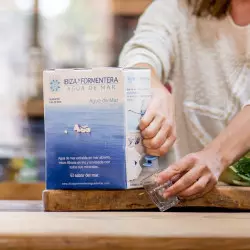
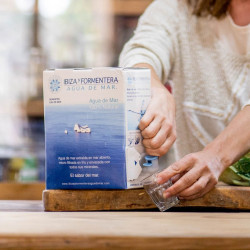
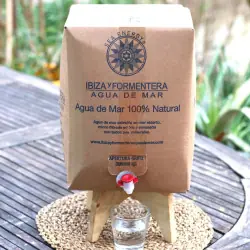
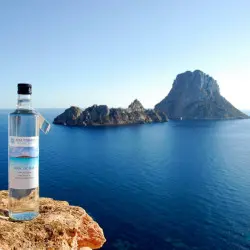
Our supplier Ibiza Agua de Mar collects sea water from a depth of 25 meters off the coast of Ibiza in a UNESCO listed area.
Concerning the harvest, here are the different physico-chemical parameters measured during the search for an optimal place for the harvest of hypertonic marine plasma, first on the radar with reading of the currents and according to the marine weather (wind, swell, rain. ..) and then by local measurement of these different parameters: taste of seawater, dissolved O2 level, PH level, redox level (ORP), salinity level (TDS), conductivity level ( PSU), alkalimetric title (TA), Pressure. It is the empirical practice of the harvesters and the reading of the various measuring instruments that makes it possible to decide on the best complex combination of these measures together to decide whether the harvest is triggered on the site or whether another location is sought.
Where does marine plasma come from ?
The marine plasma is collected in the high seas, off the coast of Ibiza, in a specific area classified as UNESCO with high planktonic activity and with a presence of tens of square kilometers of Posidonia. It is indeed in this specific area that lives the largest living organism listed on Earth, a posidonia herbarium of 80,000 to 200,000 years extending over 15 kilometers in length.
Source: Sophie Arnaud-Haond, Carlos M. Duarte, Elena Diaz-Almela, Núria Marbà, Tomas Sintes, Ester A. Serrão: Implications of Extreme Life Span in Clonal Organisms: Millenary Clones in Meadows of the Threatened Seagrass Posidonia oceanica
When is it best to take marine plasma ?
The ideal is to consume marine plasma, which contains, let's remember, all the elements that make up Mendeleev's periodic table, in the morning when you get up, on an empty stomach. take 1/4 of hypertonic marine plasma to mix 3/4 of spring water or filtered water.
What are the benefits of marine plasma ?
Minerals are the "fuel" used primarily by our body, which is necessary for our cells to perform their functions optimally. They are also essential for the absorption of vitamins and are responsible for enzymatic processes in cells. Cells perform all their functions with maximum vitality and the precise capacity for organic, bioavailable, alkaline cellular nutrition. Thus, sea water becomes the best mineral drink since it contains all the elements of Mendeleev's periodic table.
Another of the great benefits of seawater is its pH. As Otto Warbürg, father of cellular respiration and two-time Nobel laureate, said, “all diseases are acidic and where there is oxygen and alkalinity there can be no disease”. Due to the quality of our raw material, the hyper-oxygenated waters of Posidonia meadows (recognized by UNESCO as a World Heritage Site in 1999) and sea currents providing purity and clarity: Ibiza and Formentera Agua de Mar have an alkaline pH , between 8.1 and 8.4, which will help the body maintain a neutral pH through homeostasis. The ingestion of sea water is advised to control and maintain our PH, as well as an exceptional supplement for alkaline diets.
The antioxidant and anti-acidity power produced by seawater is due to the alkalinity provided by the minerals.
Drinking filtered seawater in a direct and controlled way is very beneficial for your health, because seawater is an excellent nutrient, containing most of the minerals of the periodic table and all of them dissolved in the best universal solvent available: l 'water.
Seawater contains all the minerals of the periodic table of elements in a bioavailable way. It is thanks to this that foods cooked in seawater are rehydrated and remineralized to make foods with high nutritional power. The problem today is that our intake of minerals through food has dropped dramatically and what is causing this? The answer is very simple: pollution, soil depletion due to intensive agricultural production and our stressful pace of life have considerably reduced the quality of food and its mineral intake, drastically reducing the minimum contribution necessary for the proper functioning of the body.
Seawater also helps us stay young, for a simple reason: the body regularly and cyclically regenerates all its cells, because their lifespan is limited in time. As we age, one of the first faculties the cell loses is the ability to hydrate. We know that the older we get, the less we drink, so drinking and ingesting seawater can help us "wake up" this ability to hydrate ourselves., 4
products
Preventing heavy legs day-to-day: the 5-point summer routine
This may be the most useful part for you, because it asks for very little time and zero equipment.
Morning (3 minutes): a large glass of warm lemon water with a spoonful of hypertonic seawater, then 10 minutes of movement, whatever it is - stretching, a walk around the block, the garden.
At the desk (30 seconds an hour): ankle flexions, three sit-stands, and if possible 5 minutes with legs raised after lunch.
After exercise or walking (1 minute): ascending cold shower, even when you're rushed.
Evening (15 minutes): legs up the wall, plus a drainage tea (red vine leaf or blackcurrant).
All summer (21-day course): chlorella and spirulina together, 3 g of each per day - added to the violet smoothie, in a drink, or simply sprinkled on lunch dishes. And if you stack the aggravating factors (heat + prolonged standing or sedentary lifestyle), a metabolic enzyme course for the same duration - see previous section.
If you want to test for three weeks what it changes for your end-of-day sensation, the chlorella + spirulina duo we've sourced is the most accessible starting point - chlorella for liver support, spirulina for bioavailable iron. Right this way.
FAQ: everything you might wonder about heavy legs
Why are my legs heavier in summer than in winter?
Heat dilates the veins, which slows the return of blood to the heart. On top of that, dehydration is more frequent, sweat removes minerals, and physical activity is often different (holidays, prolonged standing, long sitting journeys). It's a stack of small factors that, end to end, create the typical summer heaviness.
What's the best natural remedy for heavy legs?
There isn't just one - it's the combination that works. Daily ascending cold showers, 30 minutes of walking a day, proper hydration, and a diet rich in flavonoids and magnesium do 80% of the work. Plants (red vine leaf, horse chestnut) and metabolic enzymes (bromelain, nattokinase) are useful bonuses, especially over a three to six-week course.
Do I need a drainage massage to relieve heavy legs?
Drainage massage is pleasant and can help in the moment, but it does not replace movement. The main "pump" is your calf contracting when you walk. If you have to choose between two massages a month and 30 minutes of walking a day, choose walking with your eyes closed.
Which deficiency can cause heavy legs?
Magnesium deficiency is the most frequently associated with sensations of heaviness and cramps. Iron deficiency (anaemia) accentuates general fatigue, including leg fatigue. Vitamin C deficiency weakens vessel walls over time. Before supplementing, a blood test with your GP is useful.
How long does it take to feel relief?
For immediate moves (cold shower, leg elevation), the effect is immediate. For dietary changes and plant or enzyme courses, count three weeks minimum for a lasting effect, and six weeks to stabilise.
Are compression stockings useful in summer?
Yes, and they exist in fine, breathable summer versions. They are particularly useful if you take a long-haul flight, work standing or already have varicose veins. For medical-grade compression stockings (class 2 or higher), a medical prescription after Doppler ultrasound is recommended.
What about pharmaceutical phlebotonics (diosmin, hesperidin)?
They have their place for some people, especially in short courses, and remain widely prescribed across Europe. They don't replace movement, hydration and diet, which remain the foundation. Use them occasionally, as a complement, and always in conversation with your GP if you take other treatments.
Maurer, H. R. (2001). "Bromelain: biochemistry, pharmacology and medical use". Cellular and Molecular Life Sciences, 58(9), 1234-1245.
Pavan, R., Jain, S., Shraddha & Kumar, A. (2012). "Properties and therapeutic application of bromelain: a review". Biotechnology Research International, 2012, 976203.
Sumi, H., Hamada, H., Tsushima, H., Mihara, H. & Muraki, H. (1987). "A novel fibrinolytic enzyme (nattokinase) in the vegetable cheese natto". Experientia, 43, 1110-1111.
The information presented in this article is provided for informational purposes only and does not constitute medical advice. Consult a healthcare professional before any significant change to your diet, supplementation, or in case of unusual symptoms.