Contaminated water in France: the 3 scandals that are being hidden from you
Summary
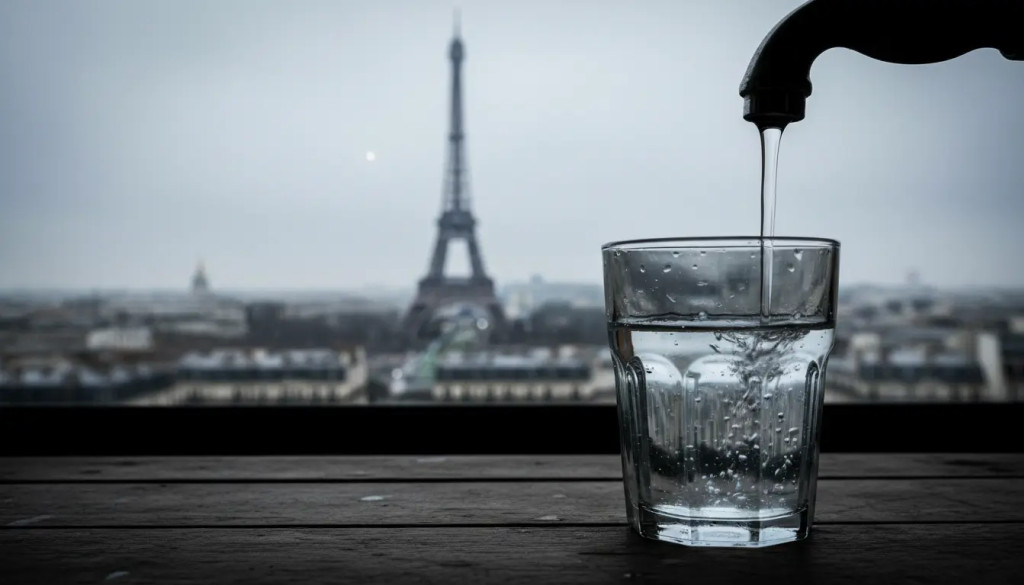
Yes, the water in France is contaminated. This is not alarmism; it is what the official figures say: 96% of the tested municipalities show traces of PFAS, those infamous "forever chemicals." 18 billion bottles of water were sold after treatments banned by law. And three-quarters of the pesticides found in our waters are classified as carcinogenic or endocrine disruptors. What is most troubling is that this information comes from official reports, senatorial inquiry commissions, and scientific analyses made public between 2024 and 2025. Here is what these revelations concretely imply for you and your family, and most importantly, how to protect yourself.
Water in France is contaminated: what the numbers say
We have been interested in water quality for decades. It is a subject that is particularly close to our hearts at Biovie because water is literally the foundation of everything: our nutrition, our hygiene, our vitality. And when we start to dig into this subject, frankly, what we discover is chilling.
In France, we are told that tap water is "the most monitored food item." This is true on paper. However, when we look more closely, we realize that the controls are far from covering all the pollutants present, that the standards do not take into account the cocktail effects (the interaction between several pollutants at low doses), and that some networks have simply never been tested for PFAS before January 2026, when monitoring became mandatory. If you want to understand why filter tap water has become indispensable, the following figures are telling.
Specifically, three major scandals came to light between 2024 and 2025. Three distinct issues, but they converge towards the same concerning conclusion: our water is not as safe as we are led to believe. And the good news is that solutions do exist. But before discussing them, let's look at the facts.
Scandal No. 1 - Bottled Water Fraud Revealed in 2024
Which water brands are affected ?
It was Le Monde and Radio France that exposed the affair in January 2024, and the follow-up was documented by a Senate inquiry commission in May 2024. The brands involved are not small, obscure brands. We are talking about Perrier, Vittel, Contrex, Hépar, San Pellegrino from the Nestlé group, and Cristaline, Saint-Yorre, Vichy Célestins from the Alma group.
18 Billion Fraudulent Bottles: What the Government Concealed
The figure is staggering: 18 billion bottles were sold after undergoing prohibited treatments for natural mineral waters, including the use of activated carbon filters and UV lamps. These treatments are perfectly allowed for tap water, but they are strictly prohibited for mineral waters, which are regulated to be naturally pure at the source. By using these processes, the manufacturers simply sold treated water at a high price, passing it off as naturally pure water.
This fraud was systemic and dates back to 2005 according to the Senate report. What is particularly shocking is that the Élysée was allegedly informed of the situation as early as 2022, and Nestlé's lobbying is documented in the Senate report. The revenues generated by this fraud are estimated at 3 billion euros by Mediapart.
The consequences are already visible: Perrier sales have dropped by 14% since the revelations, and on July 10, 2025, the headquarters of Nestlé France was raided by the authorities.
Bottled water or tap water: which one to choose today ?
Franchement, after these revelations, trust is broken. Bottled water is clearly not the guarantee of purity that we were sold. And I'm not even talking about the issue of microplastics contained in plastic bottles, which is a whole other topic but adds to the picture. What is certain is that it is becoming essential to regain control over the quality of the water we drink, and the domestic filtration appears to be the most reasonable path.
Scandal No. 2 - PFAS, eternal pollutants in your glass
What are PFAS and why are they dangerous ?
PFAS, or per- and polyfluoroalkyl substances, are a group of chemical compounds created by industry with a formidable characteristic: they are almost indestructible. Hence their nickname "forever pollutants." They are found in non-stick coatings, food packaging, water-repellent textiles, firefighting foams, and a multitude of industrial products.
The problem is that these substances accumulate in the environment and in our bodies. They do not degrade, or do so extremely slowly. Recent scientific studies associate them with thyroid disorders, fertility issues, cancers, and disruptions of the immune system.
96% of tested municipalities contaminated: the official figures
The figure is staggering: according to cross-analyses by Anses and independent studies published between 2024 and 2025, between 92 and 96% of the French municipalities tested show traces of PFAS in their drinking water.
To understand properly, the French regulatory standard set for 2026 is 0.1 µg/L. The national average rate measured is 0.024 µg/L according to data from the ministry relayed by Selectra in December 2025. So on average, we are below the standard. But the devil is in the details: 24 networks exceed this standard, and the record is held by the commune of Louppy-sur-Loison with a rate of 3,100 µg/L, which is 31 times the standard. These figures are alarming.
Monitoring of these substances in drinking water only became mandatory in France on January 1, 2026. This means that for decades, people drank this water without even knowing what it contained. In the face of these eternal pollutants, the activated charcoal is one of the filtration solutions most studied by the scientific community.
Map of the regions most affected by PFAS
The BRGM published a national map of PFAS contamination in July 2025. And in October 2025, Générations Futures, in partnership with Data For Good, launched the tool "Dans mon eau" ("In My Water"), which allows anyone to check the quality of their water by simply entering their address.
The most affected regions are the Grand Est (notably the Ardennes, with communes such as Louppy-sur-Loison, Villy, Juvigny-sur-Loison), Nord-Pas-de-Calais marked by historical industrial contamination, Île-de-France with persistent underground pollution, the PACA region, and the Lyon area near chemical industries. In the Ardennes and Meuse, 17 communes are particularly affected, impacting approximately 3,500 people.
Scandal No. 3 - Pesticides: The Invisible Contamination That Persists
Three-quarters of the detected pesticides are carcinogenic or endocrine disruptors.
Here is a figure that should concern everyone: according to Générations Futures, three-quarters of the pesticides detected in drinking water in France are classified as carcinogenic or endocrine disruptors. About 300 pesticide substances are currently being tested in analyses, and the results are far from reassuring, particularly in the agricultural regions of the North, the Paris basin, and the West.
Chloridazone: banned since 2020, still in your water
It may be the most telling illustration of the persistence of these pollutants. Desphenyl chloridazone, a metabolite of chloridazone (an herbicide used in beet cultivation), has been banned in France since 2020. And yet, in 2025, Franceinfo reports that it is still detected in many water catchments. These molecules are so stable that they persist in soils and groundwater for years, even decades, after their ban.
It is exactly the same phenomenon as with PFAS: these substances were used massively for years without concern for their long-term impact, and today, we are paying the consequences. And when we know that current standards do not take into account cocktail effects, meaning the interaction between several pollutants present simultaneously at low doses, we can grasp the magnitude of the problem.
Is my water affected? How to check in 2 minutes
Concretely, here is how you can check the quality of your water in just a few clicks. The "Dans mon eau" tool, developed by Générations Futures in partnership with Data For Good, is available for free on dansmoneau.fr. You enter your address and you get the official analysis results for your municipality, covering five types of pollutants: pesticides, PFAS, nitrates, CVM, and perchlorates. It's simple, quick, and frankly, I encourage you to do it. Aurélie and I did it immediately and it reassured us in our choice of filter our water at home.
The concrete health risks for your health
Effects of PFAS on the body (studies 2024-2025)
I am not going to give you a toxicology lesson, but it seems important to understand why these contaminants pose a real health problem. PFAS accumulate in our bodies over time. The most recent studies (2024-2025) associate them with thyroid disorders, fertility issues in both men and women, an increased risk of certain cancers, and a weakened immune system. Their main characteristic is precisely that they do not degrade: they remain in our bodies for years.
Endocrine disruptors: the danger of repeated low doses
What makes endocrine disruptors particularly insidious is that they act at minuscule doses. Unlike a classic poison where "the dose makes the poison," endocrine disruptors can have effects at very low concentrations, and these effects are not proportional to the dose. This is known as non-monotonic effects. In other words, just because your water is "within the norm" doesn't mean you are protected, especially if you are simultaneously exposed to several of these substances through water, food, and the environment.
And that's where the problem lies: current standards assess each substance individually, never in combination with others. Yet in reality, our exposure is always multiple and simultaneous. This is precisely why we have also chosen to filter the shower water, because contamination does not only occur through the water we drink, but also through skin exposure to chlorine and pollutants.
After this observation, it would be easy to feel powerless. But in reality, concrete, accessible, and effective solutions exist. And that's the good news of this article.
Filtration technologies compared
There are several home filtration technologies, each with its strengths and limitations. Traditional filter pitchers primarily remove chlorine and improve taste, but their effectiveness is limited on pesticides and almost nonexistent on PFAS. Filters with activated charcoal, more efficient, are effective against pesticides, chlorine, and some organic compounds. Reverse osmosis offers very advanced filtration that removes the vast majority of contaminants, but it also removes beneficial minerals and wastes a lot of water. Gravity filtration systems, which combine activated carbon and colloidal silver, offer an excellent compromise: they effectively eliminate contaminants while preserving essential minerals, without requiring an electrical connection or network hookup.
Natural filtration: an accessible and ecological solution
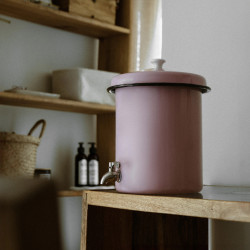
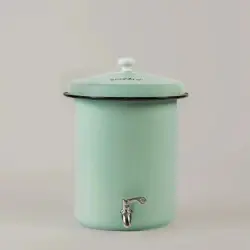
It was after trying numerous filtration systems for years that Aurélie and I discovered the system during two trips to Costa Rica. Ecofiltro. And frankly, it's the solution that convinced us the most. The principle is simple: a clay filtering pottery containing activated charcoal and colloidal silver, which operates by gravity, without electricity, without connection. The water is naturally purified and essential minerals are preserved.
What particularly appealed to us, beyond the efficiency of the filtration (up to 99.9% of contaminants removed), is the ecological and social dimension of the product. TheEcofiltro is manufactured in Guatemala with a genuine commitment to sustainable development and social involvement in the local community. The filtering pottery has a lifespan of two years, making it an extremely economical solution.
Let's do a simple calculation. A liter of bottled water costs between €0.30 and €0.50. A liter of filtered water with the Ecofiltro costs about €0.02. Over a year, for a family of three people consuming two liters per day each, the savings are considerable. Not to mention the hundreds of plastic bottles avoided.
Opt for an organic, healthy and chlorine-free shower thanks to the integral water filter without cartridges with retro-cleaning system. Filtration and dynamization., 20
products
Our recommendations for healthier water on a daily basis
Beyond filtering drinking water, here are some concrete actions we have adopted and that I recommend to you. First, check the quality of your water on dansmoneau.fr. Then, if you do not yet have a filtration system, investing in a gravity filter is, in our opinion, the best balance of quality, efficiency, and ecology. Also consider the water in the shower, as contamination does not only affect the water we drink; it also occurs through the skin and the inhalation of chlorinated vapors - we have also tested a anti-chlorine shower filter that makes a real difference. And don't forget that quality filtered water is also the foundation of a good living diet: it's what we use to soak our sprouting seeds, make our juices, our fermentations, our Kombucha. To go further, thehydrogenated water is also an interesting addition to energize the water once filtered.
Here, this article is dense, but the subject deserves it. Water is the foundation of our health, and as a player in the organic and living food sector since 2007, we have a responsibility to clearly inform you about what is really in the water we drink every day. The situation is concerning, but it is not hopeless. Solutions exist; they are accessible, effective, and environmentally friendly. It is up to each of us to take back control over the quality of our water.
Protect your water today.Discover the Ecofiltro, the natural filtration system that removes pesticides and chlorine while preserving essential minerals.
FAQ - Your questions about contaminated water in France
Is tap water contaminated in France ?
Yes, according to the official analyses for 2024-2025, a large majority of French municipalities show traces of contaminants such as PFAS, pesticides, and nitrates. The level of contamination varies depending on the regions and the type of pollutant. You can check the quality of your water on dansmoneau.fr.
Which bottled water brands are contaminated ?
The brands of the Nestlé group (Perrier, Vittel, Contrex, Hépar, San Pellegrino) and the Alma group (Cristaline, Saint-Yorre, Vichy Célestins) were subjected to prohibited treatments revealed in 2024. The senatorial inquiry commission documented 18 billion bottles affected since 2005.
What are PFAS and why are they dangerous ?
PFAS (per- and polyfluoroalkyl substances) are nearly indestructible chemical compounds, hence their nickname "forever pollutants." They accumulate in the body and are associated with thyroid disorders, cancers, and fertility issues. Water monitoring has been mandatory in France since January 2026.
How to know if my water is polluted ?
Use the free tool "Dans mon eau" on dansmoneau.fr, developed by Générations Futures and Data For Good. Enter your address and you will get the official analysis results for your municipality. Five types of pollutants are monitored: pesticides, PFAS, nitrates, CVM, and perchlorates.
How to filter PFAS and pesticides from tap water ?
Filters to activated charcoal are effective against pesticides and chlorine. For PFAS, gravity filtration systems combining activated carbon and colloidal silver, or reverse osmosis, offer the best results. Natural gravity filtration type Ecofiltro Combine efficiency and environmental respect, while preserving the essential minerals in the water.
Is bottled water safer than tap water ?
Not necessarily. The 2024 scandals revealed that many bottled waters underwent prohibited treatments. Additionally, plastic bottled water can contain microplastics. Properly filtered tap water is often a better option, both for health and for the environment and the wallet.
What are the health risks of pesticides in water ?
According to Générations Futures, three-quarters of the pesticides detected in water are classified as carcinogenic or endocrine disruptors. Chronic exposure, even at low doses, can affect the hormonal system and fertility. It is the daily repetition of these micro-exposures that poses a problem, especially since the cocktail effects between different substances are not considered by current standards.







.webp)