

Summary
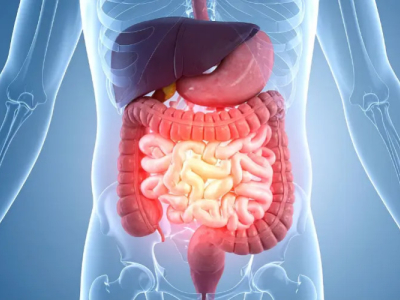
Honestly, do you wake up with that heavy feeling in your stomach? That unpleasant sensation that your body is... burdened? (Yes, I know, it's not glamorous, but it's the reality for one in two French people EVERY MORNING according to the latest epidemiological studies). Constant bloating, low energy, sluggish digestion... it prevents you from living normally.
In this quest for quickly regained digestive comfort, the Blond psyllium emerges as a particularly interesting natural solution: a soft plant fiber, accessible, and whose effectiveness is documented by numerous scientific studies.
Here is what we are going to explore together: what the organic blonde psyllium, how it works concretely in your intestines, and especially how to use it in an intestinal detoxification protocol (with precise dosages, not just vague advice). We will also address usage precautions, because transparency is essential when it comes to health.
What is blond psyllium ?
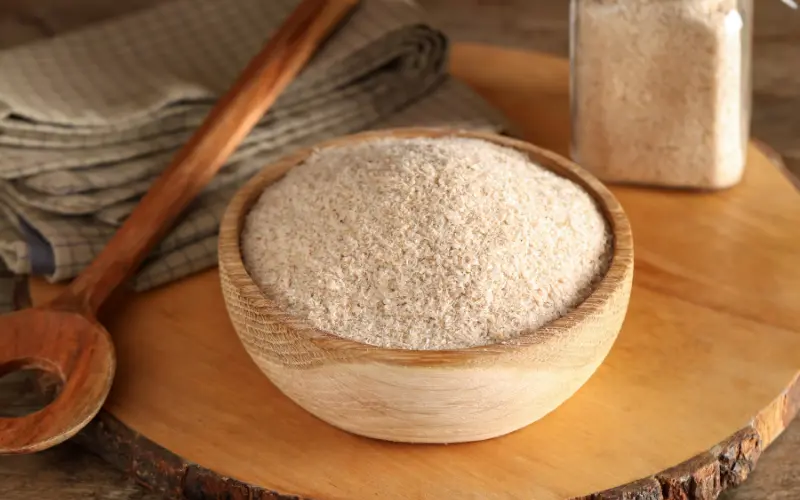
The Blond psyllium (Plantago ovata), it is this small seed originating from India that we should all have in our cupboards (and I choose my words carefully). Its husk contains 88% soluble fibers — one of the highest concentrations in the plant kingdom.
These fibers are primarily composed of mucilages, capable of absorbing up to 8 to 14 times their weight in water. And now, you might say: "Yes Eric, but why is that so important?" Well, this hygroscopic property is exactly what makes the entire effectiveness of the Blond psyllium on your intestinal transit.
Blond psyllium vs black psyllium: the crucial difference
Honestly, the distinction is really important because their effects differ significantly. The Blond psyllium contains 70 to 85% soluble fibers (gentle action), while black psyllium has the opposite ratio with more insoluble fibers (can irritate). Aurélie tested it two years ago, result: bloating for 3 days. That is why we only recommend the Blond psyllium at Biovie for a gentle intestinal detoxification.
Why 88% soluble fibers is exceptional
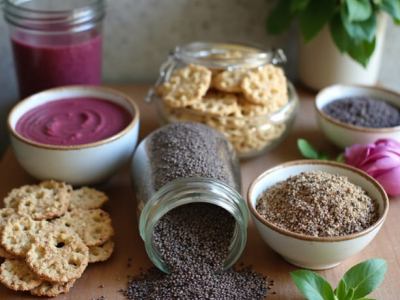
The organic blonde psyllium stands out clearly from other sources: its oat bran (~50%), chia seeds (~40%), wheat bran (5%). This exceptional concentration explains why 5 to 10 grams per day are sufficient to achieve measurable effects. The French consume on average 18-20g of fiber per day, while ANSES recommends 25-30g — the psyllium effectively fills this gap.
The 8 Scientifically Proven Benefits of Blond Psyllium
1. Constipation: natural relief in 3-7 days
The Constipation Chronic affects 15 to 20% of the French population. Chemical laxatives often create a dependency. The Blond psyllium acts differently: its mucilages absorb water, increase the volume of the stool, and give it a softer consistency.
A meta-analysis published in 2011 in theAmerican Journal of Clinical Nutrition (16 studies, 500+ participants) show that a supplementation of 10g/day significantly increases bowel movement frequency and reduces abdominal pain. The effects become noticeable between the 3rd and 7th day of regular intake.
2. Diarrhea: regulation by absorption of excess water
Here is a lesser-known but fascinating benefit: the Blond psyllium also regulates diarrhea by absorbing excess water in liquid stools. Specifically, it acts as a bidirectional regulator: it softens stools that are too hard AND solidifies stools that are too liquid — exactly what is needed for digestive troubles alternates.
3. Cholesterol: reduction of 15-20% in 8 weeks
The EFSA has officially recognized that the Blond psyllium contributes to maintaining a rate of cholesterol normal blood. A study of theAmerican Journal of Clinical Nutrition (2000) shows that a supplementation of 10g/day for 8 weeks reduces LDL cholesterol by 7% and total cholesterol by 4-5%. For hypercholesterolemic individuals, the reductions reach 15-20%.
4. Blood Sugar: Stabilization of Blood Sugar Levels
The frost formed by the Blond psyllium slows down the digestion of carbohydrates and the absorption of glucose, preventing glycemic spikes. A meta-analysis of 35 studiesThe American Journal of Clinical Nutrition, 2015) demonstrates that the more your Blood sugar is unbalanced, the more the psyllium can help stabilize it.
5. Weight loss: natural appetite suppressant effect
If you are looking to lose a few pounds, the Blond psyllium can really help you. The gel formed in the stomach slows gastric emptying, prolonging satiety. Obesity Reviews (2012) shows that the intake of psyllium before meals significantly reduces spontaneous caloric intake and promotes a weight lossProgressive.
6. Intestinal detoxification: elimination of toxins
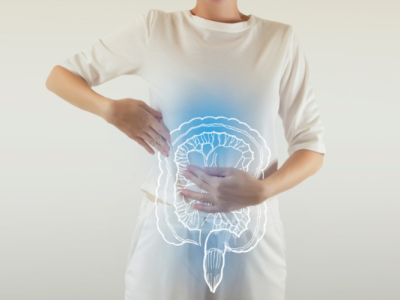
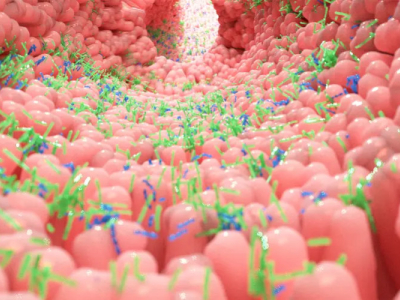
Imagine a small, soft, and damp brush sliding along your intestines. The gel of Blond psyllium catches food debris, stagnant mucus, stuck residues — and carries everything out. It's like mopping a dusty hallway. Its gentle mechanical action is enough for a Intestinal cleansing effective surface.
7. Microbiota: nourishing prebiotic effect
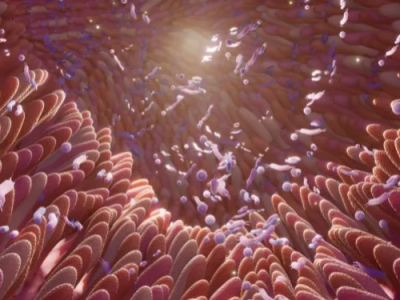
The fibers of the Blond psyllium are partially fermented by the beneficial bacteria in the colon, nourishing your gut microbiota. This fermentation produces butyrate, which nourishes the cells of the intestinal wall. A systematic review (Nutrients, 2018) confirms the prebiotic effect: it promotes the proliferation of bifidobacteria and lactobacilli.
8. Bloating: Gradual reduction of discomfort
Yes, but with nuance (total transparency): during the first 5-10 days, the psyllium can temporarily increase the bloating during the adaptation of the microbiota. After this period, it effectively reduces bloating and deflates the stomach by regulating transit and reducing excessive fermentation.
Instructions for use and dosage of blond psyllium
Gradual dosage according to your goal
Error #0 (yes, the one I made myself like a beginner): I started right away with 2 tablespoons on the first day. The result? My stomach looked like a soccer ball. Aurélie looked at me with her "I warned you" expression. So honestly, listen to me: start SLOWLY.
Recommended progressive dosage :
- Week 1 : 2.5g (½ tablespoon) once a day in the morning on an empty stomach
- Week 2 : 5g (1 tbsp) 1x/day or 2.5g 2x/day
- Week 3+ :
- Constipation : 5-10g/day
- Intestinal detox : 10-15g/day
- Cholesterol/blood sugar : 10-15g/day (divided before meals)
- Weight loss : 5-10g, 30 minutes before the 3 main meals
- Interview : 5-7g/day continuously
The 3 golden rules to NEVER break
Rule #1: 1 dose = 250 ml of water minimum
Non-negotiable. If you take 5g of psyllium, you drink AT LEAST 250 ml of water immediately. And ideally, you add another glass within the next hour. Why? Because without sufficient water, the psyllium can create a blockage in your esophagus or your intestines. Yes, it's serious.
Rule #2: Maintain a 2-hour distance with medications
The freezing of psyllium can coat your medications and reduce their absorption. So if you take regular medications (birth control pill, thyroid, diabetes...), it is IMPERATIVE to respect this interval. Pill in the morning at 7 a.m.? Psyllium at 9 a.m. at the earliest.
Rule #3: Slow progression = guaranteed success
I insist: never go directly to the maximum dose. Your microbiome needs to adapt gradually. Increasing too quickly = bloating Guaranteed for 2 weeks. Whereas a gentle progression = comfort from the 5th day.
How to take psyllium: step-by-step method
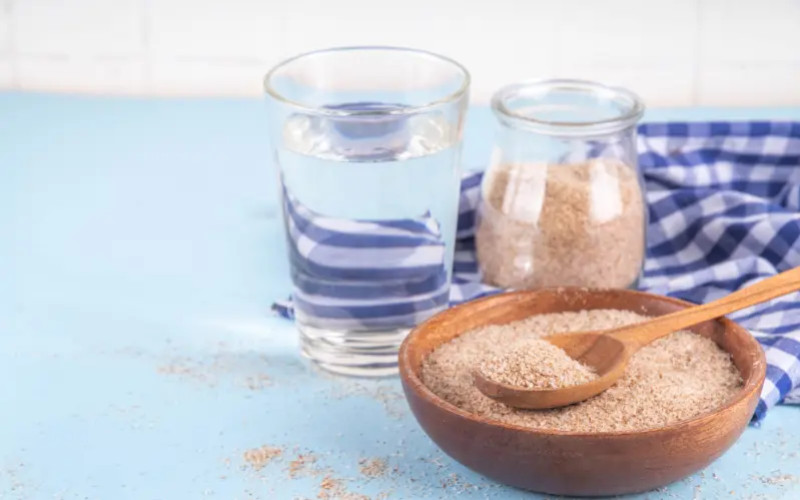
Classic method (powder in water) :
- Pour your dose of Blond psyllium in a large glass
- Add 250-300 ml of water at room temperature
- Stir vigorously with a spoon for 10-15 seconds.
- Drink immediately (before it solidifies!) in one go
- Fill the glass with water again, stir, and drink (to recover the psyllium stuck)
- Drink a second large glass of water within the next hour.
Variant: 4 Delicious Recipes with Psyllium
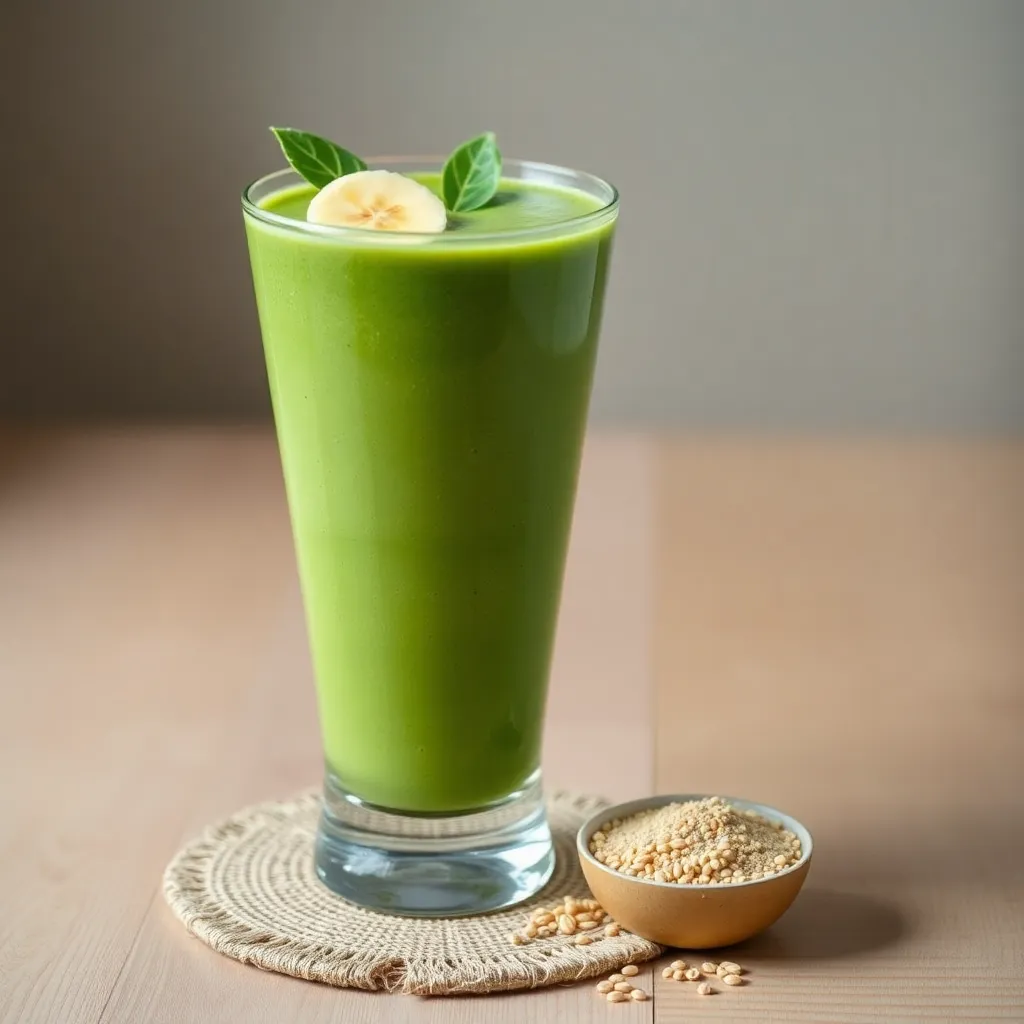
The green detox smoothie (my morning favorite) :
- 1 ripe banana
- 1 handful of fresh spinach
- 5g of Blond psyllium
- 250 ml of plant milk (almond or coconut)
- 1 tablespoon of sprouted seeds (optional, but great for enzymes)
Mix everything, drink immediately. The psyllium thickens the smoothie naturally, it's creamy and quite filling.
Chia-psyllium pudding :
- 250 ml of coconut milk
- 2 tablespoons of chia seeds
- 5g of psyllium
- 1 teaspoon of honey or maple syrup
- Vanilla or cocoa
Mix everything, let it rest for 30 minutes in the fridge. Perfect pudding texture for the breakfast. Add fresh fruits when serving.
The soup thickened with psyllium :
Here's a tip: instead of adding cream or starch to vegetable soups, incorporate 5g of psyllium at the end of cooking if it's a cooked soup and at the end of blending if it's a raw soup. Result: creamy texture, increased satiating effect, and as a bonus, your daily fiber intake.
Psyllium-date energy balls :
- 200g of pitted Medjool dates
- 100g of cashew nuts
- 2 tablespoons of psyllium
- 2 tablespoons of raw cacao
- 1 pinch of salt
Mix everything in the food processor, form into balls, roll in shredded coconut. Keeps for 1 week in the fridge. 2 balls = your dose of psyllium + a healthy snack.
Best time to take psyllium
- Constipation In the morning on an empty stomach + 1 glass of hot lemon water (stimulates peristalsis)
- Intestinal detox : In the morning on an empty stomach + in the evening 2 hours after dinner
- Cholesterol/blood sugar : 30 minutes before the 3 main meals (to capture fats and sugars)
- Weight loss : 30 minutes before each meal (maximum appetite suppressant effect)
- General maintenance : In the morning on an empty stomach (the most practical and effective)
Intestinal detox protocol with blond psyllium: 21 days for a deep cleanse
Honestly, if you really want to feel the Benefits of psyllium For your digestive system, a structured 3-week protocol is ideal. Not too short (only superficial effects), not too long (risk of boredom). Here's how to proceed.
Phase 1: Adaptation (Days 1-7)
Objective : Gradually get your microbiota used to it, avoid bloating.
Daily protocol :
- Morning : 2.5g (½ tbsp) of Blond psyllium + 300 ml of water on an empty stomach
- Hydration : At least 1.5L of water spread throughout the day
- Food : Start reducing refined sugars and processed products
Normal signals :
- Light intestinal gurgling (microbiota adaptation)
- Slightly larger stools from day 3-4
- Possible prolonged feeling of fullness after meals
Warning signals (adjust the protocol) :
- Significant persistent bloating > 3 days → Reduce to 1.5g/day
- Abdominal pain → Check hydration (add 500 ml of water)
- Aggravated constipation → Insufficient water, increase to 2L/day
Phase 2: Intensification (Days 8-14)
Objective : Deep clean, mobilize stagnant residues.
Daily protocol :
- Morning : 5g (1 tbsp) of psyllium + 300 ml of water on an empty stomach
- Evening : 5g (1 tbsp) of psyllium + 300 ml of water, 2 hours after dinner
- Hydration : Minimum 2L of water/day (non-negotiable)
- Food : Favor fresh or steamed vegetables, fresh fruits, whole grains
Recommended optimizations :
- Add 1 tablespoon of virgin coconut oil in the morning (lubricates the transit)
- Incorporate natural probioticskefir, raw sauerkraut)
- Drink 1 glass of warm lemon water upon waking (before the psyllium)
Expected effects :
- Regular and predictable transit (usually in the morning)
- Well-formed stools, easy to pass, more voluminous
- Flatter stomach, reduced bloating
- Improved energy (less post-meal fatigue)
Phase 3: Stabilization (Days 15-21)
Objective : Consolidate the achievements, prepare the exit from the protocol.
Daily protocol :
- Morning : 5g of psyllium + 300 ml of water
- Noon : 2.5g of psyllium (if needed, according to comfort)
- Hydration : Maintain 2L/day
- Food : Continue healthy eating, gradually reintroduce eliminated foods
End of treatment report (Day 21) :
- Standardized and regular transit ?
- Bloating disappeared or significantly reduced ?
- Improved energy ?
- Possible weight loss (1-3 kg possible) ?
After the protocol: what to do next ?
Option 1: Complete stop (2-week pause)
Recommended if you want to test the autonomy of your transit. Observe how your body behaves without psyllium. If transit becomes difficult again, it might have been too soon.
Option 2: Light maintenance (5g/day)
My personal recommendation: Continue with a moderate dose in the morning on an empty stomach. This maintains the acquired benefits without creating dependency. Take a break for 1 week every 2-3 months.
Option 3: Permanent integration into the diet
The psyllium becomes a staple food, like vegetables or grains. Ideal if you have chronic constipation, high cholesterol, or simply if you want to maintain optimal digestion as you age.
Maximize the detox effect: winning synergies
- Psyllium + Probiotics The psyllium Feeds the good bacteria, probiotics strengthen them. Perfect synergy.
- Psyllium + Digestive Enzymes The psyllium clean, the Enzymes optimize digestion. upstream. Excellent combo if you have trouble digesting.
- Psyllium + Spirulina The psyllium detoxifies, the spirulina Remineralizes and alkalizes. Great for a complete detox.

- Psyllium + Activated Charcoal : Attention, to be done occasionally (3-5 days max). The coal captures toxins, the psyllium evacuates them. But charcoal ALSO captures nutrients, so its use is limited.
Powder or capsules: which form of psyllium to choose ?
Here is a question that I am systematically asked, and the answer really depends on your profile and your goals. Full transparency: both forms are effective, but they are not suitable for the same uses.
Psyllium powder: raw power
Advantages :
- Flexible dosage : You adjust precisely according to your needs (2.5g, 5g, 10g...)
- Faster action : The powder disperses in the water immediately.
- Culinary versatility : Can be integrated into smoothies, soups, yogurts, recipes
- Best value for money : Generally 30-40% cheaper than capsules
- Optimal moisturizing effect : You inevitably drink water with it, so hydration is guaranteed.
Disadvantages :
- Unpleasant texture : Some find it gelatinous, slimy (honestly, it's true)
- Necessary preparation : You have to mix it, drink quickly, it's not very convenient on the go.
- Neutral taste but not pleasant : Not bad, but not good either
For whom ?
- Do you want a intestinal detoxIntensive (high doses required)
- You are looking for the best value for money.
- You are comfortable with the daily preparation.
- Do you want to join the psyllium in your recipes
Psyllium capsules: the convenience of portability
Advantages :
- Zero preparation : You swallow with a large glass of water, it's done.
- Easily transportable everywhere : Office, travel, restaurant... no problem
- No unpleasant texture : You don't taste anything, you don't feel anything
- Standardized dosage : Each capsule contains a precise dose (usually 500-700 mg)
Disadvantages :
- Higher cost : Approximately 30-40% more expensive than the powder at an equivalent dosage
- High doses = many capsules : For 10g/day, that means taking 14 to 20 capsules.
- Potentially slower action : The capsules must first dissolve
- Risk of insufficient hydration : We tend to drink less water than with the powder.
For whom ?
- Do you travel often or are you rarely at home?
- You really hate the texture of the powder.
- You want moderate maintenance use (5-7g/day max)
- You prioritize practicality over price.
Which one to choose ?
Honestly? The two:
- At home : Powder in your morning smoothie (convenient, economical, effective)
- On the move : Capsules in your bag (office, travel, restaurant)
It allows you to maintain regularity without ever missing a dose, while optimizing your budget. The powder jar lasts 2-3 months, and I always have a bottle of capsules as a backup.
Practical equivalences powder/capsules
- 5g of powder = approximately 7-10 capsules (depending on capsule dosage)
- 10g of powder = approximately 14-20 capsules
- 15g of powder = approximately 21-30 capsules
You understand why capsules are impractical for intensive treatments: swallowing 30 capsules a day is just not sustainable.
Quality criteria to check (powder AND capsules)
- Organic certification : Guaranteed pesticide-free
- 100% husks : No mixed whole seeds (less effective)
- Traceable origin : India or Pakistan (historical cultivation areas)
- Purity > 95% : Check for the absence ofAdditives, Fillers, anti-caking agents
- Opaque packaging The psyllium fears the light
Precautions for use and contraindications of blond psyllium
Here is the part where I need to be 100% transparent (and it's important). The Blond psyllium is generally very safe, but there are situations where you need to be cautious, or even avoid it completely.
Absolute contraindications (DO NOT take psyllium)
- Intestinal obstruction (diagnosed or suspected): The psyllium could worsen the blockage
- Esophageal, gastric, or intestinal stenosis : Narrowing of the digestive tract
- Fecaloma : Accumulation of very hard stools in the rectum
- Difficulty swallowing (dysphagia): Risk of blockage in the esophagus
- Appendicitis (suspected or diagnosed)
- Known allergy to psyllium : Rare but existent (cross-reactions with grasses)
If you are in one of these situations, discussion mandatory with a doctor BEFORE any intake.
Special precautions (use possible but under mandatory medical supervision)
- Insulin-dependent diabetes The psyllium may alter blood sugar levels, adjusting insulin may be necessary
- Swallowing disorders : Take the psyllium already mixed in a thick liquid, never dry
- Active inflammatory bowel diseases (Crohn's disease, ulcerative colitis in flare-up): May cause further irritation
- Pregnancy and breastfeeding: Generally safe, but start with low doses (medical advice recommended)
- Children < 6 years old : Use not recommended without pediatric advice
- Elderly people : Start with very low doses, monitor hydration
Important drug interactions
The psyllium can reduce the absorption of certain medications. Minimum 2-hour distance (ideally 3-4 hours) with:
- Cardiac medications : Digoxin, antiarrhythmics
- Anticoagulants : Warfarin (the psyllium can affect the INR)
- Thyroid hormones : Levothyroxine (reduces absorption)
- Lithium : Psychiatric medication
- Carbamazepine : Antiepileptic
- Oral contraceptives : Contraceptive pill (possibly reduced absorption)
- Diabetes medications : Insulin, oral antidiabetics (risk of hypoglycemia)
If you are on chronic medication, ALWAYS seek the advice of your doctor or pharmacist before starting the psyllium.
Possible side effects and solutions
Bloating and gas (especially weeks 1-2) :
- Cause : Adaptation of the microbiota to the influx of fibers
- Solution : Start with very low doses (2.5g), increase slowly over 3 weeks
- Tip : Taking probiotics simultaneously (improves tolerance)
Abdominal cramps :
- Cause : Dose too high or insufficient hydration
- Solution : Reduce the dose by half, increase the water to 2.5L/day
Aggravated constipation (paradoxical but possible) :
- Cause : Really insufficient hydration (the psyllium absorbs the available water)
- Solution : Drastically increase water intake (minimum 2L/day), temporarily reduce dosage
Diarrhea :
- Cause : Excessive dose for your digestive system
- Solution : Reduce the dose by half, stabilize for 1 week
Allergic reactions (rare) :
- Symptoms : Itching, hives, breathing difficulties, facial/throat swelling
- Action : IMMEDIATE STOP, urgent medical consultation if respiratory symptoms
The 5 fatal mistakes to absolutely avoid
Error #1: Taking dry psyllium
NEVER of psyllium in powder form directly into the mouth, even followed by water. Risk of suffocation or esophageal blockage. Always mix in water BEFORE swallowing.
Error #2: Waiting for it to set
If you let the mixture sit for 2-3 minutes, it becomes a very thick gel almost impossible to swallow. DRINK IMMEDIATELY after mixing.
Error #3: Underestimating hydration
250 ml of water per intake is the MINIMUM. Ideally 300-400 ml, plus an additional glass within the following hour. Otherwise, hello cramps.
Error #4: Taking psyllium at the same time as medications
Minimum 2-hour gap, otherwise you reduce the effectiveness of your treatments. It's silly to compromise your health for that.
Error #5: Continuing despite worrying symptoms
If you have intense abdominal pain, rectal bleeding, or if it doesn't improve after 3-4 days of adjustment, STOP and consult a doctor. Listen to your body.
Medical surveillance strongly recommended
Consult a healthcare professional BEFORE starting if:
- You have a history of serious digestive disorders.
- You take prescription medications (especially those listed above)
- You are over 70 years old.
- You are pregnant or breastfeeding
- You have unexplained digestive symptoms (pain, bleeding, weight loss...)
Psyllium blond vs ZenCleanz ONE: which one to choose for your detox ?
Honestly, it's THE question that comes up constantly. And here is my honest answer: the Blond psyllium and ZenCleanz ONE are not competitors, they are complementary. However, they do not meet the same needs or the same level of requirements in terms of detoxification.
The limitations of psyllium (let's be clear)
The Blond psyllium, it is fantastic for surface cleaning, regular maintenance, and regulating transit. BUT — and it's important to say this clearly — it CANNOT:
- Dissolve the mucoid plaque embedded in your intestines for years
- Act on others Emunctories (liver, kidneys)
- Chemically decompose ancient deposits
It's a bit like cleaning your kitchen with a sponge: effective for daily maintenance, but for stubborn stains, you need a powerful degreaser. There you go.
ZenCleanz ONE: The complete solution for an advanced detox
It is precisely there that ZenCleanz ONE makes perfect sense.
There where the psyllium acts mechanically (like a broom), ZenCleanz ONE acts enzymatically (like a powerful degreaser). The protocol contains enzymes specific agents capable of dissolving the encrusted mucoid plaque — something that the psyllium Alone cannot do it.
Psyllium + ZenCleanz ONE: the optimal synergy
Frankly, the ideal is not to choose, but to integrate them into a global strategy:
Recommended strategy :
- Daily : Psyllium for maintenance (5-7g/day)
- 2 times a year : ZenCleanz ONE treatments (spring + autumn) for deep enzymatic cleansing
This approach respects digestive physiology while optimizing the body's natural self-cleaning abilities.
Ready for a complete and advanced intestinal detox ?
The Blond psyllium is an excellent starting point, but if you're looking to go further with a complete enzymatic protocol, discover ZenCleanz ONE: the #1 detox solution to eliminate mucoid plaque and restore your intestines to like-new condition.
Discover the ZenCleanz ONE protocol →
FAQ: Your Essential Questions About Blond Psyllium
Is it good to take psyllium every day ?
Yes, take psyllium every day It is possible and beneficial, provided certain rules are followed. For maintenance use, a moderate dose of 5-7g/day can be maintained over several months. However, the precautionary principle suggests alternating periods of intake and rest (1 week every 2-3 months) to allow the digestive system to maintain its natural motility.
Why does psyllium help with weight loss ?
The psyllium does not "cause weight loss" in the strict sense, but facilitates the weight loss through several mechanisms. Its soluble fibers form a gel in the stomach that slows gastric emptying, prolonging satiety. This gel also stabilizes blood sugar levels and reduces cravings. Studies show that an intake of 5-10g of psyllium 30 minutes before meals can spontaneously reduce calorie intake by 10-15%. But be careful: it's a facilitator, not a miracle solution.
Is psyllium good for the liver ?
The psyllium has beneficial indirect effects on the liver. By capturing bile acids in the intestine, it forces the liver to synthesize new bile acids from blood cholesterol. By regulating transit, it also limits the intestinal reabsorption of toxins that would be sent back to the liver. It is an indirect support of liver function through theOptimization of elimination functions.
What are stools like when taking psyllium ?
Stools generally become larger, better formed, and easier to pass. They achieve an ideal consistency: neither too hard nor too soft (similar to a ripe banana, which is the medical reference!). The color may temporarily darken slightly, indicating that the psyllium leads to stagnant residues. If the stools become excessively large or pasty, it is a sign of an excessively high dose or insufficient hydration.
Why not take psyllium before sleeping ?
Several reasons advocate for taking it earlier in the day. The psyllium stimulates intestinal peristalsis, which can cause rumbling or an urge to have a bowel movement during the night. In people prone to reflux, taking it just before sleeping can promote acid reflux when lying down. The required hydration can also lead to nighttime awakenings. If you wish take psyllium In the evening, prioritize 2-3 hours. before bedtime.
Does psyllium reduce bloating ?
Yes, but with a temporal nuance. During the first 5-10 days, the psyllium can paradoxically temporarily increase the bloating during the adaptation of the microbiota. After this period, it effectively contributes to deflate the stomach by regulating transit, reducing excessive fermentation, and improving gas evacuation. The effect is particularly noticeable in people suffering from chronic constipation.
Is organic psyllium really necessary ?
The choice of organic blonde psyllium presents several tangible advantages. Conventional crops may contain pesticide residues. Certification biography guarantees the absence of these substances. Considering that the psyllium is consumed daily to support detoxification, it would be paradoxical to introduce chemical residues into it. The additional cost (20-30%) remains moderate compared to the benefits in purity.
Can psyllium be combined with probiotics ?
Not only is it possible, but it is highly recommended! The psyllium, as a prebiotic fiber, nourishes the probiotics that you ingest. The probiotics need substrate to multiply — the psyllium their supply of this fuel. Conversely, the probiotics improve tolerance to psyllium by optimizing its fermentation. The ideal is to take probiotics in the morning on an empty stomach, 15-30 minutes before the psyllium.
Conclusion: Psyllium, a Gateway to Sustainable Gut Health
Honestly, the Blond psyllium represents a natural, accessible, and scientifically validated solution to improve your digestive comfort. Its 88% soluble fiber content makes it one of the most concentrated sources available, with demonstrated effects on transit, cholesterol, blood sugar, and the microbiome.
For people discovering intestinal detoxification, the psyllium constitutes an excellent starting point. Its gentle action allows for concrete experimentation with the benefits of regular transit without the constraints of a complex protocol.
Nevertheless, and it is important to emphasize this with transparency, the psyllium presents inherent limitations in its mechanical mode of action. It does not contain enzymes capable of dissolving the encrusted mucoid plaque, nor active components for the other excretory organs.
It is precisely at this stage that approaches like ZenCleanz ONE make perfect sense. The ideal is not to choose, but to integrate them into a comprehensive strategy: the psyllium in regular maintenance + ZenCleanz ONE treatments twice a year for a deep cleanse.
This gradual approach respects digestive physiology while optimizing the body's natural self-cleaning abilities.
Whatever your approach, the key lies in consistency, gradual progress, and attentive listening to the signals from your body. Gut health is a fundamental pillar of overall well-being, and taking care of your gut is taking care of your vitality for the years to come.