


A morning ritual of striking simplicity, to adopt on an empty stomach for a gentle start to the day. Chlorella, rich in chlorophyll, pairs with soothing aloe vera water and an invigorating touch of lemon. A very simple tonic, which many women appreciate particularly during their period.
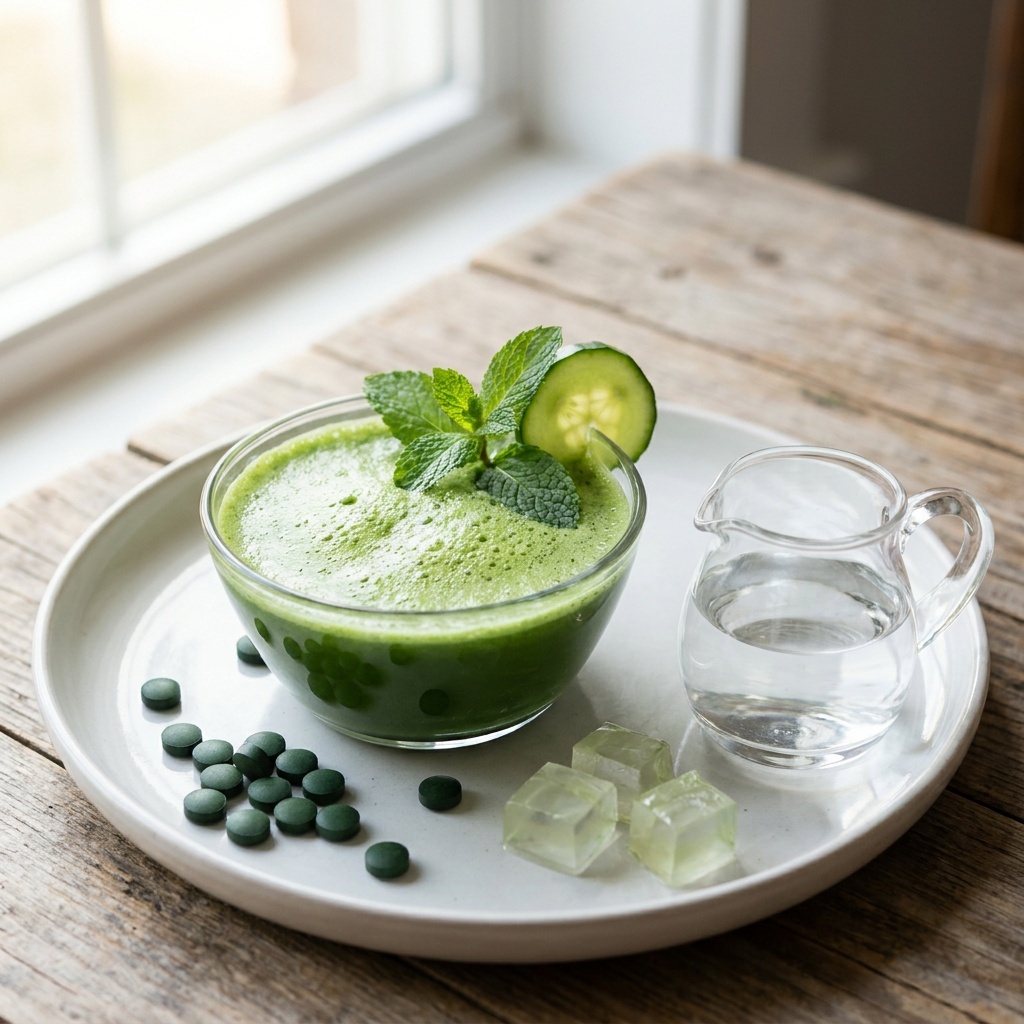
Morning chlorella tonic

Share this article
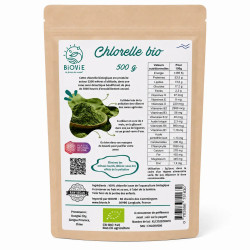
Ingredients
- 1 glass of filtered water
- 1/2 tsp chlorella powder
- A little aloe vera water
- The juice of a lemon wedge
Preparation
- Pour the filtered water into a large glass.
- Add the chlorella, the aloe vera water and the lemon juice.
- Stir well until the chlorella has dissolved completely.
- Drink on an empty stomach, as soon as you wake.
Tip
The taste of chlorella can be surprising at first: start with a small amount and increase it gradually, or add it to a smoothie to mask it better.
The full range Chlorella Algae
1 product
Discover the full range
FAQ: your questions about morning chlorella
Is it possible to take chlorella every day?
That is the most common use, including over long periods, among people in good health. The practical rule is to build up gradually: start with half a teaspoon, as here, and increase over one or two weeks if all goes well. Passing digestive discomfort — bloating, quicker transit — is common when starting too fast, and disappears when the dose is reduced. In case of anticoagulant treatment, autoimmune disease or pregnancy, the advice of a health professional is essential before making it a habit.
Is chlorella good for the liver?
It is one of the most widespread associations on the internet, but let us be clear: no health claim about the liver is authorised for chlorella in the European Union, and the available studies remain too limited to conclude. What can be said without error is that chlorella is a microalga rich in chlorophyll, protein and minerals, which fits well into a varied diet. For the rest, it is better to be wary of the 'detox' promises in circulation, and to talk to a professional if you have a liver condition.
Is chlorella effective at binding cadmium?
This question comes up often, driven by a few pieces of work carried out mainly in animals or in vitro, which observed a binding between the cell wall of chlorella and certain metals. To date, these results allow no conclusion transferable to humans, and no claim of this kind is authorised in Europe. An important point the other way round: microalgae concentrate what their growing medium contains. So choose a producer who publishes their heavy-metal analyses — that is the only genuinely actionable criterion.
Share this article