


The quality of tap water is a topic that people talk to me about more and more often. We have been filtering our water for years, and for me personally, since my first daughter Eva was born, and she is turning 30 this year-so well before the topic made headlines. We were almost considered eccentric at the time. And then suddenly, between the scandals about PFAS in tap water, reports on pesticides, and the new regulations of 2026, it has become the urgent issue of the moment.
So here it is, I wanted to clarify things for you. Because the reality is nuanced: The quality of tap water in France meets drinking water standards for more than 87% of distribution units., but it varies considerably from one city to another. Some municipalities have excellent water quality, while others exceed the limits for pesticides or PFAS. Can you drink tap water in France without worry? The answer really depends on your municipality.
In this article, I offer you a comprehensive ranking of tap water quality by city, a concrete guide to analyze the drinking water in your community in just a few minutes, and of course, solutions for those who want to go further in filtering their tap water.
How is tap water quality assessed ?
In France, tap water is one of the most monitored food items. However, the quality criteria are numerous and not always easy to decipher. Here is what you need to know about water quality in France in 2025-2026.
The 50+ parameters controlled by the ARS
The Regional Health Agencies (ARS) are responsible for monitoring the quality of tap water. And they don't do things halfway: more than 50 parameters are continuously checked. These include microbiological parameters (bacteria, viruses), chemical (pesticides, nitrates, heavy metals), physical (turbidity, color), and organoleptic (taste, odor) parameters. In practice, each distribution network undergoes about 300 checks per year. The ARS publishes the water quality by municipality on the website. sante.gouv.fr - it is the most detailed official source for verifying what is in your water.
The 5 essential criteria for the consumer
But in everyday life, you don't need to understand all 50 parameters. Here are the 5 that really matter for assessing the quality of your tap water:
- Microbiology : it is the number one criterion, and the good news is that more than 98 to 99% of the French population receives water that meets this standard.
- Pesticides and their metabolites : this is where it gets complicated, with 31.5% of networks containing detectable pesticides according to the Générations Futures report from August 2025. Tap water contaminated by pesticides mainly affects rural communities and intensive agricultural areas.
- PFAS (the infamous "forever pollutants"): a study by UFC-Que Choisir / Générations Futures detected PFAS in 29 out of 30 samples in January 2025. Research on PFAS in tap water has surged by 457% in one year - a sign that the issue is increasingly concerning.
- Nitrates : an old problem, especially in agricultural areas, and one that remains particularly concerning for infants
- Limestone : not dangerous to health per se, but it damages your devices and can dry out your skin. The Water hardness also varies from one municipality to another., it is a parameter to take into account
And it is precisely on the parameters that elude traditional treatment - pesticide residues, chlorine, fine particles - that a tap water filtration system like a ceramic fountain can make a difference in daily life.
The top 10 French cities with the best tap water
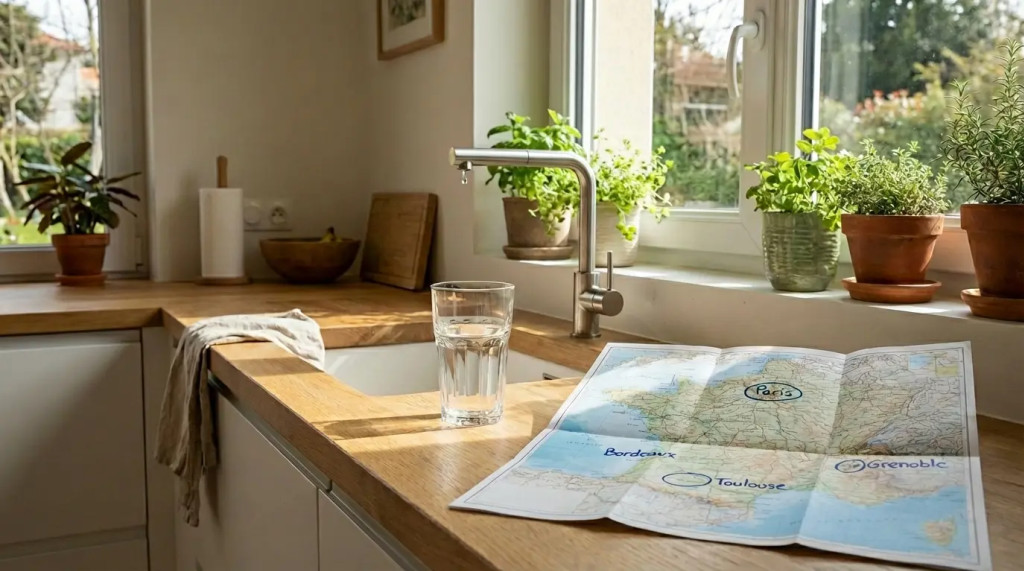
So, where can you drink the best water in France? Here is our ranking of tap water quality by city, based on data from ARS, UFC-Que Choisir, and Générations Futures:
- Marseille - source: Durance/Verdon - strength: treated with ozone, low pesticide content - drawback: medium hardness
- Toulouse - source: Pyrenees - strength: fresh water, low mineral content - drawback: some metabolites detected
- Clermont-Ferrand - source: volcanic - strength: naturally filtered by rocks - drawback: aging network on the outskirts
- Grenoble - source: Alpine aquifers - strength: minimally treated, naturally pure - drawback: limestone in certain areas
- Thonon-les-Bains - source: alpine - strength: exceptional purity - drawback: geographically limited
- Lyon - source: Rhône/aquifers - strength: efficient treatments - drawback: PFAS around Pierre-Bénite
- Bordeaux - source: groundwater - strength: natural protection of aquifers - drawback: some occasional exceedances
- Brest - source: Breton sources - strength: fresh water - drawback: agricultural pesticides upstream
- Lille - source: limestone aquifers - strength: general compliance - drawback: high hardness, historical pesticides
- Paris - source: Seine/Marne treated - strength: intensive monitoring - drawback: chlorine taste, emerging contaminants
Marseille - Durance water treated with ozone since 1981
If Marseille often tops the rankings for tap water quality by city, it is thanks to the combination of a quality source (the Durance and the Verdon) and ozone treatment implemented since 1981. Ozone is a powerful disinfectant that does not leave a residual taste, unlike chlorine. The result: water with very good parameters for pesticides and nitrates.
Toulouse, Clermont-Ferrand, Grenoble - the alpine and volcanic trio
These three cities benefit from a considerable natural advantage: their water sources are protected by geology. The volcanic water of Clermont-Ferrand is naturally filtered by basaltic rocks, Grenoble's water comes directly from Alpine aquifers, and Toulouse benefits from Pyrenean waters. Less treatment required means fewer chemical residues in your glass.
Thonon-les-Bains - naturally pure alpine water
It is a somewhat unique case: Thonon-les-Bains produces water so pure that it is also bottled. The tap water there is almost identical to mineral water. Honestly, it's a luxury that many municipalities would dream of.
Lyon, Bordeaux, Brest, Lille, Paris - compliant but caution required
These major cities generally offer water that meets standards, but with specific points of concern. In Lyon, the proximity of the Pierre-Bénite plant (PFAS production) has made headlines. The tap water quality in Paris is good in terms of health, but it's mainly the chlorine taste that bothers residents - 59% of French people would like a better taste for their tap water according to the Global Coolers 2025 survey. Personally, this is what led Aurélie and me to turn to tap water filtration a long time ago: not necessarily out of fear, but for taste comfort and as a precaution.
Other cities regularly mentioned
The ranking above covers the major cities, but other towns come up consistently when you look at quality reports. The common thread is obvious: almost all of them are mountain towns, or supplied by deep, protected aquifers, where the resource arrives with little contamination and therefore needs little treatment.
- Annecy - supplied by a lake reputed to be among the purest in Europe, minimal treatment
- Chambéry - protected aquifers, very low nitrate levels
- Évian-les-Bains and Thonon-les-Bains - mountain springs naturally filtered by rock
- Pau and Bayonne - water of Pyrenean origin, low agricultural pressure on the catchment areas
- Mulhouse - deep, well-protected groundwater
- Limoges - preserved surface water, little industrial pollution upstream
Conversely, what degrades water is almost never the town itself but its catchment area: intensive farming, industry upstream, or poorly protected wells. That is why two neighbouring towns can show very different results - and why you should always check the data for your own municipality, as explained further below.
The most problematic areas: where is the water of lower quality ?
Certain regions in France face multiple challenges regarding water quality. Here is the map of areas where tap water is contaminated - and rest assured, simple solutions exist.
The north and the Paris Basin - historical pesticides and perchlorate
The northern regions of France and the Paris Basin bear the burden of a historically intensive agriculture. Decades of chemical treatments have left traces in the groundwater, notably in the form of pesticide metabolites - these degradation by-products that persist for a very long time in the environment. It is one of the regions where tap water is most contaminated, and where municipalities show the most threshold exceedances. Tap water contaminated by pesticides in these municipalities is a structural problem that treatment plants struggle to completely resolve.
Intensive agricultural areas (Beauce, Picardy, inland Brittany)
Beauce, Picardy, and inland Brittany are particularly affected by pesticides in tap water. The August 2025 report from Générations Futures is unequivocal: 5.7% of the distribution units (or 1,377 units) are non-compliant for pesticides.. And this figure only accounts for regulated substances. The tap water quality map clearly shows these agricultural areas as the most affected - the rural municipalities in these regions are the ones that deserve your utmost attention.
Rural municipalities with 500-1,000 inhabitants - aging infrastructure
One often overlooked point: small rural communities sometimes have aging treatment infrastructures and limited means to modernize them. The water is less monitored there than in large urban areas, and threshold exceedances are more frequent. This is a real issue of danger related to tap water in these areas.
The PFAS zones (Pierre-Bénite, Villers-Saint-Paul)
PFAS, the infamous "forever chemicals," have become the hot topic of 2025-2026. Areas like Pierre-Bénite (Rhône) or Villers-Saint-Paul (Oise) are particularly exposed due to their proximity to industrial sites. The map of PFAS-contaminated water in France is expanding with each analysis - it's a subject we are closely monitoring at Biovie.
If your municipality appears in these areas, don't panic. : simple solutions exist, and that is precisely the subject of the rest of this article. A Comparison of home filtration systems can help you choose the solution suited to your situation.
The 5 contaminants to watch for in your water in 2026
Does your water look clear and odorless? That doesn't mean it's free of contaminants. Here are the 5 substances to be aware of in 2026, because some of them are not even regulated yet. Testing your tap water has become essential.
Pesticides and metabolites - 31.5% of networks affected
It is the figure that struck me the most in the Future Generations report of August 2025: Nearly one-third of French distribution networks contain detectable pesticides.. And yet, we are only talking about the substances that are being tested for - some metabolites are simply not monitored yet. Tap water contaminated by pesticides in rural communities remains the most widespread problem in France.
PFAS (forever pollutants) - the new regulations of January 1, 2026
Since January 1, 2026, the PFAS law no. 2025-188 imposes a threshold of 0.1 µg/L for all PFAS in drinking water. This is a significant advancement. However, the problem is that PFAS are extremely persistent in the environment - they are not called "forever pollutants" for nothing. PFAS in tap water have become the number one concern for the French: inquiries on this subject have surged by 457% in one year.
TFA (trifluoroacetic acid) - the invisible and unregulated contaminant
TFA is a particularly concerning case. It is a degradation byproduct of certain fluorinated pesticides and refrigerant gases. It is present in a large portion of French waters, but it is not yet regulated. In reality, it is a blind spot in monitoring, and this issue will need to be closely followed in the coming months.
Nitrates - a threat to infants
Nitrates are a "classic" water pollutant in France. While the levels are generally controlled, they remain particularly concerning for infants, as they can cause methemoglobinemia (a reduction in the blood's ability to carry oxygen). This is an additional reason for young parents to pay attention to the quality of their community's tap water and consider a filtration solution.
Microplastics - 78% of bottled water contains them
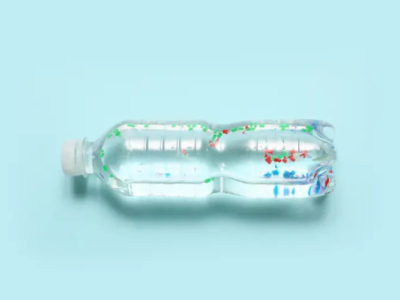
And here's the irony: those who think they are protecting themselves by buying bottled water are not necessarily better off. According to 60 Millions de consommateurs (2025), 78% of bottled water contains microplastics.. The concerning presence of microplastics in the water is a problem that affects both bottled water and tap water. A ceramic filter like the Ecofiltro retains fine particles and chlorine, helping to reduce exposure to these contaminants on a daily basis - while avoiding the plastic from bottles.
Discover how Ecofiltro ceramic filtration works → Learn more
How to check the water quality in your municipality in 4 steps
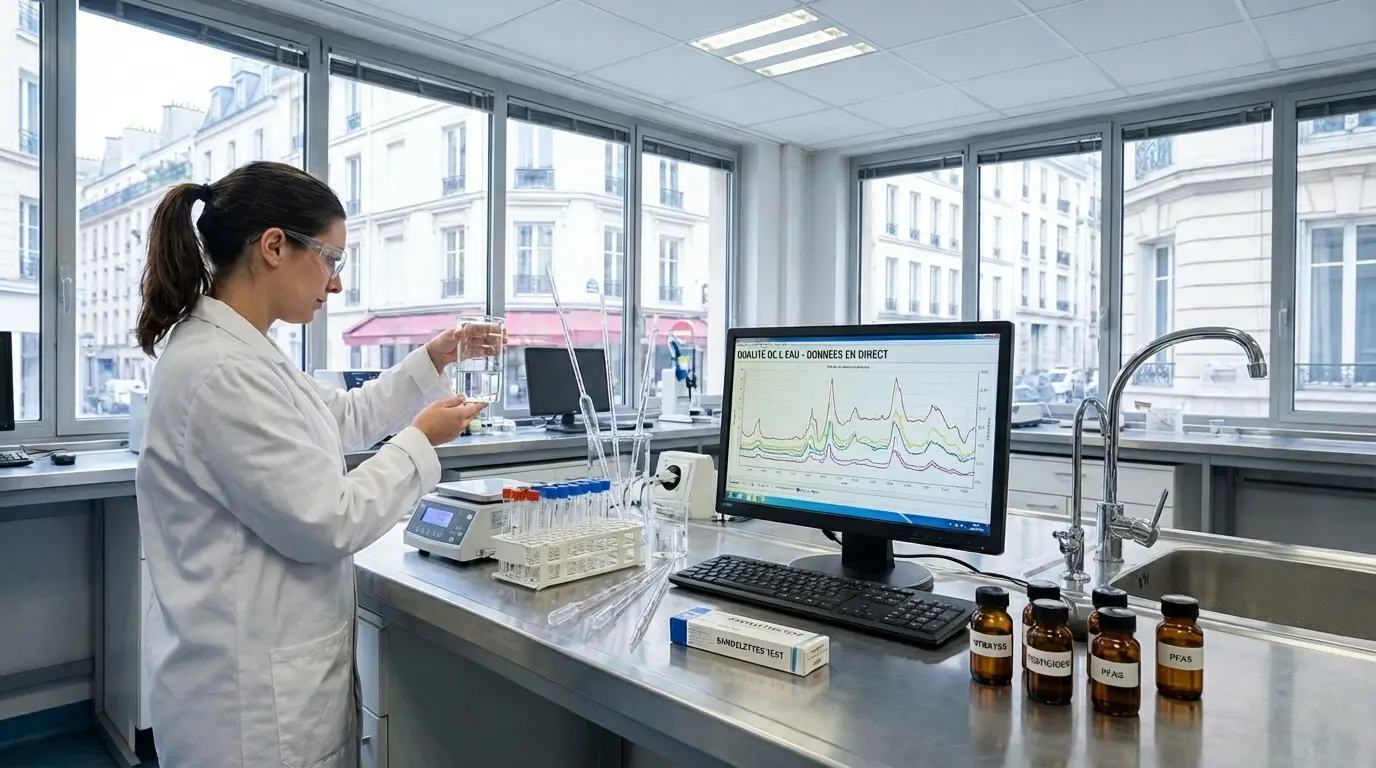
Here's how to check the quality of your water in just a few minutes. Do you want to know if the tap water in your home is dangerous? It's free and takes less than 5 minutes.
Step 1 - Check the UFC-Que Choisir map
This is the simplest starting point to learn about the quality of tap water in your city. Visit quechoisir.org, enter your municipality, and you will receive an overall rating as well as a detailed breakdown by parameter. This tap water quality map is free and very well made - it's the tool I recommend first.
Step 2 - check for pesticides and PFAS on dansmoneau.fr
The "Dans Mon Eau" site by Générations Futures is complementary: it specifically focuses on pesticides and PFAS. The "Dans Mon Eau" map is regularly updated and provides you with a precise view of the contaminants detected in your municipality. It is currently the best tool for visualizing the map of contaminated water in France, region by region.
Step 3 - Check the ARS report for your municipality
To go further, the site sante.gouv.fr Publishes the detailed results of health inspections. The ARS provides the analysis of drinking water by municipality with all the measured parameters. It's more technical, but it's the most comprehensive official source for knowing the water quality by municipality in your region.
Step 4 - Evaluate your water daily
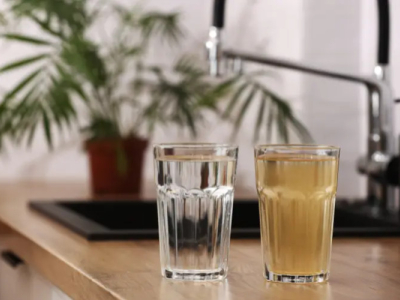
Finally, trust your senses. If your water has a strong taste of chlorine, a peculiar smell, or if you notice white deposits (lime scale), these are concrete indicators that the filtration of your tap water could improve your daily life. And for those who want certainty, there are free water analysis kits offered by the Ministry of Health in certain municipalities.
Tap water or bottled water: the complete comparison
This is the question our clients ask us very often: should we drink tap water or bottled water? So let's put the numbers on the table:
- Controls Tap water undergoes about 300 checks per year, compared to much fewer for bottled water.
- Cost : tap water costs €0.004/L compared to €0.26/L for bottled water - which is 65 times cheaper. Over a year, this amounts to about €2 per person compared to €240.
- Microplastics : 78% of bottled water contains them, particularly linked to plastic packaging.
- PFAS : PFAS have also been detected in some bottled waters - bottled water is therefore not free from danger.
- Carbon impact : Bottled water has a CO₂ impact 850 times greater than tap water.
- Taste : it is often the argument of bottle supporters, but a simple filter removes the taste of chlorine.
In reality, the best option is neither raw tap water nor bottled water. It's the third way: filtered tap water. You combine the safety and price of tap water with improved taste and a reduction of residual contaminants. And you avoid the 8 billion plastic bottles consumed each year in France. For a Ecological solution for pure water at home, Filtered tap water is a winner on all fronts: health, budget, and the planet.
The global home filtration market is not mistaken: it has grown from $13.47 billion in 2025 to a projected $24.04 billion in 2033, representing an annual growth of 7.9%. The trend is clear, and the confidence of the French in tap water, although still at 80%, is declining according to the UAE / Global Coolers 2025 survey.
Filtering tap water: the solution for pure water at home
If you have made it this far, you understand that the quality of tap water is generally good, but improvements are possible. Here is how to naturally purify tap water.
The different tap water filtration systems
- Filtered carafes : simple and inexpensive, but the filters need to be replaced regularly (recurring cost and plastic waste). Limited effectiveness on PFAS and pesticide metabolites.
- Reverse osmosis systems : very efficient but they waste a lot of water (3 to 5 liters of water discarded for 1 liter filtered), consume electricity, and also remove beneficial minerals
- Ceramic filters : a natural solution, without electricity, without plastic consumables, that retains fine particles and chlorine while preserving minerals
For a Detailed comparison of home filtration systems, I invite you to consult our dedicated article. And don't forget to also filter the water from your shower: chlorine is also absorbed through the skin.
Why ceramic filtration is a natural and sustainable alternative
Ceramic filtration is an age-old principle, used for centuries in many cultures. The principle is simple: water passes through a microporous ceramic wall that retains impurities by simple gravity. No electricity, no parts to replace every month, no plastic. The purifying power of activated charcoal, often integrated into these systems, complements the action of the ceramic. Clearly, in an ecological approach to naturally purify tap water, it is the solution that makes the most sense.
Ecofiltro: our test after 6 months of use
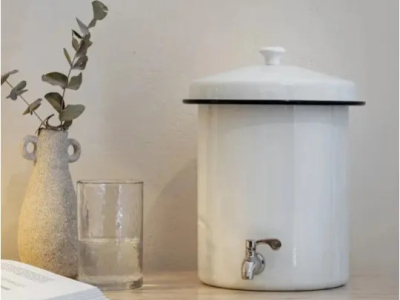
With Aurélie, we tested the Ecofiltro daily for 6 months. And frankly, the result convinced us. The water is soft, pleasant to the taste, with no chlorine flavor. The system is remarkably simple: you fill the top compartment, the water passes by gravity through the ceramic filter, and you collect filtered water in the bottom reservoir. Zero electricity, zero waste. And above all, a very long lifespan that makes it a profitable investment in the long term - especially compared to the €240 per year per person spent on bottled water.
Danièle R., one of our clients, shared with us on Trustpilot: "After a few days, the Ecofiltro filter convinced me. The water is light and smooth to drink, and it's easy to use." And Nicole B. added: "I bought the Ecofiltro clay water filter which provides excellent filtered water."
As Lili K. also says in our Google reviews: "Super Ecofiltre water filter for drinking soft water that is finally pleasant to the taste."
Read our full review after 6 months of use → Read the test
Discover the Ecofiltro and switch to pure, ecological, and economical water → View the product