




Summary
To check the quality of your tap water for free in your municipality, seven official platforms are available to you: sante.gouv.fr, quechoisir.org, dansmoneau.fr, service-public.fr, eaudurobinet.fr, atlasante.fr and cieau.com. These sites compile the results of more than 320,000 annual samples conducted by the Regional Health Agencies. However, after 18 years of assisting our clients at Biovie with water quality issues, we estimate that 60% of consumers are still unaware of the existence of these free tools. This article guides you step by step on how to use them and understand your results.
Why check the quality of your tap water ?
Confidence is declining, and that's normal.
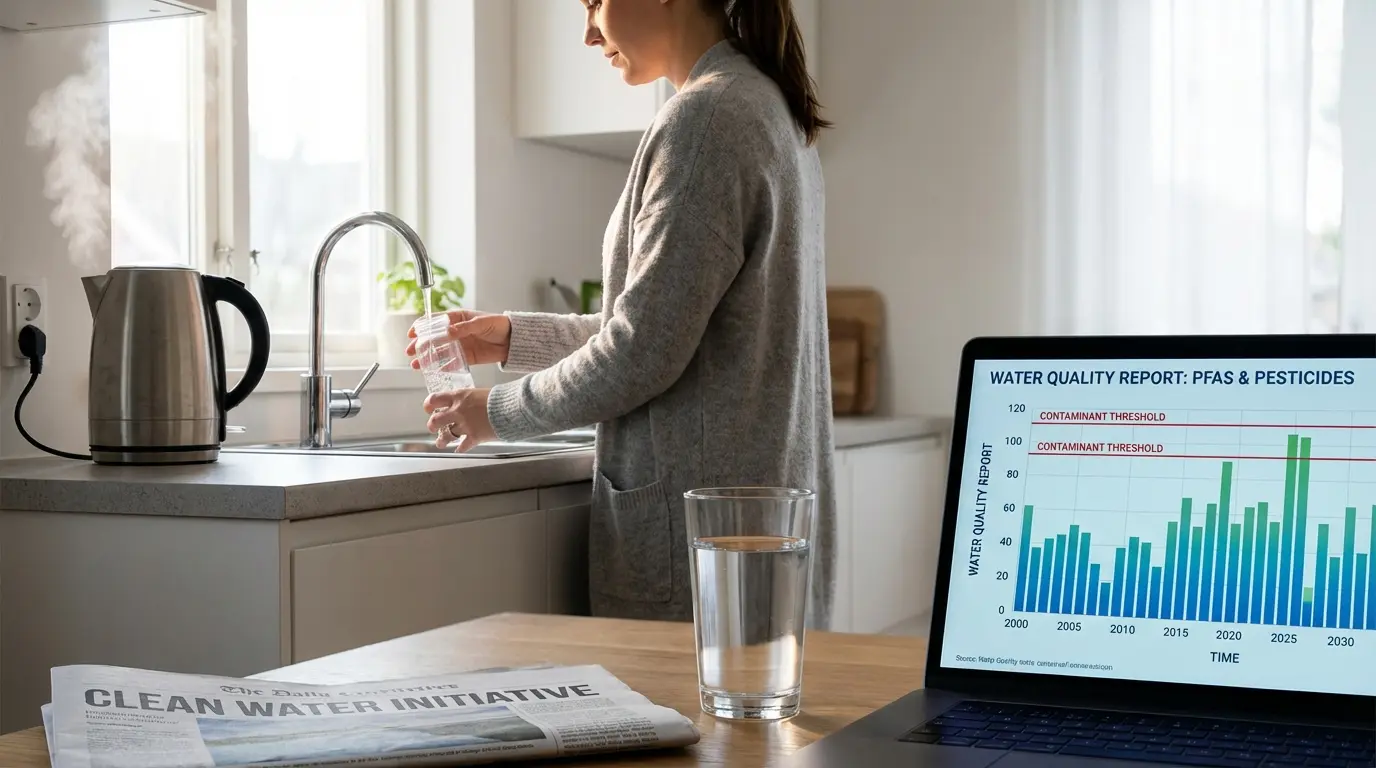
Here is something that struck me recently: the satisfaction of the French with their tap water decreased from 86% in 2019 to 78% in 2025, according to the CIEau. Frankly, when we see the increasing media coverage of PFAS, those infamous "forever chemicals," and pesticide residues, this decline in confidence is not irrational; it is actually quite healthy.
In concrete terms, it's not that the water has suddenly become bad. It's that we now know better what it contains. And knowing means being able to act. The term "PFAS water" is searched 3,600 times per month on the internet, with peaks of 9,900 in the summer. It's a topic of concern, and rightly so.
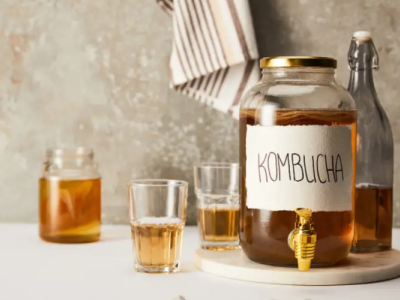
Imagine: you are preparing your child's bottle, filling the kettle in the morning, cooking your vegetables... Water is everywhere in your daily life. Not knowing what it contains is a bit like eating with your eyes closed. At Biovie, the question of water quality has been with us since the beginning. When working with living foods, sprouted seeds, kombucha, spirulina... water quality is the foundation of everything.
PFAS and emerging pollutants: legitimate concerns
PFAS, for those who may not be familiar with the term, are chemical substances used since the 1950s in industry for their non-stick and waterproof properties. They are found in pans, food packaging, waterproof clothing, firefighting foams... The problem is that they hardly degrade in the environment, hence their nickname "forever pollutants."
In 2026, the European Union lowers the regulatory threshold for PFAS in drinking water from 500 ng/L to 100 ng/L. This is a strong signal: the authorities acknowledge that the previous standards were not protective enough.
Knowing the quality of the water in your municipality to make an informed decision
The idea is absolutely not to scare you. 96% of distribution units in France comply with current standards, according to Santé Publique France. This is reassuring. However, "compliant" does not mean "free of all contaminants." Standards evolve, knowledge progresses, and what was considered acceptable yesterday may no longer be tomorrow.
That's why we wanted to create this guide: so that you can, in just a few minutes and without spending a cent, know exactly what's in your local water. And then, depending on what you find, make an informed decision if a additional filtration seems relevant to you.
The 7 official sites to check the quality of your water for free
1. The Ministry of Healthsante.gouv.fr) - the absolute reference
This is the official go-to site for checking the quality of tap water. The Ministry of Health publishes the results of health inspections conducted by the Regional Health Agencies (ARS) across the entire country. You enter the name of your municipality or your postal code, and you can access the latest analysis reports.
What can be found there: bacteriological results, nitrate levels, pesticide residues, heavy metals. It is the most complete and reliable source since it is the official data directly from accredited laboratories.
The only downside: the interface is somewhat austere, typically administrative. The data is raw, without educational explanation. So, it's a data site, not a popularization tool. But the numbers are there, and that's what matters.
2. UFC-Que Choisir (quechoisir.org) - the interactive map with 50+ contaminants
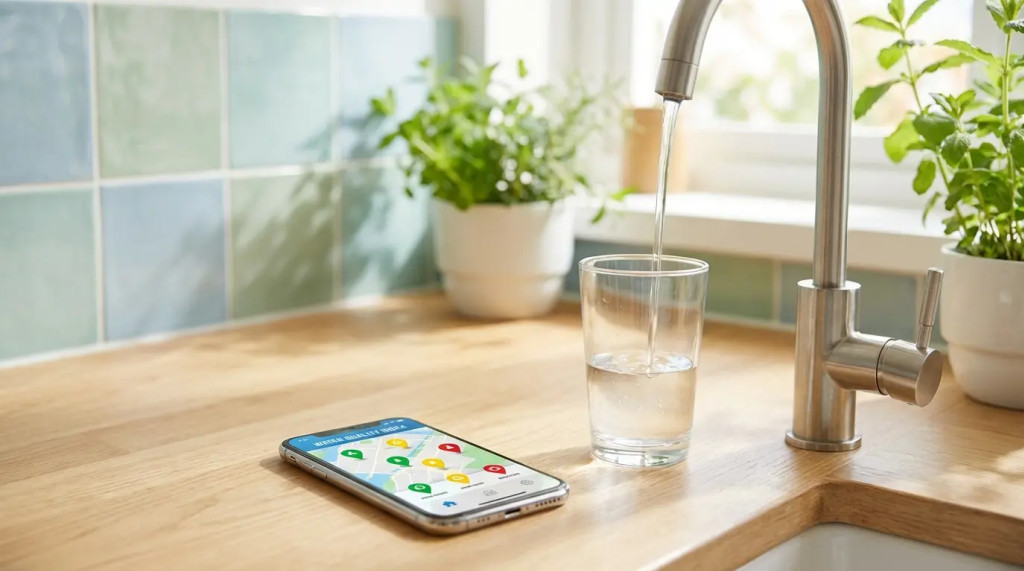
If you want something more visual and educational, this is the site I recommend as a first approach. UFC-Que Choisir offers an extraordinary interactive map that covers more than 50 contaminants. You enter your postal code, and in a few seconds, you get a very readable report with a color code.
The interface is really well designed: from green to red, you immediately understand if there are any areas of concern with your water. The updates are monthly, which is quite responsive.
3. In My Water (dansmoneau.fr) - the focus on PFAS and pesticides
This site is a fairly recent gem, launched in October 2025. It specifically focuses on emerging pollutants: PFAS and pesticides in drinking water. If this is your main concern, it is clearly the site you should prioritize.
Our clients tell us regularly: it is often after consulting DansMon Eau that they identify a local problem and decide to take action. The interface is modern, the interactive map is well-designed, and the data is updated monthly.
4. Service-Public.fr - the administrative portal
Service-Public.fr is the portal for administrative procedures. It is not necessarily the first place one would go to check the quality of their water, but it provides centralized access to regulatory information and directs users to the appropriate contacts: town hall, distributor, Regional Health Agency (ARS).
It is particularly useful if you notice an anomaly and want to know what your rights are, the steps to follow, or whom to contact.
5. EauDuRobinet.fr - all municipalities + overseas territories
This site has the advantage of covering the entire territory, including the overseas departments and territories, which is not the case for all tools. It is an aggregator that compiles ARS data and makes it accessible for each municipality.
For people living overseas, it's often the first instinct. And frankly, information about water quality shouldn't be limited to mainland France.
6. AtlaSanté - online info invoices
AtlaSanté is a tool from Santé Publique France that allows access to infofactures, these documents that normally accompany your water bill and summarize the quality of the water distributed in your municipality.
In reality, very few people read these documents attached to their bills, and some don't even receive them. AtlaSanté allows you to find them online, which is very convenient.
7. CIEau (cieau.com) - the open data of the General Directorate of Health
The Water Information Center offers access to DGS data in open data format. It is a more comprehensive approach that allows for understanding the major national and regional trends in water quality.
The site is also rich in educational content about the water cycle, treatments, and health issues. It is a good complement if you want to deepen your knowledge beyond your own community.
How to interpret the analysis results ?
Understanding the units: mg/L, µg/L, and TH
When you check the results of your municipality, you will come across figures with units that may seem intimidating. Don't worry, it's simpler than it seems.
The mg/L (milligram per liter) is the standard unit. When you are told that the nitrate threshold is 50 mg/L, it means 50 milligrams of dissolved nitrates in a liter of water. It is the most common unit.
The µg/L (microgram per liter) is a thousand times smaller. It is the unit used for pesticides and PFAS, as these substances are concerning even at minute doses. The regulatory threshold for an individual pesticide is 0.1 µg/L.
The TH (Hydrotimetric title) measures the hardness of water, that is, its calcium and magnesium content. It is not an indicator of danger but of comfort: very hard water can scale your appliances and may give an unpleasant taste.
European and French standards
France applies European standards, which set limits for more than 50 parameters. These standards are regularly revised. The latest major revision specifically concerns PFAS, with the threshold being lowered to 100 ng/L (or 0.1 µg/L) in 2026.
IGQ: Class A or Class B ?
The Global Quality Indicator (GQI) classifies water into two main categories. Class A corresponds to good quality water, consistently meeting all parameters. Class B indicates a temporary exceedance of certain parameters, without immediate health risk.
If your municipality is in class A, you can be at ease. If it is in class B, it does not mean that your water is dangerous, but that one or more parameters have occasionally exceeded the thresholds. This is when it might be relevant to dig a little deeper to understand which parameter is involved.
One-time or recurring overrun ?
The distinction is important. A one-time exceedance, linked for example to an episode of heavy rain that washed pesticides into the catchment areas, does not have the same significance as a recurring exceedance, which would indicate a structural problem.
Websites like Que Choisir or DansMon Eau generally indicate the frequency of exceedances, allowing you to form your own opinion.
Which pollutants should be monitored as a priority ?
PFAS: These Eternal Pollutants That Cause Concern
I mentioned it earlier, it is THE topic of the moment regarding the quality of drinking water. The map from the BRGM (Bureau of Geological and Mining Research) published in 2025 identifies the most affected areas in France. The regions of Auvergne-Rhône-Alpes, Hauts-de-France, and certain areas of the Rhône Valley are particularly concerned.
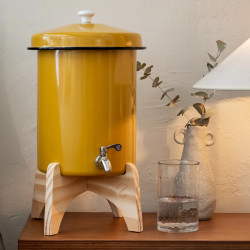
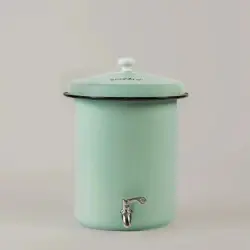
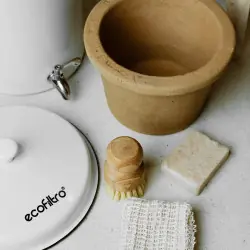
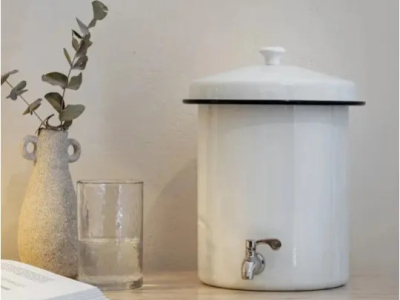
If the analyses of your municipality reveal PFAS levels exceeding 100 ng/L (the future EU threshold for 2026), a additional filtration like that proposed by Ecofiltro, with its microporous ceramic, can effectively reduce these eternal pollutants.
Specifically, let's take the example of Sophie, a mother of two children in the Lyon region. By consulting DansMon Eau, she discovered that her municipality had 150 ng/L of PFAS, above the future European threshold. She opted for an Ecofiltro filter: a one-time investment of about €150, compared to €50 per month for bottled water.