Bloating, gas, and slow digestion: why is dill still unknown?
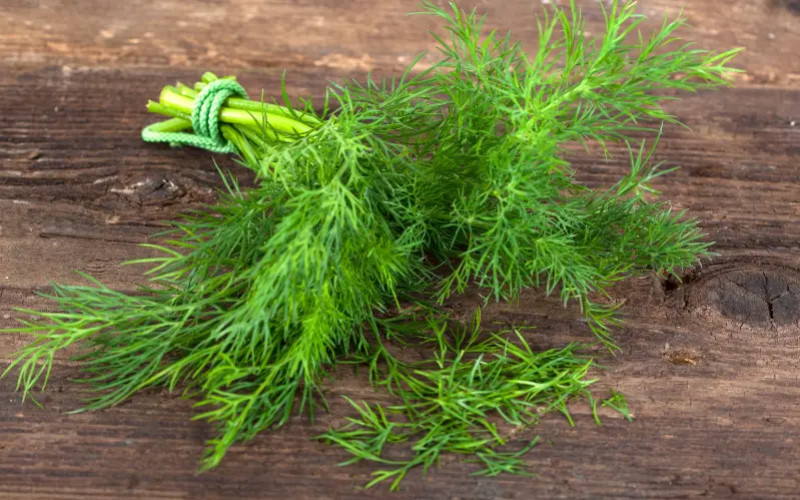
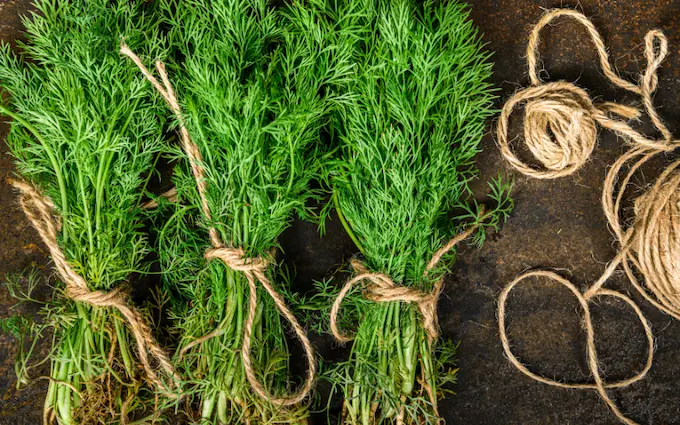
DillAnethum graveolens) belongs to the family of carminative plants-those traditionally used to support the expulsion of intestinal gas and digestive comfort after meals. Three compounds uphold this tradition: carvone, limonene, and alpha-phellandrene, notably studied in a double-blind randomized clinical trial involving 118 women after cesarean section (Fazel et al., 2017), where an oral dose equivalent to 10.8 to 14.8 mg of carvone was associated with a significant reduction in postoperative bloating and flatulence compared to placebo. I have been working with sprouted seeds at Biovie for thirty years, and I will tell you right away: the young dill sprout-still new to the French market-is the form that, in my opinion, has been most unjustly overlooked. This is precisely the focus of this article.
What exactly is dill (and why have we forgotten it) ?
A carminative herb known since ancient Egypt
The Ebers Papyrus, dated around 1550 BCE, already mentions dill as a digestive remedy. Three thousand five hundred years is no small feat. Ayurvedic medicine has incorporated it into soothing preparations for functional intestinal disorders, and all of Northern and Eastern Europe has made it a daily culinary companion-Swedish gravlax, Russian smetana, Baltic soups, tzatziki Greek. Specifically, wherever the climate did not allow for Mediterranean fennel, dill took its place.
In France, history is more capricious. Mediterranean cuisine has made fennel the local star (anise, pastis, fennel bulb, seeds in infusion), and dill has been relegated to a decorative role on salmon dishes. This is how, in two or three generations, it stopped being used as a daily digestive comfort plant. Wrongly so.
Carvone, limonene, apigenin: the three compounds that do everything
When we look at the phytochemical composition ofAnethum graveolens, The profile is surprisingly clear. The seeds concentrate a majority of cis-carvone (up to 75.2% of the essential oil depending on the chemotypes) and limonene (around 21.6%). The leaves, on the other hand, shift towards alpha-phellandrene (62.7%) and limonene (13.3%), with flavonoids such as apigenin and quercetin also present (reviewed). The Pharmacological Potential of Anethum graveolens, 2025).
For my part, what strikes me is the complementarity of seeds/leaves/young shoots. Three different profiles for three different uses. We will come back to this later.
How does dill act on bloating and gas ?
The antispasmodic effect on digestive muscles
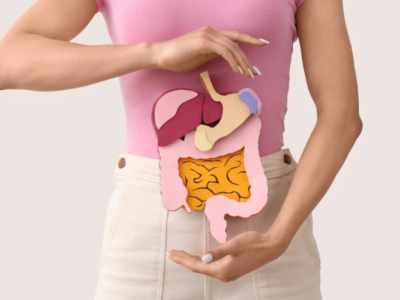
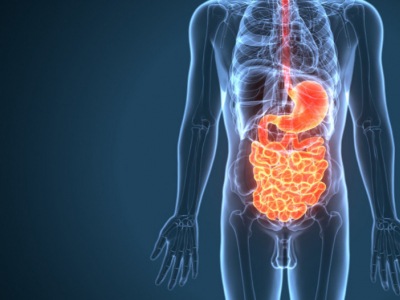
Bloating and heaviness after meals often result from an excess of trapped gas in the intestines and spasms of the smooth digestive muscles. This is the typical setting for functional disorders - no underlying disease, but a decline in comfort.
Carminative compounds such as carvone, limonene, and alpha-phellandrene have been the subject of studies. in vitro and on animal models that suggest a relaxing action on the smooth digestive muscles and support for the expulsion of gas. These data are encouraging, but let's be honest: they do not equate to a clinical demonstration on healthy humans. What can be said with caution is that dill is traditionally used to contribute to digestive comfort after meals, as part of a varied and balanced diet.
What the Fazel clinical trial on 118 women (2017) says
The most robust study to date on dill and digestive discomfort comes from Iran, published in the Journal of Herbal Medicine (Fazel et al., 2017). The protocol: 118 women who had undergone a cesarean section were double-blind randomized between an oral dill essential oil (dose equivalent to 10.8-14.8 mg of carvone, taken three times over one hour) and a placebo. Result: a significant reduction in the intensity of postoperative bloating and flatulence in the dill group.
An essential clarification, because I know this information will circulate: it is a post-surgical clinical context, with an essential oil administered by caregivers. Do not replicate this dosage at home. For daily use, we talk about herbal tea, fresh young shoots, and dill in cooking. No self-medication with essential oils.
Dill in irritable bowel syndrome
A second study deserves mention: Vakili et al., published on PMC in 2020. A combination of three essential oils - Zataria multiflora, , Anethum graveolens, , Trachyspermum ammi - was compared in a double-blind study to a standard antispasmodic medication (hyoscine butylbromide, 10 mg, three times a day) in patients living with irritable bowel syndrome. Over two weeks, the results suggest comparable efficacy on the symptoms.
Once again, measure: it is an essay on the combination, not just on dill alone. But the signal is interesting. Preliminary data suggests that dill could contribute to the digestive comfort of people living with a functional colopathy (IBS), as part of a varied and balanced diet and a healthy lifestyle. Not a promise - a signal.
If bloating has been ruining your post-meal times for too long, I suggest to you 10 Additional Tips for a Calm Stomach - an article where I detail the levers that go beyond just dill.
Dill or fennel: which plant to choose for which discomfort ?
This is the question I am asked most often. Here's how I distinguish between the two in practice.
Botanical family : Dill and fennel both belong to the Apiaceae family. Cousins, therefore. With possible cross-allergies if you are sensitive to the family (carrot, celery, parsley, anise).
Major carminative compound : Carvone dominates in dill (30-40% of the essential oil from seeds), while anethole is predominant in fennel (60-90%). This explains the stronger and more anise-like taste of fennel.
Taste profile Dill is fresh, slightly aniseed, lemony - a subtle taste that blends in everywhere. Fennel is distinctly aniseed, sweet, and pronounced.
Main digestive action : both are traditional carminative plants, with fennel generally perceived as having a more pronounced antispasmodic action.
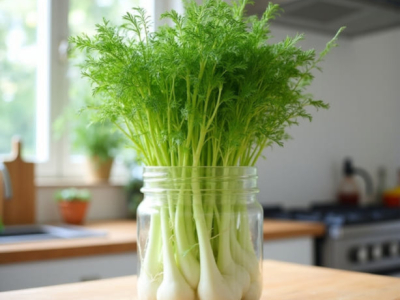
Most active form : seeds, young shoots, fresh leaves for dill; seeds, bulb, young shoots for fennel.
Traditional flagship indication : dill for everyday post-meal gas and slow digestion, fennel for colic and women's digestive issues (where it has a long tradition of use, especially during breastfeeding).
Major contraindication : The essential oil is not recommended during pregnancy and breastfeeding for both plants, and for young children (under 1 year for dill, under 12 years for fennel according to current recommendations).
Cool season : dill from May to October, fennel from June to November.
The takeaway message: these are two carminatives. complementary, not competing. Ideally, in my practice, it's best to alternate or combine them depending on the days and meals.
Biovie offers 24 varieties of organic sprouting seeds, produced since 1896 by our Italian supplier Geo Bavicchi, and every batch is tested before it goes on sale (germination rate above 95% required). Radish, fenugreek, sunflower and alfalfa sprout the fastest and most easily for beginners, in 3 to 5 days on a windowsill. To discover several varieties without making a mistake, the packs (The 3 Radishes, The Essentials, The Pep's Seeds...) are a good starting point, before choosing your varieties individually. The range also covers microgreen seeds to grow on a substrate, and sprouters to get started without unnecessary equipment., 46
products
A higher concentration of bioactives than adult leaves
Here is a topic that none of our peers on page 1 of Google are covering. And yet.
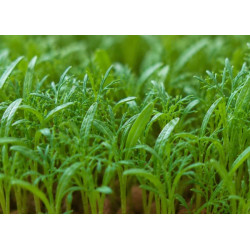
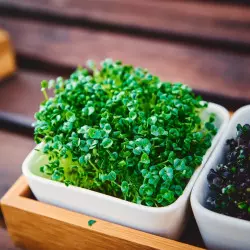
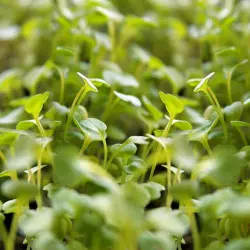
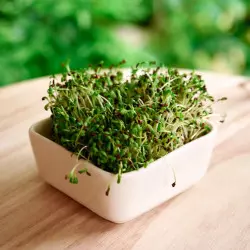
Microgreens - that is, the plant harvested between 7 and 14 days after germination, just after the appearance of cotyledons and the first true leaves - generally concentrate bioactive compounds with greater intensity than the adult plant. This is documented for broccoli (sulforaphane), radish, sunflower, and many other species. For dill, specific scientific data is still limited, but what is observed in the field is consistent with what is known for other Apiaceae microgreens: a denser aromatic profile, preserved enzymatic freshness, and optimal bioavailability because the plant is consumed raw.
This may be the most important point. Dill essential oil is powerful, and precisely because of this potency, it is not recommended for pregnant or breastfeeding women, children under one year old, and certain individuals with specific health conditions.
The young sprout is simply a fresh food. A plant consumed in its vegetative state. There are no major contraindications within the context of normal dietary consumption (beyond the cross-allergies with Apiaceae that I mentioned earlier). This is what makes the young sprout relevant for someone who wants to incorporate dill as a daily digestive aid without delving into the logic of aromatherapy.
How to Incorporate Dill into Your Daily Routine: 5 Simple Methods
Post-meal dill herbal tea
The most traditional form, and the one I recommend first to someone who is discovering it. Use 1 to 2 g of dried dill seeds (about one level teaspoon), lightly crushed in a mortar to release the essential oils, infused for 5 to 10 minutes in 200 ml of simmering water. Drink 15 to 30 minutes after a heavy meal.
The effect experienced, in my experience and that of the people we accompany, generally manifests in 20 to 40 minutes - the time it takes for the heat of the infusion and the volatile compounds to pass through the digestive tract.
Young sprouts on raw vegetables
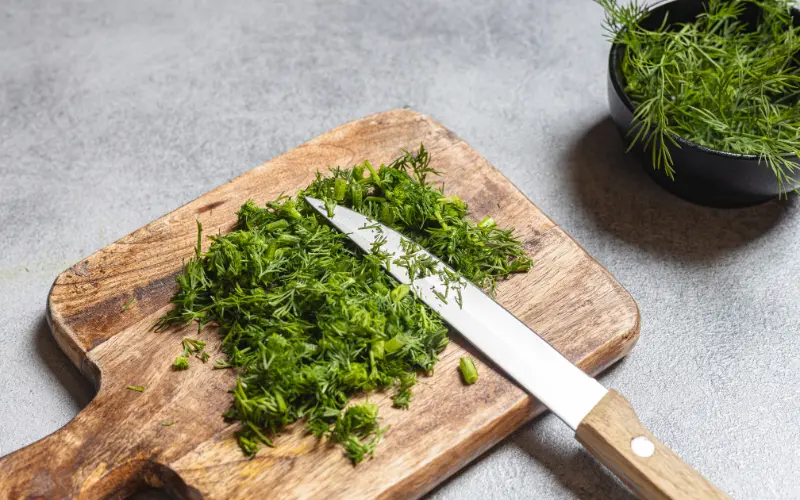
My favorite protocol, and the one that requires the least discipline. A tablespoon of young dill sprouts (about 5 to 7 g) added to a mixed salad, raw vegetables, mashed avocado, or vegetable tartare. The taste is fresh, slightly lemony, and the action begins during the meal itself since the compounds are already in the food bowl.
The EasyGreen dill sprouter (to be released) allows you to grow your own sprouts at home in about ten days. To structure a real daily digestive support approach, also see promote better digestion on a daily basis.
Chewed seeds
Ancient Mediterranean and Indian practice. Half a teaspoon of dill seeds (about 1 g) slowly chewed at the end of the meal, as is done with fennel in Indian restaurants (the Mukhwas). Mechanical action on salivation, immediate release of essential oils, plus a fresh note in the mouth that is not unpleasant.
Fresh dill in digestive pesto
A recipe that Aurélie developed at our place: fresh dill (a nice bunch, about 30 g), sprouted sunflower seeds, new garlic, lemon juice, olive oil, nutritional yeast. We make jars of it that keep in the fridge and spread it on sourdough bread, on raw vegetables, or incorporate it into sauces. Practically, it has become our everyday pesto during dill season.
Dill water according to tradition
Very gentle preparation, traditionally used for babies from a few months old (but consult a pediatrician - I am an agronomist, not a doctor). Half a teaspoon of dill seeds in 250 ml of boiling water, steep for 10 minutes, then carefully strain. Very mild taste.
Precautions and contraindications: what you need to know
Pregnancy and breastfeeding: essential oil no, young shoots yes
The distinction is essential. Dill essential oil is not recommended during pregnancy and breastfeeding (potential hormonal and neurotoxic effects reported in the literature and noted by PasseportSanté and Vidal). On the other hand, fresh dill in cooking, young sprouts on a salad, and light herbal tea are considered safe as part of normal food consumption. If in doubt, seek the advice of the healthcare professional overseeing your pregnancy.
Cross allergies in the Apiaceae family
If you are allergic to carrot, celery, parsley, anise, or fennel, be cautious with dill - all these plants belong to the botanical family Apiaceae and share common allergens. Test with a small dose before regular integration.
In practice: three protocols according to your profile
Profile 1 - Daily slow digestion, heaviness after lunch Tablespoon of young dill sprouts (~5-7 g) on the midday raw vegetables, and dill herbal tea (1 to 2 g of seeds infused) in the mid-afternoon. Allow 2 to 4 weeks to observe a baseline effect on digestive comfort.
Profile 2 - Occasional bloating after rich meals Half a teaspoon of dill seeds (~1 g) chewed at the end of a meal. Occasional use, no daily routine necessary.
Profile 3 - You live with irritable bowel syndrome (functional colopathy) Gradual approach and always as a complement to your medical follow-up. Light herbal tea after the two main meals (1 to 1.5 g of seeds), gradual introduction of young shoots if well tolerated. Keep a small journal of sensations over 4 weeks to assess what suits you.
Warning: The information presented in this article is provided for informational purposes only and does not constitute medical advice. Consult a qualified healthcare professional before making any changes to your diet or supplementation, especially if you are pregnant, breastfeeding, have a chronic condition, or are undergoing treatment. As part of a varied and balanced diet and a healthy lifestyle.
FAQ - Your Questions About Digestive Dill
What daily dose of dill is truly effective for digestion ?
For regular digestion, use about 1 tablespoon (5 to 7 g) of fresh leaves or young shoots per meal, or 1 teaspoon (1 to 2 g) of dill seeds in an infusion after the meal. The Fazel 2017 clinical trial used doses of essential oil equivalent to 10.8-14.8 mg of carvone, but in a post-operative clinical context - this is not a dosage to be replicated in self-medication. As part of a varied and balanced diet and a healthy lifestyle.
Is dill dangerous during pregnancy ?
Theessential oil Dill is not recommended during pregnancy and breastfeeding due to potential hormonal and neurotoxic effects reported in the literature (sources: PasseportSanté, Vidal). However, fresh dill in cooking, young sprouts on a salad, and light herbal tea are considered safe as part of normal dietary consumption. Always seek the advice of the healthcare professional overseeing your pregnancy.
How long before feeling the effects of dill ?
For post-meal bloating, the effect of dill tea is generally felt within 20 to 40 minutes. For young shoots consumed with the meal, the action begins during digestion itself. For a long-term effect on chronic digestive comfort, expect 2 to 4 weeks of regular use. Individual variability is real - no guarantee of results.
Dill or fennel: which one should I choose if I have to choose ?
These are two complementary carminative plants. Fennel is more traditionally used for colic and women's digestive issues. Dill is more versatile for everyday post-meal gas and has a milder taste for those who do not like the strong flavor of anise. The ideal approach is to alternate or combine them depending on the day.
Is it possible to grow dill sprouts at home ?
Yes, and it is particularly interesting: young dill sprouts concentrate aromatic compounds with more intensity than the mature plant, and without the contraindications of essential oil. Cultivation requires a sprouter adapted to the fineness of dill seeds and their specific germination cycle. [SHORTCODE_GERMOIR_ANETH] (upcoming at Biovie). To discover the complete list of seeds to sprout at home, also see our dedicated guide.
Is dill effective against irritable bowel syndrome ?
A double-blind randomized clinical trial (Vakili et al., 2020) compared a combination including dill essential oil - Zataria multiflora, , Anethum graveolens, , Trachyspermum ammi - to a standard antispasmodic medication (hyoscine butylbromide) in IBS patients. The results suggest comparable efficacy on functional digestive symptoms. Important: this is a trial on the combination, not on dill alone. Preliminary data suggest that dill may contribute to digestive comfort for people living with functional bowel disorders, as part of a varied and balanced diet and a healthy lifestyle.