Marine plasma: dangers, side effects - what science really says
Marine plasma fascinates, captivates-and also raises legitimate questions. I completely understand them, and I will answer honestly. The short answer? Seawater is safe for the vast majority of healthy adults, provided that the recommended forms and dosages are followed. 10 mL of isotonic plasma contain approximately 90 mg of sodium - which is less than half a slice of bread. Real contraindications exist, but they are specific and pertain to particular medical situations. Here is the complete data, without alarmism or purely commercial discourse - because you deserve an honest answer about the documented benefits of marine plasma"as much as on its real limits."
Where does the reputation of danger associated with seawater come from ?
The confusion with ordinary seawater
It is necessary to understand where fear comes from in order to dispel it. When we hear "seawater," the brain immediately associates it with a well-known old warning for castaways: drinking seawater dehydrates and can kill. This is true - for raw seawater, consumed in large quantities, without treatment.
But marine plasma is not ordinary seawater. This is where the fundamental confusion lies, and it's what I explain every time the question comes up. There is a world of difference between collecting water from the edge of a beach and producing marine plasma according to the original Quinton® protocol-in terms of the collection location, depth, analytical protocol, and treatment.
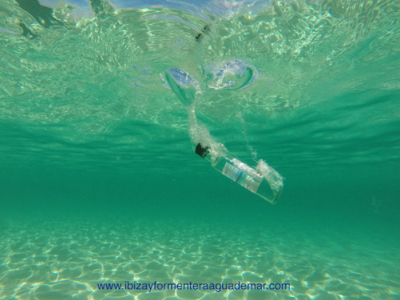
To see concretely how a marine plasma harvest takes place - the on-site measurements, the sampling depth, the filtration protocol - I recommend this video filmed during my visit to Ibiza, at our suppliers:
The confusion between isotonic and hypertonic: two very different products
The other source of confusion is that we refer to "seawater" as a single product, whereas there are two forms with very different profiles.
The isotonic form is diluted to match the concentration of human body fluids (~9 g/L of minerals). 10 mL of isotonic plasma provide approximately 90 mg of sodium - which is 0.2 g of salt. To give you a concrete reference: a slice of regular bread contains between 300 and 500 mg of sodium. The isotonic form is mild and well tolerated by the vast majority of people.
The hypertonic form is raw, undiluted marine plasma. 10 mL of hypertonic plasma provide approximately 330 mg of sodium - which is 0.83 g of salt, the equivalent of a slice of bread. It is a more concentrated, more stimulating form, and it is the one that requires the most precautions to be taken.
Understanding this distinction is essential before discussing the "danger of hypertonic Quinton water" - these are two very different conversations. To fully understand the differences in usage profiles, I refer you to our dedicated article for more information. choose between isotonic and hypertonic form.
The real side effects: what can really happen
The adaptation reaction (Herxheimer): normal and transient
Here is the point that I systematically address with people who are starting a marine plasma treatment. At the beginning of the intake, some people experience slight fatigue, temporary headaches, or accelerated transit. It can be concerning - and yet, it is perfectly normal.
This phenomenon has a name: the Herxheimer reaction. This is not a sign that the product is harming you. It is the normal response of an organism adapting to a sudden intake of bioavailable ionic trace elements, with its natural elimination functions being activated. In supporting the emunctories during the detoxification process - liver, kidneys, intestines - you generally minimize these adaptation effects.
The solution is simple and I repeat it every time: never start at full dose. Start with 2.5 mL for the first three days, gradually increase over 10 days. The Herxheimer reaction usually disappears in 2 to 5 days.
A feedback I often hear: "I stopped after 3 days thinking it was making me sick. A year later, I started again slowly - and then, everything changed." The problem wasn't the product. It was the startup protocol.
The effect on intestinal transit: benefit or inconvenience depending on the profiles
The hypertonic form, taken on an empty stomach, has a slight osmotic effect on intestinal transit. For some people-particularly those who suffer from sluggish bowels-this is beneficial. For others, especially in cases of sensitive intestines, it may be perceived as a discomfort at the beginning of the treatment.
In practice: if you have a sensitive colon, start with the isotonic form. It is much gentler on the digestive mucosa and helps support normal digestive function.* Specifically, seawater and the intestines often form a beneficial association - provided you don't overdo it during the adaptation phase.
The beneficial effect is obtained with the recommended doses of 10 to 30 mL per day. A varied and balanced diet and a healthy lifestyle are important.
The iodized taste of the hypertonic form: a characteristic, not a danger
This is not a side effect in the medical sense, but many people are surprised by the strong, slightly iodized and salty taste of the hypertonic form. This taste is simply a reflection of its mineral richness - the 78 ionic trace elements of marine plasma in their most concentrated form.
If this taste is a problem for you: dilute it in a glass of non-chlorinated water, or opt for the isotonic form, which has a much more subtle taste.
€47.90
EXPECTED TO BE BACK IN STOCK AROUND OCTOBER 20
What are the real contraindications of seawater ?
This is the central question - and I will answer it precisely. The contraindication of Quinton® water is limited to a few well-identified medical situations.
Formal contraindications:
Severe uncontrolled arterial hypertension - particularly for the hypertonic form
Advanced chronic kidney failure - the kidneys are no longer able to manage the mineral load
Strict salt-free diet medically prescribed for severe heart disease or post-transplant
Infants under 6 months for the hypertonic form only
Situations requiring prior medical advice:
Pregnancy: the isotonic form is generally well tolerated, however, consult your midwife or obstetrician.
Severe liver disease diagnosed (see liver section below)
Treatment with diuretics, antihypertensives, lithium, or digoxin - the maximum daily amount of water should be discussed with your doctor.
Situations generally without contraindication:
Healthy adults
Children over 6 months (isotonic form, adapted doses)
Mild hypertension monitored, non-severe (isotonic form under medical supervision)
*A varied and balanced diet and a healthy lifestyle are important.
Is seawater dangerous for the liver ?
What the available data really says
Here is a straightforward answer.
The isotonic form does not present any known danger to the liver. It is generally well tolerated, including by people with compromised liver function. Isotonic marine plasma contributes to the support of normal electrolyte metabolism and participates in the proper functioning of the body.*
The hypertonic form, with its higher sodium concentration, puts more strain on the liver's filtration functions. In the case of diagnosed liver disease - cirrhosis, advanced hepatocellular insufficiency - it is not recommended. Seawater and liver insufficiency: this is a situation where caution is required and medical advice is non-negotiable.
For individuals looking to incorporate marine plasma into a comprehensive support approach, isotonic solutions are recommended. They contribute to the proper functioning of the body's natural mechanisms without overloading the excretory organs.*
*The beneficial effect is obtained with the recommended doses. A varied and balanced diet and a healthy lifestyle are important.
Isotonic vs hypertonic: which one presents the most risks ?
Frankly, it's a matter of dosage and health profile. Both forms have the same base plasma - what distinguishes them is solely the concentration.
Isotonic marine plasma:
Sodium per 10 mL: ~90 mg (0.2 g of salt)
Audience: broad, including sensitive individuals, children (>6 months), pregnancy under medical advice
Marine plasma side effects: minimal at recommended doses
Isotonic marine plasma contraindications: limited to situations of severe renal insufficiency and strict absolute salt-free diet.
Hypertonic marine plasma (diluted):
Sodium per 10 mL: ~330 mg (0.83 g of salt)
Audience: healthy adults, athletes, individuals with a high need for remineralization
Side effects: possible Herxheimer reaction at the start of treatment, transit effect at the beginning of intake.
Medical advice: hypertonic seawater is recommended if: treated hypertension, renal or hepatic fragility, medications sensitive to electrolytes.
To put sodium into perspective: 30 mL per day represents ~990 mg of sodium - which is 20% of WHO recommendations (5 g/day maximum). For a healthy person, this is not a problematic dose.
To better understand the nutritional richness of marine plasma and why this mineral intake is so valuable:
Ordinary seawater collected from the coastline contains bacteria, viruses, microplastics, and various contaminants depending on the coastal environment. When consumed in large quantities, its high salt concentration indeed causes cellular dehydration. This real danger does not apply to Quinton® marine plasma.
The Quinton® protocol involves:
A sample taken in the open sea, more than 30 meters deep, in planktonic vortex areas identified by precise measurements (dissolved oxygen, pH, conductivity, salinity, redox potential)
Immediate refrigerated transport to the laboratory
A cold microfiltration at 0.22 micron - size that eliminates bacteria (minimum size ~0.5 micron), viruses, and contaminants, without pasteurization or irradiation, preserving the integrity of bioavailable ionic trace elements
Strict quality controls in accordance with European regulations for food use
This rigorous protocol - documented since René Quinton himself in Seawater, an organic environment (1904) - which makes marine plasma safe where raw seawater is not.
The medical opinion on seawater: what do practitioners say ?
Why medical institutions remain cautious (and what it doesn't mean)
"My doctor doesn't believe in seawater." I hear it regularly, and I understand that it can be unsettling.
Conventional medicine requires double-blind randomized controlled trials to validate a health claim. This type of study costs several million euros-and for a non-patentable natural product, no one has a financial interest in funding them. The absence of evidence in the academic sense does not therefore mean proof of absence of effect.
What we know for certain: Quinton® plasma was listed in the Vidal as early as 1934 and reimbursed by Social Security as a medication until 1982. It lost its marketing authorization not due to safety concerns - this point is crucial - but because the laboratory that owns the original brand did not undertake the new sterility procedures required for injectables. It is an administrative decision, not a judgment on the product's safety.
What we also know: the Marine Dispensary of Paris was conducting 10,000 injections per month in the 1920s-1950s (source: Dr. Jean Jarricot, The Marine Dispensary, 1921), with documented results on malnourished infants, cases of rickets and tuberculosis - without any documented adverse effects at the population level over more than 50 years of clinical practice.
Naturopaths, integrative doctors, and nutritionists who incorporate it into their daily practice observe solid feedback from the field. This is also regularly confirmed by our Biovie clients:
"I have been drinking a glass on an empty stomach in the morning for 2 months." - Mr. grewis, Trustpilot ★★★★★
"I have been ordering Quinton® for several years... Everything is of exceptional quality. I have complete trust." - Pascale B., Trustpilot ★★★★★
"I find specific products there that are unavailable elsewhere, such as fresh seaweed and seawater." - Dominique, Trustpilot ★★★★★
How to start a detox safely: the progressive Biovie protocol
Recommended starting dosage according to the profile
If you have no medical contraindications, here is how to calmly start your first marine plasma treatment, minimizing any reaction to Quinton® water at the beginning of the treatment.
Standard progressive protocol - isotonic seawater:
J1–J3: 3 mL in the morning on an empty stomach
J4–J7: 5 mL
J8–J14: 10 mL
From Day 15: 10 to 30 mL per day depending on the goal (remineralization, vitality, digestive support)
For people with monitored non-severe hypertension: 20 mL of isotonic solution per day = ~180 mg of sodium = 3% of WHO recommendations (5 g/day). Under medical supervision, it is generally compatible. The key point: show these precise figures to your doctor for an informed decision.
For athletes or individuals with high physical expenditure: The hypertonic form can be considered from day 8 if the start with isotonic went well. It helps maintain a normal electrolyte balance.* Our clients particularly recommend it for this use.
Quinton® water without salt does exist - it is the isotonic form, with its 90 mg per 10 mL, which often remains usable under supervision even in controlled diets.
Eau de Quinton® maximum recommended daily quantity: 30 mL per day for regular use. Beyond that, consult a healthcare professional.
The beneficial effect is obtained with the recommended doses of 10 to 30 mL per day. A varied and balanced diet and a healthy lifestyle are important.
Warning signs to watch for
The normal signs of adaptation - slight fatigue, accelerated transit, temporary headaches on days 1-5 - are not warning signals. They are part of the Herxheimer reaction and disappear with the gradual increase of doses.
On the other hand, consult a doctor if you notice:
A documented increase in blood pressure (if you are being monitored for hypertension)
Unusual swelling of the lower limbs
Significant and persistent changes in urination or lower back pain
These manifestations indicate that your profile warrants a medical evaluation before proceeding.
Do you want to incorporate marine plasma into a global rebalancing approach? Read our article on Demineralized and acidified soil and how to rebalance it - it will provide you with the complete nutritional context to understand the benefits of marine plasma.
What is marine plasma ?
So-called hypertonic marine plasma is simply seawater harvested and filtered under very specific conditions.
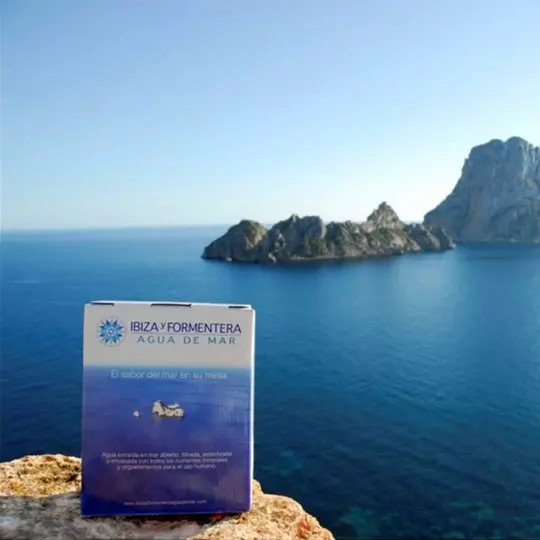
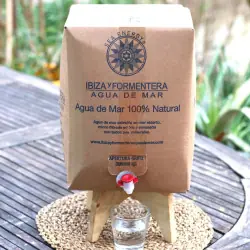
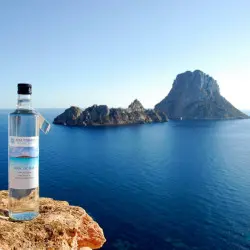
Our supplier Ibiza Agua de Mar collects sea water from a depth of 25 meters off the coast of Ibiza in a UNESCO listed area.
Concerning the harvest, here are the different physico-chemical parameters measured during the search for an optimal place for the harvest of hypertonic marine plasma, first on the radar with reading of the currents and according to the marine weather (wind, swell, rain. ..) and then by local measurement of these different parameters: taste of seawater, dissolved O2 level, PH level, redox level (ORP), salinity level (TDS), conductivity level ( PSU), alkalimetric title (TA), Pressure. It is the empirical practice of the harvesters and the reading of the various measuring instruments that makes it possible to decide on the best complex combination of these measures together to decide whether the harvest is triggered on the site or whether another location is sought.
Where does marine plasma come from ?
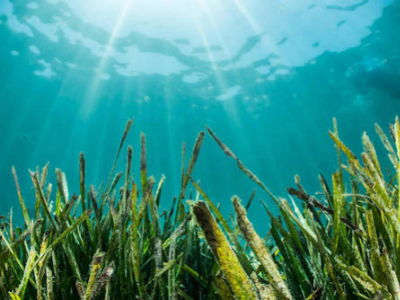
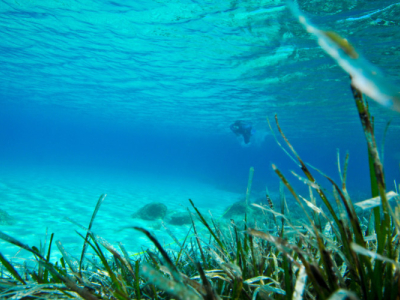
The marine plasma is collected in the high seas, off the coast of Ibiza, in a specific area classified as UNESCO with high planktonic activity and with a presence of tens of square kilometers of Posidonia. It is indeed in this specific area that lives the largest living organism listed on Earth, a posidonia herbarium of 80,000 to 200,000 years extending over 15 kilometers in length.
Source: Sophie Arnaud-Haond, Carlos M. Duarte, Elena Diaz-Almela, Núria Marbà, Tomas Sintes, Ester A. Serrão: Implications of Extreme Life Span in Clonal Organisms: Millenary Clones in Meadows of the Threatened Seagrass Posidonia oceanica
When is it best to take marine plasma ?
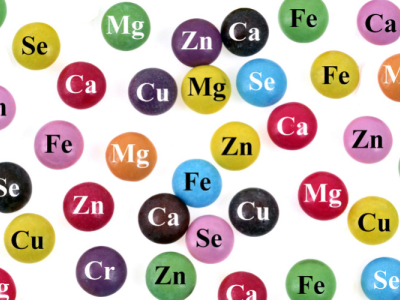
The ideal is to consume marine plasma, which contains, let's remember, all the elements that make up Mendeleev's periodic table, in the morning when you get up, on an empty stomach. take 1/4 of hypertonic marine plasma to mix 3/4 of spring water or filtered water.
What are the benefits of marine plasma ?
Minerals are the "fuel" used primarily by our body, which is necessary for our cells to perform their functions optimally. They are also essential for the absorption of vitamins and are responsible for enzymatic processes in cells. Cells perform all their functions with maximum vitality and the precise capacity for organic, bioavailable, alkaline cellular nutrition. Thus, sea water becomes the best mineral drink since it contains all the elements of Mendeleev's periodic table.
Another of the great benefits of seawater is its pH. As Otto Warbürg, father of cellular respiration and two-time Nobel laureate, said, “all diseases are acidic and where there is oxygen and alkalinity there can be no disease”. Due to the quality of our raw material, the hyper-oxygenated waters of Posidonia meadows (recognized by UNESCO as a World Heritage Site in 1999) and sea currents providing purity and clarity: Ibiza and Formentera Agua de Mar have an alkaline pH , between 8.1 and 8.4, which will help the body maintain a neutral pH through homeostasis. The ingestion of sea water is advised to control and maintain our PH, as well as an exceptional supplement for alkaline diets.
The antioxidant and anti-acidity power produced by seawater is due to the alkalinity provided by the minerals.
Drinking filtered seawater in a direct and controlled way is very beneficial for your health, because seawater is an excellent nutrient, containing most of the minerals of the periodic table and all of them dissolved in the best universal solvent available: l 'water.
Seawater contains all the minerals of the periodic table of elements in a bioavailable way. It is thanks to this that foods cooked in seawater are rehydrated and remineralized to make foods with high nutritional power. The problem today is that our intake of minerals through food has dropped dramatically and what is causing this? The answer is very simple: pollution, soil depletion due to intensive agricultural production and our stressful pace of life have considerably reduced the quality of food and its mineral intake, drastically reducing the minimum contribution necessary for the proper functioning of the body.
Seawater also helps us stay young, for a simple reason: the body regularly and cyclically regenerates all its cells, because their lifespan is limited in time. As we age, one of the first faculties the cell loses is the ability to hydrate. We know that the older we get, the less we drink, so drinking and ingesting seawater can help us "wake up" this ability to hydrate ourselves., 4
products
"Marine plasma is at an unbeatable price." - Cindy Mx., Trustpilot ★★★★★
"Quinton® Water at a very affordable price... Exceptional quality." - Ondine E.-N., Trustpilot ★★★★★
FAQ - Sea Water Danger & Side Effects
What are the real contraindications of seawater ?
The confirmed contraindications include uncontrolled severe hypertension, advanced chronic kidney failure, medically prescribed strict salt-free diet, and infants under 6 months for the hypertonic form. Pregnancy is not an absolute contraindication - the isotonic form is generally well tolerated, but consult your midwife. If you do not fall into these categories, seawater is considered safe at the recommended doses of 10 to 30 mL per day.
Can marine plasma be toxic ?
No, at the recommended doses (10 to 30 mL per day). 10 mL of isotonic plasma contains about 90 mg of sodium, which is equivalent to half a slice of bread. Millions of people have used it for over a century without documented harmful effects. The toxicity of ordinary seawater (dehydration) does not apply to the microfiltered and dosed forms of marine plasma.
Does marine plasma increase blood pressure ?
For individuals with normal blood pressure, the usual doses have no measurable effect on blood pressure. The hypertonic form is not recommended for individuals with hypertension who are under medical treatment or on a strict low-sodium diet. The isotonic form, with its 90 mg of sodium per 10 mL, can often be used under medical supervision even when blood pressure is being monitored.
Is the injection of seawater dangerous ?
Marine plasma injection (percutaneous hydrotomy) is a medical procedure performed by trained practitioners, primarily used for joint pain, but in France, this practice is prohibited. For practitioners in other countries, the risks are those related to the procedure itself (local infection, transient pain), not to the substance.
Is seawater dangerous for the liver ?
The isotonic form is generally well tolerated, including by people with a weakened liver. The hypertonic form is not recommended in cases of severe liver disease. If you have a diagnosed liver condition, consult your doctor before any treatment and always opt for the isotonic form.
What are the normal side effects at the beginning of treatment ?
At the beginning of the treatment, some people report slight fatigue, temporary headaches, or an acceleration of intestinal transit. This phenomenon - the Herxheimer reaction - is a normal adaptive response of the body, not a danger signal. It usually disappears within 2 to 5 days. Solution: start with 2.5 mL and gradually increase over 10 days.
Can you drink seawater with medication ?
There are no documented drug interactions with marine plasma. However, if you are taking diuretics, antihypertensives, or medications sensitive to electrolytes (lithium, digoxin), inform your doctor or pharmacist before starting a course, as these treatments already alter your electrolyte balance.