Fast delivery
.png)
 Fair prices




You feel exhausted in the morning, your hair is falling out more than usual, your nails break at the slightest impact — and you think it's probably stress or lack of sleep? In reality, there is a good chance that your body is sending you a much more specific signal: a iron deficiency. It is the most widespread nutritional deficiency in the world according to the WHO, and in France, one in four women of childbearing age is affected. This is not insignificant.
Frankly, when we discover these figures, we think that something is not right. And when we dig a little deeper, we realize that the classic solutions — those iron tablets that cause constipation, nausea, and that infamous metallic taste in the mouth — are not always the ideal answer, far from it.
We have been working since 2007 (and even 2005, the year I organized the first raw food workshops) at Biovie around superfoods and raw food. And we have observed, first on ourselves, then within our community, that there is a natural approach that truly deserves attention: the combination of three products — the spirulina, the Chlorella and the marine plasma. Not one OR the other. All three together, in synergy. Here's why, and especially, how. If you wish to delve deeper into the topic of plant-based iron and algae, consult Our complete guide on plant-based iron and seaweed.
Summary
- Iron deficiency: why it is the number 1 deficiency in France
- Why traditional iron supplements pose a problem
- Spirulina and Iron: The Science Behind Exceptional Bioavailability
- Chlorella: Preparing the Ground for Better Iron Absorption
- Marine plasma: the forgotten cofactors of iron absorption
- The concrete protocol of the anti-deficiency trio: dosages and instructions for use
- How much does it cost? The natural trio vs supplements in the pharmacy
- Populations particularly at risk
- FAQ — Your questions about iron deficiency and spirulina
Iron deficiency: why it is the number 1 deficiency in France (and in the world)
The alarming figures: 25% of French women affected
Let's start by laying out the numbers, because they speak for themselves. The World Health Organization considers iron deficiency to be the number one nutritional deficiency in the world. We are talking about 2 billion people affected by anemia, the majority of which is iron-related. 614 million women and 280 million children are affected worldwide (WHO, 2020). Anemia has caused the loss of 50 million years of healthy life in 2019. And according to The Lancet Global Health (2022), micronutrient deficiencies remain a global public health issue.
In France, the ESTEBAN study conducted by Santé Publique France between 2014 and 2016 revealed that 25% of women of childbearing age are iron deficient. 20% have a total depletion of reserves, 21% have low reserves. 7% are anemic, and in most cases, this iron deficiency anemia is not even treated. 32% of women aged 25 to 44 (non-menopausal) are affected, compared to only 5% of men. Among teenage girls aged 15 to 17, it rises to 44% according to data from the University of Burgundy-Franche-Comté. Iron deficiency anemia in girls aged 6-17 exceeds 10%. And the trend is not improving: there is a increase of 3 points among 18-25 year-olds between 2019 and 2024.
Concretely, this means that around you, in your surroundings, there are probably several women who are deficient without knowing it. And between 50 and 80% of the global population is likely iron deficient without being anemic — the majority goes unnoticed.
The 3 stages of iron deficiency (depletion → deficient erythropoiesis → anemia)
What they don't always tell you is that the iron deficiency does not develop overnight. It progresses in three stages, and it is important to understand this in order to act as early as possible.
The first stage is the depletion of iron reserves. Your ferritin (the protein that stores iron) is decreasing, but you don't feel anything unusual yet. Your regular blood tests may even appear normal if your doctor only checks the hemoglobin. This is a silent stage, and it's precisely at this point that intervention is needed.
The second stage is what is called theDeficient erythropoiesis. Iron is starting to become insufficient for properly producing red blood cells. The Iron deficiency and fatigue settle in, but they are often attributed to something else.
The third stage is theiron deficiency anemia properly speaking. There, the symptoms become truly bothersome on a daily basis. And yet, according to ESTEBAN data, the majority of anemic women in France are not treated. If you suffer from persistent chronic fatigue, discover how spirulina acts on chronic fatigue.
10 symptoms of iron deficiency that should alert you
Here are the signs that should raise a red flag for you. And I really encourage you not to downplay them, because we tend to get used to chronic fatigue by telling ourselves that it's "normal." Among the iron deficiency symptoms the most common:
- Persistent fatigue that does not go away despite rest — it is the number one symptom, and often the most debilitating
- Shortness of breath unusually fast during exertion, even moderate
- Hair falling out in abnormal quantity
- Brittle, ridged, or spoon-shaped nails — it is a classic sign of theiron deficiency anemia nails
- A paleness marked at the level of the complexion, gums, and inside of the eyelids
- Headaches frequent and dizzy spells
- Difficulties with concentration and a sensation of "mental fog"
- An increased sensitivity to infections — the immune system is weakened
- Palpitations cardiac
- Restless legs syndrome and muscle restlessness
If you recognize several of these symptoms in yourself, the first thing to do is to request a complete blood test from your doctor, insisting that ferritin is checked (and not just hemoglobin). That's the foundation. So, iron deficiency what to do Concretely? Read on.
.webp)
Why traditional iron supplements pose a problem
Common side effects (constipation, nausea, metallic taste)
So yes, when one is iron deficient, the doctor's first response is often to prescribe a treatment of iron deficiency in tablets. And on paper, it makes sense. Except that in practice, many women stop their treatment before the end of the course. Why? Because the side effects are really troublesome: constipation, nausea, abdominal pain, black stools, and that persistent metallic taste in the mouth that spoils daily life.
I am not saying that these treatments are useless — they have their place, particularly in cases of severe anemia. But for mild to moderate deficiencies, which represent the majority of cases, there are natural alternatives that deserve to be seriously considered.
The problem of absorption: ferrous iron vs ferric iron
Another concern that is rarely discussed: the type of iron contained in standard supplements. Most contain ferrous iron (Fe²⁺) or ferric iron (Fe³⁺) in the form of metal salts (ferrous sulfate, ferrous fumarate, etc.). The problem is that these forms are often poorly tolerated by the intestine and are relatively poorly absorbed. It is estimated that a large portion of the iron ingested in this form is simply not assimilated by the body, which partly explains the digestive issues — all this unabsorbed iron irritates the digestive tract.
It's a bit paradoxical when you think about it: we take a supplement meant to fill a deficiency, but a good part of what we ingest just passes through without being used.
The natural alternative exists — and science validates it
The good news is that there are sources of natural iron whose bioavailability is remarkable and tolerance is much better. And it's not just an intuition on our part: serious scientific studies confirm it. A natural iron supplement A well-chosen option can make all the difference. The new 2024 recommendations from the HAS are indeed moving towards a more personalized approach, which opens the door to complementary solutions like the ones we are going to present to you.
"A reliable site where I have ordered several times (spirulina, chlorella, seawater...). Quality products at fair prices, quite unique and unavailable elsewhere." — Gillian, Trustpilot review ⭐⭐⭐⭐⭐
Spirulina and Iron: The Science Behind Exceptional Bioavailability
28.5 mg of iron per 100 g — ANSES data
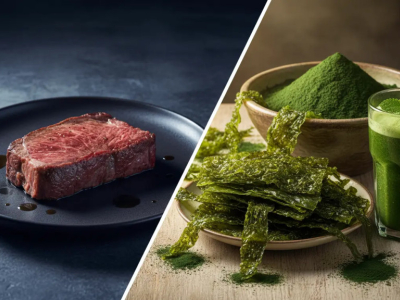
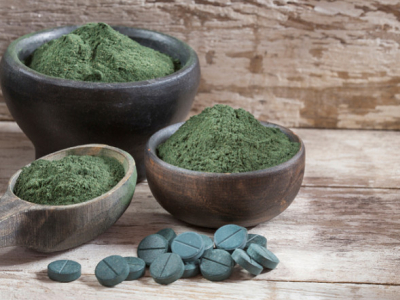
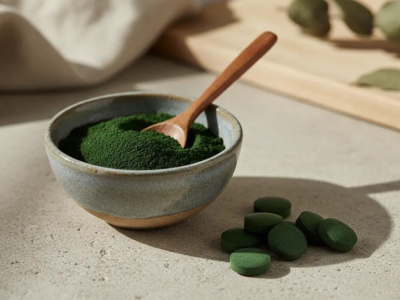
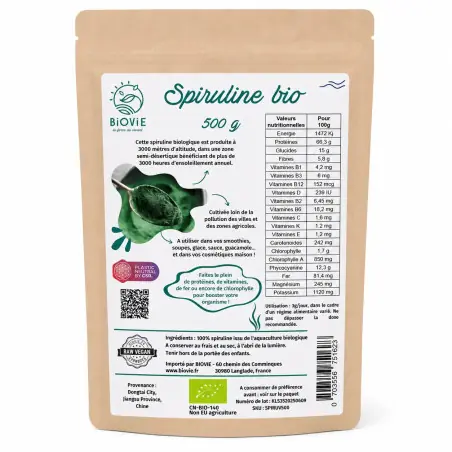
The spirulina — this blue-green microalga whose scientific name is Arthrospira platensis — is simply one of the richest superfoods in iron that exists. According to ANSES data (CIQUAL database), it contains 28.5 mg of iron per 100 g of dried powder, with a variation from 0.35 to 2.34 mg/g depending on the quality of the spirulina. To put things in perspective: that's about 5 times more than black pudding and 15 times more than spinach (and yes, we can forget the myth of Popeye).
Concretely, 4 grams of spirulina — it's a small teaspoon — bring between 1.4 and 9.36 mg of iron, which can cover from 10 to 67% of daily needs of a woman. Additionally, ANSES has validated the safety of consuming 2 to 10 grams per day over 12 months (2017 report), which is reassuring for long-term use.
Phycocyanin: The Secret of Iron Absorption in Spirulina
But what makes the spirulina and iron truly unique, it's not just the content — it's the way this iron is made available to our body. The iron in spirulina is naturally chelated (i.e., bound) to the C-phycocyanin, a blue pigment that is also a powerful antioxidant. This chelation keeps the iron in its ferrous form (Fe²⁺), which is the form best absorbed by our intestines. This is referred to as bioavailable iron, or even of highly bioavailable iron.
And there is another considerable advantage: unlike legumes or cereals, the shell of spirulina is not cellulosic. It is made up of easily digestible polysaccharides and does not contain phytates — these famous molecules that block the absorption of iron in so many other plant-based foods. This is why spirulina stands out significantly from other plant-based sources of iron.
Clinical studies: what do researchers say ?
The results of the studies are frankly encouraging for those interested in the link between spirulina and anemia. A study published in the Journal of Agricultural and Food Chemistry (2001) demonstrated that the formation of ferritin from spirulina was 27% higher to that obtained with yeast or enriched flour. The assimilation of iron from spirulina would be 6.5 times higher than that of meat.
Another study published in Cellular & Molecular Immunology showed an improvement in hemoglobin in elderly individuals with just 4 grams of spirulina per day for 2 weeks. Two weeks. That's fast.
Of course, spirulina does not replace medical treatment in cases of severe anemia. But in cases of spirulina iron deficiency light to moderate, and especially in prevention, it is a remarkable tool. To learn more, discover 6 ways to consume spirulina daily.
Biovie video to discover: Episode 3: 5 Essential Living Foods to Start With — Éric presents spirulina and chlorella as essential foods in a raw food diet.
Learn more about our organic spirulina certified by Ecocert →
Chlorella: Preparing the Ground for Better Iron Absorption
Intestinal detox — a clean intestine absorbs better
Here is an aspect that is often forgotten when we talk about Iron deficiency and intestine : the state of your intestinal mucosa. You can consume all the iron in the world, but if your intestine is congested, inflamed, or unbalanced, absorption will be compromised.
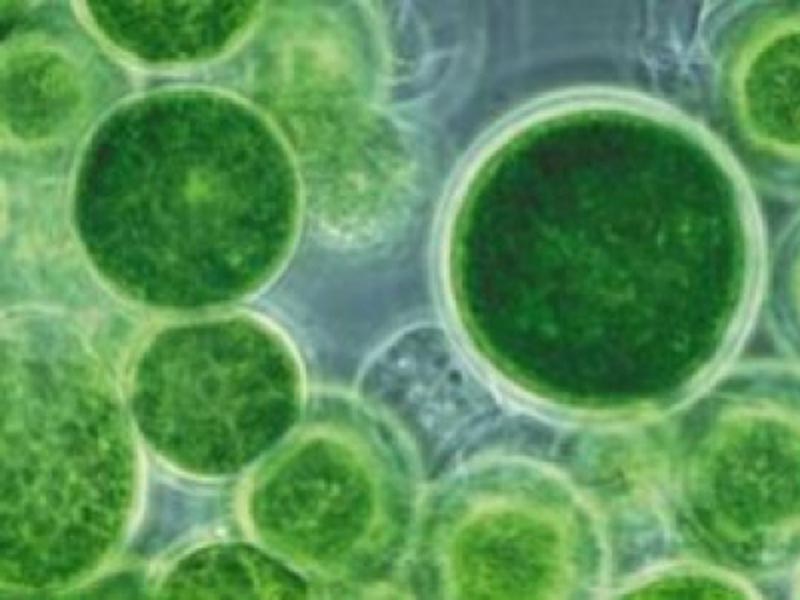
That's where the Chlorella comes into play. This green microalgaeChlorella vulgaris) is recognized for its properties in supporting the body's detoxification. It helps bind heavy metals and certain toxins in the digestive tract, which aids in clearing the way for better absorption of essential nutrients, including iron. To learn more about this topic, check out our dedicated article for discover all the benefits of chlorella.
Chlorella also supports the gut microbiota, which is fundamental: a balanced microbiota promotes the assimilation of minerals. In a way, chlorella sets the stage for the iron in spirulina to be properly absorbed.
B12 + chlorophyll: the allies in the production of red blood cells
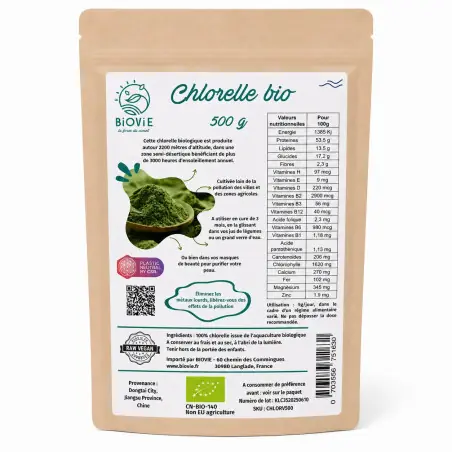
Chlorella has the highest concentration of chlorophyll in the plant kingdom. And this is far from a trivial detail: the chemical structure of chlorophyll is surprisingly close to that of hemoglobin. The main difference? A magnesium atom at the center of chlorophyll where hemoglobin contains iron. This structural similarity means that chlorophyll supports the formation of red blood cells.
Moreover, the Chlorella and iron form an effective duo because she brings bioavailable form of vitamin B12 — an essential vitamin for the production of red blood cells and the proper functioning of the nervous system. This is a crucial point for understanding the link between Iron and vitamin B12 deficiency symptoms, particularly for people following a vegetarian or vegan diet. If you are vegan, we recommend our article on The 10 essential nutrients for vegans.
And with its 50 to 60% protein content containing all essential amino acids, chlorella is in itself a complete superfood.
The synergy of spirulina + chlorella: more effective together
What we have observed for years at Biovie is that the combination of spirulina and chlorella works much better than each taken individually. Chlorella prepares the intestine and provides cofactors (B12, chlorophyll), while spirulina supplies iron in a highly absorbable form. It's a true complementarity, not just a simple stacking.
Biovie video to discover: Chlorella: The Revolutionary Superfood ! — Understanding everything about the properties of chlorella, its richness in iron, zinc, magnesium, and its detoxifying properties.
Discover our premium organic chlorella →
Marine plasma: the forgotten cofactors of iron absorption
78 minerals and trace elements directly assimilable
And here is the third pillar of our trio, the one that is talked about the least and yet is essential: the marine plasma. Purified seawater contains 78 minerals and trace elements in ionic form, that is to say, directly assimilable by the cells of your body. It is a complete mineral totum, a true concentrate of what nature does best in terms of remineralization. Discover the 10 benefits of marine plasma for your health and understand the role of trace elements in iron assimilation.
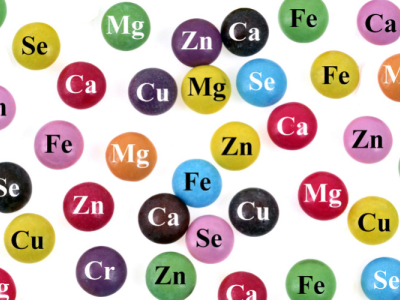
Copper, zinc, magnesium: the catalysts of iron metabolism
What many people don't know is that the Iron does not work alone.. To be properly metabolized and transported in the body, it requires cofactors. The three main ones are copper, zinc, and magnesium — and the Marine plasma and iron are intimately linked because the plasma contains all three.
The Copper is an essential cofactor in iron metabolism: it is responsible for the conversion between the Fe²⁺ and Fe³⁺ forms and is involved in the transport of iron via ceruloplasmin. Without sufficient copper, your body cannot properly use iron, even if you consume enough of it.
The zinc is involved in more than 300 enzymatic processes, including the production of gastric acid — and guess what, this gastric acid is essential for absorbing iron at the intestinal level.
The magnesium contributes to acid-base balance and the maintenance of an optimal intestinal pH for iron absorption.
Do you now understand why taking iron alone is not always enough? The mineral environment of your body also needs to be in place. This is exactly what marine plasma provides.
From the Vidal of 1975 to today: marine plasma and anemia
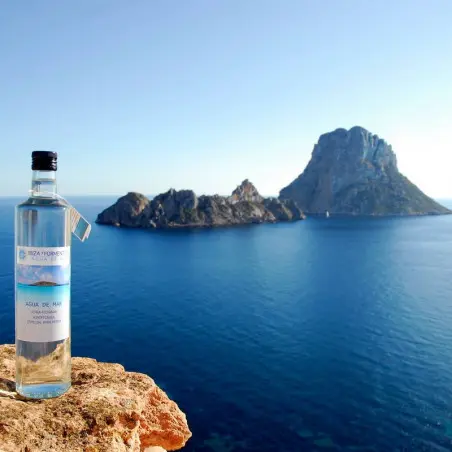
What has always fascinated me about marine plasma is that it is not a recent trend. The marine plasma (known as Quinton plasma, but since this brand is trademarked, we cannot use it) was listed in the Vidal — the drug dictionary — until 1975 with indications, among others, "anemia, asthenia, overwork". That is to say, exactly the issues we are discussing in this article.
René Quinton, at the beginning of the 20th century, had already understood that seawater contained all the elements necessary for proper cellular function. To choosing well between hypertonic and isotonic plasma, consult our dedicated guide.
Biovie video to discover: How is marine plasma collected in Ibiza ? — Behind the scenes of the collection and filtration of marine plasma that we offer at Biovie.
"Marine plasma is at an unbeatable price. The algae, honey, and freeze-dried fruits, everything is really very good." — Cindy, Trustpilot review ⭐⭐⭐⭐⭐
Explore our range of marine plasma →
The concrete protocol of the anti-deficiency trio: dosages and instructions for use
Now, let's get to the practical part. Because it's all well and good to understand why it works, but what you're interested in is how to put it all into practice in daily life. And honestly, it's much simpler than it seems. What to eat for iron deficiency, and especially how to optimize absorption — here is the step-by-step protocol.
Week 1 — gradual introduction phase
We never start at full speed. It's a common-sense principle that we systematically apply at Biovie: give your body time to adapt.
- Spirulina : 1 g per day (about 1/4 teaspoon)
- Chlorella : 1 g per day
- Hypertonic marine plasma : 1 ampoule diluted in a glass of water in the morning
The ideal time to take this trio: in the morning, on an empty stomach or 30 minutes before breakfast. Always accompany your intake with fresh lemon juice or a fruit rich in vitamin C (kiwi, orange, acerola) — vitamin C is the best ally for iron absorption.
Weeks 2 to 8 — loading phase
Gradually increase the dosages:
- Spirulina : 3 to 5 g per day (1 heaping teaspoon)
- Chlorella : 2 to 3 g per day
- Hypertonic marine plasma : 1 to 2 ampoules per day
This is the key phase. It is during these weeks that iron reserves can be replenished. Our customer feedback shows that the first effects on energy and fatigue are generally felt within 2 to 3 weeks. For a measurable increase in ferritin (verifiable by a blood test), allow 6 to 8 weeks continuous treatment.
Maintenance treatment — maintaining one's reserves
Once the charging cycle is complete, switch to maintenance mode:
- Spirulina : 2 to 3 g per day
- Chlorella : 1 to 2 g per day
- Isotonic marine plasma : 1 ampoule per day (the isotonic version is milder for long-term use)
This maintenance schedule can be sustained over several months, in cycles of 3 weeks on / 1 week off.
Associations to favor (vitamin C) and to avoid (tea, coffee, calcium)
This is an important point in thediet for iron deficiency : some Foods for iron deficiency promote absorption, others block it.
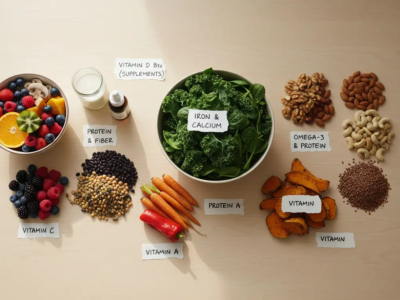
To favor (iron absorption boosters): - Vitamin C: fresh lemon juice, acerola, kiwi, red bell pepper, broccoli - Fruits and vegetables rich in beta-carotene
To avoid within 2 hours after taking the trio: - Tea and coffee (tannins block iron absorption) - Dairy products (calcium is a strong inhibitor of iron) - Foods very high in fiber or phytates (wheat bran, excessive whole grains)
"Morning Anti-Deficiency Smoothie" Recipe: A banana, 3 g of organic spirulina powder, 2 g of chlorella, the juice of half a lemon, and a small piece of fresh ginger. The marine plasma ampoule is diluted in a glass of water and drunk just before the smoothie. Two minutes flat, and you're ready for the day. With Aurélie, it has become a morning ritual, and honestly, we wouldn't go without it anymore.
"We are delighted with all the orders placed so far with Biovie. Whether it's the blender, spirulina, pollen, Quinton plasma, fresh algae... the delivery always goes smoothly, and the products are of excellent quality!" — Jean T., Google review ⭐⭐⭐⭐⭐
Furthermore, did you know that Dulse is another seaweed that is very rich in iron. ?An interesting alternative to incorporate into your recipes.
How much does it cost? The natural trio vs supplements in the pharmacy
I know that the question of cost is legitimate. Taking three products may seem expensive at first glance. But when you calculate it on a day-to-day basis, the reality is quite different.
A classic iron supplement in pharmacies costs between 5 and 15 € per month, indeed. However, it only contains iron, which is often poorly tolerated, without the absorption cofactors and without the additional benefits (proteins, B12, chlorophyll, antioxidants, overall remineralization).
The Biovie trio, when broken down to a daily cost, represents a comparable investment when you consider that you are not only getting assimilable iron, but also a complete supply of plant-based proteins, B12, chlorophyll, antioxidant phycocyanin, and 78 synergistic trace elements. It's somewhat like the difference between buying isolated synthetic vitamins and consuming a complete superfood.
And then, there is a cost that is often forgotten: that of chronic fatigue on your quality of life, your productivity, your morale. Restoring your iron reserves is about regaining energy, mental clarity, vitality. It's priceless. The global iron supplements market is expected to reach 5.5 billion USD by 2027 (+6.8% per year) and in France, the plant-based supplements segment is growing by +8.9%/year (Synadiet). The consumption of spirulina in France is increasing by +15% per year for 5 years. The trend is clear.
"As a nutrition therapist, I am constantly looking for organic, ethical, and effective products. For several years, I have been ordering from Biovie, and it is one of the few sites I have absolute trust in. The products are of remarkable quality." — Prisca T., nutrition therapist, Trustpilot review ⭐⭐⭐⭐⭐
Populations particularly at risk
An important point: certain populations are more exposed than others to the risk of iron deficiency and should be particularly vigilant. Among the causes of iron deficiency, physiological factors play a major role:
- Women of childbearing age Menstrual losses represent an additional 0.4 to 0.8 mg of iron per day. This is considerable over a month. Daily needs: 16 mg/day (ANSES).
- Pregnant women : the iron deficiency during pregnancy is common because iron needs are doubled, reaching 25 to 30 mg per day in the third quarter. The HCSP recommends systematic screening for iron deficiency.
- Teenage girls : rapid growth + menstruation = cumulative risk. Needs: 11 to 16 mg/day. The data shows up to 44% deficiency in this age group.
- Vegetarians and vegans : In the absence of heme iron (of animal origin), the intake must be compensated by quality plant-based sources. Spirulina is a key ally in this regard.
- Athletes : iron losses due to sweating and intestinal microlesions related to intense effort are underestimated.
- Elderly people : intestinal absorption of iron decreases with age (the National Academy of Medicine highlights the high prevalence in this population).
- Children from 6 months to 2 years : needs of 6 to 7 mg/day, critical period for neurological development.
For all these populations, a natural approach combining spirulina, chlorella, and marine plasma can be a relevant supplement, alongside appropriate medical monitoring. Of course, this trio does not replace a prescribed treatment in cases of severe anemia. Always consult your doctor.
"Since discovering BioVie and living foods, my health has transformed. I feel lighter, more energetic, with a true sense of serenity every day." — Siegfried R., Trustpilot review ⭐⭐⭐⭐⭐
FAQ — Your questions about iron deficiency and spirulina
Does spirulina increase iron levels ?
Yes. Spirulina contains 28.5 mg of iron per 100 g according to ANSES. This iron, chelated to phycocyanin, is stabilized in ferrous form (Fe²⁺), which facilitates its intestinal absorption. A study by the Journal of Agricultural and Food Chemistry showed a 27% higher ferritin formation from spirulina compared to other sources. In practice, 4 to 5 g per day provide 1.4 to 9.36 mg of iron, which is 10 to 67% of the daily requirements. Combine it with vitamin C to maximize absorption. At Biovie, our organic spirulina is certified by Ecocert and analyzed to guarantee its iron content.
How to consume spirulina in case of iron deficiency ?
Start gradually: 1 g per day during the first week, then increase to 3-5 g per day. Mix the spirulina powder into a smoothie with fresh lemon juice. Avoid taking it with tea, coffee, or dairy products that limit iron absorption. The ideal time: in the morning on an empty stomach or 30 minutes before a meal. For optimal effectiveness, combine it with chlorella and marine plasma.
Can spirulina and iron be taken at the same time ?
Yes, it is even complementary. Spirulina itself is a source of bioavailable iron. If you are taking a supplement prescribed by your doctor, spirulina can be consumed in parallel — space the intakes by 2 hours for optimal absorption. Consult your doctor to adjust the protocol. The natural approach (spirulina + chlorella + marine plasma) can be complementary or take over once the reserves are stabilized.
Is spirulina better than iron tablets ?
Spirulina does not replace medication in cases of severe anemia. However, for mild to moderate deficiencies, it offers notable advantages: no digestive side effects, better tolerance, and simultaneous provision of proteins, B12, chlorophyll, and antioxidants. Its iron chelated to phycocyanin shows remarkable bioavailability. It is particularly relevant for prevention or maintenance therapy.
Who should not take spirulina ?
ANSES advises against spirulina for individuals with a pronounced allergic background, liver disorders, or phenylketonuria. If you are on anticoagulants, consult your doctor (vitamin K). In cases of hemochromatosis (excess iron), spirulina is contraindicated. Always choose certified organic spirulina, tested for heavy metals and cyanotoxins. At Biovie, each batch is checked and certified by Ecocert.
How long does it take to see results on iron ?
The initial effects on energy and fatigue are generally felt within 2 to 3 weeks with the trio of spirulina + chlorella + marine plasma. For a measurable increase in ferritin levels (verifiable by a blood test), expect 6 to 8 weeks of continuous treatment. The improvement depends on the initial degree of deficiency and adherence to the protocol.
A varied and balanced diet and a healthy lifestyle are important. Dietary supplements do not replace a diverse diet.