

The Incredible Story of Kathleen Drew-Baker, the Woman Who Revolutionized the World of Nori
Today, I would like to share with you the fascinating story of a little-known British botanist, Kathleen Drew-Baker, whose discoveries literally saved an entire industry and revolutionized our understanding of the life cycle of red algae.
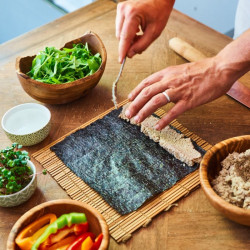
Frankly, when we eat a nori sheet in our makis or miso soups, we don't suspect for a second that this delicate seaweed almost completely disappeared from Japan in the 1950s. And it is thanks to the work of an extraordinary female scientist, working in a small laboratory in Manchester, that we can still enjoy this seaweed with such particular marine flavors today.
As for me, I discovered this story a few years ago while deepening my knowledge about seaweed for Biovie. This remarkable woman never set foot in Japan, never tasted nori in her life, and yet she is revered there as the "Mother of the Sea." This is a story that deserved to be told!
A Crisis Threatening an Entire Economic Ecosystem
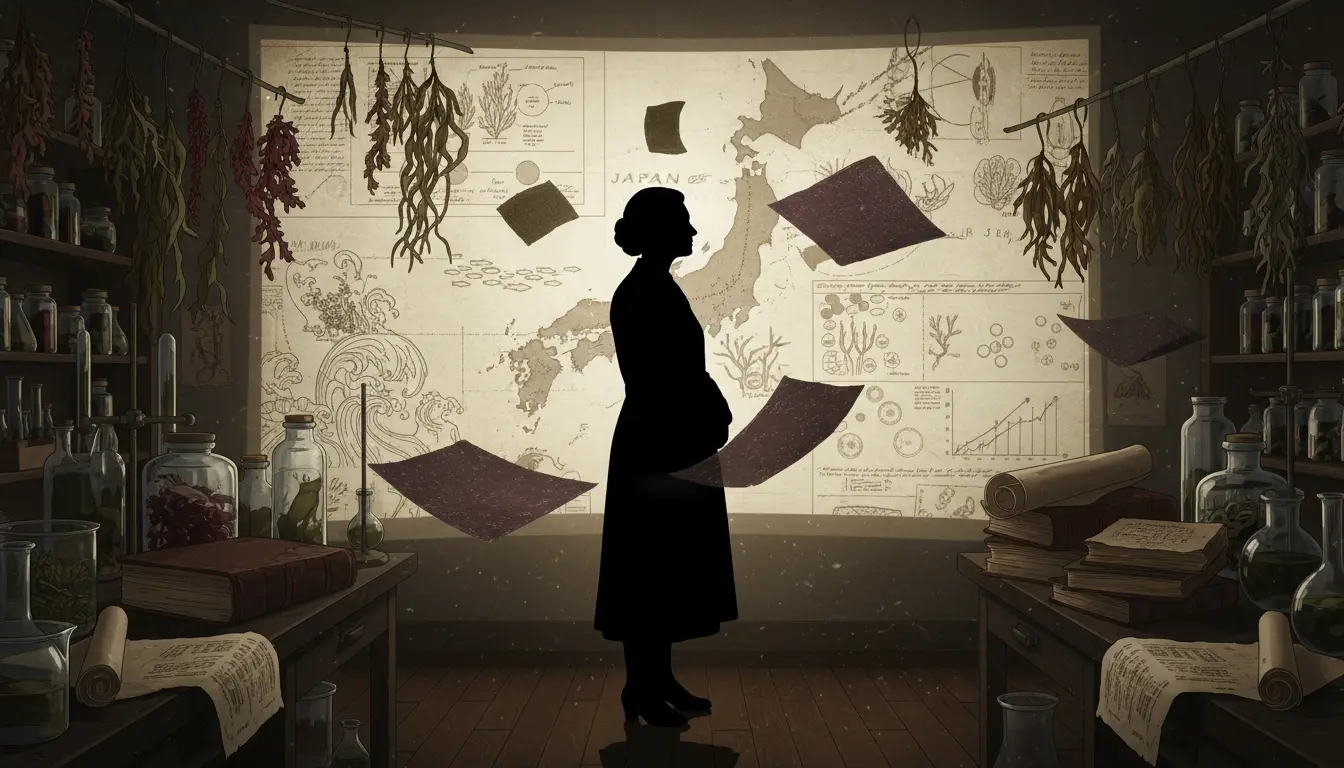
In the 1940s-1950s, Japan faced a major crisis in nori production. This red algae, cultivated for over 300 years in Japanese bays, saw its harvests dramatically collapse. The cultivators, called "nori-shi," watched helplessly as their traditional crops gradually disappeared.
The problem was significant: no one really understood the complete life cycle of nori. The Japanese had mastered the cultivation techniques, passed down from generation to generation, but they were completely unaware of how this algae reproduced in nature. In practice, they planted their nets hoping that the spores would attach to them, without really knowing where these spores came from or how they formed.
This lack of scientific knowledge made production extremely unpredictable and vulnerable. Some years, the harvests were abundant, other years, almost nothing. With the increase in coastal pollution and post-war environmental changes, the situation was becoming critical.
Kathleen Drew-Baker: A Passionate Botanist
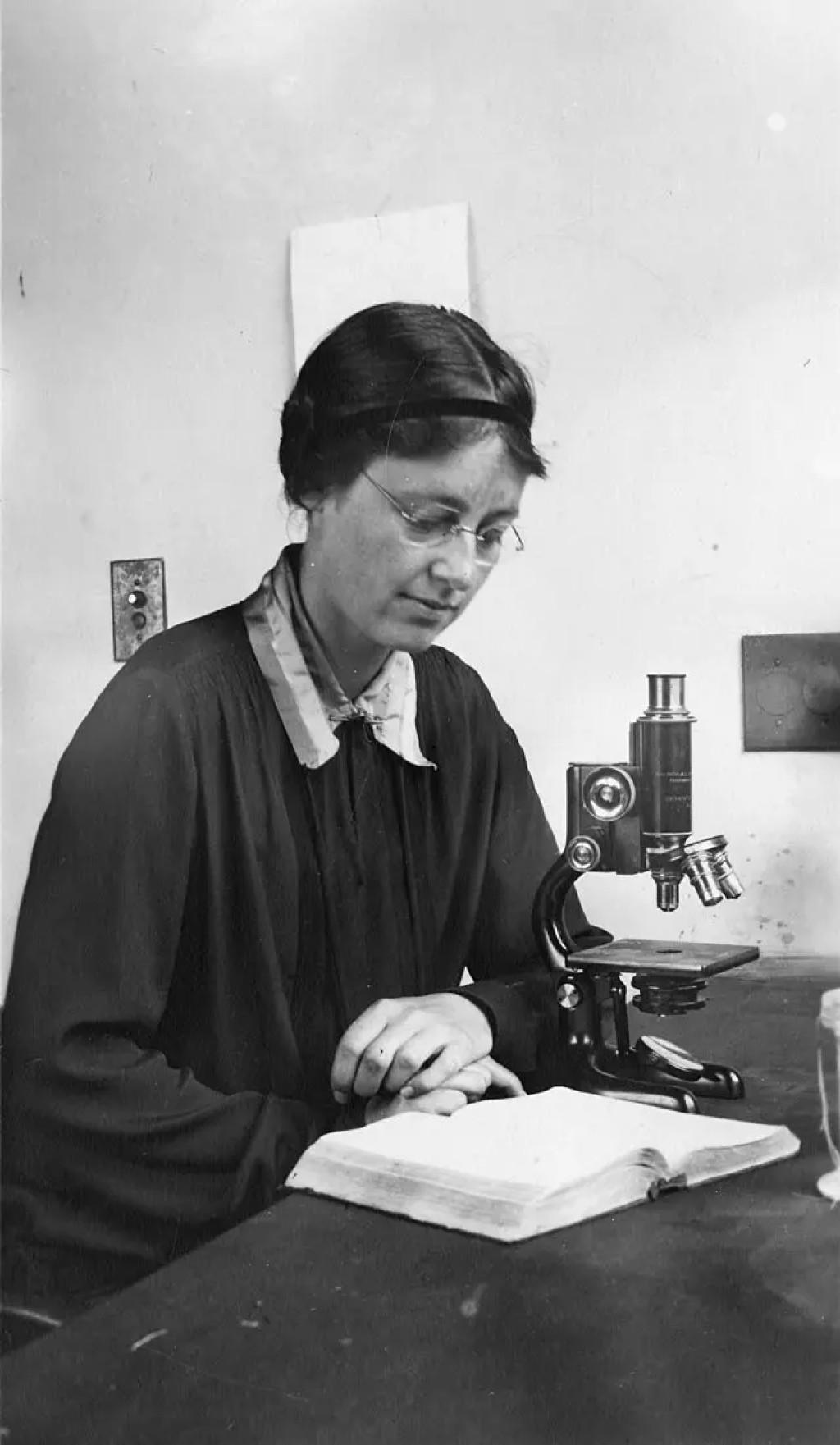
It is in this context that Kathleen Drew-Baker, a British botanist born in 1901, comes into play. A graduate of the University of Manchester, she specialized in the study of marine algae, a field still largely unexplored at the time. What fascinates me about this woman is that she conducted her research at a time when female scientists were rare and often little recognized.
Kathleen worked under difficult conditions, with limited resources, but she possessed that insatiable scientific curiosity that characterizes great discoverers. She spent hours observing under the microscope the different stages of development of red algae, trying to unravel the mysteries of their complex reproductive cycle.
The Revolutionary Discovery: Decoding the Mystery of the Life Cycle
In 1949, Kathleen Drew-Baker published a scientific article that would change the history of nori. She discovered that the red algae Porphyra (the scientific name for nori) has a particularly complex life cycle, with two distinct phases:
The first phase, which everyone knew, is the red algae we see floating in the water or that we cultivate on nets. But Kathleen discovered that there is a second, completely different phase, where the algae takes the form of small pink filaments that live inside shells!
This discovery was revolutionary. For centuries, scientists and cultivators searched for nori spores in the water, without realizing that a crucial part of the life cycle was taking place inside oyster and mussel shells. These small pink filaments, which she called the "Conchocelis phase," release the spores that then develop into the nori we know.
Frankly, it was like discovering that a butterfly can also live underground! This hidden phase explained why nori production was so unpredictable: it depended on the health of shellfish populations, whose role no one suspected.
The Revolution of Nori Cultivation in Japan
When Kathleen Drew-Baker's work reached Japan, it was a true revolution. Japanese scientists, led by Fusao Ota, immediately understood the importance of this discovery. They could finally fully control the reproductive cycle of nori!
In practical terms, here's what this discovery allowed:
Cultivators can now raise the pink filaments in laboratories, in controlled oyster shells. They manage the conditions of temperature, light, and nutrition to optimize spore production. No more hypothetically waiting for spores to arrive naturally!
This scientific mastery of the complete cycle transforms a traditional, random activity into a true modern industry. The production of nori literally explodes: from a few hundred tons per year in the 1950s, it has increased to several hundred thousand tons today.
Japan becomes the world's leading producer of nori, followed by South Korea and China. This algae, which was once threatened with extinction, becomes one of the most important aquaculture productions in the world, now representing a market worth several billion dollars.
"Mother of the Sea": Japan's Eternal Recognition
This is where the story becomes truly moving: Kathleen Drew-Baker never had the chance to see the fruits of her discoveries. She passed away in 1957, just a few years after her revolutionary work, without ever having visited Japan.
But the Japanese have never forgotten her. They respectfully call her "Haha-no-umi," which means "Mother of the Sea." In Sumiyoshi Bay, near Osaka, a memorial in her honor has been erected. Every year, on April 14th, her birthday, nori cultivators hold a ceremony to honor her memory.
This posthumous recognition deeply touches me. In our Western world, her name is barely known, while in Japan, she is revered as a benefactor of humanity. It's a beautiful example of gratitude and scientific recognition that transcends cultures.
Nori Today: A Superfood with Exceptional Qualities
Thanks to the discoveries of Kathleen Drew-Baker, we can now fully enjoy the extraordinary nutritional benefits of nori. This red algae has become one of the most sustainable and nutritious productions on our planet.
From a nutritional standpoint, nori is simply exceptional. It contains more protein than most land vegetables - about 35 to 50% of its dry weight. These proteins are complete, meaning they contain all the essential amino acids that our body cannot produce on its own.
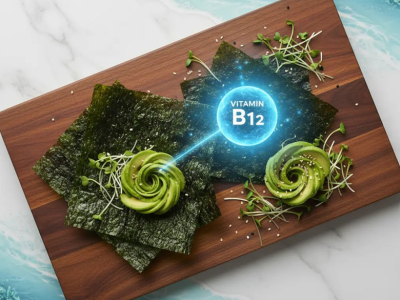
Nori is also a remarkable source of vitamin B12, making it particularly interesting for people following a vegetarian or vegan diet. Few plant-based foods contain this vitamin essential for the proper functioning of the nervous system.
But what fascinates me the most is its richness in bioavailable marine minerals: iodine, of course, but also iron, calcium, magnesium, zinc. These minerals are present in a form that our body easily assimilates, unlike synthetic supplements.
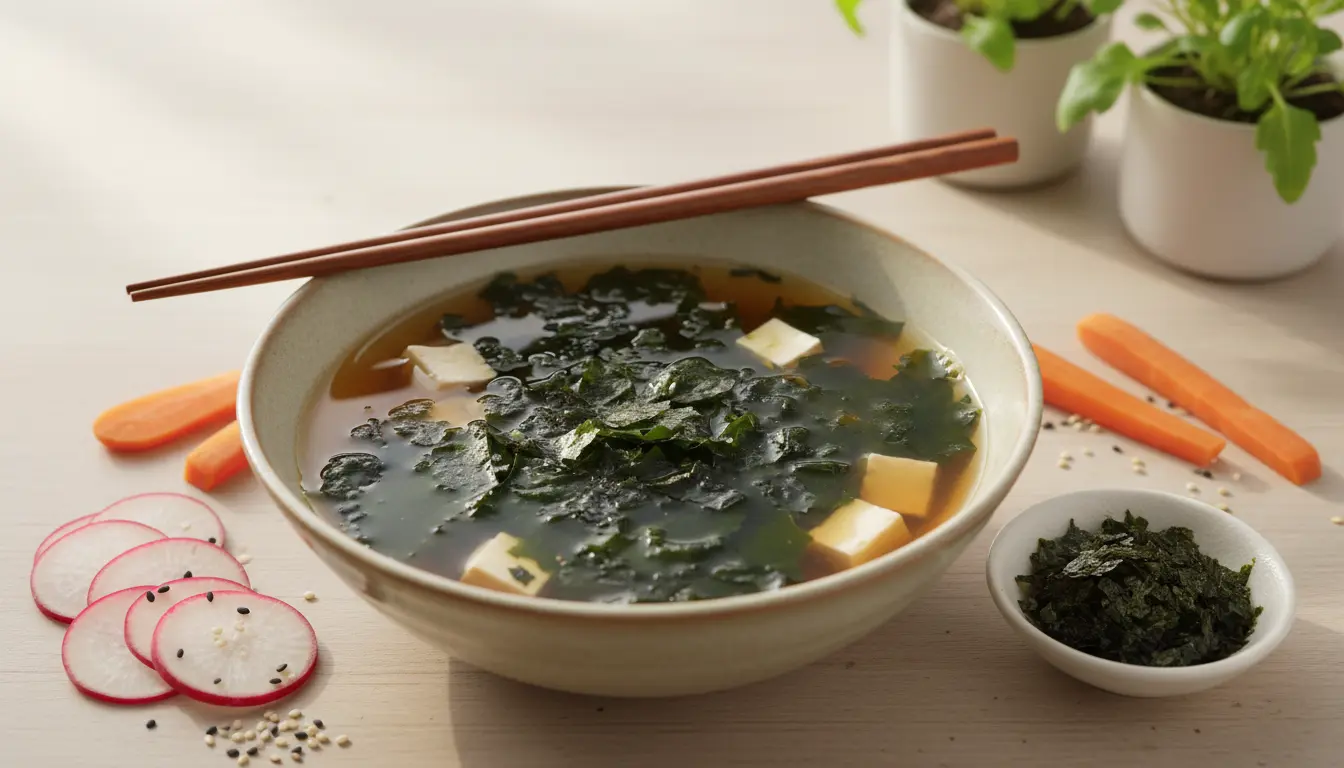
And then there's that characteristic umami flavor! Nori naturally contains free amino acids, including glutamic acid, which provide that fifth flavor so sought after in cooking. That's why a simple sheet of nori can completely transform the taste of a broth or soup.
An Environmentally Friendly Cultivation
What also excites me about the story of nori is that its cultivation represents a model of sustainable aquaculture. Unlike fish farming, which requires external food inputs, nori cultivation only consumes CO2 (it is actually a carbon sink) and nutrients naturally present in seawater.
In fact, nori farms even help purify the water! These algae absorb excess nutrients (nitrogen, phosphorus) that can cause eutrophication of coastal waters. It's a perfect example of an economic activity that improves the environment instead of degrading it.
The cultivation techniques have remained surprisingly simple and respectful: nets stretched in shallow waters, harvested by hand or with light machinery. No pesticides, no chemical fertilizers, just the power of nature harnessed through scientific knowledge.
€10.50
Organic Fresh Nori Seaweed
How to Choose and Use Nori Today
Practically, how can we benefit today from this extraordinary legacy left by Kathleen Drew-Baker? At Biovie, we have selected top-quality organic nori, harvested in pure Breton waters.
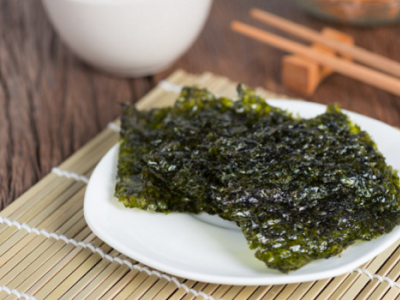
Frankly, the difference between good nori and industrial-quality nori is immediately noticeable. Good nori has that deep green-purple color, that fine yet resilient texture, and above all, that intense marine flavor without any bitterness.
One of my favorite ways to consume it is as natural "chips": cut it into strips, lightly grill it, and you have a delicious and nutritious marine snack. Aurélie also uses it a lot in her culinary creations, especially to bring that umami note to her raw preparations.
The Living Legacy of a Pioneer
In conclusion, every time we enjoy a sheet of nori, we unknowingly pay tribute to the scientific genius of Kathleen Drew-Baker. This remarkable woman bequeathed us much more than just a cultivation technique: she opened the doors to sustainable and nutritious marine food.
Her story perfectly illustrates how fundamental science, conducted with passion and rigor, can transform the world in unexpected ways. Without her discoveries, we probably would never have had access to the nutritional wealth that nori offers.
This is why I wanted to share this story with you: to remind you that behind every food we offer at Biovie, there are extraordinary men and women who have dedicated their lives to understanding and improving our relationship with nature.
The next time you bite into a sheet of nori, think of Kathleen Drew-Baker, this "Mother of the Sea" who never saw the Pacific Ocean but revolutionized the way we cultivate and consume seaweed.
FAQ: Your questions about Kathleen Drew-Baker and nori
Who was Kathleen Drew-Baker?
Kathleen Drew-Baker (1901-1957) was a British botanist, a graduate of the University of Manchester, specialising in marine algae. She carried out her research on the life cycle of red algae in a small laboratory, at a time when female scientists were rare and little recognised.
What was her major discovery?
In 1949, she discovered that the red algae Porphyra, the scientific name for nori, has a life cycle with two distinct phases: the visible phase we know, and a hidden phase in the form of small pink filaments living inside oyster and mussel shells, which she named the Conchocelis phase.
Why did this discovery save the nori industry in Japan?
Before this discovery, Japanese nori growers did not know how the algae reproduced, which made production highly unpredictable. Thanks to Kathleen Drew-Baker's work, Japanese scientists were able to control the reproductive cycle in the laboratory, taking production from a few hundred tonnes a year in the 1950s to several hundred thousand tonnes today.
Why is Kathleen Drew-Baker nicknamed the Mother of the Sea in Japan?
The Japanese respectfully call her Haha-no-umi, Mother of the Sea, in tribute to the discoveries that saved the nori industry. A memorial is dedicated to her in Sumiyoshi Bay, near Osaka, and every 14 April, her birthday, nori growers hold a ceremony in her memory, even though she never travelled to Japan.
What are the nutritional qualities of nori?
Nori contains around 35 to 50% complete protein by dry weight, more than most land vegetables. It is also a source of vitamin B12, particularly valuable for vegetarian or vegan diets, as well as marine minerals such as iodine, iron, calcium and zinc.
Is nori farming a sustainable form of aquaculture?
Yes. Unlike fish farming, growing nori requires no external feed: it uses only the CO2 and nutrients naturally present in seawater. Nori farms even absorb excess nutrients that can cause eutrophication of coastal waters.