Fast delivery
.png)
 Fair prices


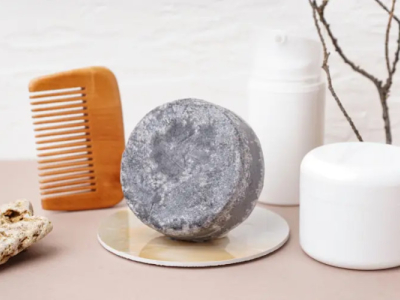

Shampoo Bar or Rhassoul Clay: Why the Clay Is the Real Sulfate-Free Starting Point
If you've started looking at a solid shampoo bar instead of a plastic bottle, you've already understood the important part: harsh detergents have no business on a living scalp. But here's what's rarely said — most "sulphate-free" products, bars included, simply swap SLS for other surfactants. The detergent logic stays the same, just a little gentler. Rhassoul clay (ghassoul) isn't a shampoo at all. It's a pure mineral clay that cleanses by adsorption — a physical phenomenon, not a chemical one. As far as I know, it's the only genuine way to step out of the surfactant model altogether.
I'm Éric Viard, an agricultural engineer trained at ISTOM, founder of Biovie since 2007 and co-author of "Algues au quotidien" (Gallimard, 2024). For more than thirty years I've been testing, in the field and on myself, the simplest things nature has to offer. Rhassoul is one of those products I've used for so long I'd almost forgotten how disorienting it is when you first try it.
Why sulphates are a problem (and why "sulphate-free" liquids aren't enough)
Let's start with the culprit everyone knows by name without really knowing it. SLS (sodium lauryl sulphate) and its cousin SLES (sodium laureth sulphate) are anionic surfactants. Their job is to foam and lift grease. And that they do remarkably well — perhaps too well.
Recent work on the scalp microbiome (high-throughput sequencing, 2024) shows that repeated washing with strong surfactants depletes the skin's microbial diversity and disrupts the lipid film that protects the outer skin layer. In plain terms, here's what that means in your shower: a stripped scalp signals your sebaceous glands to "rebuild everything, fast." Hence the vicious circle so many people know — greasy hair by the next day, so daily washing, so an even more reactive scalp. The American Academy of Dermatology actually recommends avoiding sulphates in cases of rosacea, eczema or seborrhoeic dermatitis.
So far, nothing new: this is exactly what pushed you towards the "sulphate-free" shelf. The problem is what's on that shelf.
What a "sulphate-free" shampoo bar really hides
Turn the pack over. Read the INCI list. Where sodium lauryl sulphate used to be, you'll almost always find sodium coco-sulphate, cocamidopropyl betaine or decyl glucoside. These are other surfactants. Gentler, often plant-derived, true — but the logic is identical: dissolve the sebum into a lather you rinse off. Alongside them you'll frequently find preservatives (phenoxyethanol, benzyl alcohol) and synthetic fragrances.
That's the deep misunderstanding. "Sulphate-free" has become a marketing answer to a worry — not a change of paradigm. Whether you buy your natural shampoo in a supermarket or a pharmacy, you stay in the same world: the surfactant world. A slightly more respectable one, fine. But the same world.
So the real question isn't "which is the best shampoo bar?". It's: do you want less detergent, or do you want to change method entirely?
Rhassoul clay: a third, mineral path — not another shampoo
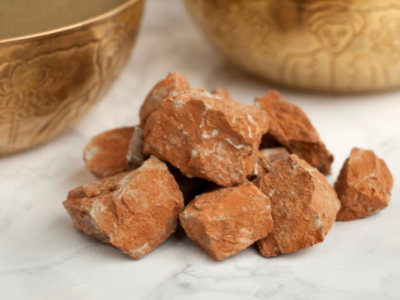
Rhassoul (from the Arabic ghassala, "to wash") is a clay extracted from a single place on earth: the Moulouya valley in the Moroccan Atlas. It has been used in the hammam since the 8th century for skin and hair. It isn't a "trendy" ingredient picked up by the cosmetics industry — it's a thousand-year-old practice that never needed lather to prove itself.
Its composition has been studied in detail (Daoudi et al., 2018): roughly 53.6% silica (SiO₂), 9.9% SO₃, 8.3% magnesium oxide (MgO) and 8.1% alumina (Al₂O₃). Its signature is stevensite, a clay from the magnesium smectite family, alongside calcite, dolomite and quartz. Behind those rather dry figures lies a simple fact: these clay sheets are negatively charged and have a high exchange capacity. Translated into everyday terms, they attract and hold greasy particles and residues — a bit like a magnet for sebum.
Adsorption vs detergency: the difference that changes everything
This is the heart of it, so let's take thirty seconds on it. A surfactant dissolves grease: it surrounds it, lifts it and carries it off in the lather, taking part of the protective film with it. Rhassoul works by adsorption: sebum and impurities stick to the surface of the clay sheets and leave with the rinse water. There's no detergent emulsion, no stripping.
The result, in feel: the hair is clean, but the scalp doesn't feel tight. None of that raw, degreased sensation that, precisely, restarts the sebum machine. Many people describe a scalp that feels "soothed" rather than "cleaned". That's exactly what we're after.
A question of pH (and why baking soda is a false good idea)
Rhassoul's pH is neutral to slightly acidic, around 7. Your scalp's pH sits between 4.5 and 5.5. We're in a compatible zone — the clay doesn't disturb the acid balance that protects the cuticle and the skin flora.
I make this point because many people, on leaving sulphates, turn to baking soda. Bad idea. Baking soda has a pH of around 9: firmly alkaline. Short term it "cleans", but over time it lifts the cuticle scales and weakens the fibre. Rhassoul does the opposite: it respects the terrain instead of forcing it.
Stevensite: recognising real rhassoul
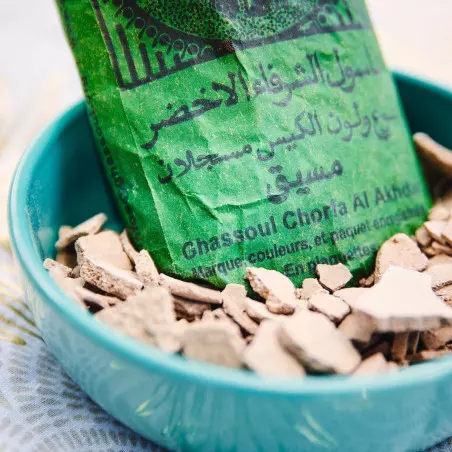
Not all "rhassoul" is equal. Some clays sold under that name are actually cut with kaolinite or montmorillonite, which don't behave the same way. The quality marker is the presence of stevensite and genuine traceability of origin. That's also why we chose a raw rhassoul clay, Ecocert-certified and non-irradiated, for the shop: certification guarantees origin and the absence of treatment.
The "no poo" transition: what nobody tells you
Let's be honest, because this is where most people give up. When you stop using strong surfactants, your scalp doesn't recalibrate overnight. It has learned, sometimes over years, to overproduce sebum to compensate for the stripping. By the time it understands it can ease off, you should allow 2 to 6 weeks (documented transition protocols converge on that range).
Why the variation? Because your sebaceous glands produce on average 1 to 2 mg of sebum per cm² per day, and that output takes time to come down after years of overstimulation. The duration depends on your hair length, its nature, and above all your history of silicones — those coatings that mask the fibre's true state.
During this phase, expect hair that gets greasy quickly, an occasionally itchy scalp, a slightly "waxy" feel. Beyond the discomfort, here's what it really means: your skin is relearning its rhythm. All of it is temporary. And that's exactly where rhassoul becomes valuable: it absorbs excess sebum without triggering the rebound effect. It bridges the gap between "surfactant shampoo every day" and "almost nothing". It's the gentle crutch of the no poo transition, not a punishment.
An honest precaution before going further
Rhassoul is a cosmetic, not a medicine, and it doesn't suit everyone. If you have scalp psoriasis, active seborrhoeic dermatitis or a skin infection, this is not the moment to experiment with a new routine on your own: speak to a dermatologist first. And as with any product applied to the skin, a patch test on the inner elbow 24 hours before first use remains a good habit, even though reactions are rare.
Practical protocol: using rhassoul as a shampoo
Good news to start: it takes two minutes and needs no special equipment. A bowl, a spoon, and the clay you already have in your cupboard.
The basic recipe, for mid-length hair:
- 2 tablespoons of rhassoul powder in a non-metallic bowl.
- Warm water added little by little, until you get a smooth paste, neither too runny nor too thick (the texture of stirred yoghurt).
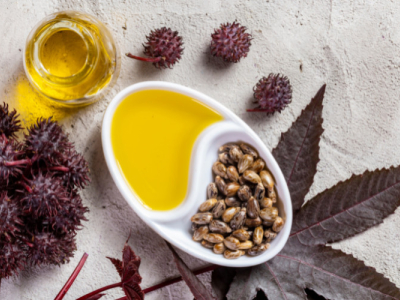
- For dry or porous hair, 1 teaspoon of castor or jojoba oil mixed into the paste.
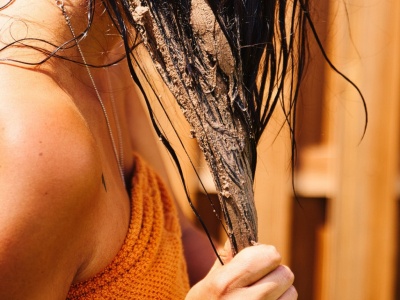
- Apply to the scalp with a gentle massage, then to the lengths. Leave on for 5 to 10 minutes.
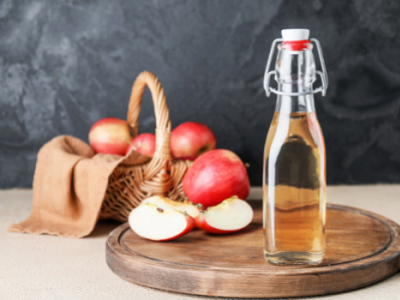
- Rinse thoroughly with warm water. Optionally, a final rinse with water and organic cider vinegar (1 tablespoon per litre) closes the cuticle and adds shine.
Frequency: 1 to 2 times a week, no more, alternating with simple water rinses. This mineral solid shampoo used daily would end up drying things out — as so often, the best is the enemy of the good. To go further, this homemade shampoo with clay fits beautifully into a zero-waste routine.
The classic mistakes (I've made them all)
A paste that's too runny slides off and gives a muddy, ineffective result. A paste that's too thick is a nightmare to rinse and leaves residue. Water that's too hot stimulates sebum production, so warm, never scalding. And above all: don't combine rhassoul with baking soda "to clean better". You'd cancel out the whole benefit of the respectful pH we discussed above.
Winning combinations
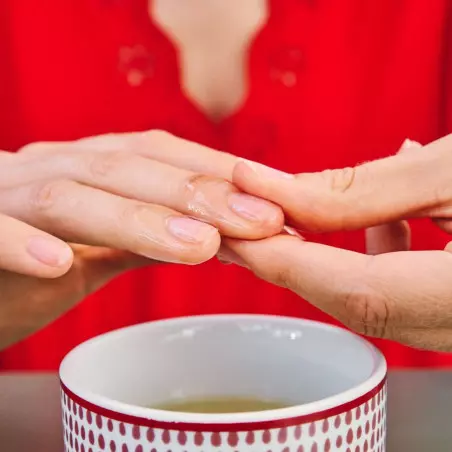
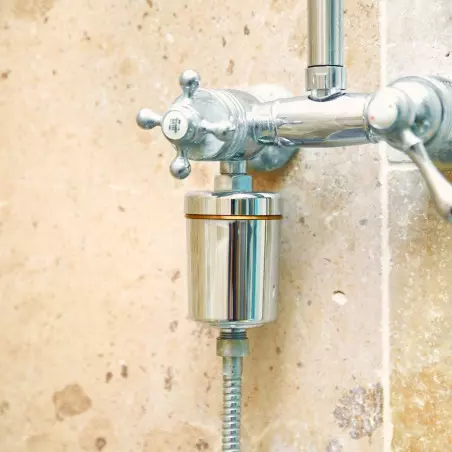
Rhassoul works even better with company. A pre-shampoo bath of castor oil, left on 30 minutes before washing, nourishes the lengths and supports density. Cider vinegar as a final rinse acidifies, detangles and adds shine. Finally, a factor almost always overlooked: filtered water. The chlorine and limescale in tap water stress the fibre as much as some products do. A shower filter sometimes changes more than you'd think.
Greasy hair, dandruff, sensitive scalp: what rhassoul really changes
For greasy scalps, it's often the turning point. The clay absorbs excess sebum without overstimulating the glands — unlike some zinc anti-dandruff shampoos, which degrease hard and restart production. What people report most often is washes gradually spacing out: from every day to every two or three days.
On dry dandruff, the clay's gentle exfoliating action helps loosen flakes, and its mineral content soothes a tight scalp. On persistent greasy dandruff, though, let's be clear: if it's linked to an overgrowth of Malassezia yeast, rhassoul may support comfort but doesn't replace treatment. Persistence = a dermatologist's opinion, without hesitation.
For sensitive or reactive scalps, the absence of surfactant, fragrance and preservative is exactly what we're looking for. And for colour-treated hair: rhassoul doesn't strip colour the way sulphates do. It's even an ally for making a balayage or a plant-based colour last.
The limits, no spin
I'm not going to sell you a miracle product, because there's no such thing — not in cosmetics, not anywhere.
Rhassoul doesn't lather. For many, that's the real obstacle: we've spent our whole lives associating lather with cleanliness, when lather is just an effect of surfactants, not a sign of cleaning. It takes two or three washes to unlearn that reflex.
In very hard water, the clay can leave a "waxy" feel on the lengths: the warm cider-vinegar rinse usually sorts it out. On very fine hair, overdosing can weigh it down — start light. And no, rhassoul doesn't make hair grow: growth depends on internal factors (nutrition, hormones, stress, sleep) that no clay, however good, can influence.
In short: it isn't a promise, it's a method. And like any method, it asks for a little patience at the start.
Frequently asked questions
What is the best sulphate-free shampoo?
The real question isn't finding "the best" among the liquid formulas, but deciding what you want: fewer sulphates, or truly leaving the detergent model? If it's the latter, rhassoul clay is both the most radical and the gentlest option.
What are the drawbacks of a sulphate-free shampoo?
Liquid formulas lather less and often keep other surfactants: they remain industrial cosmetics. Rhassoul doesn't lather at all — the psychological adjustment takes two or three washes, that's the main "drawback".
How long does the transition to natural washing take?
Between 2 and 6 weeks, depending on your hair type and your history of silicones. Rhassoul helps you through this stage by stabilising sebum production rather than restarting it.
Is rhassoul suitable for colour-treated hair?
Yes. It contains no stripping surfactant, unlike sulphates which dull and fade colour. It even helps preserve vibrancy.
Can you use rhassoul every day?
No. Once or twice a week is enough. Beyond that, you risk drying out scalp and lengths.
Does rhassoul work on dandruff?
On dry dandruff and excess sebum, it clearly helps (gentle exfoliation + adsorption). On persistent greasy dandruff linked to Malassezia, it may support comfort but doesn't replace a dermatologist's advice.
Where to start
If you remember one thing: a liquid sulphate-free shampoo is a half-measure; rhassoul clay is a change of logic. To test over three weeks what it really changes for your scalp and the spacing of your washes, start with a raw, certified, traceable rhassoul — it's the foundation of a natural skincare and haircare routine that lasts.
References
- Daoudi, L., et al. (2018). "Ghassoul – Moroccan clay with excellent adsorption properties". Materials Today: Proceedings (ScienceDirect S2214785318309568).
- Chiheb, H., et al. (2020). "Interfacial electrochemical properties of natural Moroccan Ghassoul (stevensite) clay in aqueous suspension". Heliyon, PMC7109421.
- (2024). "Scalp microbiome dynamics and antiseborrheic shampoo: a randomized controlled study". PMC12256380.
- (2024). "High-throughput sequencing of scalp microbiome changes during shampoo use". PMC12337528.
- "New Topicals to Support a Healthy Scalp While Preserving the Microbiome". Journal of Clinical and Aesthetic Dermatology (JCAD).
Last update: June 2026. Article written by Éric Viard, founder of Biovie and agricultural engineer ISTOM, co-author of "Algues au quotidien" (Gallimard, 2024) — World's Best Cookbook, Gourmand Cookbook Awards 2025, and Best French Cookbook, Académie Nationale de Cuisine 2025.
This article is for educational purposes only. It does not replace medical advice. If you have persistent greasy dandruff, scalp psoriasis, active seborrhoeic dermatitis or any skin infection, consult a dermatologist before adopting a new routine.