


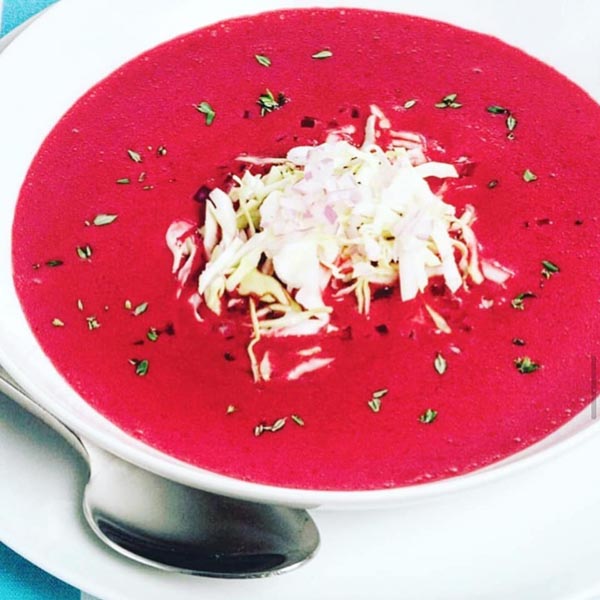
Raw borscht is the quickest and most surprising raw beetroot recipe you can prepare: five minutes, zero cooking, and all the active compounds of the red beetroot remain intact. Not boiled. Not degraded by heat. Alive. That's exactly the spirit of raw food — and it's what radically distinguishes this raw soup from any traditional borscht.
What is raw borscht?
Borscht, in its Ukrainian or Russian version, is a long-simmered soup — red beetroot, cabbage, spices, several hours of cooking. An ancestral, hearty dish that truly warms you up. But in the raw version — the raw borscht — the whole concept is reinterpreted. The vegetables are not cooked. The water is heated to a maximum of 35–40°C to keep the digestive enzymes active. The result: an intensely red soup, slightly warm, with all the nutritional density of raw beetroot preserved.
For those discovering the principles of raw food, this borscht is often one of the first recipes that truly convinces. It's unexpected. And it's astonishing.
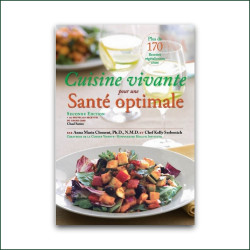
This recipe is taken from the 170 recipes in our eBook "Living Cuisine for Optimal Health", developed with Aurélie. Essentially, everything we've learned in three decades of raw cooking — ratios, combinations, texture tips — condensed into a guide to enjoy meals without ever getting bored.
Raw Borscht Recipe — Ingredients and Preparation
Ingredients (for 2 people)
⏱ Preparation time: 5 minutes | Level: easy
In a bowl (crunchy base):
- 1 stalk of celery, finely chopped
- 1 red onion, finely chopped
To blend:
- 1 cup of chopped green cabbage
- 1 chopped red onion
- 3 cups of chopped raw red beet (about 400 g)
- ½ avocado
- ½ teaspoon of fresh thyme
- 2 cups of warm water (35–40°C maximum to preserve enzymes)
- 1 tablespoon of fresh lemon juice
- 1 tablespoon of Biovie marine plasma
Step-by-step Preparation
- Prepare your bowl: finely chop the celery and red onion, place them at the bottom.
- Peel the raw red beet and cut it into coarse pieces. (Tip: use gloves — betacyanin stains hands permanently.)
- Place all the blender ingredients: beet, cabbage, onion, avocado, thyme, warm water, lemon juice, and marine plasma.
- Blend for 60 to 90 seconds until you get a smooth texture. If you prefer a lighter consistency, add a little water.
- Pour the mixture over the celery and onion in the bowl. Mix gently.
- Serve immediately — the enzymes are at their peak activity in the first few minutes after preparation.
And there you have it, it's done. Enjoy your meal!
Why add marine plasma to this recipe?
Honestly, it's one of the ingredients we've been using the most at home for years — and it always surprises those who discover our recipes. Marine plasma is a great substitute for salt. Composed of the same minerals as our blood plasma, it provides the 78 trace elements of seawater in ionic form, directly assimilable. It subtly enhances the iodized flavor of the soup while contributing to the remineralization of the body. It's the Biovie angle — the one you won't find in classic raw beet recipes. A small detail that really changes the tasting experience.
The Benefits of Raw Beet
Raw red beet consumption is a whole different dimension. Cooking degrades some of its active compounds — notably betacyanin and folates, both heat-sensitive. Choosing raw beet means opting for the benefits of raw foods in their full expression. And that's precisely why this soup has interested me so much over the years.
Betacyanin: A Remarkable Pigment
That intense red color in your bowl? It comes from betacyanin, a pigment from the betalain family. This compound is known for its antioxidant properties: it helps neutralize free radicals and, according to available research data, supports the body's natural liver detoxification functions. Betalains begin to degrade at 60°C — another reason to consume raw beet, or in gently warmed water.
Moreover, a study published in the Journal of Functional Foods (Wootton-Beard & Ryan, 2011) confirmed that beet juice is a significant source of bioavailable antioxidants. No extrapolation on my part — it's documented.
Natural Nitrates and Cellular Oxygenation
Beetroot is among the vegetables richest in natural dietary nitrates. In the body, these nitrates are converted into nitric oxide (NO), a molecule involved in vascular dilation and improved cellular oxygenation. Research published by Lansley et al. (2011) in the Journal of Applied Physiology documented this functional interest in a controlled clinical trial. For those wondering why to keep foods raw, the ranking of vegetable processing methods—from worst to best—is very enlightening reading.
Nutritional Richness (ANSES Ciqual Data)
For 100 g of raw red beetroot, according to the ANSES Ciqual database (food code 20047):
- Folates (vitamin B9): about 109 µg — contribute to the normal functioning of the nervous system and normal cell division
- Potassium: about 325 mg — contributes to the normal functioning of the nervous system and normal blood pressure
- Dietary Fiber: about 2.55 g — contributes to normal digestive function and nourishes the gut microbiota
- Manganese: enzymatic cofactor contributing to the protection of cells against oxidative stress
As part of a varied and balanced diet and a healthy lifestyle, raw red beetroot is an interesting source of essential micronutrients. These values should be verified directly on the Ciqual 2025 database before publication.
Is Raw Beetroot Toxic? What You Need to Know
This question often arises. The short answer: no, raw beetroot is not toxic for healthy adults. It is perfectly edible and safe as part of a varied and balanced diet. However, some useful clarifications:
- Betaturia (red or pink urine): a benign and harmless phenomenon, observed in 10 to 15% of people after consuming beetroot. It's the betacyanin passing through—no need to worry.
- Oxalates: beetroot contains natural oxalates. People prone to oxalic kidney stones are advised to moderate their consumption and consult their healthcare professional.
- Nitrates and Infants: the natural nitrates present in beetroot are not recommended in large quantities for infants under 6 months. For adults, usual dietary intake poses no problem.
- Ongoing Medication Treatments: when in doubt, always consult your doctor or healthcare professional before changing your diet.
Variations and Ideas to Go Further
Raw borscht is a base that can be endlessly modified. Some ideas to vary the pleasures:
- Detox Version: add 1 cm of freshly grated ginger + 1 additional tablespoon of lemon juice
- Satiating Version: double the amount of avocado for a creamier texture and a more generous supply of good fats
- Warm Version: use water at 38–40°C and serve immediately—the comfort of a hot soup, with all enzymes preserved
- In Raw Beetroot Salad: blend for a shorter time to achieve a thicker texture, to pour over a base of raw vegetables
For more ideas for delicious raw soups, our raw curry and fresh coconut soup recipe is a great discovery. If you enjoy combining beetroot and seaweed, our dulse and beetroot salad will surprise you. And for a colorful and lively starter, the beetroot-carrot verrines are a success every time.
Frequently Asked Questions About Raw Borscht and Raw Beetroot
How to eat raw red beetroot?
Raw red beetroot can be consumed grated in a salad, blended in a cold soup like in this raw borscht, or juiced with an extractor. It is recommended to peel it before consumption. When finely grated or blended, it is easier to digest and better tolerated than when consumed in large pieces.
Is it good to eat raw beetroot?
Yes, raw beetroot is excellent for health as part of a varied and balanced diet. When consumed without cooking, it retains its enzymes, folates (about 109 µg/100g according to the Ciqual ANSES database), potassium (325 mg/100g), and betacyanin — compounds that partially degrade during cooking. It contributes to cellular oxygenation thanks to its natural nitrates.
How to prepare raw beetroot?
Peel the raw beetroot under cold water, preferably with gloves to avoid staining your hands. Cut it into pieces, then grate it, blend it in a blender, or pass it through an extractor according to your recipe. It can also be sliced into thin strips for a raw beetroot carpaccio or julienned for a salad. No cooking is necessary.
What can be done with raw beetroots?
Raw beetroots lend themselves to many preparations: cold soup (like this raw borscht), juice with an extractor, grated salad, carpaccio, beetroot hummus, smoothie, or dehydrated chips. In raw cuisine, they pair particularly well with avocado, lemon, ginger, and seaweed.
Is raw beetroot toxic?
No, raw beetroot is not toxic for healthy adults. It can cause a pink or red coloration of the urine (beeturia) — a benign and harmless phenomenon. People prone to oxalic kidney stones or following specific medical treatments are advised to consult their healthcare professional before consuming it in large quantities.
"Finally a site that meets my expectations in terms of ingredients! It is sometimes difficult to get everything we need for raw cooking in organic stores." — Christelle, Biovie customer ★★★★★
References
- Lansley, K.E., Winyard, P.G., Fulford, J., Vanhatalo, A., Bailey, S.J., Blackwell, J.R., DiMenna, F.J., Gilchrist, M., Benjamin, N., Jones, A.M. (2011). "Dietary nitrate supplementation reduces the O2 cost of walking and running: a placebo-controlled study". Journal of Applied Physiology, 110(3), 591–600. doi: 10.1152/japplphysiol.01070.2010. (controlled clinical trial)
- Wootton-Beard, P.C., Ryan, L. (2011). "A beetroot juice shot is a significant and convenient source of bioaccessible antioxidants". Journal of Functional Foods, 3(4), 329–334. (analytical study)
- ANSES. Ciqual 2025 food nutritional composition table. https://ciqual.anses.fr — Raw red beetroot (food code 20047). ⚠️ Values to be verified on the Ciqual 2025 database before publication.
Update: March 2026. Article validated by Éric Viard, founder of Biovie and engineer at ISTOM, co-author of “Algues au quotidien” (Gallimard, 2024) — Best Cookbook in the World, Gourmand Cookbook Awards 2025, and Best Cookbook in France, National Academy of Cuisine 2025.
Disclaimer: The information presented in this article is provided for informational purposes only and does not constitute medical advice. Consult a qualified healthcare professional before making any changes to your diet or supplementation. As part of a varied and balanced diet and a healthy lifestyle.