







You are considering a treatment of birch sap but do the words "danger" and "side effects" worry you? It's a healthy reaction, and frankly, I completely understand it. After almost 19 years of supporting living food with Aurélie at Biovie, we have heard all possible concerns about this spring cleanse. So here is the complete truth, without alarmism and without naivety: Birch sap is not dangerous for the vast majority of healthy people.. However, it has 7 documented contraindications that you need to be aware of before starting a treatment. There you have it. And if you're first looking to understand the documented benefits of birch sap, we have a complete article on the subject.
In concrete terms, with over 90,500 monthly searches in March alone for birch sap, the enthusiasm is real. And that's a good thing. However, this enthusiasm also comes with a lot of misinformation, between sites that dramatize to generate clicks and those that downplay everything to sell their product. At Biovie, our approach has always been the same: your health first, our honesty always. And that is exactly the spirit of this article.
Is birch sap really dangerous ?
Let's start by putting things into perspective. The VIDAL, which is a reference in pharmacology in France, acknowledges birch for its diuretic properties and lists it in its phytotherapy database. This is not insignificant: it means that the birch sap is sufficiently documented to be included in medical reference books.
The website Allo Docteurs, in a 2023 article, aptly summarizes the situation with a phrase I find quite accurate: birch sap is "not dangerous but not necessary." In reality, this formulation is somewhat reductive. Imagine yourself at the end of winter, feeling tired, with a dull complexion, and that heavy feeling many experience after the cold months. For these individuals, a birch sap cure can be a real springtime boost. However, it's important to know for whom it is suitable, and especially for whom it is not.
What science says (state of knowledge 2025)
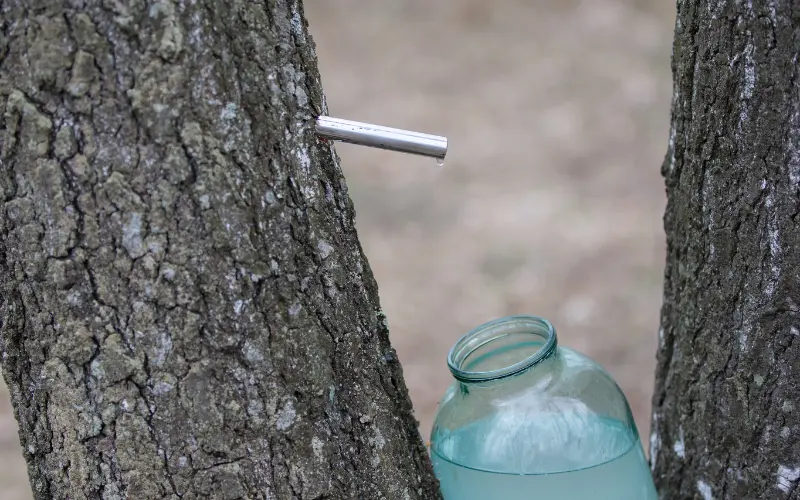
Birch sap is a natural liquid harvested directly from the tree trunk at the beginning of spring. It contains a remarkable combination of minerals and trace elements: magnesium, calcium, potassium, manganese, zinc, vitamin C, flavonoids, and betulin. It is this nutritional richness that gives it its recognized purifying properties.
The available studies primarily confirm its diuretic effects and its ability to support the body's natural elimination functions. These are not marketing claims; they are documented properties in phytotherapy literature and the European Pharmacopoeia, which validates its traditional uses.
That said, let's be honest: we are not dealing with a miracle drug. Birch sap is a food-drink with interesting properties, not a medical treatment. This is an important distinction, and it's what makes the difference between a medical advice seriousness and the marketing of certain brands.
Real danger vs normal detox reaction: how to tell the difference
This is probably the most important question of this article. Many people confuse the side effects transient effects of a birch sap cure with a real alarm signal. However, the difference is quite simple to identify.
A transient effect is a slight digestive discomfort in the first few days, an increase in urinary frequency (this is even the desired effect), or a few temporary headaches. These manifestations are signs that your body is reacting to the treatment. They usually disappear within 2 to 5 days.
A warning sign, on the other hand, is an allergic reaction (swelling, itching, breathing difficulties), unusual bleeding, or symptoms that worsen instead of improving after a week. In these cases, you should stop the treatment immediately and consult a doctor. To better understand the functioning of your elimination organs, we have dedicated a full article to this topic.
The 7 contraindications of birch sap
Here is the summary table that no one else provides, yet it is the most useful information if you are hesitant to start a treatment. I have compiled this information from VIDAL data, the European Pharmacopoeia, and our own experience in support at Biovie.
- Allergy to salicylates (aspirin) - High Risk - Birch sap naturally contains salicylates. If you are allergic to aspirin, do not consume birch sap, it is a contraindication Absolute.
- Birch pollen allergy - High risk - There is a risk of oral allergy syndrome (itching of the mouth and throat). People allergic to birch pollen should avoid the sap as a precaution.
- Anticoagulant treatment - High Risk - The natural salicylates in the sap can potentiate the effect of anticoagulants like warfarin and increase the risk of bleeding. Prohibited without explicit medical advice.
- Hypertension treated with medication - Moderate risk - The pronounced diuretic effect of the sap can alter the electrolyte balance and disrupt the effectiveness of certain antihypertensive treatments. Medical advice is required before any treatment.
- Kidney failure - Moderate risk - The mineral content of the sap and its diuretic effect may excessively strain fragile kidneys. Medical advice is mandatory.
- Pregnant woman, breastfeeding woman, and child under 7 years old - Moderate risk - There are not enough studies to ensure safety in these situations. As a precautionary measure, medical advice is essential.
- Immunosuppressive treatments and diabetes - Moderate risk - As the potential interactions with these treatments are not sufficiently documented, caution is advised.
- Healthy adult - No contraindication - The risk is low with a progressively adapted protocol.
Here are these 7 Contraindications are the only ones that are truly documented. For all other healthy individuals, the birch sap remains a valuable ally in a springtime wellness approach.
Allergy to salicylates and birch pollen
Salicylates are chemical compounds naturally found in birch. These are the same molecules found in aspirin, in synthetic form. If your body does not tolerate aspirin, there is a high chance it will not tolerate birch sap either. It's a matter of biochemistry, not dosage.
For thepollen allergy, it is a phenomenon of cross-reactivity: your immune system confuses the proteins in the sap with those of the pollen to which it is already sensitized. Symptoms range from simple tingling in the mouth to more significant reactions. In case of doubt, an allergy test can clear up the uncertainty.
Anticoagulant treatment: a drug interaction not to be overlooked
Frankly, it is the contraindication that I consider the most serious. The salicylates in birch sap have a blood-thinning effect. If you are already taking a Anticoagulant, the combination of the two effects can significantly increase the risk of bleeding.
Specifically: if you are on warfarin, heparin, or any other similar treatment, never start a birch sap regimen without the explicit consent of your doctor. This is not a comfort precaution; it is a matter of safety.
Hypertension under medication treatment
The diuretic effect of birch sap is indeed real and is actually one of its most appreciated properties. However, this diuretic effect can also alter the balance between sodium and potassium in your body. If you are taking antihypertensive medications, this alteration may disrupt the effectiveness of your treatment.
On the other hand, it is important to note that for people with slightly elevated but untreated blood pressure, the natural diuretic effect of sap can actually contribute positively to managing blood pressure. Once again, the nuance is important.
Renal insufficiency and mineral load
Birch sap is naturally rich in minerals, particularly potassium. Healthy kidneys can manage this mineral load without any problem. However, weakened kidneys or those in failure may struggle to filter and eliminate this additional intake. Therefore, medical advice is essential if you are affected.
Pregnancy, breastfeeding, and children under 7 years old
In reality, there is no scientific data proving that birch sap is dangerous during the pregnancy or breastfeeding. But the absence of evidence of danger is not evidence of the absence of danger. This is exactly why healthcare professionals apply the precautionary principle. And at Biovie, we do the same.
For the children under 7 years old, there simply are no specific studies. We recommend avoiding it as a precaution.
Immunosuppressive treatments and diabetes
For people on immunosuppressants, the drug interactions Possible interactions between the active compounds in sap and these powerful treatments are not sufficiently studied. For people with diabetes, sap contains natural sugars (fructose, glucose) in small amounts but may still require an adjustment in blood sugar monitoring. Consult your doctor, as this is the wisest recommendation.
Common side effects of birch sap: should we be concerned ?
Here we are. You are in good health, you have none of the contraindications listed above, and you have just started your treatment. Here's what might happen in the first few days, and why it shouldn't alarm you.
Digestive issues at the beginning of treatment (bloating, accelerated transit)
It is the most common side effect and also the most discussed online. Bloating, gas, accelerated transit: these symptoms are common in the first 2 to 5 days of the treatment. They simply indicate the stimulation of your body's elimination functions.
These digestive discomforts are not a sign of danger. These are signals that your body is reacting to the treatment. They spontaneously disappear in the vast majority of cases. And it is precisely to reduce these discomforts that we have developed our progressive protocol (I will return to this below). If you regularly suffer from bloating, we have also compiled 10 tips for achieving a calm stomach.
To support this phase, enzymatic support can help better tolerate the first days of the treatment. At Biovie, we have developed synergies of digestive enzymes specifically for this type of support.
Headaches and Herxheimer reaction
Headaches at the beginning of a treatment are a major concern, and it's understandable. In reality, it is most often what is called a Herxheimer reaction, a well-documented phenomenon in the medical literature.
The principle is simple: when the body accelerates its elimination processes, the increased mobilization can temporarily cause symptoms such as headaches, slight fatigue, or even a runny nose. This is a transient phenomenon that usually disappears within 2 to 3 days. If the headaches persist beyond a week, reduce the dose or stop the treatment and consult a healthcare professional.
Increased urinary frequency (desired effect, not a danger)
That one always makes me smile when I read it in the "dangers" of the birch sap. The increase in urinary frequency is not a side effect; it is the main desired effect. Birch sap is known for its diuretic properties - it is even the first property attributed to it by the VIDAL.
This increase means that your body is eliminating more. That is exactly the purpose of a cleanse. The only point of caution: make sure to stay well-hydrated to compensate for the water loss.
When to stop the treatment: warning signs
Even though the vast majority of treatments proceed without issues, it is important to recognize the signals that should prompt you to stop:
- Allergic reaction: swelling of the face, lips, or throat, hives, difficulty breathing
- Unusual bleeding: bleeding gums, unexplained bruises
- Symptoms that worsen after 7 days instead of improving
- Intense abdominal pain (to be distinguished from simple bloating)
If you notice any of these signals, stop the treatment immediately and consult your doctor. Your body is speaking to you, listen to it. To better Identify the causes of your digestive issues., a dedicated article can help you distinguish between normal discomfort and a warning signal.
Fresh, pasteurized, or fermented sap: are the risks the same ?
It's a topic that no one addresses among our colleagues, yet it's fundamental. Not all birch saps are the same, and the risks ofside effects vary depending on the type of sap you consume.
The fresh sap is harvested directly from the tree and consumed as is, without processing. It is the most vibrant form but also the most fragile: it keeps for a very short time (a few days in the refrigerator) and can ferment uncontrollably if not stored properly. The risk of digestive discomfort is highest with this form.
Pasteurized sap underwent heat treatment to extend its shelf life. The downside: pasteurization destroys some of the enzymes and living elements that make the sap valuable. It's a bit like drinking "dead" sap, if you'll allow me the expression.
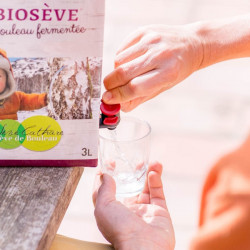
The fermented sap is the form we prefer at Biovie, and for good reason. Lacto-fermentation is a natural process that pre-digests certain compounds in the sap, often making it better tolerated digestively. It retains its nutritional qualities while being more stable and gentler on the stomach. This difference explains why many people who have experienced discomfort with fresh sap of variable quality find themselves perfectly fine with Fermented birch sap, often better tolerated.
Discover Biovie's organic fermented birch sap, naturally better tolerated →