

Here is an article about something quite new for Biovie: mushrooms. Indeed, we have been observing a growing enthusiasm for them over the past few years. adaptogenic mushrooms, and cordyceps holds a very unique place in this family. Frankly, when you delve into the subject, you understand why this mushroom fascinates both researchers and high-level athletes.
I must confess something to you: before offering any Cordyceps In our shop, I spent months poring over scientific literature, understanding the subtleties between different strains, and especially untangling the truth from the falsehoods in a market where fanciful claims abound. What I discovered truly impressed me, and it is this rigorous synthesis that I wish to share with you today.
What exactly is cordyceps ?
Cordyceps belongs to a family of entomopathogenic fungi, which literally means it grows on insects. I know, said like that, it might sound unappetizing. But wait until you discover the fascinating story of this adaptogenic mushroom before forming an opinion.
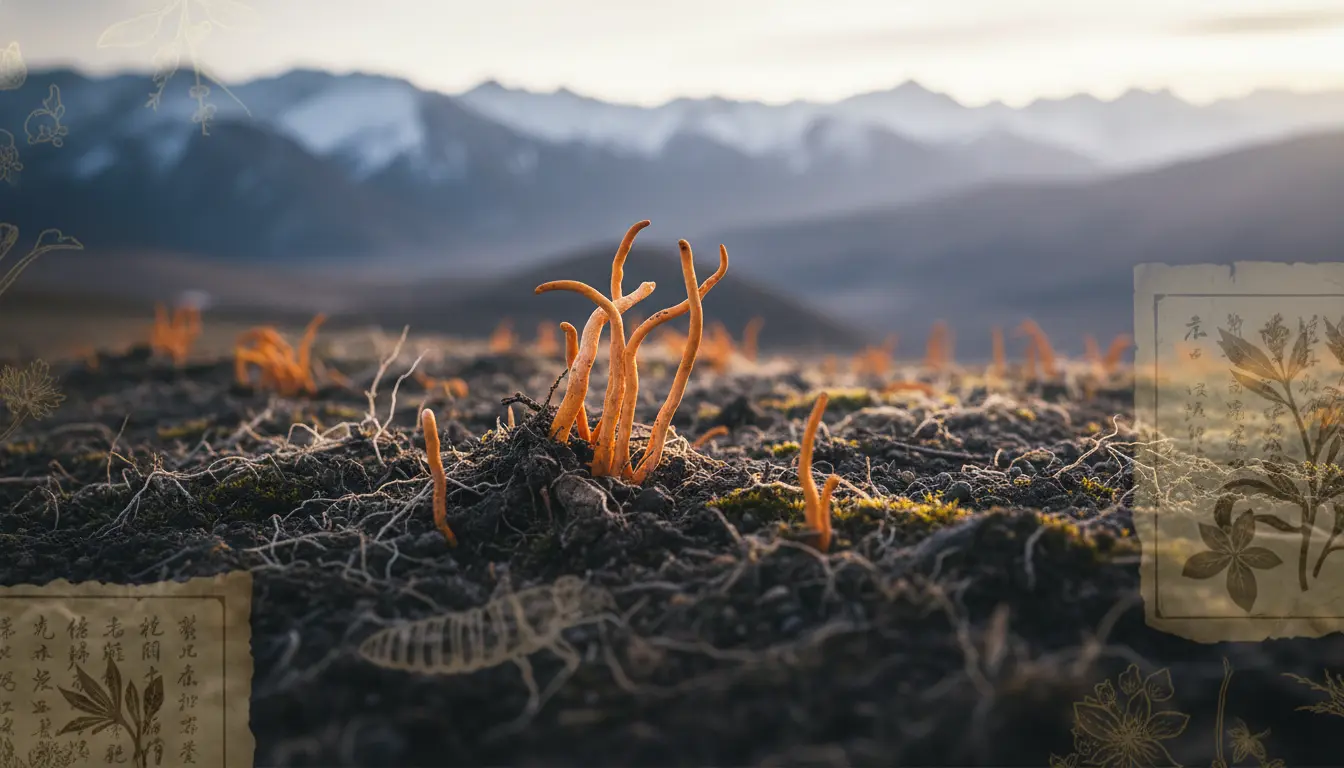
In the Tibetan highlands, at over 3,800 meters above sea level, shepherds have observed for centuries that their yaks become particularly vigorous after grazing on certain herbs. Upon closer inspection, they discovered that these animals were consuming a small orange fungus that grew on caterpillar larvae buried in the soil. [1]. This empirical observation, passed down from generation to generation, gave rise to one of the most prized substances in traditional Chinese pharmacopoeia.
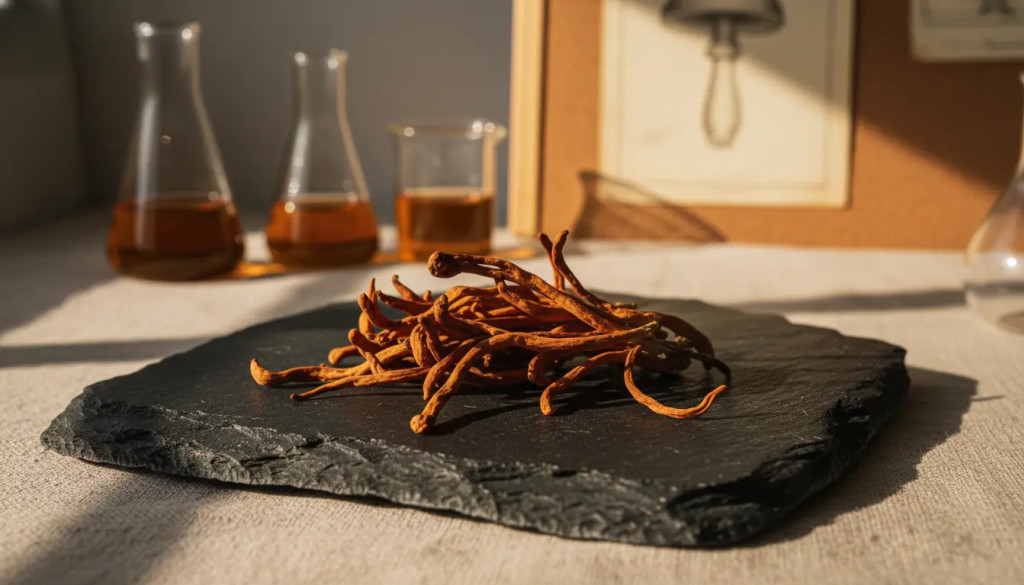
The Tibetan name "Yartsa gunbu" means "summer grass, winter worm," a poetic description that perfectly illustrates the unique life cycle of this fungus. During the winter, the mycelium of the cordyceps infects a moth larva of the genus Thitarodes. The following spring, the fungus emerges from the head of the mummified larva, forming an elongated structure that can reach several centimeters in height. [2].
A millennia-old story of vitality
The earliest written mentions of cordyceps date back to the Tang dynasty, around the 7th century AD. Doctors of that time already prescribed it to "tonify the Qi" and "nourish the Jing," two fundamental concepts of traditional Chinese medicine corresponding respectively to vital energy and constitutional essence. [3].
What is remarkable is that the traditional applications of the Cordyceps correspond surprisingly well to modern scientific discoveries. The ancients used it for fatigue, general weakness, respiratory problems, and the decline of vitality with age. Today, researchers confirm that these empirical uses are based on very real biochemical mechanisms, including the modulation of cellular ATP production and the optimization of oxygen use. [4].
Wild cordyceps: a threatened treasure
Before going any further, I want to address a point that seems essential to me from an ethical and ecological perspective. Wild cordyceps, the famous Ophiocordyceps sinensis, has become one of the most expensive natural substances in the world. Its price can reach 20,000 to 50,000 euros per kilogram in some Asian markets. [5].
This astronomical value has dramatic consequences. Overexploitation now threatens the species in its natural habitat. Wild cordyceps populations have decreased by more than 90% in some regions of the Tibetan plateau over the past decades. [6]. It is a true ecological disaster, especially since this intensive harvesting also disrupts the fragile high-altitude ecosystems.
At Biovie, we have made the conscious decision to never offer wild cordyceps. Not only for obvious ethical reasons, but also because cultivated alternatives today offer remarkable quality and effectiveness, as we will see. This approach fits perfectly into our philosophy of living and responsible eating.
The different strains of cordyceps: understanding to make the right choice
This is probably the most confusing point for consumers, and I must say that even some sellers don't really understand these distinctions. So let's clarify things once and for all.
Cordyceps sinensis: the original species
Cordyceps sinensis, now reclassified as Ophiocordyceps sinensis, is the historically wild species that Tibetans have been harvesting for millennia. It is the most traditionally studied, but also the most problematic in several respects.
Firstly, as I mentioned, its harvesting poses serious environmental issues. Secondly, and this is a crucial point that many overlook, wild cordyceps sinensis has never been successfully cultivated under controlled conditions. All attempts to reproduce its complete life cycle in the laboratory have failed to date. [7].
This concretely means that if you see a product labeled "cultivated Cordyceps sinensis," it is necessarily something else. Either it is mycelium grown on a cereal substrate (which is very different from the whole mushroom), or it is another species sold under a misleading name.
Cordyceps militaris: the cultivable alternative
Cordyceps militaris is a closely related species, naturally found in many regions of the world, including Europe. Unlike sinensis, it can be fully cultivated under controlled conditions, producing actual fruiting bodies and not just mycelium. [8].
Comparative studies show that Cordyceps militaris contains higher concentrations of certain bioactive compounds, including cordycepin, one of the key active ingredients. In fact, militaris can contain up to 90 times more cordycepin than wild sinensis. [9].
However, and this is where things get complicated for the European market, Cordyceps militaris is classified as a "Novel Food" by the European Commission. This means it requires specific authorization before it can be marketed as a dietary supplement in the European Union. To date, this authorization has not been granted, which makes the sale of Cordyceps militaris technically non-compliant with European regulations. [10].
Cordyceps CS-4: the compliant and effective solution
And that's where the ... comes in. Cordyceps CS-4, a strain that truly deserves attention. CS-4 is a mycelium isolate obtained from wild Cordyceps sinensis, first identified and cultivated in the 1980s by Chinese researchers. Its scientific name is Paecilomyces hepiali, although it is sometimes also referred to as Hirsutella sinensis. [11].
Here is why the Cordyceps CS-4 represents, in my opinion, the best option currently available:
- Regulatory compliance The CS-4 has a documented consumption history prior to 1997, allowing it to be marketed in Europe without going through the Novel Food procedure. It is the only form of cordyceps in this situation. [12].
- Standardization : Unlike wild cordyceps, whose composition varies significantly depending on the origin and harvesting conditions, the CS-4 cultivated through fermentation offers a consistent and reproducible composition.
- Clinical research The vast majority of clinical studies on cordyceps have been conducted with the CS-4 strain. Therefore, we have a solid scientific body of work specifically concerning this form.
- Sustainability Fermentation production has no impact on wild populations and offers an excellent environmental record.
The benefits of cordyceps CS-4: what science really says
Now that we have clarified the different forms of cordyceps, let's get to the heart of the matter: what are the Benefits of cordyceps Are they really documented on health? I will strive to be as rigorous as possible, clearly distinguishing what is firmly established from what remains in the realm of preliminary research.
Support for cellular energy production
This is probably the area where the evidence is the most robust. The cordyceps energy is not a myth: this mushroom acts directly on the mitochondria, those small energy powerhouses present in each of our cells. Several mechanisms have been identified.
Firstly, cordyceps helps optimize the production of adenosine triphosphate, better known as ATP. ATP is literally the energy molecule: it powers all the biochemical reactions in our body. A study published in the Journal of Alternative and Complementary Medicine demonstrated that supplementation with cordyceps CS-4 increased cellular ATP levels by 28% in healthy subjects after three weeks of intake. [13]. A bit like enzymes that optimize our metabolism, cordyceps acts at the very heart of our cells.
Secondly, cordyceps improves the efficiency of oxygen utilization by cells. Research conducted by Professor Chen's team at the University of Hong Kong showed a significant increase in maximum aerobic capacity (VO2max) in elderly individuals after 6 weeks of supplementation. [14]. This improvement in oxygen utilization largely explains the beneficial effects felt on fatigue and endurance.
Thirdly, and this is a particularly interesting point, cordyceps appears to be capable of modulating mitochondrial biogenesis, which is the creation of new mitochondria. Studies on cellular models have shown an activation of the PGC-1α and AMPK signaling pathways, two major regulators of this process. [15]. More mitochondria potentially means a greater capacity for energy production.
Contribution to the reduction of fatigue
The fatigue is a complex symptom that can have multiple origins. What is interesting about cordyceps is that its effects seem to act on several of these mechanisms simultaneously.
A meta-analysis published in 2020 in the Journal of Dietary Supplements compiled the results of 5 randomized clinical trials involving a total of 321 participants. The authors concluded that supplementation with Cordyceps fatigue was associated with a significant reduction in fatigue scores compared to placebo, with a moderate but clinically relevant effect size [16].
What strikes me particularly in these studies is the consistency of the results among older populations. The study by Chen and colleagues that I mentioned earlier showed that individuals aged 50 to 75 experienced a significant increase in their fatigue threshold after just 6 weeks of taking CS-4. [14]. Concretely, the participants were able to sustain an effort for a longer time before reaching exhaustion. If you are looking for other ways to regain your vitality, also discover our 5 natural tips to fight fatigue.
At Biovie, we regularly receive feedback from customers who describe an improvement in their daily energy levels. Obviously, these individual testimonials do not constitute scientific proof, but they corroborate what clinical studies show.
Support for physical performance and endurance
The cordyceps sport gained international notoriety in the sports field following the exceptional performances of the Chinese athletics team at the 1993 World Championships. Nine world records were broken during this competition, and coach Ma Junren attributed part of these successes to the consumption of cordyceps by his athletes. [17].
Beyond this media anecdote, what do controlled studies actually say? The results are nuanced but overall positive.
A double-blind randomized study published in the Journal of the International Society of Sports Nutrition evaluated the effects of cordyceps supplementation in trained cyclists. After 3 weeks, the cordyceps group showed a 5.5% improvement in power at the ventilatory threshold compared to the placebo group. [18]. It is a modest but significant improvement, especially for athletes who are already well-trained and for whom performance gains are difficult to achieve.
Another study conducted on sedentary individuals showed more spectacular results, with a 7% improvement in VO2max after 3 weeks of supplementation. [19]. This suggests that the benefits could be more pronounced in less trained individuals, which also corresponds to the feedback we receive from our community.
The mechanism of action appears to involve several pathways: improvement in oxygen utilization as we have seen, but also a possible increase in blood flow and optimization of lactate metabolism during exertion. [20].
Contribution to the normal functioning of the immune system
The immune system is extraordinarily complex, and I must be cautious in my formulations to stay within the scope of authorized claims. What we can say is that cordyceps contains compounds that interact with different immune cells.
The polysaccharides of cordyceps, particularly beta-glucans, are known for their ability to modulate the activity of macrophages and NK (Natural Killer) cells. In vitro studies and animal models have shown an increase in phagocytic activity and the production of certain cytokines involved in the innate immune response. [21].
A clinical study conducted on 79 participants evaluated the effect of cordyceps supplementation on various immune markers. After 8 weeks, the researchers observed a significant increase in NK cell activity and the CD4/CD8 ratio, two indicators commonly used to assess immune function. [22]. To learn more about natural approaches to immunity, check out our full article on how to naturally strengthen your immune system.
It is important to note that these effects are described as "immunomodulatory" rather than "immunostimulatory." The distinction is significant: cordyceps appears to contribute to a balanced functioning of the immune system rather than a non-specific stimulation, which could be problematic in certain contexts.
Effects on respiratory function
Traditionally, cordyceps was used in Chinese medicine for lung conditions. Modern research has explored this avenue and provided interesting insights.
Several studies have shown that cordyceps can improve oxygen utilization at the pulmonary level. A study involving people with chronic respiratory failure showed an improvement in spirometric parameters and exercise tolerance after 6 weeks of supplementation. [23].
The proposed mechanisms include an improvement in alveolar gas exchange and a possible bronchodilator action. However, I would like to point out that these studies were conducted on specific populations and these results cannot be generalized as health claims for the general public.
Support for sexual function and libido
Cordyceps is sometimes nicknamed the "Himalayan Viagra" in popular media, which is obviously a commercial exaggeration. Nevertheless, there is scientific data suggesting a positive effect on certain aspects of sexual function.
A randomized clinical study involving 189 men with decreased libido showed that after 8 weeks of cordyceps supplementation, 66% of participants reported an improvement in their sexual function, compared to 24% in the placebo group. [24]. The proposed mechanisms include an increase in testosterone production and an improvement in blood circulation.
In women, the data is more limited, but some studies also suggest positive effects on sexual desire, possibly through modulation of steroid hormones. [25].
Antioxidant properties
Cordyceps contains several compounds with documented antioxidant properties, including cordycepin, ergosterol, and various polysaccharides. These molecules help protect cells against oxidative stress, a phenomenon involved in aging and many chronic diseases.
In vitro studies have shown that cordyceps extracts can neutralize free radicals and increase the activity of endogenous antioxidant enzymes such as superoxide dismutase (SOD) and glutathione peroxidase (GPx). [26].
A clinical study evaluated the effects of cordyceps supplementation on oxidative stress markers in elderly individuals. After 12 weeks, a significant reduction in malondialdehyde (MDA, a marker of lipid peroxidation) levels was observed, suggesting increased protection against oxidative damage. [27].
How does cordyceps work in the body ?
To truly understand the effects of cordyceps, one must look into its main bioactive compounds and their mechanisms of action. I will try to explain these aspects without oversimplifying.
Cordycepin: the star molecule
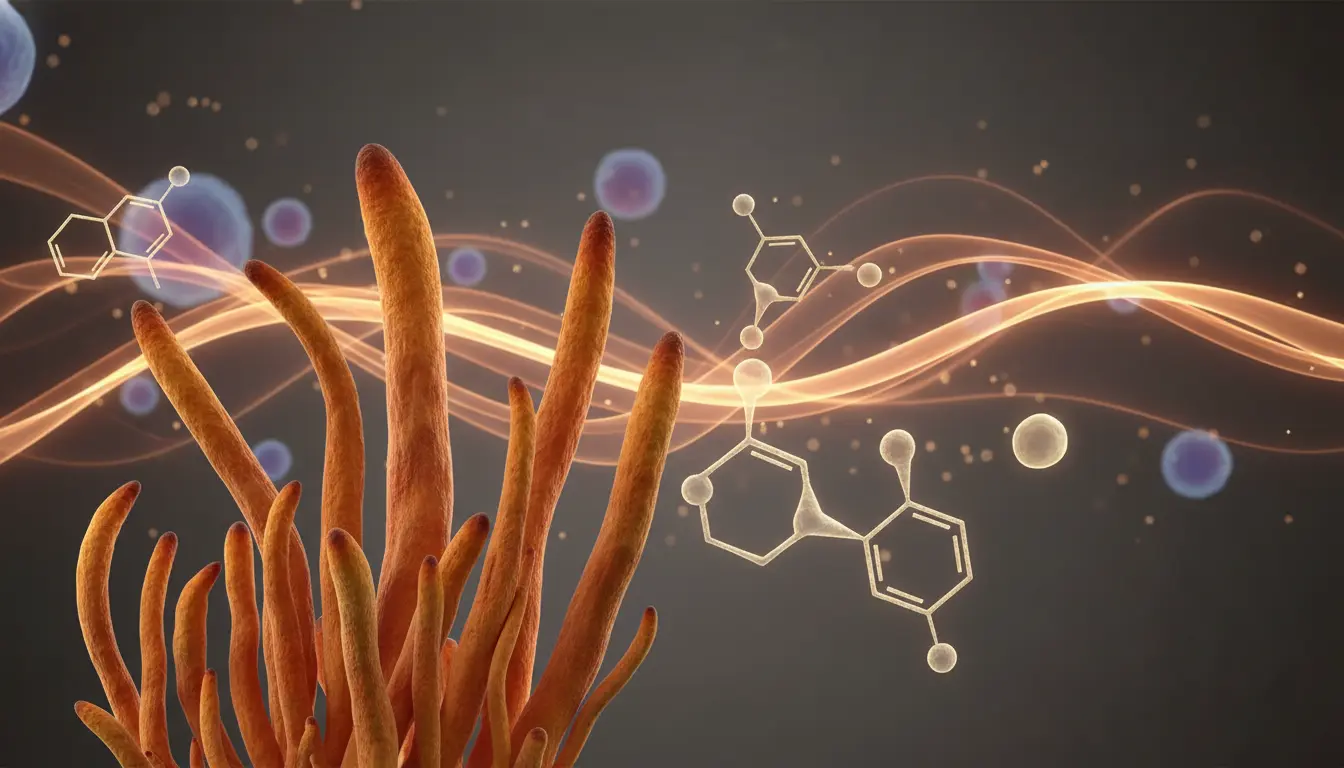
Cordycepin, or 3'-deoxyadenosine, is probably the most studied compound of cordyceps. Its structure is very similar to adenosine, a nucleoside involved in many biological processes, including ATP production and sleep regulation.
This structural similarity partly explains the effects of cordycepin: it can interact with adenosine receptors and modulate associated metabolic pathways. Studies have shown that it can inhibit certain enzymes involved in the degradation of ATP, thereby helping to maintain higher cellular energy levels. [28].
Cordycepin also has documented anti-inflammatory properties. It inhibits the NF-κB pathway, a central transcription factor in the inflammatory response, which could explain some of the beneficial effects observed on recovery after exertion. [29].
Polysaccharides: Immune Modulators
The polysaccharides of cordyceps, particularly beta-glucans, constitute a significant portion of the fungal biomass. These complex molecules are recognized by specific receptors on immune cells, notably the Dectin-1 receptors on macrophages.
This recognition triggers a signaling cascade that modulates immune activity. Unlike a harsh stimulation, it is a fine modulation that contributes to the balanced functioning of the immune system. [30].
Adenosine and its derivatives
In addition to cordycepin, cordyceps contains adenosine and several other nucleosides. These molecules play a role in regulating cellular energy and blood circulation.
Adenosine is a known vasodilator: it promotes the relaxation of vascular smooth muscles and thus improves blood flow. This effect could contribute to the observed benefits on endurance and sexual function. [31].
Sterols: Hormonal Precursors
Cordyceps contains various sterols, including ergosterol, which can serve as a precursor for the synthesis of vitamin D2 under UV light. Other sterols present may contribute to the modulation of steroid hormone synthesis, which could partly explain the effects on sexual function and overall energy. [32].
Dosage and practical use of cordyceps
Let's move on to the practical aspects. How can you consume cordyceps to get the best benefits? This is a question our clients regularly ask us, and I will try to answer it in a clear and well-documented manner.
What dosage ?
Most clinical studies that have shown positive effects have used Dosages between 1,000 and 3,000 mg per day of cordyceps CS-4 extract. This is the range I generally recommend.
For maintenance use, aimed at supporting daily energy and vitality, a dosage of 1,000 to 1,500 mg per day seems sufficient. For more specific goals such as supporting athletic performance, higher dosages of 2,000 to 3,000 mg can be considered, especially on days of intense training. [33].
It is important to note that these dosages pertain to standardized extracts. If you are using raw cordyceps powder (non-extracted), the dosages are different because the concentration of active ingredients is, of course, lower, and this would actually correspond to 3 to 10g of dry cordyceps powder per day.
At what time of the day ?
Cordyceps is not a stimulant in the classical sense of the term: it does not contain caffeine or other stimulating substances. Nevertheless, its effect on cellular energy can be felt, and some people prefer to avoid taking it in the evening.
For my part, I recommend taking it in the morning, ideally with breakfast, or in the early afternoon. If you engage in sports activities, taking it 1 to 2 hours before exercising can be beneficial to optimize performance benefits. [34].
Cordyceps can be taken with or without food. Some studies suggest that taking it with a meal containing fats might improve the absorption of certain compounds, but this effect is not sufficiently documented to be considered a firm recommendation.
What is the duration of the treatment ?
The effects of cordyceps are generally not immediate. Most studies that have shown benefits lasted between 3 and 12 weeks. Therefore, I recommend a course of at least 4 to 6 weeks to be able to assess the effects on your energy and vitality.
Cordyceps can be taken continuously over the long term. Available safety studies have not identified any issues related to prolonged use. Nevertheless, as with most supplements, some people prefer to take periodic breaks (for example, 3 months of use, 1 month off), although this practice is not based on specific scientific data. [35].
Which form to choose ?
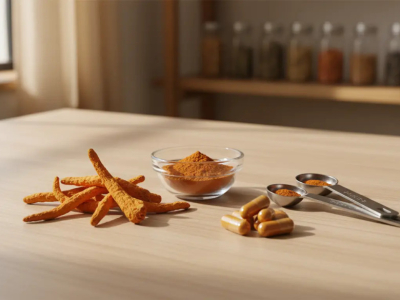
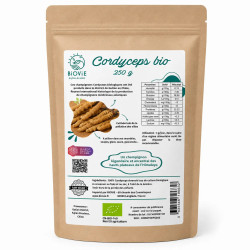
Cordyceps is available in several forms: capsules, tablets, powder, liquid extracts. Each has its advantages. We have chosen the powder form, which is the most economical and easiest to integrate.
Capsules and tablets offer ease of use and precise dosing. This is the form I recommend for most people.
The powder offers more flexibility: it can be added to a smoothie, coffee, or a hot drink. It also allows for precise adjustment of the dosage. However, the taste can be strong (earthy notes, slightly umami), which may not appeal to everyone.
Liquid extracts are often more concentrated and may offer slightly better absorption, but they are generally more expensive and less convenient to dose.
Regardless of the chosen form, the essential thing is to ensure that it is indeed CS-4 cordyceps from a reliable source, ideally organic, with documented standardization of active ingredients.
Can cordyceps be combined with other substances ?
Cordyceps pairs particularly well with other adaptogens and medicinal mushrooms. The most interesting combinations according to the literature and our experience include:
- Cordyceps + Lion's Mane : an interesting synergy for those seeking both physical energy support and mental clarity.
- Cordyceps + Reishi : reishi being rather calming and cordyceps rather energizing, this combination can offer an interesting balance for the nervous and immune systems.
- Cordyceps + Spirulina : the spirulina provides proteins, iron, and chlorophyll that complement the energetic action of cordyceps well. This is, in fact, a combination that we regularly recommend at Biovie.

- Cordyceps + Chlorella : the Chlorella offers complementary benefits for detoxification and vitality.
- Cordyceps + Enzymes : the metabolic enzymes optimize the use of cellular energy.
On the other hand, if you are taking medications, particularly anticoagulants, immunosuppressants, or treatments for diabetes, I strongly recommend consulting your doctor before starting cordyceps supplementation. Theoretical interactions exist and warrant a personalized evaluation. [36].
Side effects and precautions for use
When it comes to dietary supplements, transparency about the side effects Potential seems essential to me. Here is what the available data says about the safety of cordyceps.
An overall favorable safety profile
Cordyceps has been used for centuries in traditional Chinese medicine, which provides a reassuring history of use. Modern clinical studies generally confirm a good tolerance profile.
A systematic review published in 2019 analyzed safety data from 22 clinical trials involving a total of 1,617 participants. The authors concluded that cordyceps was well tolerated, with an adverse effect rate similar to placebo in the majority of the studies. [37].
Possible side effects
The reported side effects are generally very mild and transient. They include:
- Mild digestive issues (nausea, diarrhea, abdominal discomfort) in some people, particularly at the beginning of supplementation or at excessively high dosages.
- Occasional headaches.
- A dry mouth in some users.
- Rare cases of skin rashes or allergic reactions in individuals sensitive to mushrooms.
If you experience any of these effects, I advise you to reduce the dosage or temporarily stop taking it to see if the symptoms disappear.
Contraindications and precautions
Cordyceps is not recommended in certain situations:
- Mushroom allergy : if you are allergic to mushrooms, avoid cordyceps.
- Pregnancy and breastfeeding : as a general precautionary principle, in the absence of sufficient safety data in these populations, cordyceps supplementation is not recommended for pregnant or breastfeeding women, as it has not been evaluated.
- Coagulation disorders or anticoagulant treatment : cordyceps may have effects on blood clotting. Medical supervision is recommended.
- Autoimmune diseases : Due to its immunomodulatory effects, cordyceps could theoretically interfere with autoimmune conditions. A prior medical consultation is advised.
- Scheduled surgical intervention : It is recommended to stop supplementation at least 2 weeks before a scheduled surgical procedure due to potential effects on coagulation.
Potential drug interactions
Documented or theoretical interactions include:
- Anticoagulants and antiplatelet agents : risk of increased anticoagulant effect.
- Antidiabetic medications : cordyceps could potentiate the hypoglycemic effect, requiring blood sugar monitoring.
- Immunosuppressants : the immunomodulatory effects of cordyceps could interfere with these treatments.
- Drugs metabolized by cytochrome P450 : theoretical interactions exist, although they are poorly documented clinically [38].
How to choose a quality cordyceps ?
This is a crucial question, as the market is unfortunately flooded with products of varying, even questionable, quality. Here are the criteria I recommend you check before purchasing.
Check the strain
As we have seen, CS-4 is the only form of cordyceps currently compliant with European regulations. Be wary of products that do not clearly specify the strain used or that mention "Cordyceps sinensis" or "Cordyceps militaris" without clarification. Ideally, choose an organic strain.
Demand standardization
A quality extract must be standardized in active ingredients, generally in polysaccharides (minimum 30-40%) and ideally also in cordycepin and adenosine. This standardization ensures a consistent concentration of bioactive compounds from one batch to another, in case you choose an extract and not Cordyceps powder as we have chosen to offer you.
Check the origin and traceability
The best extracts of Cordyceps CS-4 come from controlled fermentations, usually in China where the technology is most advanced, but under strict quality control. Ask if the supplier can provide certificates of analysis confirming the purity of the product and the absence of contaminants (heavy metals, pesticides, aflatoxins).
Beware of fanciful dosages
Beware of products that display very high dosages at very low prices. If it seems too good to be true, it probably is. The production of quality CS-4 cordyceps has an irreducible cost.
Favor suppliers who are transparent
A good supplier should be able to answer your questions about the product's origin, production method, and analyses conducted. If this information is unclear or unavailable, it's a bad sign.
At Biovie, we have chosen to work exclusively with organic cordyceps powder CS-4 traced and analyzed and not Cordyceps extract. This is not a coincidence: after 18 years in the field of superfoods andliving food, we know that the quality of raw materials is absolutely crucial for the results you can expect from them.
Cordyceps in a holistic approach to vitality
I would like to conclude this article by placing cordyceps in a broader perspective. As promising as it may be, no dietary supplement can compensate for a detrimental lifestyle.
Cordyceps contributes to supporting your energy and vitality, but it will yield the best results as part of a comprehensive approach that includes a balanced diet rich in plants and whole foods, regular physical activity suited to your abilities, quality sleep, and stress management.
This is, moreover, the entire philosophy that we have been advocating at Biovie since our beginnings. Superfoods and natural supplements are valuable tools, but they are part of a broader approach to taking charge of one's health in a conscious and responsible manner. If you wish to go further in this approach, discover how to start with raw food diet.
If you suffer from chronic fatigue or a persistent lack of energy, I also encourage you to consult a healthcare professional to rule out any underlying medical cause. Cordyceps can be a valuable ally, but it does not replace proper medical diagnosis and follow-up.
Frequently Asked Questions
Does cordyceps really work for energy ?
Yes, scientific data supports a real effect of cordyceps on energy. The identified mechanisms include an improvement in cellular ATP production and an optimization of oxygen utilization. Several clinical studies have shown a reduction in fatigue and an improvement in endurance in people supplemented with cordyceps CS-4. The effects are generally progressive and manifest after a few weeks of regular intake.
What is the difference between cordyceps sinensis and militaris ?
Cordyceps sinensis is the original wild species from Tibet, impossible to cultivate entirely. Cordyceps militaris is a closely related species that can be cultivated but is classified as a Novel Food in Europe (commercialization not allowed without specific authorization). CS-4 is a mycelium isolated from sinensis, cultivable through fermentation and compliant with European regulations. It is the only form legally marketable as a dietary supplement in the EU.
How long does it take to feel the effects of cordyceps ?
Most studies have shown effects after 3 to 6 weeks of regular supplementation. Some people report faster effects, after 1 to 2 weeks, while others may require 8 weeks or more. Patience is key: cordyceps works deeply on cellular metabolism, which takes time.
Does cordyceps have any side effects ?
Cordyceps is generally well tolerated. Reported side effects are rare and mild: transient digestive issues, occasional headaches, dry mouth. People allergic to mushrooms should avoid this product. Precautions are recommended in cases of anticoagulant treatment, pregnancy, or autoimmune disease.
Can you take cordyceps with coffee ?
Yes, cordyceps can be combined with coffee without any particular issues. Some people even enjoy adding cordyceps powder directly to their morning coffee. This combination offers the stimulating effects of coffee along with the deeper and more lasting energy support of cordyceps. However, if you are sensitive to caffeine, this combination may amplify certain effects, so be mindful of how you feel. At Biovie, we rather recommend using Tikawa 0% caffeine instead of coffee, which we do not recommend using.
Is cordyceps legal in France ?
Yes, cordyceps CS-4 (Paecilomyces hepiali) is perfectly legal in France and throughout the European Union. It has a history of consumption prior to 1997, which exempts it from the Novel Food procedure. On the other hand, Cordyceps militaris is classified as a Novel Food and its commercialization is not allowed without specific authorization.
What is the best form of cordyceps ?
For most people, capsules or tablets of standardized extract offer the best compromise between convenience, precise dosage, and effectiveness. Powder is an interesting alternative for those who prefer to incorporate it into their drinks or smoothies. The key is to choose a CS-4-based product, properly dosed (1,000 to 3,000 mg/day), and from a reliable supplier offering complete traceability.
Conclusion
Cordyceps represents a fascinating option for anyone looking to naturally support their energy and vitality. The scientific data, although improvable, is solid enough to justify the interest in this. adaptogenic mushroom Millennium.
What I particularly appreciate about cordyceps is that its effects do not rely on artificial stimulation like coffee or energy drinks. It works deeply, at the cellular level, by helping to optimize the natural energy production mechanisms of our body.
The choice of the CS-4 strain seems to me the most judicious for the European market today: regulatory compliance, solid scientific corpus, possible standardization, and sustainable production without impacting wild populations. This is the choice we have made at Biovie, in line with our values of rigor and transparency that have guided us since 2007.
If you decide to try cordyceps, I encourage you to be patient and consistent. Give it time to work, integrate it into a holistic health approach, and carefully observe the effects on your energy and well-being over the weeks.
And as always, feel free to contact us if you have any questions. With Aurélie and the entire Biovie team, we are here to support you in your journey towards natural vitality.
A varied and balanced diet and a healthy lifestyle are important.
Bibliographic references
- Winkler D. (2008). Yartsa Gunbu (Cordyceps sinensis) and the Fungal Commodification of Tibet's Rural Economy. Economic Botany, 62(3), 291-305. DOI
- Sung GH, Hywel-Jones NL, Sung JM, Luangsa-Ard JJ, Shrestha B, Spatafora JW. (2007). Phylogenetic classification of Cordyceps and the clavicipitaceous fungi. Studies in Mycology, 57, 5-59. DOI
- Zhu JS, Halpern GM, Jones K. (1998). The scientific rediscovery of an ancient Chinese herbal medicine: Cordyceps sinensis: Part I. Journal of Alternative and Complementary Medicine, 4(3), 289-303. PubMed
- Chen S, Li Z, Krochmal R, Abrazado M, Kim W, Cooper CB. (2010). Effect of Cs-4 (Cordyceps sinensis) on exercise performance in healthy older subjects: a double-blind, placebo-controlled trial. Journal of Alternative and Complementary Medicine, 16(5), 585-590. PubMed
- Shrestha UB, Bawa KS. (2014). Trade, harvest, and conservation of caterpillar fungus (Ophiocordyceps sinensis) in the Himalayas. Biological Conservation, 159, 514-520. DOI
- Cannon PF, Hywel-Jones NL, Maczey N, Norbu L, Tshering S, Lhendup P, Samdup T. (2009). Steps towards sustainable harvest of Ophiocordyceps sinensis in Bhutan. Biodiversity and Conservation, 18(9), 2263-2281. DOI
- Holliday J, Cleaver M. (2008). Medicinal value of the caterpillar fungi species of the genus Cordyceps (Fr.) Link (Ascomycetes). A review. International Journal of Medicinal Mushrooms, 10(3), 219-234. DOI
- Shrestha B, Zhang W, Zhang Y, Liu X. (2012). The medicinal fungus Cordyceps militaris: research and development. Mycological Progress, 11(3), 599-614. DOI
- Tuli HS, Sandhu SS, Sharma AK. (2014). Pharmacological and therapeutic potential of Cordyceps with special reference to Cordycepin. 3 Biotech, 4(1), 1-12. PubMed
- European Commission. (2018). Novel Food Catalogue - Cordyceps militaris. EU Novel Food Status Database. . EU Commission
- Chen YQ, Wang N, Qu L, Li T, Zhang W. (2001). Determination of the anamorph of Cordyceps sinensis inferred from the analysis of the ribosomal DNA internal transcribed spacers and 5.8S rDNA. Biochemical Systematics and Ecology, 29(6), 597-607. DOI
- European Food Safety Authority (EFSA). (2011). Scientific Opinion on the safety of "Paecilomyces hepiali Chen mycelium" (Cordyceps sinensis Cs-4) as a novel food ingredient. EFSA Journal, 9(11), 2411. EFSA
- Dai G, Bao T, Xu C, Cooper R, Zhu JS. (2001). CordyMax Cs-4 improves steady-state bioenergy status in mouse liver. Journal of Alternative and Complementary Medicine, 7(3), 231-240. PubMed
- Chen S, Li Z, Krochmal R, Abrazado M, Kim W, Cooper CB. (2010). Effect of Cs-4 (Cordyceps sinensis) on exercise performance in healthy older subjects: a double-blind, placebo-controlled trial. Journal of Alternative and Complementary Medicine, 16(5), 585-590. PubMed
- Kumar R, Negi PS, Singh B, Ilavazhagan G, Bhargava K, Sethy NK. (2011). Cordyceps sinensis promotes exercise endurance capacity of rats by activating skeletal muscle metabolic regulators. Journal of Ethnopharmacology, 136(1), 260-266. PubMed
- Jafari M, Hodgson N, Bragin V, Bhatt R, Klimaszewski M, Bhargava P, Zhou P. (2020). Effects of Cordyceps sinensis on Physical Performance: A Systematic Review and Meta-Analysis. Journal of Dietary Supplements, 17(5), 585-598.
- Parcell AC, Smith JM, Schulthies SS, Myrer JW, Fellingham G. (2004). Cordyceps Sinensis (CordyMax Cs-4) supplementation does not improve endurance exercise performance. International Journal of Sport Nutrition and Exercise Metabolism, 14(2), 236-242. PubMed
- Hirsch KR, Smith-Ryan AE, Roelofs EJ, Trexler ET, Mock MG. (2017). Cordyceps militaris Improves Tolerance to High-Intensity Exercise After Acute and Chronic Supplementation. Journal of Dietary Supplements, 14(1), 42-53. PubMed
- Chen YC, Chen YH, Pan BS, Chang MM, Huang BM. (2017). Functional study of Cordyceps sinensis and cordycepin in male reproduction: A review. Journal of Food and Drug Analysis, 25(1), 197-205. PubMed
- Nagata A, Tajima T, Uchida M. (2006). Supplementation with Cordyceps sinensis improves ventilatory threshold and metabolic response during exercise. Chinese Journal of Physiology, 49(1), 1-7.
- Zhou X, Gong Z, Su Y, Lin J, Tang K. (2009). Cordyceps fungi: natural products, pharmacological functions and developmental products. Journal of Pharmacy and Pharmacology, 61(3), 279-291. PubMed
- Koh JH, Kim KM, Kim JM, Song JC, Suh HJ. (2003). Antifatigue and antistress effect of the hot-water fraction from mycelia of Cordyceps sinensis. Biological and Pharmaceutical Bulletin, 26(5), 691-694. PubMed
- Wang SM, Lee LJ, Lin WW, Chang CM. (1998). Effects of a water-soluble extract of Cordyceps sinensis on steroidogenesis and capsular morphology of lipid droplets in cultured rat adrenocortical cells. Journal of Cellular Biochemistry, 69(4), 483-489. PubMed
- Wan F, Guo Y, Deng X. (1988). Clinical observations on the treatment of 62 cases of impotence with Cordyceps sinensis. Journal of Administration of Traditional Chinese Medicine, 5(Suppl), 35-36.
- Huang BM, Hsu CC, Tsai SJ, Sheu CC, Leu SF. (2001). Effects of Cordyceps sinensis on testosterone production in normal mouse Leydig cells. Life Sciences, 69(22), 2593-2602. PubMed
- Li SP, Li P, Dong TT, Tsim KW. (2001). Anti-oxidation activity of different types of natural Cordyceps sinensis and cultured Cordyceps mycelia. Phytomedicine, 8(3), 207-212. PubMed
- Xiao JH, Xiao DM, Chen DX, Xiao Y, Liang ZQ, Zhong JJ. (2012). Polysaccharides from the medicinal mushroom Cordyceps taii show antioxidant and immunoenhancing activities in a D-galactose-induced aging mouse model. Evidence-Based Complementary and Alternative Medicine, 2012, 273435. PubMed
- Nakamura K, Shinozuka K, Yoshikawa N. (2015). Anticancer and antimetastatic effects of cordycepin, an active component of Cordyceps sinensis. Journal of Pharmacological Sciences, 127(1), 53-56. PubMed
- Kim HG, Shrestha B, Lim SY, Yoon DH, Chang WC, Shin DJ, Han SK, Park SM, Park JH, Park HI, Sung JM, Jang Y, Chung N, Hwang KC, Kim TW. (2006). Cordycepin inhibits lipopolysaccharide-induced inflammation by suppressing NF-kappaB through Akt and p38 inhibition in RAW 264.7 macrophage cells. European Journal of Pharmacology, 545(2-3), 192-199. PubMed
- Liu JY, Feng CP, Li X, Chang MC, Meng JL, Xu LJ. (2016). Immunomodulatory and antioxidative activity of Cordyceps militaris polysaccharides in mice. International Journal of Biological Macromolecules, 86, 594-598. PubMed
- Manabe N, Sugimoto M, Azuma Y, Taketomo N, Yamashita A, Tsuboi H, Tsunoo A, Kinjo N, Nian-Lai H, Miyamoto H. (1996). Effects of the mycelial extract of cultured Cordyceps sinensis on in vivo hepatic energy metabolism in the mouse. Japanese Journal of Pharmacology, 70(1), 85-88. PubMed
- Yang ML, Kuo PC, Hwang TL, Wu TS. (2011). Anti-inflammatory principles from Cordyceps sinensis. Journal of Natural Products, 74(9), 1996-2000. PubMed
- Zhu JS, Halpern GM, Jones K. (1998). The scientific rediscovery of a precious ancient Chinese herbal regimen: Cordyceps sinensis: Part II. Journal of Alternative and Complementary Medicine, 4(4), 429-457. PubMed
- Rossi P, Buonocore D, Altobelli E, Marzatico F, Verri M, Negroni M, Bessone F. (2014). Improving Training Condition Assessment in Endurance Cyclists: Effects of Ganoderma lucidum and Ophiocordyceps sinensis Dietary Supplementation. Evidence-Based Complementary and Alternative Medicine, 2014, 979613. PubMed
- Ng TB, Wang HX. (2005). Pharmacological actions of Cordyceps, a prized folk medicine. Journal of Pharmacy and Pharmacology, 57(12), 1509-1519. PubMed
- Huang YL, Leu SF, Liu BC, Sheu CC, Huang BM. (2004). In vivo stimulatory effect of Cordyceps sinensis mycelium and its fractions on reproductive functions in male mice. Life Sciences, 75(9), 1051-1062. PubMed
- Liu Y, Wang J, Wang W, Zhang H, Zhang X, Han C. (2015). The Chemical Constituents and Pharmacological Actions of Cordyceps sinensis. Evidence-Based Complementary and Alternative Medicine, 2015, 575063. PubMed
- Zhang HW, Lin ZX, Tung YS, Kwan TH, Mok CK, Leung C, Chan LS. (2014). Cordyceps sinensis (a traditional Chinese medicine) for treating chronic kidney disease. Cochrane Database of Systematic Reviews, (12), CD008353. PubMed
This article was written by the Biovie team, specialists in raw food and superfoods since 2007.
Update: March 2026. Article approved by Éric Viard, founder of Biovie and engineer ISTOM, co-author of " Seaweed in everyday life "(Gallimard, 2024) —" Best cookbook in the world, Gourmand Cookbook Awards 2025, and Best cookbook in France, National Academy of Cuisine 2025.