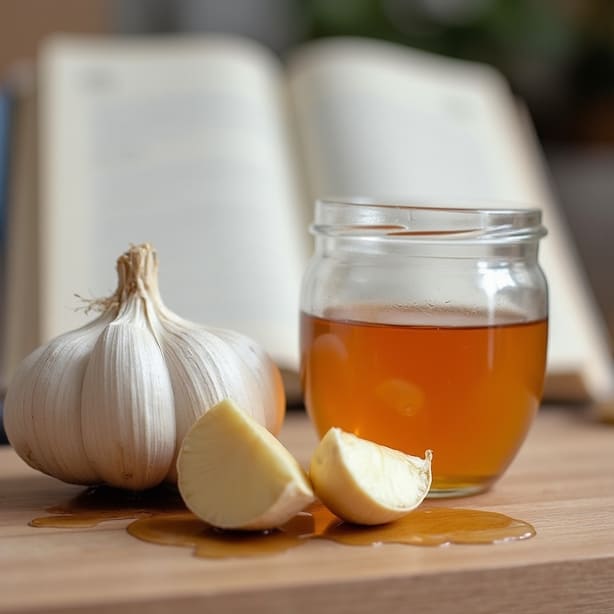
Fermented garlic in honey is an ancient preparation that combines the antimicrobial properties of raw garlic with the enzymes and antioxidants of raw honey, all enhanced by a natural lacto-fermentation process. Essentially, you immerse peeled garlic cloves in unpasteurized honey, and over the weeks, lactic fermentation transforms the mixture: the garlic softens, the honey liquefies, and the active compounds-primarily allicin-stabilize. The result? A condiment with umami and caramelized notes, used both in cooking and as a winter remedy. However, caution is required: this preparation demands precise precautions, particularly in the choice of honey, to eliminate any risk associated with botulism.
What is garlic fermented in honey ?
When I explain the principle of fermented garlic in honey to our customers, I always start with the same image: think of kimchi or sauerkraut, but in a sweet and savory version. The process is similar.
We are talking here about lacto-fermentation in an anaerobic environment. Raw garlic, once peeled and slightly crushed, releases allicin - the well-known sulfur compound responsible for the characteristic odor and the antimicrobial properties of garlic. Immersed in the raw honey, the pods are immersed in an environment rich in enzymes (invertase, glucose oxidase) and natural sugars. The lactic bacteria naturally present on the garlic then begin their work: they transform part of the sugars in the honey into lactic acid, which gradually lowers the pH and creates a hostile environment for pathogens.
The difference with black garlic? Black garlic is obtained through a Maillard reaction at high temperatures (60-80°C for several weeks). Confit garlic, on the other hand, is cooked in fat. Fermented garlic in honey, conversely, remains raw - and this is precisely what preserves the majority of its enzymatic properties. This is also what makes it so interesting in the context of a living food.
Fermented garlic in honey combines the benefits of two foods that have been studied by science for decades. But let's be rigorous: what follows is based on studies published in peer-reviewed journals, not on Internet folklore.
Antimicrobial properties of allicin
Allicin, the main sulfur compound in garlic, has a fascinating mechanism of action. A study published in theInternational Journal of Medical Microbiology showed that this compound inhibits bacterial DNA gyrase - an essential enzyme for bacterial DNA replication - in the same concentration range as nalidixic acid, a reference antibiotic (Reiter et al., 2019). It gives one pause for thought.
And the results do not stop there. Gruhlke et al. (2017) demonstrated, in Molecules, that allicin in vapor form is capable of eliminating multi-resistant lung bacteria - including Pseudomonas, Streptococcus, and Staphylococcus. At a time when antibiotic resistance is a major public health issue, these research avenues are encouraging. (Encouraging, not miraculous - the studies remain essentially in vitro at this stage.)
A review published by Marchese et al. confirms that allicin, in combination with conventional antibiotics, enhances their antimicrobial activity. Garlic is not a medication. However, it is a food with a remarkable biochemical composition. These same properties explain why the mixture of garlic and honey is traditionally used to support natural defenses in case of seasonal infections.
Strengthening the immune system
The most cited study on the subject remains that of Josling (2001), published in Advances in Therapy : a double-blind clinical trial involving 146 participants, showing a 63% reduction in the risk of catching a cold in the group receiving an allicin supplement compared to the placebo. Dated, yes. But methodologically solid.
Most recently, a comprehensive review of the bioactive compounds of garlic (Shang et al., 2024) published in Molecules confirms that garlic contains a wide range of compounds - allicin, ajoene, S-allylcysteine - that interact with the immune system via multiple mechanisms. Fermentation in honey does not destroy these compounds. It even makes them more bioavailable by reducing irritating sulfur elements.
Cardiovascular and digestive health
Garlic is associated in the scientific literature with a reduction in cholesterol LDL and has an effect on blood pressure. These are not claims I am making here - they are documented research avenues. As part of a varied and balanced diet and a healthy lifestyle, honey-fermented garlic can be considered an interesting food.
Unpasteurized honey is not sugar. It is a living food. Its flavonoids, phenolic acids, invertase, and glucose oxidase make it an active enzymatic medium. When garlic ferments in it, the enzymes honey helps stabilize allicin - a notoriously unstable compound - thereby extending its active lifespan in the preparation.
I often tell our clients: the honey-garlic synergy is not marketing. It's biochemistry.
How to make fermented garlic in honey at home? The recipe is simple. But every detail matters - I'm not going to hide it from you.
Ingredients and equipment
You will need:
2 to 3 heads of organic garlic (approximately 50 to 80 cloves depending on the size). Organic garlic is important here: we don't want pesticides in a lacto-fermented preparation.
350 ml of raw unpasteurized honey, of the nectar type (flower honey). The choice of honey is crucial - I will return to this in detail in the dangers section.
A 500 ml glass jar, sterilized, with an airtight lid.
Why nectar honey and not honeydew honey? The pH. Flower honey has an acidic pH ranging from 3.2 to 4.5, which inhibits the development of Clostridium botulinum spores. Honeydew, with a higher pH, does not offer this guarantee. It's not a minor detail - it's a matter of food safety.
Preparation time: 15 minutes. Fermentation: at least 2 weeks, 1 to 3 months for optimal results.
Sterilize your jar in boiling water for 10 minutes. Let dry completely. Residual moisture is the enemy of fermentation.
Peel the garlic cloves. Remove the skin without washing them (water could introduce unwanted bacteria). Lightly crush each clove with the flat side of a knife - this releases the allicin.
Place the pods in the jar. Do not pack. The garlic should be able to float freely.
Pour the raw honey until completely covering the pods. No pod should protrude above the surface.
Close the jar. Place it at room temperature, ideally between 18 and 22°C. Not in the sun, not in the refrigerator.
The first 7 days, open the jar daily. to release gas (fermentation produces CO2), then turn it over so that all the pods remain submerged. This is the step that people most often forget - and it's the one that makes the difference.
After a week, Degassing becomes less necessary. Continue to turn the jar every 2-3 days. The minimum fermentation time is 2 to 3 weeks. Personally, I prefer to wait 1 to 3 months. Patience pays off: the taste improves significantly.
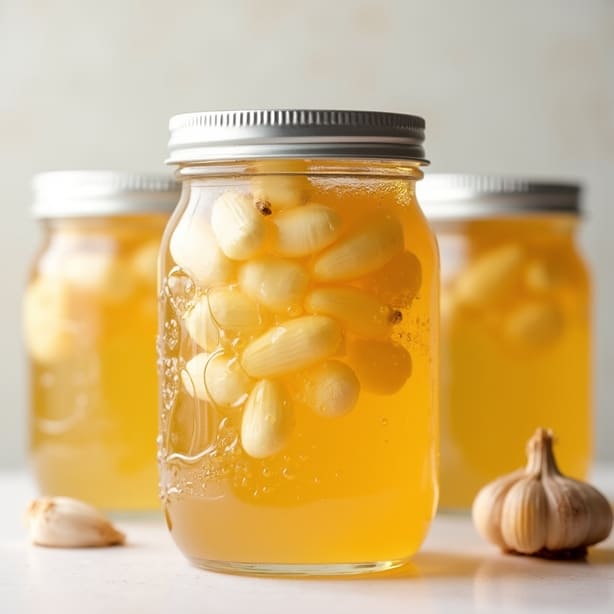
After a few days, you will observe small bubbles rising to the surface. This is normal. It is a sign that fermentation is active. The honey will gradually liquefy - this is also completely normal (the lactic bacteria transform the sugars).
Garlic takes on an amber hue over the weeks. The taste evolves into something umami, slightly caramelized. When you taste a clove and the harshness of raw garlic has disappeared, giving way to a complex sweetness - it's ready.
Fermented garlic in honey: dangers and precautions
This section is probably the most important part of the article. And it is precisely the one that is missing in 90% of the recipes found online.
The risk of botulism: reality or myth ?
The risk of botulism associated with honey-fermented garlic is real but manageable. The spores of Clostridium botulinum can survive in an anaerobic environment (without oxygen) like a closed jar. However, these spores cannot produce toxins in a sufficiently acidic environment: by using nectar honey with a pH between 3.2 and 4.5, and by adhering to hygiene rules, the risk is negligible.
TheANSES It confirms: the foods most often involved in cases of botulism in France are homemade preserves and cured meats where pH and temperature conditions are not controlled. On average, France records about 7.5 outbreaks of foodborne botulism per year - across all types of food.
For fermented garlic in honey specifically:
Use exclusively nectar honey (flower honey), never honeydew
The honey must be raw and unpasteurized. - living enzymes contribute to the safety of fermentation
Sterilize your jar before any use
Respect the cold chain (18-22°C), neither too hot nor too cold
Raw garlic vs nectar honey vs honeydew honey:
Raw garlic : pH between 5.3 and 6.3 - favorable environment for C. botulinum if he is alone in anaerobic conditions
Nectar honey (flowers) : pH between 3.2 and 4.5 - inhibits the production of botulinum toxin. Suitable for fermentation.
Honeydew honey : pH often higher than 4.5 - insufficient protection. To be avoided for this recipe.
Contraindications and people at risk
Infants under one year: no honey, fermented or not, as an official precautionary principle. TheANSES formally recommends to never give honey to children under 12 months old, due to the risk of infant botulism. Their intestinal flora, still immature, cannot eliminate the spores of C. botulinum.
Other precautions:
People on anticoagulants : Garlic has a blood-thinning effect. Consult your doctor.
Allergy to garlic or honey : obviously, this preparation should be avoided.
Pregnant or breastfeeding women : as a precaution, seek the advice of a healthcare professional.
Diabetics : honey remains a food with a high sugar content, even when fermented.
Signs of contamination to watch for
If your preparation emits a foul odor (distinct from the normal fermented smell, which is rather tangy and sweet), if you observe visible mold on the surface, or if the garlic turns black in an abnormal way - do not consume it. Discard the preparation. Do not hesitate.
Conservation and daily use
How long to store garlic fermented in honey ?
When stored in its airtight jar in a cool, dark place, garlic fermented in honey can be kept for several months to a year without any issues. The taste continues to evolve: the longer it sits, the more the umami and caramelized notes develop. Some of our customers keep their jars for 6 months before using them.
No need for a refrigerator if your room stays below 22°C. Beyond that, cooling might be wise, especially in summer.
How to use fermented garlic in honey ?
The classic dosage: 1 to 2 cloves per day, accompanied by a teaspoon of infused honey. You can consume them alone, in the morning on an empty stomach, or incorporate them into your meals.
Some ideas that our clients particularly appreciate:
In salad : a crushed clove in a vinaigrette is an explosion of flavors
In raw marinade for vegetables or mushrooms
Infused honey : used as a syrup for seasonal sore throat, or to sweeten an herbal tea
On a slice of bread sourdough bread - yes, it works surprisingly well
In a winter treatment, a daily intake for 3 weeks is often recommended by natural health practitioners. This is what several naturopaths do who recommend our honeys to their patients. One of our naturopath clients also told us: "I recommend Biovie for the quality of their products and their ethics. I also advise my clients to use their products as a naturopath."
To go further on the Eating habits that make the difference and the ways of boost your energy On a daily basis, I invite you to browse through these articles.
Variants and associations
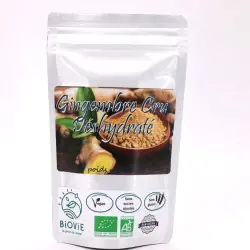
Fermented garlic with honey and ginger
Fresh ginger is an addition that I particularly love. Slice it thinly and add it to your jar with the garlic cloves before pouring in the honey. Ginger brings a spicy and warming note-ideal for the winter months.
The recipe variation: same proportions, same honey, same process. Simply add 30 to 50 g of fresh organic ginger, peeled and thinly sliced. The fermentation proceeds in the same way. If you like ginger, our recipe ofginger and lemon water you will also like it.
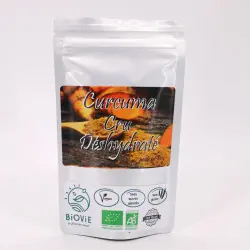
Other associations: thyme, lemon, turmeric, cinnamon
Thyme brings its own antimicrobial compounds (thymol, carvacrol) and pairs very well with garlic and honey. To use it: add 3 to 4 sprigs of organic fresh thyme to the jar when pouring the honey. The result is a condiment with herbal and resinous notes, particularly appreciated during winter treatments. Lemon - just a dash of zest - adds freshness. Turmeric, with its curcumin, creates a mixture with beautiful colors and complementary properties. And the cinnamon brings warmth and spicy sweetness - a very successful autumnal variation.
A personal tip: don't try to put everything in the same jar. Make small batches, test, taste. That's also the pleasure of dietary transition - experimenting gradually, at your own pace.
To discover others fermented foods which will enrich your diet, our selection also includes Organic kimchi, from yogurt plant-based home, and many other living preparations. Also consult our guide to 15 best fermented foods for your gut flora.
Testimonials and reviews from our customers
Our customers have trusted us for years for the quality of our raw, unpasteurized honey. Biovie is rated 4.9★ on Google (200+ reviews) and 5★ on Trustpilot (150+ reviews).
"I have been ordering from Biovie for years. I have always been delighted with the quality of the products and the service." - Florence D., ★★★★★ Google
"Excellent quality products, clear communication, always well-packaged parcels. I love Biovie because the range is very comprehensive." - Lucie V., ★★★★★ Google
"I discovered Biovie and the approach of Aurélie and Éric several years ago. I love the products they offer, as well as their approach, the care they take in the sourcing, quality, and ethics of the products." - Maïwenn O., ★★★★★ Google
FAQ - Your questions about honey fermented garlic
What are the benefits of garlic fermented in honey ?
Fermented garlic in honey combines the antimicrobial properties of allicin - the active sulfur compound in garlic - with the enzymes and antioxidants of raw honey. Lacto-fermentation also generates probiotics that contribute to the balance of the gut microbiota, as part of a varied and balanced diet and a healthy lifestyle.
Is fermented garlic in honey dangerous ?
The main risk is botulism, related to the spores of Clostridium botulinum in an anaerobic environment. By using nectar honey (pH 3.2-4.5) and adhering to hygiene rules, this risk is negligible. Honey-fermented garlic is prohibited for infants under one year old and not recommended for people on anticoagulants.
How to make fermented garlic in honey ?
Peel 2 to 3 heads of organic garlic, slightly crush the cloves, and place them in a sterilized 500 ml jar. Cover with 350 ml of raw unpasteurized honey. Seal the jar, leave it at room temperature (18-22°C), and turn the jar daily for the first week. Minimum fermentation: 2-3 weeks. Optimal: 1 to 3 months.
How to eat garlic fermented in honey ?
Consume 1 to 2 cloves per day, either on their own or added to salads, raw marinades, or dressings. The infused honey can be used as a syrup for a sore throat or to sweeten herbal tea. During a winter regimen, a daily intake for 3 weeks is common.
How long can fermented garlic in honey be stored ?
In an airtight jar, in a cool and dark place, garlic fermented in honey can be preserved for several months to a year. The taste improves over time, developing umami and caramelized notes. If there is a suspicious odor or visible mold, do not consume.
Which honey to use for fermenting garlic ?
Use exclusively raw, unpasteurized honey, of the nectar type (flower honey). Its acidic pH (3.2-4.5) ensures safe fermentation. Avoid honeydew honey (pH too high) and pasteurized honey (enzymes destroyed by heat).
Can ginger be added to honey-fermented garlic ?
Yes. Fresh ginger, sliced thinly and added with garlic cloves, is an excellent addition. It brings a spicy and warming note, particularly appreciated in winter.
Can thyme be added to garlic fermented in honey ?
Yes. Fresh organic thyme (3 to 4 sprigs) fits perfectly into the jar before adding the honey. It brings its own antimicrobial compounds (thymol, carvacrol) and herbal notes that enhance the properties of the preparation. The fermentation follows the same process as with garlic alone.
Can you eat honey-fermented garlic every day ?
Yes, as part of a varied and balanced diet, 1 to 2 cloves per day is a reasonable dosage. Avoid if you are on anticoagulant treatment or have a digestive sensitivity to garlic. If in doubt, consult a healthcare professional.
If this article was helpful to you and you want to go further in your dietary transition, subscribe to our Newsletter - every week we share practical tips, recipes, and discoveries about raw food.
Marchese, A., et al. (2016). "Antifungal and antibacterial activities of allicin: a review". Trends in Food Science & Technology, 52, 49–56. ⚠️ Note de correction : la référence originale de l'article mentionnait à tort la revue Microorganisms et un PMID de 2020 (32207097). La référence correcte est celle-ci.
Josling, P. (2001). "Preventing the common cold with a garlic supplement: a double-blind, placebo-controlled survey". Advances in Therapy, 18(4), 189–193.
Warning: The information presented in this article is provided for informational purposes only and does not constitute medical advice. Consult a qualified healthcare professional before making any changes to your diet or supplementation. As part of a varied and balanced diet and a healthy lifestyle.