




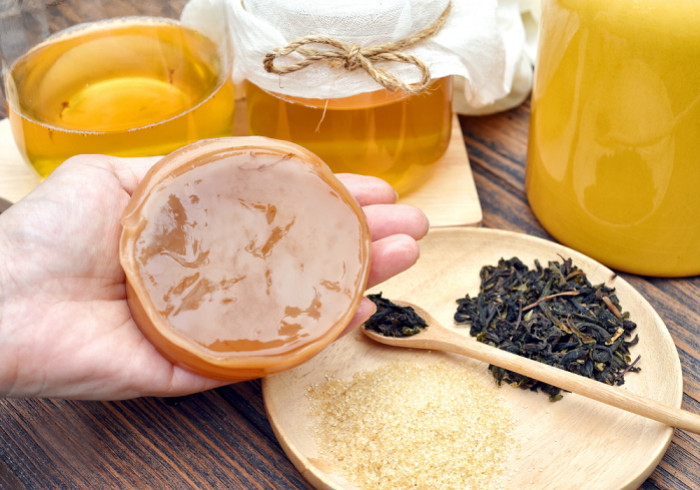

Making a homemade kombucha mother is possible with three ingredients: unflavored tea, sugar, and a bottle of unpasteurized kombucha purchased from a health food store. In 3 to 8 weeks at room temperature (22-27°C), a gelatinous film forms on the surface - this is your SCOBY, ready to brew as much kombucha as you want. This step-by-step guide covers everything I've learned from practicing home fermentation for years, and what I share with Biovie customers who are starting out.
After our article on where to get a kombucha mother, "here is the logical next step: make your own. Because yes, it is accessible. All you need is a glass jar, a breathable fabric, a bit of patience - and a good understanding of what is happening in your jar. To delve deeper into the basics of fermentation, our guide on" start home fermentation is a good starting point.
Share this article
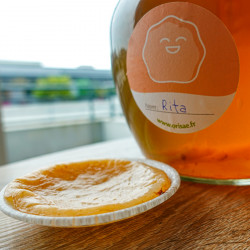
Organic Kombucha Mother
€15.90 Last items in stock
What is SCOBY, the mother of kombucha ?
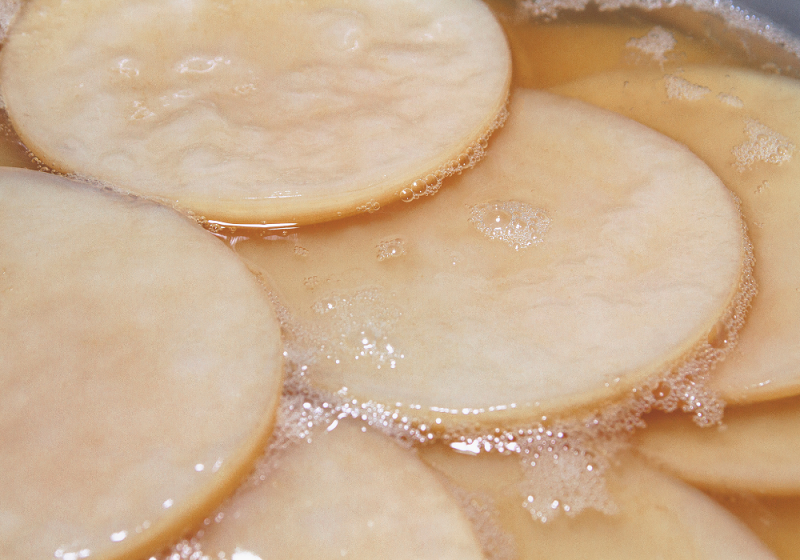
The SCOBY (Symbiotic Culture of Bacteria and Yeast), translated as "Symbiotic Culture of Bacteria and Yeast," is a gelatinous substance ranging in color from cream to brown that floats on the surface of the liquid during the fermentation of kombucha. It is he - and he alone - who transforms your sweet tea into kombucha. Without SCOBY, there is no fermentation, no drink.
What is happening in this jar is frankly fascinating from a microbiological standpoint. The yeasts transform sugar into ethanol and CO₂ (alcoholic fermentation), while the acetic bacteria - mainly Acetobacter and Komagataeibacter - oxidizes this ethanol into acetic and gluconic acid. It is this dual process that gives kombucha its characteristic tangy taste and lowers the pH enough to create a hostile environment for harmful bacteria. According to the review by Jayabalan et al. (2014, Comprehensive Reviews in Food Science and Food Safety), this microbial community is one of the most complex studied in traditional fermented beverages.
Another important point: The SCOBY is NOT a mushroom. I specify this because the error is widespread - even in some organic shops. Mushrooms belong to the fungal kingdom. The kombucha mother, on the other hand, is a matrix of bacterial cellulose hosting a community of bacteria and yeasts. These are two completely distinct kingdoms of life. The term "kombucha mushroom" is a popular, not scientific, designation.
Specifically, here's what makes the SCOBY interesting in the long term: it is indefinitely reusable from one batch to another. With each fermentation, a new layer of cellulose forms on the surface. The SCOBY gradually thickens - which then allows it to be divided and shared with your friends and family (I'll come back to this later). And if you want to understand how kombucha differs from other fermented drinks, our comparison kefir or kombucha can enlighten you.
The microbial makeup of a SCOBY: what science revealed in 2021-2025
For a long time, people spoke about the SCOBY somewhat in the dark. "There are bacteria, yeasts, it ferments." Since 2019-2021, genetic sequencing has made things much clearer, and it's fascinating.
On the yeast side, the genus that very often dominates isn't the common baker's yeast you might picture, but Brettanomyces (also called Dekkera) - the same yeast family that gives certain Belgian beers and certain wines their character. You also find Zygosaccharomyces, Lachancea, Starmerella, and sometimes Saccharomyces. These are the ones that consume the sugar and produce alcohol and CO₂ (the bubbles).
On the bacteria side, the star genus is called Komagataeibacter (formerly classified under Gluconacetobacter), accompanied by Acetobacter. These are acetic bacteria: in the presence of oxygen, they oxidise the ethanol produced by the yeasts and turn it into acetic acid. This is what gives kombucha its sharp acidity - and it's also Komagataeibacter that weaves the famous cellulose pellicle.
Do you see the mechanics? The yeasts make the alcohol, the bacteria turn it into acid. A loop. A genuine symbiosis. According to the review work of Harrison & Curtin (2021) and of Villarreal-Soto and colleagues (2020), it's this two-way dance that structures the whole ecosystem.
The concrete result of all this activity: kombucha's pH drops to a range of 2.5 to 3.5. And behind its technical feel, that figure tells something quite reassuring. Such a low pH is a naturally hostile environment for unwanted bacteria. Translated into everyday terms: this is exactly why a well-run kombucha fermentation is one of the safest for a beginner. The acidity protects the culture on its own. You're not dealing with a fragile medium that gets contaminated by the slightest draft - you're dealing with an acid fortress.
This is precisely the rigour I love about fermentation: it isn't magic, it's living chemistry that can be understood and reproduced. (My background as an ISTOM engineer has something to do with it - I've always needed to know why something works before trusting a method.)
The ingredients to make a kombucha mother
Making a homemade kombucha mother requires very little equipment. Here is what you need for 1 liter of preparation:
- Black tea or green tea: 4 to 6 unflavored tea bags (or 4-6 g of loose leaf tea). The tea provides the tannins and essential nutrients for the microorganisms in the SCOBY - avoid blends with essential oils or spices, which can inhibit fermentation.
- Sugar: 100 to 120 g per liter of water. Organic cane sugar, white sugar, or beet sugar - your choice. What I've observed over the years: cane sugar often provides a rounder aromatic profile. But the essential thing is that there is some. The yeasts need it as an energy source, and almost all of it will be consumed during fermentation.
- Water: 800 ml of dechlorinated or spring water. Chlorine inhibits microorganisms - if you use tap water, simply boil it or let it sit for 30 minutes in the open air.
- Kombucha starter liquid: 200 ml of unpasteurized and unflavored kombucha (which is 20% of the total volume). This is the element that many forget, yet it makes all the difference at the start: this acidic "starter" immediately lowers the pH and prevents contamination during the critical first days. Available in organic stores.
- A clean glass jar of at least 1 liter (preferably with a wide neck).
- A breathable fabric - coffee filter, muslin, clean cotton cloth. No plastic wrap: the SCOBY needs oxygen.
- A rubber band to fix the fabric.
If you prefer to start with an already prepared base, our Kombucha mother Orisae is available at Biovie - it's the solution for those who want to start their first brewing without waiting the 4 to 8 weeks for SCOBY formation.
How to make a kombucha mother: the steps
Here is the complete protocol for successfully making your homemade kombucha mother. These are short and actionable steps - each one is important, especially regarding temperature and hygiene.
- Bring 800 ml of water to a boil to remove the chlorine, then remove from heat.
- Add the tea bags and let them steep for 15 minutes.
- Remove the sachets, add 100 to 120 g of sugar, and stir until completely dissolved.
- Let the sweetened tea cool completely to room temperature. This point is non-negotiable: pouring hot tea over the kombucha starter kills the microorganisms.
- Pour the 200 ml of unpasteurized kombucha into the clean jar.
- Add the cooled sweet tea to the jar.
- Cover the jar with the breathable fabric and secure it with the elastic band. Never use an airtight lid - the mixture needs to breathe.
- Place the jar in a dark and warm place, at a stable temperature of 22 to 27°C, away from drafts and vibrations.
- Wait 3 to 5 weeks without moving or stirring the jar. A translucent film will gradually form on the surface - this is your future kombucha mother.
What is the preparation time for a kombucha mother ?
Preparing a SCOBY requires patience. The fermentation process is gradual, and trying to rush it is the first mistake beginners make. Here are the time markers to keep in mind:
- 1 to 3 weeks: the appearance of a thin translucent film on the surface. This is the beginning of your SCOBY. It looks like a fragile, almost invisible membrane. Normal.
- 4 to 8 weeks: The scoby is well-developed, thick, robust - ready to start a quality kombucha.
The number one factor is the ambient temperature. At 25-27°C, fermentation is significantly faster than at 18°C, where it can slow down considerably. In winter, if your kitchen is cool, place the jar near a gentle heat source - a radiator at a reasonable distance, or on top of a refrigerator. The quality and quantity of your starter also play a role: with 20% well-acidic starter kombucha, you are starting under good conditions.
How to feed and maintain your kombucha mother ?
A well-nourished SCOBY ensures successful fermentation batch after batch. Feeding the SCOBY is simply providing it with fresh sweet tea regularly. There you go, it's as simple as that.
How often to feed the SCOBY ?
If you brew kombucha regularly - every 1 to 3 weeks - the SCOBY is automatically "fed" with each new batch. No need to think about it. However, if you put your SCOBY on pause, place it in a "SCOBY hotel" (see next section) and refresh it with fresh sweet tea every 3 to 4 weeks. The sugar serves as an energy source for the yeasts and bacteria present - without regular input, their activity decreases.
And if you notice that your kombucha seems not very sweet at the end of fermentation? That's perfectly normal. By the end of the cycle, the microorganisms have consumed almost all of the sugar, which makes the drink low in sugar and acidic. You can also experiment with different types of sugar - cane, beet, muscovado - to vary the flavor profiles.
The ideal temperature for maintaining an active SCOBY is 22 to 27°C. Below 18°C, microbial activity slows down significantly. Above 30°C, some microorganisms can be altered - to be avoided in summer if your kitchen heats up.
How to know if the kombucha mother is alive ?
Several indicators can help assess the vitality of your SCOBY. Here's how to read the signals:
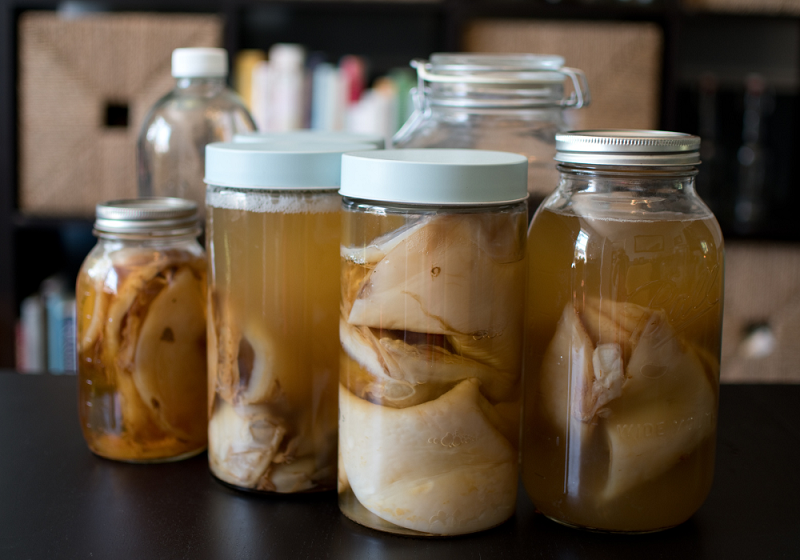
Appearance: A healthy SCOBY is thick, cream to brown in color, with a rubbery texture. A black, green (moldy), or discolored SCOBY is likely contaminated - discard it and start over. The small brown spots or yellowish filaments are perfectly normal: they are yeasts.
Texture: A fresh kombucha mother is firm but flexible. If it is very slimy or soft, it's a sign to watch out for.
Thickness: A healthy SCOBY gradually thickens with each batch. If it remains very thin after several brews, check the temperature and the quality of your starter.
Smell: The SCOBY and kombucha should emit a sour and slightly vinegary, pleasant smell. A musty, rotten, or cheesy odor indicates contamination - in this case, there's no need to hesitate, just throw it away.
Taste and sparkle: The finished kombucha should be slightly acidic and fizzy. An unpleasant bitter taste or a complete lack of fizz may indicate a struggling SCOBY.
How to store your kombucha mother ?
Are you going on vacation? Taking a break from brewing? Your SCOBY can be put on hold in what is called a "hotel in SCOBY" - and it will be ready to resume service whenever you want.
To preserve your kombucha mother:
- Place the SCOBY in a clean jar with enough finished kombucha to completely cover it (at least 250 ml).
- Cover with a breathable cloth and place in the refrigerator.
- A SCOBY well preserved in the refrigerator remains viable. up to 3 months. Beyond that, refresh with fresh sweet tea.
- Before starting a new brew, take the SCOBY out of the refrigerator and let it return to room temperature. 24 hours before use.
Freezing, on the other hand, is not recommended: it can irreparably damage the microorganisms in the SCOBY. The refrigerator remains the only reliable option for long-term storage.
How to divide and share your kombucha mother ?
Over the batches, your SCOBY will thicken - sometimes considerably. Frankly, that's a good sign: it means your culture is active and healthy. But when your mother exceeds 2 to 3 cm in thickness, it's time to divide it.
With clean hands or sterilized utensils, gently separate the oldest layer (below) from the most recent one (on the surface). Each layer becomes an independent culture capable of fermenting a new batch. The old layer can be stored in your SCOBY hotel, used for a second simultaneous brew, or given to a friend who wants to start. This is, in fact, a well-established friendly tradition in fermenting communities - a wonderful way to share culture both literally and figuratively.
Work quickly and in a clean environment to avoid any contamination during handling.
How long does it take to ferment kombucha ?
Once your kombucha mother is well-formed, you can start your first fermentation. With our complete kombucha kit, 7 days are enough for the 1st and 2nd fermentation - this is the solution I recommend to start without worrying about the equipment.
In general, homemade kombucha fermentation takes between 7 and 21 days. The higher the temperature, the faster the fermentation. To know when to stop: taste it regularly starting from the 7th day. When the acidity/fizziness balance suits you, transfer it to bottles. Our Complete guide to successfully fermenting your first kombucha covers this entire process in detail. And to explore the universe of Fermented foods beneficial for gut flora, our dedicated article will give you many ideas to go further.
Precautions and contraindications of kombucha
Kombucha is a living fermented beverage, appreciated as part of a fermented food balanced and a healthy lifestyle. However, certain precautions are necessary - and it seems important to me to mention them clearly:
- Pregnancy and breastfeeding: Homemade kombucha contains low traces of alcohol (0.5 to 3%) and unpasteurized microorganisms - its consumption is not recommended during this period.
- Immunocompromised individuals: Unpasteurized beverages rich in living microorganisms may pose an infection risk. Consult your doctor before consuming them.
- Liver diseases: Rare cases of hepatotoxicity associated with excessive consumption of kombucha have been described in the medical literature (Jayabalan et al., 2014). In cases of liver fragility, medical advice is essential.
- Yeast allergy: The SCOBY contains active yeasts. In case of a documented allergy to yeasts or fungi, avoid kombucha.
- First steps: If you have never drunk kombucha, start with small amounts - 50 to 100 ml per day - to allow your microbiota to gradually adapt. This is true for any living fermented food.
In case of doubt, consult your healthcare professional. This information is provided for educational purposes.
Frequently Asked Questions About Kombucha Mother
Can you make your own kombucha mother ?
Yes, absolutely! To make a homemade kombucha mother, you just need a bottle of unpasteurized and unflavored kombucha (available in organic stores), black or green tea, and sugar. In 3 to 8 weeks, depending on the ambient temperature, a gelatinous film will form on the surface of the liquid - that's your SCOBY.
How long does it take to make a homemade SCOBY ?
It takes between 3 and 5 weeks for a usable SCOBY to appear. For a robust and well-developed culture, plan for 4 to 8 weeks. The speed mainly depends on the temperature: at 25-27°C, fermentation is faster than at 18°C.
What tea should be used to make a kombucha mother ?
Black tea or non-flavored green tea is ideal. These teas contain the tannins and essential nutrients that the microorganisms in the SCOBY need. Avoid flavored teas or infusions with essential oils that can inhibit fermentation.
How do I know if my SCOBY is healthy ?
A healthy SCOBY is cream to brownish in color, thick, flexible, and emits a pleasant sour smell. If you notice green, black, or colored mold, or a foul odor, the SCOBY is contaminated and should be discarded. Small brown spots or strands are normal - that's yeast.
Can you eat or drink the kombucha mother (SCOBY) ?
Yes, the SCOBY is edible! It has a particular gelatinous texture and can be consumed as is or incorporated into smoothies, candies, or homemade preparations. It contains some of the probiotics and bacterial cellulose from the kombucha.
How to store your kombucha mother between batches ?
Place your SCOBY in a jar with finished kombucha (at least 250 ml) to cover it, cover with a cloth, and store in the refrigerator. This "SCOBY hotel" allows it to stay alive for up to 3 months. Before starting a new brew, let it return to room temperature for 24 hours.
How to divide and share your kombucha mother ?
When your SCOBY exceeds 2 to 3 cm in thickness, you can gently separate it into two layers with clean hands. Each half is an independent culture capable of fermenting a new batch. It's a friendly way to share the culture with your loved ones.
Are there any contraindications to consuming kombucha ?
Homemade kombucha is not recommended for pregnant or breastfeeding women, immunocompromised individuals, and those with liver diseases, due to its content of live microorganisms and low traces of alcohol. People allergic to yeast should also avoid it. If in doubt, consult your doctor.
The full range Lactic Ferments
4 products
Discover the full range

References
- Jayabalan, R., Malbaša, R.V., Lončar, E.S., Vitas, J.S., Sathishkumar, M. (2014). "A Review on Kombucha Tea-Microbiology, Composition, Fermentation, Beneficial Effects, Toxicology, and Tea Fungus". Comprehensive Reviews in Food Science and Food Safety, 13(4), 538–550. Revue de littérature complète sur la microbiologie du SCOBY, les acides produits par fermentation et les données toxicologiques.
Update: March 2026. Article approved by Éric Viard, founder of Biovie and engineer ISTOM, co-author of " Seaweed in everyday life "(Gallimard, 2024) -" Best cookbook in the world, Gourmand Cookbook Awards 2025, and Best cookbook in France, National Academy of Cuisine 2025.
Warning: The information presented in this article is provided for informational purposes only and does not constitute medical advice. Consult a qualified healthcare professional before making any changes to your diet or supplementation. As part of a varied and balanced diet and a healthy lifestyle.