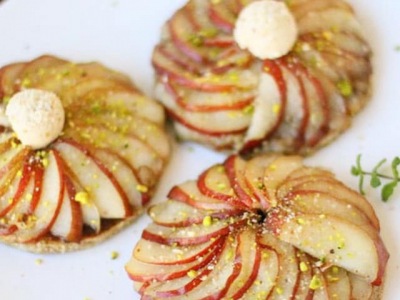



These pear tarts are prepared in 20 minutes, with no baking required, on a base of almond flour and dates, topped with a completely raw caramel. Allow at least 2 hours in the refrigerator - and the result: a seasonal dessert that retains the benefits of fresh pears (quercetin, vitamin C, fiber, potassium) without degrading them through heat. Recipe for 4 people, home-approved for several autumns.
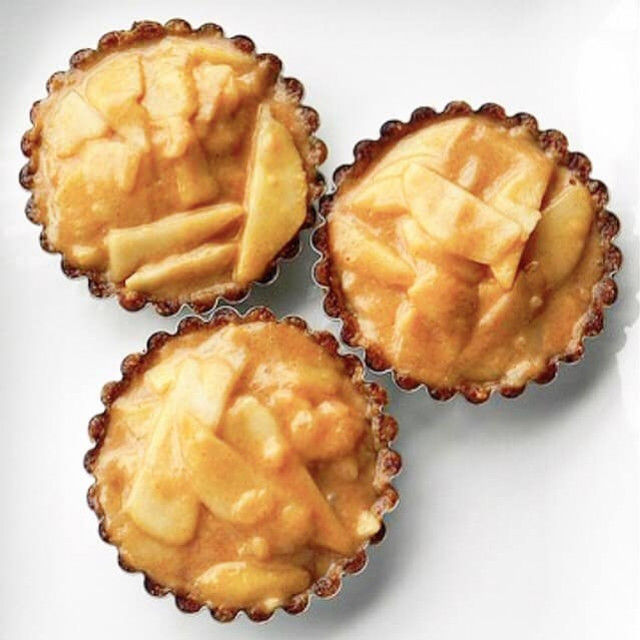
Pear and caramel tarts
Share this article

Organic activated whole almonds
€18.90 In stock
Why cook raw in autumn? The pear as a starting point
Frankly, I'm not going to give you a long speech about "the benefits of raw food" in general. What interests me here is the pear. And the pear in autumn is something specific: it is ripe, local, inexpensive, and it has a nutritional composition that deserves attention before turning on the oven.
What the pear really provides: fiber, vitamin C, quercetin
A ripe pear contains about 4.3 g of fiber per 100 g, a good portion of which is pectin - soluble fibers that contribute to normal digestive function (source: ANSES-CIQUAL, 2020). Not insignificant for a fruit that tends to be underestimated.
And then there is quercetin. This antioxidant flavonoid, found in pears (as well as in apples, grapes, and onions), helps protect cells against oxidative stress. Heat degrades some of it - a concrete reason to consider consuming this fruit raw in particular. It's not food ideology: it's simple chemistry.
The vitamin C content remains modest (about 4 mg/100 g), but vitamin C contributes to the normal functioning of the immune system. As part of a varied and balanced diet, every source counts.
For the Pear and Coconut Tart Recipe that we published a few years ago, the angle was different. Here, we stick to 100% raw, without compromise.
The argument that is often forgotten: potassium and tannins
The pear is an interesting source of potassium, a mineral that contributes to the normal functioning of the nervous system and muscles. Epidemiological studies are also exploring the link between regular consumption of fruits rich in potassium and tannins and cardiovascular health - notably the study by Hertog et al. (1993) in The Lancet, which observed an association between dietary flavonoid consumption and coronary risk in a cohort of 805 elderly men. This is not an established causality, but the indication is serious.
Step-by-step recipe: raw caramel pear tartlets (4 servings)
Active preparation: 20 minutes. Refrigeration time: 2 to 4 hours minimum. Equipment: a blender, 4 small tart molds (or pastry rings), a sharp knife for the pears.
The base: almond flour and date dough
Ingredients:
- 100 g of almond flour
- 100 g of pitted dates
- Sea salt (a few pinches)
Mix the three ingredients together until you obtain a compact mass that holds together. The consistency should be similar to soft modeling clay - if it sticks too much, chill for a few minutes before molding. Divide into 4 equal portions and fill the molds, pressing the mixture firmly onto the bottom and sides. Refrigerate while preparing the caramel.
For the dough, we use almond flour from our own organic activated almonds - the difference in taste is real compared to an industrial powder. With this type of raw preparation, the quality of the base truly changes the final result. You can read our article on activated almonds and their benefits if you want to understand why soaking alters the composition of the nut.
Caramel: The True Secret of the Recipe
Ingredients:
- 15 cl of plant-based milk (preferably almond or coconut)
- 50 g of pitted dates
- 1/2 teaspoon of lemon juice
- 1/2 teaspoon of vanilla extract
- Cinnamon, ginger, and salt to taste
- 1 teaspoon of melted coconut oil
Everything in the blender, at maximum power, until you achieve a smooth and pearly texture. There you have it - that's carawmel. The spelling is not a typo: it's a contraction of "raw" and "caramel," a nod we kept because it says exactly what it is.
Cinnamon and ginger: adjust according to your taste. Personally, I use cinnamon quite generously in the fall - it pairs very well with pear.
Assembly and refrigeration time
Slice 2 beautiful ripe pears into thin, even slices. Gently mix the slices with the caramel in a bowl, then pour the mixture into the tart shells. Do not overfill - the caramel will firm up when cold, a generous layer is sufficient.
Refrigerate for 2 to 4 hours before consumption. With Aurélie, we first tested them with Williams pears from our local market - it's the variety we recommend, juicier, it blends better with the caramel without releasing water. The Conference variety works very well too.
What changes when you don't bake your dessert
Enzymatic capital and preserved nutrients
Cooking beyond 42°C denatures some of the enzymes naturally present in fruits and nuts. In raw food diets, there is talk of "enzyme capital" - the idea that each raw food comes into the body with its own digestive enzymes, which eases the workload of the digestive system.
It is a principle that I have applied for a long time, without making it a dogma. Specifically: this dessert preserves the flavonoids of the pear (with quercetin at the forefront), the enzymes of the almonds, and the active fibers of the dates. An oven-baked tart at 180°C cannot say the same - even if it is delicious in other ways.
The date: natural sweetener and binder - why it replaces everything
The date does two things at once in this recipe: it sweetens and binds. Specifically, it replaces both the sugar and the butter of a classic dough. It's quite remarkable.
Its glycemic index? Around 42 for Medjool dates, according to a clinical study by Alkaabi et al. (2011) conducted on healthy and diabetic subjects - compared to 70 for white sugar. Slower, more gradual, accompanied by fibers that further slow absorption. Not a "magic" food, however: dates are still sweet, and moderation is key. But in the context of a dessert, it's clearly a better choice than refined sugar.
Seasonal variations and tips
In early autumn (late August-September), fresh figs are a great substitute for pears. The texture is different - softer, less structured - but the combination with date caramel is excellent.
For more creaminess: a tablespoon of activated almond puree spread in the pie crust just before the caramel really changes the final texture - creamier, richer. If you want a version with some crunch, add a few pieces of walnuts or hazelnuts on top when serving.
And if you like this type of raw dessert, our raw chocolate-mint fudge follows exactly the same logic - same technique, different season.
Frequently Asked Questions About Raw Pear Desserts
Can these tarts be prepared in advance ?
Yes, absolutely. These raw pear tarts can be stored for 48 hours in the refrigerator in an airtight container. Good news: the cold firms up the caramel, which improves the stability when cutting. Prepare them the day before, it's even recommended.
What can be used to replace dates in this recipe ?
Dates are the ideal binder, but they can be replaced with pitted soft prunes (very similar texture), rehydrated dried figs (more pronounced, slightly more complex flavor), or dried apricots (more tangy, less sweet). The proportions remain the same in all cases.
Which variety of pear should you choose for a raw dessert ?
For this type of no-bake vegan recipe, you need a juicy and tender pear that holds well in thin slices. The Williams, Conference, and Bosc varieties are the most suitable. To avoid: mealy pears, which disintegrate when cut and give an unpleasant texture once mixed with the carawmel.
Can almond flour be replaced with regular almond meal ?
Yes, in the same proportions. Almond flour (blanched, finely ground almonds) results in a slightly finer and more homogeneous dough. With whole almond meal, the texture will be a bit more rustic-just as good, just a bit coarser. Both work very well for this raw food recipe base for autumn.
Are these tarts suitable for children ?
Yes. No added sugar, gluten-free, no baking, and no animal products - it's a dessert that children really enjoy. Just make sure there are no nut allergies (almonds) before serving.
Which plant-based milk to use for caramel ?
Almond milk and coconut milk provide the best results in terms of texture-creamy, with good consistency after refrigeration. Oat milk can make the caramel slightly more liquid; if you still use it, reduce the amount by 2 to 3 cl to compensate.
The full range Oilseeds, nuts, seeds
Fair trade tiger nut from Niger, Amazon nuts from Bolivia, activated buckwheat from Brittany, and activated oilseed purées made in Alsace by Kaly: this range brings together oilseeds and seeds of raw quality, most of them soaked then dehydrated at low temperature (activation). To get started with activation, an activated almond or hazelnut purée is easier to use than a whole oilseed you have to soak yourself. For everyday raw cooking, tiger nut (whole, sliced or as a purée) comes in several formats suited to different uses, from homemade plant milk to crunchy snacks., 20 products
Discover the full range

References
- ANSES-CIQUAL. (2020). Nutritional composition table of foods. National Agency for Food, Environmental and Occupational Health Safety. (Institutional database)
- Boots, A.W., Haenen, G.R., Bast, A. (2008). Health effects of quercetin: from antioxidant to nutraceutical. European Journal of Pharmacology, 585(2-3), 325–337. (Revue de littérature)
- Alkaabi, J.M., et al. (2011). Glycemic indices of five varieties of dates in healthy and diabetic subjects. Nutrition Journal, 10, 59. (Essai clinique)
- Hertog, M.G., et al. (1993). Dietary antioxidant flavonoids and risk of coronary heart disease: the Zutphen Elderly Study. . The Lancet, 342(8878), 1007–1011. (Prospective epidemiological study)
Update: March 2026. Article approved by Éric Viard, founder of Biovie and engineer ISTOM, co-author of " Seaweed in everyday life "(Gallimard, 2024) -" Best cookbook in the world, Gourmand Cookbook Awards 2025, and Best cookbook in France, National Academy of Cuisine 2025.
Warning: The information presented in this article is provided for informational purposes only and does not constitute medical advice. Consult a qualified healthcare professional before making any changes to your diet or supplementation. As part of a varied and balanced diet and a healthy lifestyle.
Share this article